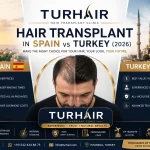
Hair Transplant in Spain vs Turkey (2026)
July 28, 2026
Hair Transplant in France vs Turkey (2026)
July 30, 2026Hair Transplant in Germany vs Turkey (2026): Which Country Offers Better Results, Better Prices, and Better Value?
Choosing between Germany and Turkey for a hair transplant in 2026 has become one of the biggest decisions for European patients experiencing hair loss. Both countries offer advanced medical facilities and qualified professionals, but they differ significantly in pricing, surgeon experience, procedure volume, waiting times, and overall patient experience.
Germany has an excellent healthcare system and highly regulated medical standards. Turkish clinics, on the other hand, have transformed Istanbul into the world’s leading destination for hair transplantation. Every year, tens of thousands of international patients—including many from Germany—travel to Turkey because they can receive the same modern techniques while paying substantially less.
However, choosing a clinic should never depend only on price. The experience of the surgeon, the quality of donor management, natural hairline design, hygiene standards, and transparent patient care are ultimately what determine whether your investment will provide lifelong satisfaction.
Why German Patients Choose Turkey
Turkey performs one of the highest numbers of hair transplant procedures worldwide. Because surgeons perform hundreds or even thousands of operations annually, many specialists develop significant expertise with different hair types, advanced FUE techniques, beard transplants, repair procedures, and female hair restoration.
Another important factor is convenience. Most Turkish clinics provide complete medical tourism packages including airport transfers, hotel accommodation, interpreters, medications, first washing sessions, and post-operative support. German clinics generally charge separately for every service.
Technology Used in Both Countries
Both Germany and Turkey utilize the latest techniques including FUE (Follicular Unit Extraction), Sapphire FUE, and DHI (Direct Hair Implantation). Modern equipment alone, however, does not guarantee superior results.
The surgeon’s planning remains the most critical factor. Hairline design, angle creation, graft placement density, donor preservation, and long-term planning require experience that cannot simply be replaced by technology.
Many patients mistakenly believe that every clinic using Sapphire blades or DHI pens produces identical outcomes. In reality, two clinics using exactly the same instruments can achieve dramatically different results depending on surgical expertise.
Doctor-Led Clinics vs Hair Factories
This is one of the biggest differences patients should understand before choosing any clinic.
Some large clinics advertise very low prices but rely heavily on technicians for almost the entire operation. The doctor may only meet the patient briefly before the surgery begins.
Doctor-led clinics follow a different philosophy. The surgeon personally evaluates hair loss, designs the hairline, calculates graft distribution, opens recipient channels, supervises every important stage, and ensures that donor extraction preserves future options.
This individualized planning usually produces more natural density, better symmetry, improved donor preservation, and lower risk of overharvesting.
Recovery Process
Recovery is similar regardless of whether the procedure takes place in Germany or Turkey. Most patients return home within two or three days. Small scabs disappear after approximately ten days, while the transplanted hairs naturally shed during the first month.
Visible growth generally begins after three to four months, significant density develops around six to eight months, and final results usually appear between twelve and fifteen months.
Following the clinic’s aftercare instructions—including washing protocols, avoiding smoking, protecting the scalp from sunlight, and taking prescribed medications—plays an important role in achieving optimal outcomes.
Price Isn’t Everything
Many people automatically assume that the cheapest clinic offers the best value. Unfortunately, this approach often leads to disappointing results.
A failed hair transplant frequently requires corrective surgery, additional graft harvesting, longer recovery, and significantly higher overall costs. Saving a few thousand euros initially can become much more expensive later.
Patients should instead evaluate:
- Who performs the surgery?
- How many patients are treated daily?
- Are before-and-after results genuine?
- Is the surgeon clearly identified?
- Is aftercare included?
- Does the clinic explain realistic expectations?
Why Many International Patients Prefer Turkey
Turkey combines experienced surgeons, competitive pricing, high surgical volume, and complete medical tourism services into one destination. These advantages explain why patients from Germany, the United Kingdom, Spain, France, Italy, and many other European countries continue choosing Istanbul every year.
For patients selecting a reputable doctor-led clinic, Turkey often provides exceptional value without compromising medical quality.
| Who Should Choose Germany? | Who Should Choose Turkey? |
|---|---|
| ✔ Prefer treatment close to home ✔ Comfortable with higher prices ✔ No travel required ✔ Local follow-up appointments | ✔ Looking for better value ✔ Want experienced high-volume surgeons ✔ Prefer all-inclusive packages ✔ Comfortable traveling for treatment |
Final Verdict: Germany or Turkey in 2026?
Germany continues to offer excellent healthcare with strict medical regulations, but significantly higher treatment costs make hair transplantation inaccessible for many patients.
Turkey has established itself as the global leader in hair restoration by combining modern surgical techniques, internationally experienced surgeons, shorter waiting times, and considerably lower prices. When patients choose an experienced, doctor-led clinic with transparent practices rather than simply selecting the cheapest provider, Turkey remains one of the strongest choices for hair transplantation in 2026.
Ultimately, the best destination is not determined by geography—it is determined by the skill of the surgeon, ethical patient care, realistic planning, and consistently natural long-term results.
Hair Transplant Success Rates in Germany vs Turkey
One of the most common questions prospective patients ask is whether success rates differ between Germany and Turkey. The answer is more nuanced than many people expect. The overall success of a hair transplant depends far more on the individual surgeon, surgical planning, donor management, and patient compliance than on the country where the procedure is performed.
Leading clinics in both Germany and Turkey routinely report graft survival rates exceeding 90% when procedures are performed correctly. The difference lies in surgical experience. Turkish surgeons who perform several procedures every day often gain significantly more hands-on experience than doctors working in countries where hair transplantation is performed less frequently.
Patients should therefore evaluate real patient outcomes, independent reviews, surgeon credentials, and long-term before-and-after photographs instead of assuming that one country automatically produces better results.
| Success Factor | Importance |
|---|---|
| Surgeon’s Experience | ★★★★★ |
| Hairline Design | ★★★★★ |
| Donor Area Management | ★★★★★ |
| Aftercare Compliance | ★★★★☆ |
| Clinic Technology | ★★★☆☆ |
| Country Location | ★★☆☆☆ |
Understanding Donor Area Preservation
The donor area is a patient’s most valuable resource during hair restoration. Every graft removed from the back or sides of the scalp can never grow there again. This means careful planning is essential.
Experienced surgeons avoid overharvesting by extracting follicles evenly across the donor area while preserving density for possible future procedures. Patients with progressive hair loss may eventually require a second transplant, making donor conservation extremely important.
Unfortunately, some high-volume clinics prioritize extracting the maximum number of grafts during one session without adequately considering the patient’s future hair loss pattern. While this may initially create impressive density, it can leave the donor area visibly depleted years later.
Hairline Design Makes the Biggest Difference
A natural-looking hairline is one of the most difficult aspects of hair transplantation. It requires artistic judgment as well as surgical expertise.
The best surgeons consider:
- Patient age
- Facial proportions
- Ethnicity
- Future hair loss progression
- Natural irregularities
- Hair direction
A hairline that appears attractive on a 25-year-old may look completely unnatural when the patient reaches 45 or 50 years old. Conservative planning often produces more satisfying long-term outcomes.
Traveling from Germany to Turkey for Surgery
Traveling to Turkey for a hair transplant is straightforward. Numerous direct flights connect German cities such as Berlin, Frankfurt, Munich, Düsseldorf, Hamburg, Cologne, and Stuttgart with Istanbul every day.
Many clinics organize every step of the journey, including airport pickup, hotel accommodation, clinic transfers, translation services, medications, and follow-up instructions. Patients usually stay two or three nights before returning home.
Since hair transplantation is considered minimally invasive surgery, most patients can comfortably fly home within two days following the procedure.
Language and International Patient Support
One reason international patients feel comfortable choosing Turkey is the availability of multilingual coordinators. Many established clinics employ German-speaking patient managers who assist throughout the consultation, surgery, and recovery process.
This eliminates communication barriers and helps patients understand every stage of treatment, medication schedules, washing instructions, and follow-up care.
Potential Risks to Consider
Hair transplantation is generally safe when performed by qualified professionals. Nevertheless, every surgical procedure carries certain risks.
Possible complications include:
- Temporary swelling
- Minor bleeding
- Shock loss
- Infection (rare)
- Unnatural hairline
- Poor density
- Visible donor scarring
- Overharvested donor area
Most of these problems are preventable through proper surgical planning, sterile techniques, and careful postoperative care.
How to Choose the Right Clinic
Instead of searching only for the cheapest clinic, patients should create a checklist before making a decision.
| Question | Why It Matters |
|---|---|
| Who performs the surgery? | Doctor involvement directly affects quality. |
| How many patients are treated daily? | Lower volume usually means more personalized care. |
| Are before-and-after photos authentic? | Real results build trust. |
| Is aftercare included? | Recovery support improves outcomes. |
| Can previous patients be contacted? | Independent feedback is valuable. |
| Are prices transparent? | Avoid unexpected charges. |
Why Experience Matters More Than Marketing
The hair transplant industry has become highly competitive. Some clinics invest enormous budgets in advertising, social media influencers, and online promotions while spending far less on medical quality.
Patients should never assume that the clinic appearing first in search results automatically provides the best care. Online visibility often reflects marketing investment rather than surgical expertise.
Instead, patients should focus on surgeon qualifications, transparent communication, realistic expectations, and consistently natural patient results.
Why Doctor-Led Clinics Continue to Stand Out
Doctor-led clinics continue attracting patients who prioritize safety, personalized treatment, and long-term outcomes. Rather than operating like production lines, these clinics typically limit the number of daily surgeries, allowing the surgeon to dedicate more attention to each patient.
During a doctor-led procedure, the physician usually designs the hairline, evaluates the donor area, opens recipient channels, supervises graft placement, and monitors every important surgical stage. This personalized approach often produces better graft survival, improved density, and more natural aesthetics.
When comparing Hair Transplant in Germany vs Turkey (2026), it becomes clear that both countries are capable of delivering excellent medical care. Germany offers outstanding healthcare infrastructure and local convenience, while Turkey provides exceptional value through competitive pricing, highly experienced surgeons, and comprehensive treatment packages.
The most successful patients are those who thoroughly research their clinic, verify the surgeon’s credentials, review authentic patient transformations, and prioritize quality over price alone. A well-performed hair transplant should provide natural-looking results that last for decades, making careful clinic selection one of the most important decisions in the entire treatment process
Is a Hair Transplant in Turkey Safe for German Patients?
Safety is often the first concern for patients considering traveling abroad for medical treatment. Fortunately, Turkey has spent more than two decades developing one of the world’s largest medical tourism industries. Every year, hundreds of thousands of international patients visit Turkey for cosmetic procedures, dental treatments, bariatric surgery, and hair transplantation.
For German patients, the key is not whether Turkey is safe, but whether the selected clinic follows internationally accepted medical standards. Reputable clinics operate in modern hospitals or accredited medical centers, use sterile operating rooms, perform detailed medical assessments, and provide continuous follow-up after surgery.
Patients should avoid clinics that refuse to identify the operating surgeon, promise unrealistic graft numbers, or offer unusually cheap prices without explaining what is included. Choosing a transparent, doctor-led clinic dramatically reduces unnecessary risks.
Understanding Hair Transplant Costs Beyond the Initial Price
Many patients compare only the advertised price of surgery, but the total treatment cost often includes several additional expenses. In Germany, accommodation, medications, consultations, laboratory tests, and follow-up appointments may be billed separately.
By contrast, many Turkish clinics simplify budgeting by offering comprehensive packages that include almost everything required for the patient’s stay.
| Expense | Germany | Turkey (Typical Package) |
|---|---|---|
| Hair Transplant Procedure | Included | Included |
| Hotel Accommodation | Additional Cost | Usually Included |
| Airport Transfer | Not Included | Included |
| Medication Kit | May Cost Extra | Usually Included |
| First Hair Wash | Sometimes Extra | Included |
| Interpreter | Limited Availability | Included |
| Aftercare Support | Separate Consultation | Included in Most Packages |
Can You Trust Online Reviews?
The internet provides thousands of reviews about hair transplant clinics, but patients should approach them critically. Positive reviews can be genuine, while some may be influenced by marketing campaigns or promotional partnerships.
Instead of focusing only on five-star ratings, patients should examine:
- Detailed patient stories.
- High-resolution before-and-after photographs.
- Results photographed from multiple angles.
- Long-term outcomes after 12 months.
- Independent discussion forums.
- Video testimonials.
Real patient experiences usually include both positive observations and constructive criticism, making them more reliable than overly promotional content.
Hair Density Expectations
One of the most common misconceptions is that a single procedure can restore the same hair density a patient had as a teenager. In reality, every individual has a limited donor supply, making realistic planning essential.
Experienced surgeons focus on creating the visual illusion of density by carefully placing grafts at natural angles and prioritizing the frontal hairline, where density has the greatest cosmetic impact.
Patients with extensive baldness may require two sessions or a combination of scalp and beard grafts to maximize coverage while protecting the donor area.
The Importance of Long-Term Hair Loss Planning
Hair transplantation treats existing hair loss but does not stop the natural progression of androgenetic alopecia. Patients who continue losing native hair after surgery may eventually notice new thin areas behind the transplanted region.
This is why experienced surgeons design conservative hairlines and recommend appropriate long-term treatments when suitable.
Possible maintenance options may include:
- Finasteride under medical supervision.
- Topical or oral minoxidil.
- PRP therapy.
- Low-level laser therapy.
- Healthy nutrition and lifestyle improvements.
Why Consultation Quality Matters
A professional consultation should never feel rushed. Before recommending surgery, the surgeon should carefully evaluate:
- Family history of hair loss.
- Current pattern of baldness.
- Hair characteristics.
- Donor density.
- Scalp flexibility.
- Medical conditions.
- Future expectations.
If a clinic immediately promises the maximum number of grafts without performing a thorough assessment, patients should proceed cautiously.
Choosing Between FUE, Sapphire FUE, and DHI
Modern clinics in both Germany and Turkey typically offer several transplantation techniques. Understanding the differences helps patients make informed decisions.
| Technique | Main Advantage | Ideal Candidate |
|---|---|---|
| FUE | Reliable, versatile, widely used. | Most patients. |
| Sapphire FUE | Precise incisions with minimal tissue trauma. | Patients seeking faster healing. |
| DHI | High precision implantation. | Smaller areas requiring dense placement. |
No technique is universally superior. The surgeon’s experience with the chosen method remains significantly more important than the device itself.
Questions Every Patient Should Ask Before Booking
Preparing the right questions can help patients avoid disappointment and identify clinics that prioritize transparency.
- Who will perform every stage of the surgery?
- How many procedures are performed each day?
- How many grafts do I actually need?
- Will the donor area remain suitable for future surgery?
- Can I see patients with similar hair loss?
- What happens if additional grafts are needed later?
- Who provides aftercare after I return home?
The Future of Hair Transplantation Beyond 2026
Hair restoration continues evolving rapidly. Artificial intelligence is increasingly assisting surgeons with graft planning and density calculations. Robotic systems continue improving extraction precision, while regenerative medicine—including stem-cell research and advanced growth factor therapies—may further enhance healing and graft survival in the future.
Despite technological progress, one principle remains unchanged: successful hair transplantation depends primarily on surgical expertise rather than expensive equipment.
Final Recommendation
For patients comparing Hair Transplant in Germany vs Turkey (2026), the decision should extend beyond price alone. Germany offers outstanding healthcare and local convenience, while Turkey combines internationally experienced surgeons, high procedure volumes, shorter waiting times, and exceptional value through comprehensive treatment packages.
Rather than searching for the cheapest clinic, patients should invest time in researching surgeon qualifications, reviewing authentic long-term results, understanding donor management philosophy, and ensuring the clinic follows a genuine doctor-led approach. A carefully planned hair transplant can provide natural, lifelong results, making quality and experience the most valuable investments a patient can make.
Common Mistakes German Patients Make When Choosing a Hair Transplant Clinic
Choosing a hair transplant clinic should never be based solely on price or online advertising. Every year, thousands of patients compare clinics in Germany and Turkey, but many focus only on the cost difference without carefully evaluating medical quality. A successful hair transplant is a lifelong investment, and correcting a failed procedure is usually much more expensive than choosing the right clinic from the beginning.
One of the biggest mistakes is assuming that every clinic offering FUE or DHI produces identical results. While many clinics advertise the same techniques, the experience of the surgeon, graft handling, donor preservation, and aesthetic planning vary enormously. Two clinics may use identical equipment yet achieve completely different outcomes.
Patients should also avoid making decisions based entirely on social media influencers or heavily edited before-and-after photos. Professional lighting, hair fibers, styling products, and camera angles can dramatically change the appearance of density. High-quality clinics usually provide consistent results from multiple patients photographed under similar conditions.
How Many Grafts Do You Really Need?
Many advertisements promise extremely high graft numbers, but more grafts do not automatically mean better results. Every patient has a limited donor supply, and unnecessarily harvesting too many follicles can permanently damage the donor area.
An experienced surgeon evaluates:
- Current level of hair loss
- Hair thickness
- Hair color
- Scalp contrast
- Donor density
- Future hair loss progression
Instead of maximizing graft numbers, experienced surgeons maximize cosmetic improvement while preserving donor resources for the future.
| Hair Loss Level | Typical Graft Requirement |
|---|---|
| Mild Hairline Recession | 1,500–2,200 Grafts |
| Moderate Hair Loss | 2,500–3,500 Grafts |
| Advanced Hair Loss | 3,800–5,000 Grafts |
| Extensive Baldness | May Require Multiple Sessions |
Why Hairline Design Is More Important Than Density
The frontal hairline is the first thing people notice when looking at a person’s face. Even moderate density can appear excellent when the hairline has been designed naturally. Conversely, extremely dense graft placement behind an artificial-looking hairline rarely produces satisfying results.
Professional surgeons create irregular, age-appropriate hairlines that blend naturally with the patient’s facial proportions. They avoid perfectly straight lines because natural hairlines contain subtle irregularities.
Patients requesting very low teenage hairlines should understand that such designs may appear unnatural as they age and can require additional surgeries in the future.
Should You Stay Longer After Surgery?
Most international patients remain in Istanbul for two or three nights following surgery. This allows the clinic to perform the first postoperative wash, inspect the donor area, answer questions, and ensure that healing has begun normally.
Some patients choose to extend their stay by one or two additional days to recover before traveling. Although not medically necessary in most cases, many patients appreciate having extra time to relax before returning home.
German patients generally find travel particularly convenient because direct flights between Germany and Istanbul operate daily throughout the year.
Hair Transplant Tourism Continues Growing in 2026
Medical tourism continues expanding rapidly across Europe, with Turkey remaining one of the world’s most popular destinations for cosmetic procedures. Hair transplantation represents one of the country’s strongest medical specialties because surgeons perform large numbers of procedures every year.
This high patient volume enables experienced doctors to refine their techniques continually while investing in advanced surgical equipment, modern facilities, multilingual patient coordinators, and comprehensive aftercare systems.
For many patients, the combination of affordability and experience makes Turkey an attractive alternative to domestic treatment.
Why Experience Cannot Be Replaced by Technology
Modern surgical instruments have undoubtedly improved hair transplantation, but technology alone cannot create natural results.
The surgeon still determines:
- Extraction angle.
- Hairline symmetry.
- Recipient channel direction.
- Graft distribution.
- Density planning.
- Donor preservation.
Even the most advanced implantation devices depend entirely on the skill of the professional using them. This explains why experienced surgeons consistently outperform inexperienced practitioners despite using similar equipment.
| What Influences Results Most? | Impact |
|---|---|
| Surgeon’s Experience | ★★★★★ |
| Hairline Planning | ★★★★★ |
| Donor Management | ★★★★★ |
| Postoperative Care | ★★★★☆ |
| Clinic Equipment | ★★★☆☆ |
| Clinic Marketing | ★☆☆☆☆ |
Understanding the Difference Between Marketing and Medical Quality
The hair transplant industry has become increasingly competitive. Many clinics spend substantial budgets on digital advertising, influencer partnerships, and sponsored online rankings.
While marketing helps patients discover clinics, it should never replace careful medical research. High search engine rankings do not necessarily indicate superior surgical quality.
Patients should always verify the identity of the surgeon, request authentic before-and-after galleries, understand who performs each stage of surgery, and ensure that realistic expectations are discussed during consultation.
Why Personalized Treatment Produces Better Results
No two patients experience identical hair loss. Factors such as age, genetics, ethnicity, scalp elasticity, donor quality, hair texture, and facial proportions all influence surgical planning.
Doctor-led clinics generally create customized treatment plans rather than applying identical solutions to every patient. This individualized approach often improves both natural appearance and long-term satisfaction.
Personalized planning also helps preserve donor resources for future procedures if additional hair loss develops over time.
Germany vs Turkey: Final Comparison for 2026
Germany continues offering outstanding healthcare standards and local convenience, making it an excellent option for patients who prefer treatment close to home and are comfortable with higher prices.
Turkey, however, remains the world’s leading destination for hair transplantation because it combines internationally experienced surgeons, modern surgical facilities, competitive pricing, and comprehensive treatment packages. Many German patients conclude that traveling to Istanbul provides significantly better overall value without sacrificing medical quality.
The smartest decision is not choosing the cheapest clinic or even choosing a specific country. The smartest decision is selecting an experienced surgeon who prioritizes natural aesthetics, ethical medical care, donor preservation, and transparent communication. When these factors are present, a hair transplant can provide life-changing results that continue looking natural for decades.
Hair Transplant Consultation: What Should German Patients Expect?
A professional consultation is one of the strongest indicators of a high-quality hair transplant clinic. Whether you choose Germany or Turkey, the consultation should never feel rushed or sales-oriented. Instead, it should focus on understanding your hair loss history, medical condition, expectations, and long-term treatment goals.
An experienced surgeon will begin by examining your donor area under proper lighting and magnification. They will assess hair density, follicle quality, scalp elasticity, and the progression of androgenetic alopecia. Rather than immediately recommending the maximum number of grafts, they should explain how many grafts are realistically available while preserving your donor area for the future.
Patients should also receive a realistic timeline for recovery and hair growth. Ethical clinics never promise instant results or unrealistic density. Hair transplantation is a gradual biological process that requires patience and careful postoperative care.
Questions You Should Ask During Your Consultation
Many patients become so excited about restoring their hair that they forget to ask important questions before scheduling surgery. Preparing a list of questions helps ensure that you fully understand every stage of treatment.
- Who performs the donor extraction?
- Who designs the hairline?
- Who opens the recipient channels?
- How many patients does the clinic treat each day?
- Will I receive a personalized treatment plan?
- How many years has the surgeon been performing hair transplantation?
- What happens if I need another procedure in the future?
- How will follow-up care be provided after I return home?
The answers to these questions often reveal much more about a clinic than promotional advertisements or discounted pricing.
| Consultation Checklist | Why It Matters |
|---|---|
| Medical History Review | Ensures safe treatment planning. |
| Donor Area Analysis | Determines available graft supply. |
| Hairline Planning | Creates natural long-term appearance. |
| Realistic Expectations | Prevents disappointment. |
| Detailed Aftercare Instructions | Improves graft survival. |
Recovery Timeline After Hair Transplant Surgery
Although every patient heals differently, the recovery process follows a relatively predictable pattern. Understanding each stage helps reduce unnecessary anxiety during the first few months.
Immediately after surgery, mild swelling and redness are completely normal. Small scabs develop around the transplanted follicles and usually disappear within seven to ten days. Patients should avoid scratching the scalp or removing the scabs prematurely.
Between the second and sixth week, most transplanted hairs naturally shed. This phenomenon, known as shock loss, is expected and should not be mistaken for treatment failure. The follicles remain alive beneath the skin and gradually begin producing new hair several months later.
Visible improvement generally starts around the fourth month, while significant cosmetic changes become noticeable between the sixth and ninth months. Final density usually develops between twelve and fifteen months after surgery.
Nutrition and Lifestyle After Hair Transplantation
Healthy lifestyle habits can support optimal healing after surgery. While nutrition alone cannot determine the success of a transplant, adequate vitamins, minerals, hydration, and protein intake contribute to tissue repair and healthy hair growth.
Patients are commonly advised to:
- Consume sufficient dietary protein.
- Stay well hydrated.
- Avoid smoking whenever possible.
- Limit alcohol during early recovery.
- Protect the scalp from direct sunlight.
- Follow all washing instructions carefully.
- Avoid heavy exercise during the first weeks.
Maintaining a healthy lifestyle also supports the remaining native hair, helping preserve long-term cosmetic results.
Can Women Also Travel to Turkey for Hair Restoration?
Although hair transplantation is often associated with men, female hair restoration has become increasingly common. Women experiencing traction alopecia, hereditary thinning, eyebrow loss, or localized scarring may also benefit from transplantation when carefully evaluated by an experienced surgeon.
Female hair loss differs significantly from male pattern baldness, making proper diagnosis essential before surgery is recommended. Experienced clinics usually perform detailed assessments to determine whether transplantation represents the most appropriate treatment option.
Repairing Failed Hair Transplants
Corrective hair transplantation is one of the most technically demanding procedures in modern hair restoration. Patients who previously underwent unsuccessful surgery may require repair because of:
- Artificial hairlines.
- Low graft survival.
- Poor density.
- Visible scarring.
- Overharvested donor areas.
- Incorrect hair direction.
Repair procedures require extensive experience because the surgeon must work with limited donor resources while improving previous surgical mistakes. Patients seeking corrective surgery should choose clinics with documented experience in complex repair cases.
| Primary Procedure | Repair Procedure |
|---|---|
| Virgin donor area. | Limited donor supply. |
| Flexible planning. | Must correct previous mistakes. |
| Predictable anatomy. | Scar tissue complicates surgery. |
| Higher graft availability. | Maximum donor preservation required. |
Future Trends in Hair Restoration
The future of hair restoration continues evolving rapidly. Researchers are investigating stem-cell therapies, follicle regeneration, tissue engineering, artificial intelligence-assisted planning, and robotic extraction systems. While many of these innovations remain under investigation, they may eventually improve treatment precision and graft survival.
Nevertheless, experienced surgeons agree that no technological advancement can replace careful planning, artistic judgment, and meticulous surgical technique. The human element remains central to successful hair transplantation.
Why Many German Patients Continue Choosing Turkey in 2026
For many German patients, Turkey represents an attractive combination of affordability, experience, and convenience. Comprehensive packages simplify travel planning while internationally experienced surgeons perform thousands of procedures every year.
However, patients should remember that not every clinic offers the same level of quality. Thorough research remains essential regardless of destination.
The ideal clinic should clearly identify the surgeon, explain every stage of treatment, provide realistic expectations, demonstrate authentic patient outcomes, and prioritize long-term donor preservation over aggressive graft extraction.
Conclusion
Comparing Hair Transplant in Germany vs Turkey (2026) involves much more than comparing prices. Germany offers exceptional healthcare standards and local accessibility, while Turkey provides outstanding value through experienced surgeons, comprehensive treatment packages, and extensive expertise in hair restoration.
Ultimately, patients should judge clinics based on surgeon experience, transparency, ethical treatment planning, natural-looking results, and long-term patient satisfaction rather than advertising or promotional pricing. A successful hair transplant is an investment that should continue looking natural for many years, making careful clinic selection the most important decision of the entire journey.
Hair Transplant in Germany vs Turkey
Frequently Asked Questions
Find clear answers about hair transplant costs, techniques, safety, travel, recovery, Dr. Demir, TurHair, and choosing between Germany and Turkey in 2026.
1. Is a hair transplant cheaper in Turkey than in Germany?
Yes. Hair transplant procedures in Turkey are generally more affordable than in Germany because clinic operating costs, staffing expenses, and medical tourism packages are structured differently. Many Turkish clinics also include hotel accommodation, airport transfers, medication, and interpreter support within one package. Patients should still compare surgeon involvement, safety standards, and aftercare rather than selecting a clinic only because it offers the lowest price.
2. How much does a hair transplant cost in Germany in 2026?
Hair transplant prices in Germany commonly vary according to the number of grafts, the surgeon, the clinic, and the selected technique. A procedure may cost several thousand euros, while extensive sessions can be considerably more expensive. Consultations, medication, follow-up visits, and additional treatments may sometimes be charged separately.
3. How much does a hair transplant cost in Turkey in 2026?
Hair transplant prices in Turkey depend on the surgeon, procedure type, graft requirement, clinic standards, and package contents. Many reputable Istanbul clinics offer all-inclusive packages covering the procedure, accommodation, transfers, medication, washing support, and follow-up care. Patients should request a detailed written quotation before booking.
4. Is Turkey safe for German hair transplant patients?
Turkey can be a safe destination when patients choose a licensed, transparent, doctor-led clinic. The clinic should clearly identify the physician, use sterile medical facilities, review the patient’s health history, explain possible risks, and provide aftercare instructions. Safety depends more on the selected clinic and medical team than on the country alone.
5. Why do German patients travel to Turkey for hair transplantation?
German patients often choose Turkey because of competitive prices, experienced hair transplant teams, direct flights to Istanbul, shorter waiting times, and all-inclusive treatment packages. Turkey also performs a high volume of hair restoration procedures, giving established specialists extensive experience with different hair loss patterns and donor areas.
6. What is the difference between FUE, Sapphire FUE, and DHI?
FUE refers to extracting individual follicular units from the donor area. Sapphire FUE uses sapphire blades to create recipient channels, while DHI uses an implantation pen to place grafts. No technique is automatically best for every patient. The correct method depends on hair loss pattern, donor quality, graft requirement, scalp condition, and the surgeon’s experience.
7. Is a doctor-led hair transplant better than a technician-only procedure?
Doctor involvement is especially important during diagnosis, hairline planning, donor assessment, graft distribution, and recipient channel creation. In technician-heavy clinics, the physician may have limited involvement. A doctor-led approach provides clearer medical responsibility and can support more personalized planning, although patients should always verify exactly who performs each surgical stage.
8. Why should German patients choose Dr. Demir and TurHair?
TurHair and Dr. Mehmet Sıraç Demir focus on personalized planning, natural hairline design, donor preservation, transparent package information, and limited daily patient numbers. Depending on the selected package, Dr. Demir personally designs the hairline and performs recipient channel opening. International patients also receive organized accommodation, transfers, interpreter support, medication, and postoperative guidance.
9. How many patients does TurHair treat each day?
TurHair follows a limited-patient model rather than a large production-line system. Treating a smaller number of patients supports more individualized planning, closer medical supervision, better communication, and more focused quality control during graft extraction, channel opening, and implantation.
10. How many grafts can be transplanted in one session?
The safe number of grafts depends on donor density, hair thickness, scalp condition, age, hair loss stage, and future treatment needs. Some patients may be suitable for larger sessions, while others require a more conservative plan. Promising a fixed maximum graft number before proper donor analysis can be misleading.
11. How long should a German patient stay in Istanbul?
Most international patients stay for two or three nights. They normally arrive one day before surgery, undergo the procedure the following day, and return for the first wash and medical control before flying home. The exact schedule may vary according to flight times, package conditions, and the clinic’s postoperative protocol.
12. Can I fly back to Germany shortly after the procedure?
Many patients fly home one or two days after surgery. Before departure, the clinic should inspect the scalp, explain washing instructions, provide medication guidance, and confirm that early healing is proceeding normally. Patients should protect the transplanted area from impact and avoid touching or scratching the grafts during travel.
13. When will transplanted hair start growing?
The transplanted hairs usually shed during the first several weeks, which is a normal part of the process. New growth often becomes visible after three or four months. Noticeable improvement develops between six and nine months, while final density may take twelve to fifteen months or longer depending on the treated area and individual growth cycle.
14. Are hair transplant results permanent?
Transplanted follicles are generally resistant to the hormone responsible for common male pattern hair loss. However, native hair around the transplanted area may continue thinning. Long-term planning, conservative hairline design, donor preservation, and appropriate medical treatment can help maintain a balanced appearance as the patient ages.
15. Can a failed hair transplant be repaired?
Some failed procedures can be improved through corrective surgery. Repair options may include softening an unnatural hairline, adding density, camouflaging scars, removing incorrectly placed grafts, or using beard grafts when scalp donor supply is limited. Repair procedures are more complex and require careful evaluation by an experienced surgeon.
16. Does a higher graft number always produce a better result?
No. A successful result depends on hairline design, graft survival, implantation angles, density distribution, donor management, and long-term planning. Extracting too many grafts can damage the donor area. An ethical clinic should recommend the number of grafts that is medically appropriate rather than using exaggerated graft promises as a sales strategy.
17. What should be included in an all-inclusive hair transplant package?
A complete package may include the hair transplant procedure, hotel accommodation, airport transfers, clinic transportation, medication, postoperative foam and shampoo, interpreter support, blood tests, the first wash, medical control, and follow-up assistance. Patients should request a written list of included and excluded services before paying a deposit.
18. How can German patients avoid hair transplant factories?
Patients should ask for the surgeon’s full name, verify medical credentials, learn who performs each stage, ask how many patients are treated daily, and request authentic long-term results. Warning signs include unclear doctor involvement, aggressive sales pressure, unrealistic graft guarantees, extremely low pricing, and refusal to provide detailed medical information.
19. Is Germany or Turkey better for a hair transplant?
Germany offers local convenience, strong healthcare infrastructure, and easier in-person follow-up, but treatment is generally more expensive. Turkey offers competitive pricing, high procedure volume, experienced teams, and complete travel packages. The best choice depends on the individual clinic, surgeon, treatment plan, donor assessment, and level of postoperative support.
20. How do I request a hair transplant assessment from TurHair?
Patients normally provide clear photographs of the front, top, crown, sides, and donor area together with their age, medical history, previous hair treatments, and expectations. The clinic can then provide a preliminary graft estimate, technique recommendation, package information, and available treatment dates. Final planning is confirmed after an in-person medical examination.
TurHair Hair Transplant Resources
Recommended Hair Transplant Guides
Explore our detailed guides about hair transplant safety, costs, techniques, doctor involvement, recovery, graft numbers, clinic selection and natural hair transplant results in Turkey.
Need personalized advice? Contact TurHair for a preliminary hair analysis, graft estimate and doctor-led treatment plan with Dr. Mehmet Sıraç Demir in Istanbul.