
Explore real TurHair hair transplant case studies including before-and-after photographs, graft numbers, treatment planning, hairline reconstruction and individual patient results.
3,712 Graft Hair Transplant – FUE Patient Case Study
A real hair transplant case focusing on frontal hairline reconstruction, improved frontal coverage and increased visual density.
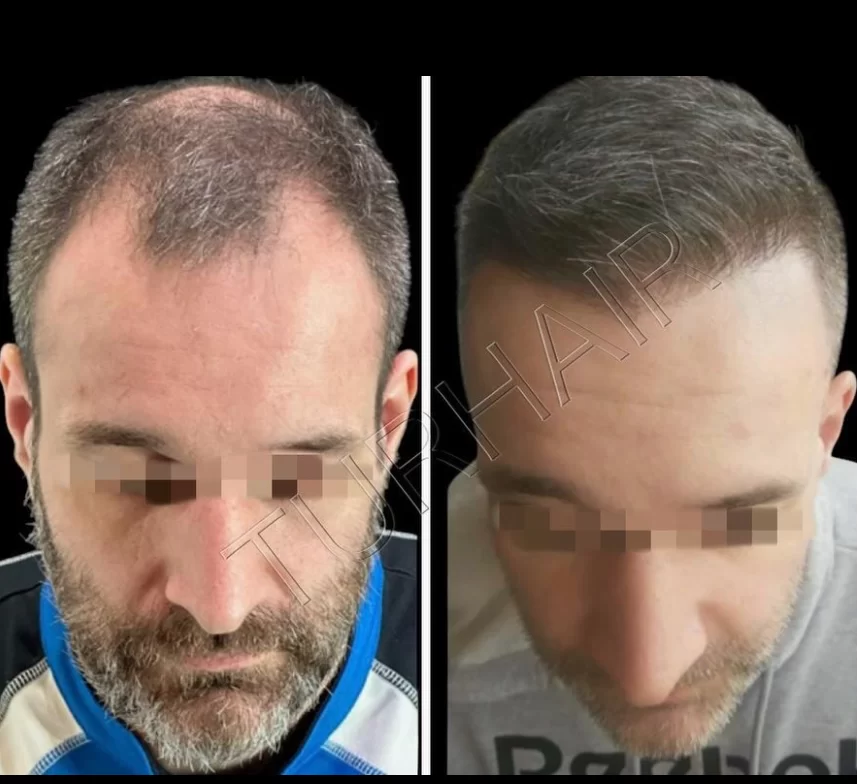
Before and after result of a 3,712 graft hair transplant at TurHair Istanbul.
Case Summary
This patient presented with significant frontal hairline recession and thinning across the frontal and mid-scalp areas. Following an individual assessment, a 3,712-graft hair transplant was planned to reconstruct the frontal hairline and improve overall visual density.
The treatment plan focused on creating a natural and age-appropriate hairline, improving frontal coverage and distributing the available grafts carefully while taking future donor preservation into consideration.
Hair Transplant Planning
The patient’s main concern was the loss of definition in the frontal hairline together with reduced density behind the hairline. Rather than simply lowering the hairline, the treatment plan was designed around facial proportions, existing hair distribution and the available donor supply.
The grafts were distributed with particular attention to the frontal zone, where hair direction, angle and density have an important influence on the appearance of a natural hair transplant result.
3,712 Graft Hair Transplant Result
The before-and-after photographs show a clear improvement in frontal coverage, hairline definition and overall visual density. The reconstructed hairline was planned to complement the patient’s facial proportions instead of creating an excessively low or aggressive design.
Hairline and Density Planning
In this case, the medical plan concentrated on rebuilding the frontal frame while balancing density across the area immediately behind the new hairline. The aim was to avoid an excessively low design and use the available grafts according to the patient’s facial proportions and existing hair distribution.
The treatment was performed at TurHair in Istanbul under the medical supervision of
Dr. Mehmet Sıraç Demir.
2,853 Graft Hair Transplant – First Session Case Study
A real hair transplant case showing the reconstruction of the frontal hairline and restoration of coverage in a patient with advanced frontal hair loss.
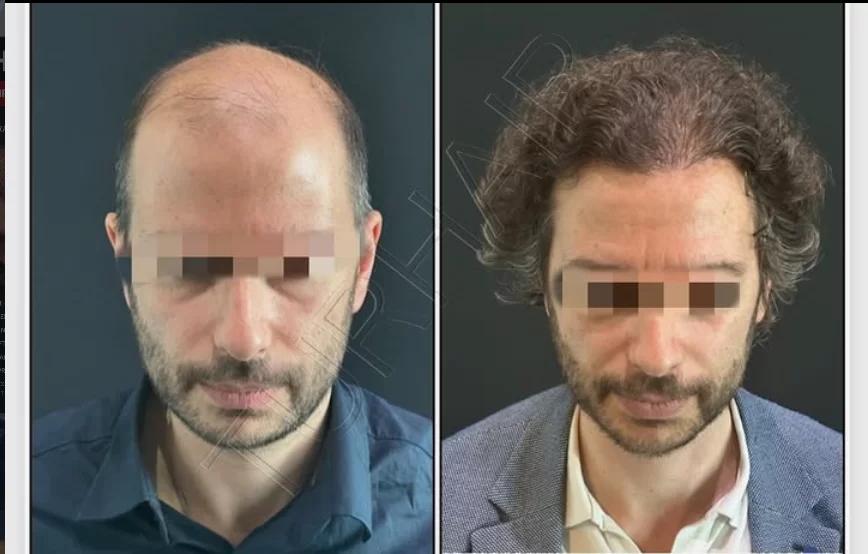
Before and after result of a 2,853 graft hair transplant – first session at TurHair Istanbul.
Case Summary
This patient presented with advanced frontal hair loss, including substantial recession of the original hairline and significant loss of coverage across the frontal region.
Following an individual assessment, 2,853 grafts were transplanted during the first session. The primary objective was to reconstruct the frontal hairline and establish natural-looking coverage in the areas where hair loss had become most visually prominent.
Because this was the patient’s first hair transplant session, the treatment plan also considered the available donor supply and the possibility of future treatment rather than attempting to use an unnecessarily high number of grafts in a single procedure.
Hair Transplant Planning
The extent of the patient’s hair loss required careful planning of the available grafts. The priority of the first session was the frontal region, as rebuilding this area can have a significant effect on the overall appearance of the hair and facial framing.
Rather than attempting to create an excessively low hairline, the design focused on establishing a natural position appropriate for the patient’s facial proportions and existing pattern of hair loss.
Graft distribution was planned to create definition at the frontal hairline while providing coverage behind it. Hair direction, implantation angle and the transition between the transplanted and existing areas were considered as part of the overall treatment plan.
First-Session Donor Preservation Strategy
Hair transplantation is not simply about transplanting the highest possible number of grafts. Because this was a first-session case involving a relatively large area of frontal hair loss, 2,853 grafts were used with priority given to rebuilding the frontal frame while considering the donor supply that may be required if the patient’s hair loss progresses in the future.
2,853 Graft Hair Transplant Result
The before-and-after photographs demonstrate a substantial visual change in the frontal region. The previously recessed frontal area has gained a defined hairline and significantly greater coverage, helping restore the frame of the patient’s face while maintaining a natural appearance.
Long-Term Donor Management
For patients with advanced hair loss, preserving donor resources can be as important as improving the immediate frontal appearance. The first-session strategy in this case therefore prioritized the areas with the greatest visual impact while maintaining a longer-term approach to donor management.
Patients considering treatment can learn more about the clinic’s approach to
hair transplant in Turkey
and doctor-led treatment planning.
3,860 Graft Hair Transplant – Patient Case Study
A real hair transplant case focusing on frontal hairline reconstruction, restoration of frontal coverage and improvement in overall visual density.
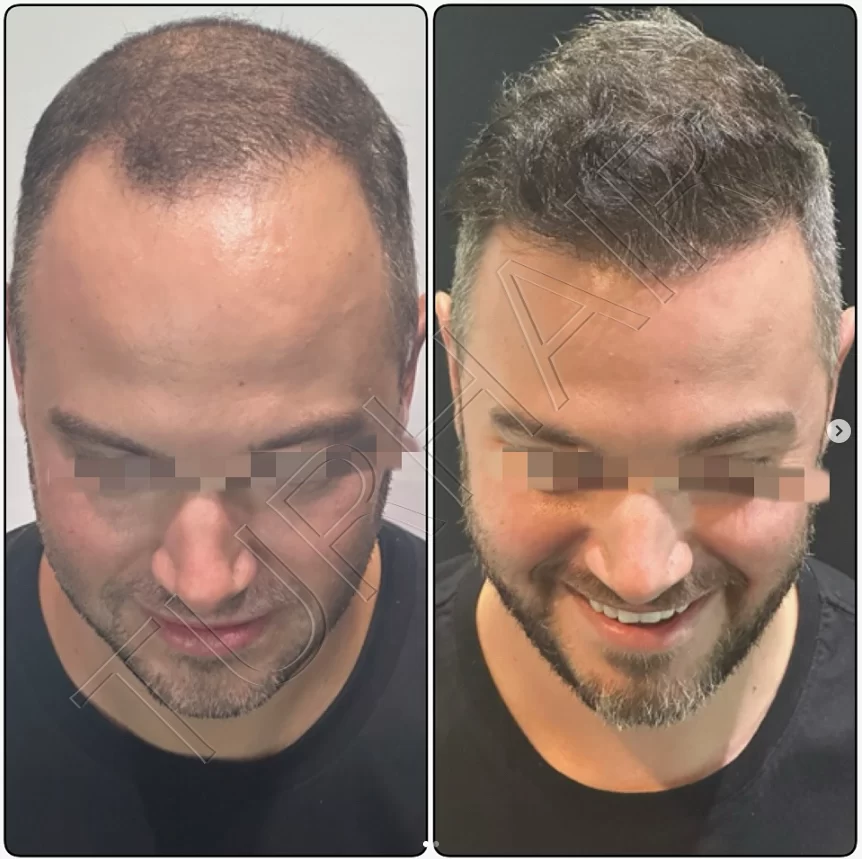
Before and after result of a 3,860 graft hair transplant at TurHair Istanbul.
Case Summary
This patient presented with significant frontal hairline recession and reduced coverage across the frontal scalp. The loss of the original frontal frame had created a visibly recessed appearance.
Following an individual assessment, a total of 3,860 grafts were transplanted. The treatment plan focused on rebuilding the frontal hairline and improving coverage throughout the frontal and front-mid scalp.
The objective was not simply to create a lower hairline, but to establish a natural-looking frontal frame while distributing the available grafts according to the patient’s hair loss pattern and donor capacity.
Hair Transplant Planning
The treatment plan was developed around the patient’s existing hair loss pattern, facial proportions and available donor supply. Particular attention was given to reconstructing the frontal frame because the position and shape of the hairline have a major influence on the overall appearance of a hair transplant.
Rather than designing an excessively low or perfectly straight hairline, the objective was to create a hairline that complemented the patient’s facial proportions while allowing sufficient graft distribution behind the frontal edge.
The 3,860 grafts were distributed with emphasis on the frontal region to improve both hairline definition and visual coverage. Hair direction, implantation angle and the transition into the existing hair were considered during treatment planning.
Frontal Graft Distribution
The number of grafts required for a hair transplant depends on the size of the recipient area, donor capacity, hair characteristics and the intended distribution of coverage. In this case, the 3,860 grafts were concentrated on reconstructing the frontal region and creating a transition from the new hairline into the hair behind it.
3,860 Graft Hair Transplant Result
The before-and-after photographs show a clear change in the patient’s frontal appearance. The reconstructed hairline provides a more defined frontal frame, while the transplanted area shows substantially improved visual coverage and density compared with the preoperative condition.
Frontal Reconstruction and Natural Direction
For this patient, treatment planning focused on the relationship between the new frontal hairline and the area immediately behind it. Direction, angle and graft distribution were considered together so that the reconstructed frontal zone would integrate naturally with the patient’s existing hair.
For additional examples, see our
hair transplant before and after results in Turkey.