All inclusive Hair Transplant Turkey✨
June 7, 2026
Best Hair Transplant Doctors in Turkey✨
June 8, 2026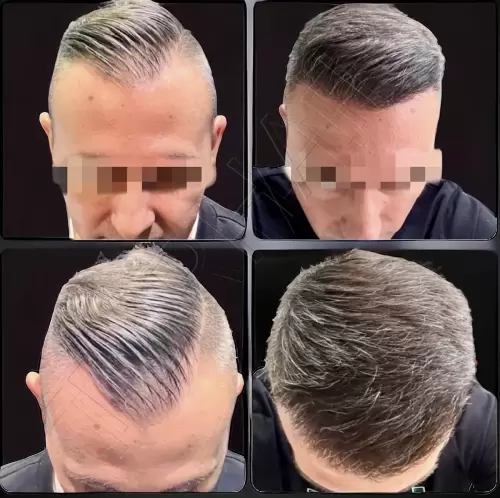

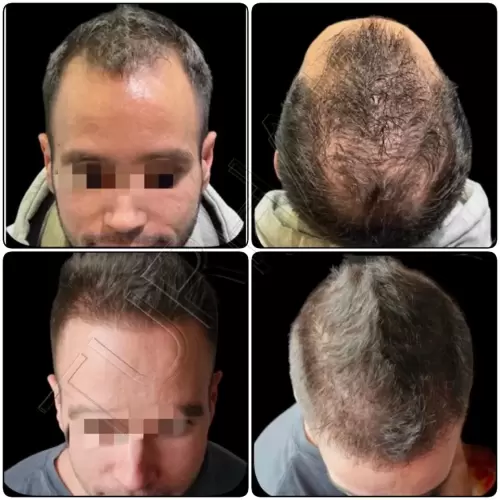
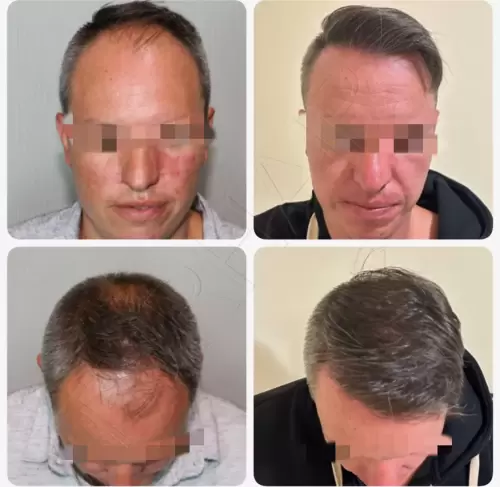
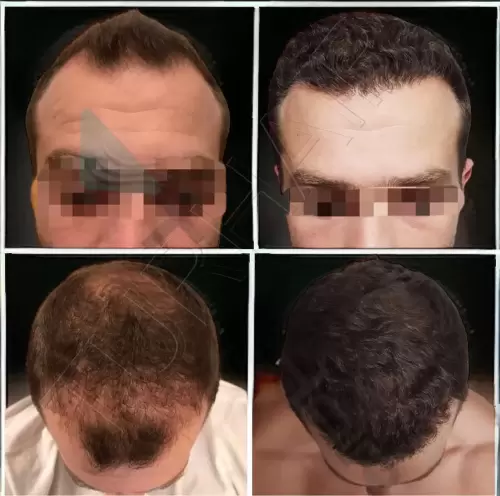


Hair Transplant Before and After Turkey
Hair transplant before and after Turkey results are one of the main reasons why international patients choose Turkey for hair restoration. Turkey, especially Istanbul, has become a leading destination for patients who want natural-looking hair transplant results, professional medical care, and affordable all-inclusive packages.
Before choosing a clinic, patients usually compare real before and after hair transplant photos, graft numbers, hairline design, donor area quality, and the doctor’s experience. A successful hair transplant is not only about planting many grafts; it is about creating a natural hairline, protecting the donor area, and planning long-term density.
Why Before and After Results Matter
Before and after photos help patients understand the real quality of a clinic. Good results show natural density, correct hair direction, soft hairline design, and balanced coverage. Bad results usually show an artificial hairline, low density, overharvested donor area, or unnatural growth direction.
When checking hair transplant before and after Turkey examples, patients should look for photos taken under normal light, from different angles, and at different stages such as 6 months, 9 months, and 12 months after surgery.
Hair Transplant Timeline in Turkey
- Before surgery: Hair analysis, donor area evaluation, hairline planning.
- First week: Scabs and redness are normal.
- 1 month: Shock loss may begin.
- 3 months: New hair starts slowly growing.
- 6 months: Visible improvement begins.
- 9–12 months: Final density becomes clearer.
- 12–18 months: Full mature result is usually seen.
Before Hair Transplant in Turkey
Before the operation, the clinic should evaluate the patient’s hair loss type, donor capacity, age, expectations, and future hair loss risk. A professional clinic does not promise unrealistic density. Instead, it creates a safe and natural plan according to the patient’s donor area.
Patients should avoid alcohol, smoking, blood thinners, and unnecessary supplements before surgery if advised by the medical team. Clear preparation helps improve healing and final results.
After Hair Transplant in Turkey
After the hair transplant, correct aftercare is very important. Patients must follow washing instructions, avoid scratching, protect the scalp from sun exposure, and avoid heavy sports for the recommended period. The final result depends on both the surgery quality and patient care after the procedure.
What Makes a Good Hair Transplant Result?
A good result should look natural, not “operated.” The hairline should match the patient’s face, age, and original hair structure. The implanted grafts should grow in the correct angle and direction. The donor area should also remain healthy and not look damaged.
Hair Transplant Techniques in Turkey
Popular techniques include Sapphire FUE hair transplant and DHI hair transplant. Sapphire FUE is often preferred for larger areas, while DHI may be suitable for more controlled implantation and specific cases. The best technique depends on the patient’s hair loss condition, donor quality, and desired result.
Why Choose Turkey for Hair Transplant?
Turkey offers experienced clinics, modern techniques, competitive prices, and all-inclusive medical tourism services. Many patients choose Turkey because they can receive airport transfers, hotel accommodation, consultation, operation, medication, and aftercare support in one package.
The TurHair & Dr. Demir Difference
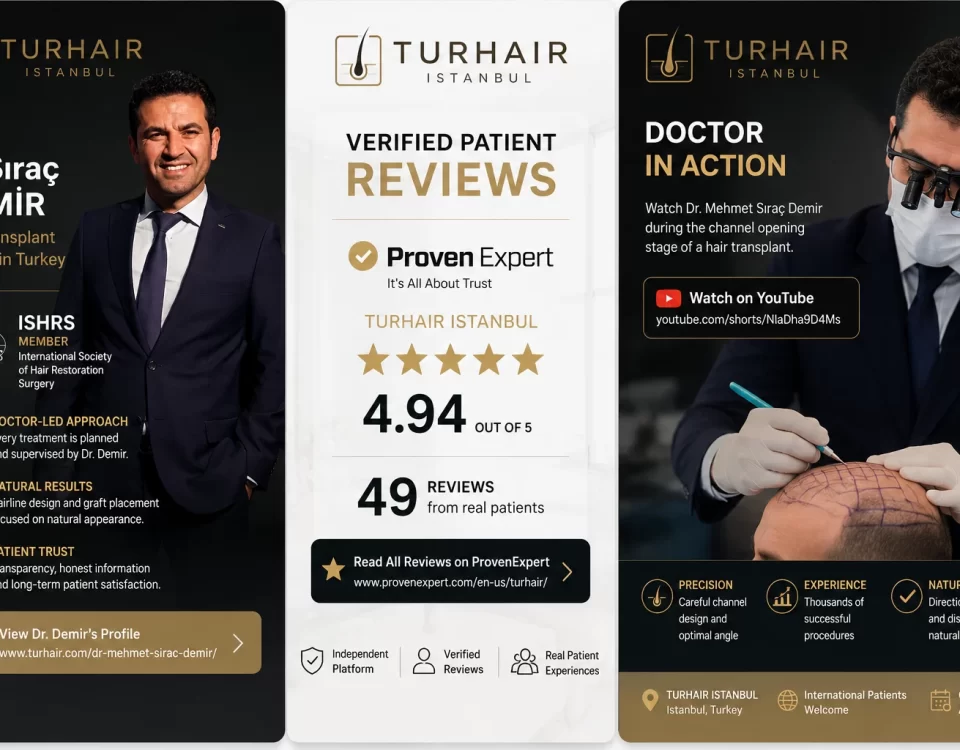
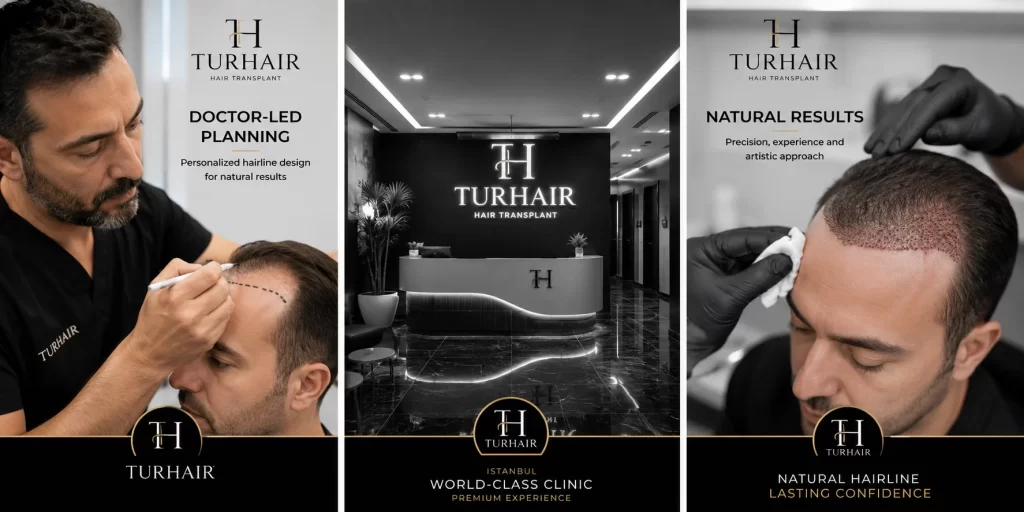
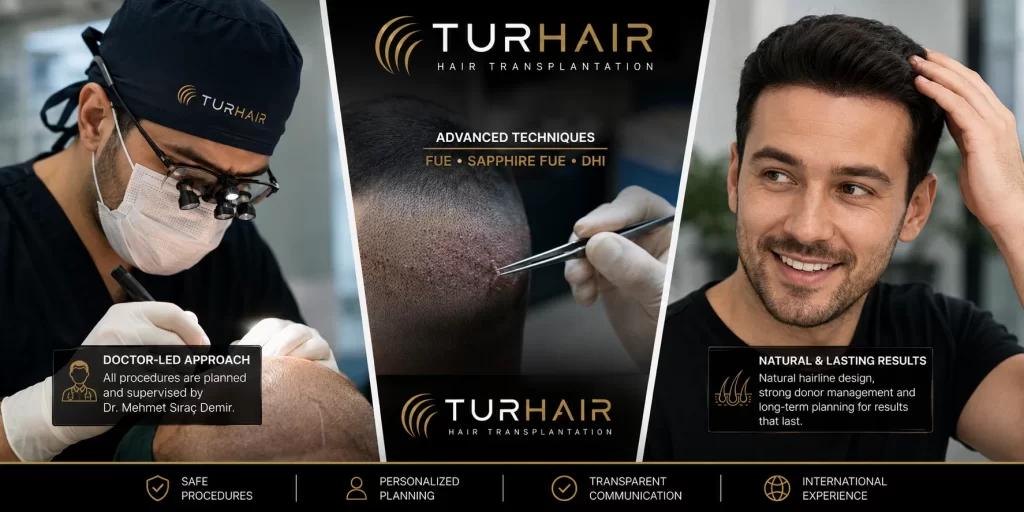
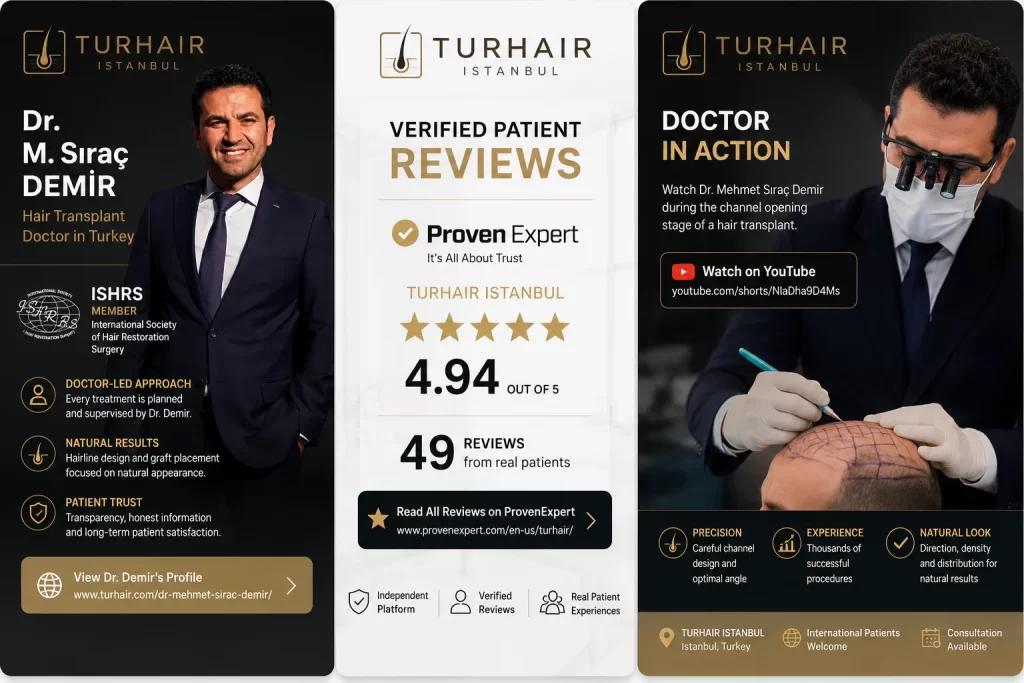
TurHair is dedicated to providing natural-looking hair transplant results, personalized treatment plans, and a premium patient experience for international patients visiting Turkey. The Dr. Demir difference is not simply about transplanting a high number of grafts—it is about creating a natural hairline, protecting the donor area, and delivering long-term aesthetic results that look completely natural.
Personalized Hairline Design
Every patient has unique facial features, forehead proportions, and hair loss patterns. At TurHair, hairlines are individually designed to match the patient’s age, facial structure, and future hair loss expectations, ensuring the most natural appearance possible.
Donor Area Preservation
A successful hair transplant is not only about the recipient area. Dr. Demir focuses on preserving the donor area by extracting grafts strategically and evenly, helping maintain a healthy donor reserve for the future.
Natural Angles & Direction
Hair follicles are implanted according to the natural angle, direction, and growth pattern of the patient’s existing hair. This meticulous approach helps achieve results that blend seamlessly with native hair.
| Feature | Standard Approach | TurHair & Dr. Demir |
|---|---|---|
| Hairline Design | Generic or straight hairline | Customized, age-appropriate, natural design |
| Donor Management | Maximum graft extraction focus | Balanced extraction with long-term planning |
| Final Appearance | Risk of artificial-looking results | Natural, aesthetic, and undetectable results |
| Patient Support | Limited post-operative communication | Continuous follow-up and recovery guidance |
Why Choose TurHair?
At TurHair, our goal is not simply to transplant hair—it is to create a natural, long-lasting result that enhances confidence and facial aesthetics. Under the guidance of Dr. Demir, every procedure is planned with precision, focusing on natural density, donor area protection, and long-term success. This commitment to quality is what makes TurHair stand out among hair transplant clinics in Turkey.
Conclusion
Hair transplant before and after Turkey results show why Turkey remains one of the most popular destinations for hair restoration. However, patients should choose clinics carefully. Natural results depend on doctor experience, graft planning, donor protection, correct technique, and professional aftercare.
Understanding Hair Transplant Before and After Results in Turkey
When patients search for hair transplant before and after Turkey, they are usually looking for proof that the procedure can truly transform their appearance. While photographs are important, understanding the science and process behind those results is equally essential. Every successful transformation starts with a detailed consultation, proper planning, and realistic expectations.
One of the biggest mistakes patients make is comparing themselves directly to another person’s before and after photos. Every patient has different hair characteristics, including hair thickness, donor density, scalp condition, hair color, curl pattern, and level of hair loss. These factors significantly influence the final outcome.
For example, a patient with thick dark hair may achieve the appearance of high density with fewer grafts compared to someone with fine blond hair. Therefore, experienced hair transplant specialists focus on creating the best possible result for each individual rather than promising identical outcomes.
The Importance of Donor Area Quality
The donor area is often called the foundation of a successful hair transplant. Hair follicles extracted from the donor zone, typically located at the back and sides of the head, are genetically resistant to hair loss. These follicles are relocated to thinning or bald areas while maintaining their resistance to future hair loss.
When reviewing hair transplant before and after results in Turkey, patients should always ask to see donor area photos. Many clinics only show the recipient area while hiding the donor zone. A high-quality procedure leaves the donor area looking natural even after thousands of grafts have been harvested.
Overharvesting can permanently damage the donor area and limit future treatment options. Ethical clinics prioritize long-term planning and donor preservation rather than extracting the maximum number of grafts in a single session.
Hairline Design: The Key to Natural Results
A natural hairline is one of the most important aspects of a successful hair transplant. The human eye naturally focuses on the hairline when looking at someone’s face. Even high-density results can appear unnatural if the hairline is poorly designed.
Experienced surgeons in Turkey carefully evaluate facial proportions, age, forehead size, and future hair loss patterns before designing the hairline. Instead of creating a straight artificial line, they build irregular micro-patterns that mimic natural hair growth.
Patients should remember that a mature and age-appropriate hairline often produces more attractive long-term results than an aggressively low hairline. Proper planning helps ensure that the transplant continues to look natural for many years.
Hair Transplant Growth Stages Explained
Many patients become worried when they do not see immediate results after surgery. Understanding the normal growth timeline helps reduce anxiety and improve satisfaction during recovery.
During the first two weeks, transplanted grafts settle into their new locations. Small scabs gradually disappear, and the scalp begins healing. Between weeks two and eight, many transplanted hairs enter a resting phase and shed. This temporary shedding process is known as shock loss and is completely normal.
New growth usually begins between the third and fourth month after surgery. At this stage, the hair may appear thin and uneven. Between six and nine months, density increases significantly. By twelve months, most patients can appreciate their final transformation, while crown areas may continue improving up to eighteen months.
How Many Grafts Are Usually Needed?
The number of grafts required depends on the severity of hair loss and the desired density. Small frontal corrections may require 1,500 to 2,000 grafts, while extensive hair restoration cases may need 4,000 to 6,000 grafts or more.
Rather than focusing only on graft numbers, patients should evaluate graft placement quality. Proper distribution creates the illusion of greater density while protecting the donor area for future needs.
Professional Turkish hair transplant clinics use advanced planning methods to maximize coverage while maintaining natural aesthetics.
Common Reasons for Poor Before and After Results
Not all hair transplant results are successful. Patients should understand the factors that can negatively impact outcomes. Inexperienced technicians, poor graft handling, incorrect implantation angles, excessive donor harvesting, and unrealistic planning can all contribute to disappointing results.
Some clinics advertise extremely low prices but compromise on quality and safety. Patients should carefully evaluate surgeon involvement, clinic reputation, patient reviews, and long-term results before making a decision.
The best clinics in Turkey prioritize medical quality over quantity. They focus on patient safety, natural aesthetics, and sustainable long-term outcomes.
Factors That Influence Final Density
Several factors affect the final appearance of a hair transplant. These include donor density, hair thickness, scalp elasticity, blood supply, healing response, age, and postoperative care. Patients with strong donor areas generally achieve better coverage and fuller-looking results.
Additionally, following postoperative instructions can significantly improve graft survival rates. Proper washing techniques, avoiding smoking, maintaining a healthy diet, and attending follow-up appointments all contribute to optimal growth.
Why International Patients Choose Turkey
Turkey continues to attract thousands of international patients every year because it combines medical expertise with affordability. Many clinics offer comprehensive packages that include airport transfers, hotel accommodation, interpreters, medications, and postoperative support.
The country’s extensive experience in hair transplantation has helped develop specialized teams, advanced techniques, and streamlined patient care systems. This combination allows patients to receive world-class treatment at a fraction of the cost found in many Western countries.
Setting Realistic Expectations
The most satisfied patients are usually those with realistic expectations. Hair transplantation can dramatically improve appearance, confidence, and self-esteem, but it cannot always restore the exact density a person had at age eighteen.
A successful result should appear natural, balanced, and appropriate for the patient’s age and facial structure. Patients who understand the limitations and possibilities of modern hair restoration techniques are more likely to appreciate their final results.
Final Thoughts on Hair Transplant Before and After Turkey
Evaluating hair transplant before and after Turkey results is an important step when researching clinics and surgeons. Patients should look beyond marketing photos and focus on consistency, donor area preservation, natural hairline design, and long-term outcomes.
Turkey remains one of the world’s leading destinations for hair transplantation because of its experienced medical professionals, advanced techniques, and excellent value. With proper planning, realistic expectations, and the right clinic, patients can achieve natural and lasting hair restoration results that significantly improve their appearance and confidence.
Celebrity Hair Transplant Before and After Results in Turkey
The popularity of hair transplant before and after Turkey searches has increased significantly because many celebrities, athletes, influencers, and business professionals have openly discussed their hair restoration journeys. Modern hair transplant techniques have advanced to the point where results can look completely natural, making it difficult for others to notice that a procedure was performed.
Today, successful hair transplantation is no longer about simply covering bald areas. Instead, it focuses on restoring confidence, improving facial harmony, and creating a youthful appearance while maintaining a natural look. Turkey has become a global leader in achieving these goals through advanced hair restoration methods.
The Psychological Impact of Hair Restoration
Hair loss affects more than appearance. For many men and women, it can significantly impact self-confidence, social interactions, professional opportunities, and overall quality of life. Studies have shown that people often associate healthy hair with youth, vitality, and attractiveness.
Before undergoing a hair transplant, many patients report feeling self-conscious in photographs, avoiding certain hairstyles, or wearing hats frequently to hide thinning areas. After successful treatment, patients often experience increased confidence and greater satisfaction with their appearance.
This emotional transformation is one reason why before and after photos remain such powerful examples of the benefits of modern hair transplantation.
Advanced Technology Used in Turkish Hair Clinics
Leading hair transplant clinics in Turkey invest heavily in modern medical technology to improve graft survival rates and overall patient outcomes. High-definition scalp analysis systems, digital hairline planning tools, sapphire blades, and specialized implantation devices help surgeons perform procedures with greater precision.
These technologies allow for smaller incisions, faster healing times, reduced trauma to the scalp, and more natural-looking results. As a result, patients can often return to normal daily activities sooner than with older hair transplant methods.
When comparing hair transplant before and after results in Turkey, technological advancements are often one of the hidden reasons behind superior outcomes.
Differences Between FUE and DHI Results
Two of the most popular hair transplant techniques in Turkey are Sapphire FUE and DHI Hair Transplant. While both methods can produce excellent results, there are important differences between them.
Sapphire FUE involves extracting grafts individually and creating recipient channels using sapphire blades before implantation. This technique is particularly effective for larger areas requiring extensive coverage.
DHI Hair Transplant uses a specialized implantation pen that allows grafts to be implanted directly into the scalp. This technique can offer precise control over angle, direction, and depth during implantation.
Both methods can achieve natural before and after transformations when performed by experienced professionals. The best choice depends on the patient’s hair loss pattern, donor area characteristics, and treatment goals.
Hair Transplant for Different Stages of Hair Loss
Not every patient experiences hair loss in the same way. Some individuals only have mild recession around the temples, while others experience advanced baldness involving the entire frontal area, mid-scalp, and crown.
For early-stage hair loss, smaller procedures may focus on strengthening the hairline and restoring temple density. Moderate cases often require comprehensive frontal and mid-scalp coverage. Advanced hair loss may require a strategic approach involving multiple sessions and careful donor area management.
Professional clinics in Turkey tailor treatment plans according to the patient’s specific needs rather than offering a one-size-fits-all solution.
How Hair Characteristics Affect Before and After Results
Hair texture plays a major role in the visual success of a hair transplant. Patients with thick, curly, or wavy hair often achieve the appearance of greater density because each hair strand provides more coverage.
Conversely, patients with fine or straight hair may require a larger number of grafts to achieve similar visual density. Hair color also matters. Dark hair against a light scalp typically creates greater contrast, making density appear lower than it actually is.
Experienced surgeons consider all these factors when designing a treatment plan and estimating expected results.
Long-Term Maintenance After Hair Transplant
A hair transplant provides permanent results because transplanted follicles retain their genetic resistance to hair loss. However, native hair surrounding the transplanted area may continue thinning over time.
Many patients choose to support their results with medical therapies such as Finasteride, Minoxidil, PRP treatments, or lifestyle improvements. These treatments can help preserve existing hair and maintain overall density.
Long-term planning is one of the reasons why reputable Turkish clinics conduct thorough consultations before recommending surgery.
Medical Tourism Advantages in Turkey
Hair transplantation has become one of the most successful medical tourism sectors in Turkey. International patients appreciate the convenience of comprehensive treatment packages that include transportation, accommodation, consultation, surgery, medications, and follow-up support.
Istanbul, in particular, has become known as the global capital of hair transplantation. The city offers easy international access, experienced medical teams, modern facilities, and a competitive healthcare market that encourages continuous improvement.
Patients from Europe, North America, the Middle East, and Asia regularly travel to Turkey seeking high-quality treatment and exceptional value.
Common Myths About Hair Transplantation
There are many misconceptions surrounding hair transplantation. One common myth is that transplanted hair looks unnatural. Modern techniques have largely eliminated this issue when procedures are performed correctly.
Another myth is that results appear immediately after surgery. In reality, the hair growth process requires patience, with significant improvements usually becoming visible after several months.
Some people also believe that every patient needs the maximum number of grafts possible. However, experienced surgeons understand that strategic placement often produces better long-term results than excessive graft extraction.
Why Research Is Essential Before Choosing a Clinic
Patients should carefully evaluate clinics before making a decision. Important factors include surgeon experience, patient reviews, before and after galleries, donor area preservation, medical standards, and postoperative support.
The best clinics focus on quality rather than volume. They provide realistic expectations, personalized treatment plans, and ongoing communication throughout the recovery process.
Taking time to research and compare options can significantly increase the likelihood of achieving a successful outcome.
Conclusion
Hair transplant before and after Turkey results continue to attract patients from around the world because they demonstrate what modern hair restoration can achieve. Through advanced techniques, experienced surgeons, personalized planning, and comprehensive patient care, Turkey has established itself as one of the leading destinations for hair transplantation.
Whether addressing mild hairline recession or advanced hair loss, the right clinic and treatment plan can provide natural, long-lasting results that improve both appearance and self-confidence. By focusing on quality, realistic expectations, and proper aftercare, patients can enjoy the full benefits of a successful hair transplant journey in Turkey.
Hair Transplant Before and After Turkey: Real Patient Experiences
One of the strongest indicators of a successful hair transplant before and after Turkey transformation is patient satisfaction. Every year, thousands of men and women travel to Turkey with the hope of restoring their hair and confidence. While each patient’s journey is unique, many share similar concerns before surgery and similar positive experiences after achieving their final results.
Most patients initially worry about pain, recovery time, scarring, and whether the transplanted hair will look natural. Modern hair transplant techniques used in Turkey have significantly reduced these concerns. Procedures are performed under local anesthesia, recovery is relatively quick, and advanced implantation methods help create highly natural results.
Many international patients report that friends, family members, and colleagues notice they look younger and healthier after a successful hair transplant without realizing that a procedure was performed. This natural appearance is often considered the ultimate measure of success.
How Age Affects Hair Transplant Results
Age is an important factor when planning a hair transplant. Younger patients may still experience ongoing hair loss, which requires careful long-term planning. Surgeons must design a hairline that will continue to look natural even if additional hair loss occurs in the future.
Patients in their thirties, forties, and fifties are often excellent candidates because their hair loss patterns are more predictable. However, age alone does not determine eligibility. Donor area quality, overall health, and realistic expectations are often more important factors.
Experienced Turkish hair transplant specialists evaluate each patient individually to create a customized treatment strategy that supports long-term success.
The Role of Graft Survival in Before and After Results
Not all transplanted grafts survive automatically. Graft survival depends on proper extraction, careful handling, precise implantation, and patient adherence to postoperative instructions.
Leading clinics in Turkey focus heavily on protecting graft viability throughout the procedure. Follicles are stored in specialized solutions, implantation times are minimized, and advanced techniques are used to reduce trauma.
High graft survival rates contribute directly to better density, improved coverage, and stronger overall before and after results. This is one reason why clinic quality matters more than simply comparing prices.
Hair Transplant for Women in Turkey
Although hair transplantation is often associated with men, an increasing number of women are choosing Turkey for hair restoration procedures. Female hair loss can occur due to genetics, hormonal changes, stress, medical conditions, or traction alopecia caused by certain hairstyles.
Women often require a different approach than male patients. The goal is usually to increase density in thinning areas while preserving existing hair. In many cases, unshaven or minimally shaved techniques can be used to make the procedure more discreet.
Before and after results for female patients can be particularly dramatic because even moderate increases in density often create a significantly fuller appearance.
Beard and Eyebrow Transplant Before and After Results
Turkey is not only known for scalp hair transplantation. Many clinics also perform beard transplants and eyebrow transplants for patients seeking facial hair restoration or aesthetic enhancement.
Beard transplantation can help men achieve fuller facial hair, fill patchy areas, or restore beard growth after injuries or scarring. Eyebrow transplantation is popular among patients who have experienced hair loss due to over-plucking, trauma, or medical conditions.
These specialized procedures require exceptional precision because facial hair growth direction must appear completely natural. When performed correctly, before and after transformations can be highly impressive.
What to Expect During the First Year
The first year following a hair transplant is a journey that requires patience. While patients are often excited to see immediate changes, hair growth follows a predictable biological process.
During the first month, healing takes priority. Temporary shedding occurs during the following weeks. New growth gradually appears between months three and four. By month six, most patients notice substantial improvement, and by month twelve, the majority of the final result becomes visible.
Patients who understand this timeline are less likely to become concerned during normal stages of recovery. Regular communication with the clinic can also provide reassurance throughout the process.
Why Natural Density Matters More Than Maximum Density
Many patients initially focus on achieving the highest possible density. However, experienced surgeons understand that natural density is often more important than maximum density.
A strategically designed hair transplant can create the illusion of fullness while using grafts efficiently. Proper placement, natural angulation, and balanced distribution often produce superior aesthetic outcomes compared to simply implanting the largest possible number of grafts.
The most successful before and after results typically appear natural under all lighting conditions and from every viewing angle.
Traveling to Turkey for Hair Transplant Surgery
Turkey’s well-developed medical tourism infrastructure makes the treatment process convenient for international visitors. Most patients arrive one day before surgery and stay several days afterward for follow-up care and the first hair wash.
Many clinics provide airport transfers, hotel accommodation, translators, and personalized support throughout the visit. This comprehensive approach allows patients to focus on recovery while the clinic handles logistical details.
The combination of affordability, quality, and convenience continues to make Turkey one of the world’s most attractive destinations for hair restoration.
Choosing the Right Hair Transplant Clinic
Not all clinics offer the same level of expertise. Patients should carefully review surgeon credentials, clinic reputation, before and after galleries, online reviews, and consultation quality before making a decision.
It is important to ask who performs the graft extraction, channel opening, and implantation stages. Clinics that prioritize medical standards and physician involvement generally provide more consistent results.
A trustworthy clinic will explain both the advantages and limitations of treatment rather than making unrealistic promises.
The Future of Hair Restoration in Turkey
The hair transplant industry in Turkey continues to evolve. Ongoing advancements in graft preservation, implantation technology, regenerative therapies, and patient care protocols are helping improve outcomes even further.
Emerging treatments such as stem-cell-based therapies, advanced PRP techniques, and improved donor management strategies may continue to enhance before and after results in the coming years.
Turkey’s commitment to innovation and specialized expertise positions it to remain a global leader in hair restoration for the foreseeable future.
Final Evaluation of Hair Transplant Before and After Turkey
When reviewing hair transplant before and after Turkey results, patients should focus on natural hairlines, donor area preservation, realistic density, and long-term consistency. These factors provide a much more accurate picture of quality than marketing images alone.
With experienced surgeons, modern techniques, personalized treatment planning, and comprehensive aftercare, Turkey continues to deliver life-changing hair restoration results for patients from around the world. A successful hair transplant is not simply about growing hair—it is about restoring confidence, improving appearance, and achieving results that look completely natural for years to come.
Understanding Norwood Scale and Hair Transplant Planning
One of the most important concepts in hair restoration is the Norwood Scale, which is used to classify male pattern baldness. When reviewing hair transplant before and after Turkey results, understanding the Norwood classification helps patients compare cases that are similar to their own.
Patients with Norwood 2 or 3 hair loss typically require fewer grafts because hair loss is limited to the temples and frontal hairline. Norwood 4 and 5 patients usually need more extensive restoration of the frontal area and mid-scalp. Advanced cases such as Norwood 6 and 7 often require strategic planning to maximize available donor resources while creating balanced coverage.
Experienced hair transplant surgeons in Turkey carefully evaluate Norwood classification before recommending a treatment plan. This assessment helps determine the ideal number of grafts, expected density, and long-term strategy.
Why Some Hair Transplants Look Better Than Others
Many patients wonder why two people receiving a similar number of grafts can achieve completely different results. The answer usually lies in surgical planning and execution.
Successful hair transplantation involves much more than moving follicles from one area to another. Hairline design, graft selection, implantation angle, density distribution, donor management, and healing protocols all influence the final outcome.
In leading Turkish clinics, every graft is treated as a valuable resource. Multi-hair grafts are often placed behind the hairline to create density, while single-hair grafts are used at the front to achieve a soft and natural appearance.
This attention to detail is often what separates average results from exceptional before and after transformations.
The Importance of Donor Area Conservation
Many patients focus entirely on the recipient area while ignoring the importance of donor area management. However, donor preservation is one of the most critical aspects of a successful hair transplant.
The donor area contains a limited number of permanent hair follicles. Once these follicles are extracted, they cannot be replaced. Overharvesting may create visible thinning, patchiness, or scarring in the donor zone.
Professional clinics in Turkey understand that hair loss is often progressive. They preserve donor resources whenever possible so that future procedures remain an option if additional hair loss occurs later in life.
This long-term approach helps maintain natural appearance both immediately after surgery and many years into the future.
Hair Transplant Recovery Tips
Recovery plays a major role in achieving optimal results. Patients who follow postoperative instructions carefully often experience better graft survival and smoother healing.
Important recovery recommendations include sleeping with the head elevated during the first few nights, avoiding direct sunlight, protecting the scalp from trauma, and following the clinic’s washing instructions precisely.
Smoking and excessive alcohol consumption can negatively affect blood circulation and potentially impact healing. Many clinics advise avoiding these habits during the early recovery period.
Proper hydration, balanced nutrition, and adequate sleep also support healthy recovery and hair growth.
Hair Density Expectations After Transplantation
One common misconception is that a hair transplant can instantly recreate the density of a teenager’s natural hair. In reality, donor limitations require strategic planning.
The goal of modern hair transplantation is not necessarily maximum density but rather natural visual density. Skilled surgeons create the appearance of fullness through careful graft placement and artistic design.
Patients with realistic expectations are often more satisfied because they understand the limitations of donor supply and appreciate the improvements achieved through professional treatment.
When comparing before and after photos, natural appearance should always be considered more important than extremely high density.
Hair Transplant Success Rates in Turkey
Turkey has developed one of the world’s largest and most experienced hair transplant industries. As a result, many clinics have refined their protocols through thousands of procedures performed each year.
Modern FUE and DHI techniques generally achieve high graft survival rates when performed by experienced teams. Advances in graft handling, storage solutions, and implantation methods have contributed significantly to improved outcomes.
Patients often choose Turkey because they can access experienced specialists who regularly perform large numbers of hair restoration procedures while maintaining competitive pricing.
Medical Evaluation Before Surgery
A comprehensive medical evaluation helps ensure patient safety and treatment success. Before surgery, clinics typically review medical history, medications, allergies, scalp condition, and donor area quality.
Blood tests may also be requested to evaluate general health. Patients with underlying medical conditions may require additional assessment before proceeding with treatment.
A thorough consultation allows the surgeon to identify potential challenges and create a personalized treatment strategy tailored to the patient’s specific needs.
International Reputation of Turkish Hair Transplant Clinics
Turkey’s reputation as a global hair transplant destination has been built over many years. Patients travel from Europe, North America, South America, the Middle East, Asia, and Africa seeking affordable and effective hair restoration solutions.
Many Turkish clinics employ multilingual patient coordinators who assist international visitors throughout the treatment process. This support helps reduce stress and ensures clear communication before, during, and after surgery.
The combination of medical expertise, hospitality, and accessibility has made Turkey one of the most recognized countries in the field of hair restoration.
Long-Term Satisfaction After Hair Transplantation
The true measure of success is not how the transplant looks one month after surgery but how it appears years later. Long-term satisfaction depends on natural hairline design, donor preservation, proper graft placement, and realistic expectations.
Patients who undergo treatment at reputable clinics often report increased confidence, improved self-image, and lasting satisfaction with their appearance.
Many individuals state that they wish they had addressed their hair loss earlier because of the positive impact it had on their personal and professional lives.
Conclusion: Why Patients Continue Choosing Turkey
The continued popularity of hair transplant before and after Turkey searches reflects the country’s strong reputation for delivering impressive hair restoration results. Modern techniques, experienced surgeons, advanced technology, and comprehensive patient care have positioned Turkey as a global leader in the industry.
Whether treating early-stage hairline recession or advanced baldness, successful hair transplantation requires careful planning, artistic vision, and medical expertise. Patients who research thoroughly, choose reputable clinics, and follow postoperative instructions can achieve natural, long-lasting results that enhance both appearance and confidence.
As technology continues to evolve and treatment protocols improve, Turkey is expected to remain one of the world’s most trusted destinations for hair transplantation and hair restoration procedures.
Hair Transplant Before and After Turkey: Frequently Asked Questions from International Patients
As Turkey continues to lead the global hair restoration industry, more patients than ever are researching hair transplant before and after Turkey results before making a decision. While before and after photos provide valuable insight into a clinic’s capabilities, many patients also have important questions regarding the procedure, recovery process, long-term outcomes, and overall experience.
Understanding these factors can help patients make informed decisions and set realistic expectations before undergoing hair transplant surgery in Turkey.
Will My Hair Transplant Look Natural?
This is one of the most common questions asked by prospective patients. Modern hair transplantation techniques have evolved significantly over the past decade. When performed by experienced professionals, transplanted hair can look completely natural.
Natural results depend on several factors including hairline design, graft placement, implantation angle, density planning, and donor management. Clinics that prioritize artistic planning and individualized treatment generally achieve the most impressive outcomes.
Most successful hair transplant results are undetectable to people who do not know the patient underwent surgery.
How Long Do Hair Transplant Results Last?
One of the major advantages of hair transplantation is permanence. The transplanted follicles are typically taken from genetically resistant areas located at the back and sides of the scalp. These follicles retain their resistance to hair loss after transplantation.
As a result, the transplanted hair generally continues growing for a lifetime. However, native hair that has not been transplanted may continue to thin over time. For this reason, some patients choose supportive treatments to preserve existing hair.
Proper planning by an experienced surgeon helps ensure that results remain natural and balanced even if future hair loss occurs.
Can Patients with Advanced Baldness Achieve Good Results?
Many patients with extensive hair loss believe they are no longer candidates for hair transplantation. While advanced baldness presents additional challenges, modern techniques often allow significant improvements even in severe cases.
The key is realistic planning. Patients with limited donor reserves may not achieve full original density, but they can often restore a natural hairline and meaningful coverage that dramatically improves appearance.
Experienced Turkish clinics specialize in maximizing available donor resources while maintaining natural aesthetics.
Why Is Turkey So Popular for Hair Transplants?
Turkey has earned its international reputation through a combination of experience, technology, affordability, and patient satisfaction. Thousands of procedures are performed every month, allowing Turkish specialists to refine their techniques and gain extensive expertise.
In addition to medical quality, many clinics provide comprehensive treatment packages that simplify the entire process for international visitors. These packages often include accommodation, airport transfers, consultation, surgery, medications, and follow-up care.
This combination of value and quality continues to attract patients from around the world.
What Happens During a Hair Transplant Consultation?
A thorough consultation is one of the most important stages of the hair transplant journey. During this process, the medical team evaluates hair loss patterns, donor density, scalp condition, medical history, and patient expectations.
Photographs may be taken for planning purposes, and the surgeon typically discusses graft estimates, expected coverage, hairline design, and recovery timelines.
A quality consultation should be educational rather than sales-focused. Patients should feel comfortable asking questions and discussing concerns before making a decision.
The Importance of Hairline Density Distribution
One reason some before and after results appear more impressive than others is strategic density distribution. Experienced surgeons understand that not every area requires the same concentration of grafts.
Higher density is often placed in the frontal region where visibility is greatest, while other areas may be treated more conservatively. This approach maximizes visual impact while preserving donor resources.
The result is a balanced appearance that looks natural from every angle.
Can Hair Transplants Be Combined with Other Treatments?
Yes. Many patients choose to combine hair transplantation with complementary treatments designed to support growth and preserve native hair. These treatments may include platelet-rich plasma therapy, medical hair loss treatments, nutritional optimization, and scalp care programs.
Although a hair transplant addresses areas of existing hair loss, supporting overall scalp health may improve long-term outcomes and patient satisfaction.
Many leading clinics in Turkey offer integrated treatment plans tailored to each patient’s needs.
Travel Experience for International Patients
Traveling to Turkey for hair restoration is typically straightforward. Major international airports provide convenient access to Istanbul and other medical tourism destinations.
Most patients arrive one day before surgery, undergo treatment the following day, and remain in Turkey for several days to attend follow-up appointments and receive washing instructions.
International patient coordinators often assist with logistics, language support, transportation, and accommodation arrangements.
Evaluating Before and After Galleries Correctly
Patients should analyze before and after photos carefully. The best galleries include multiple angles, consistent lighting conditions, close-up images of the hairline, and photographs showing the donor area.
Clinics that consistently produce natural-looking results across different hair types and levels of hair loss are generally more reliable than clinics displaying only a few exceptional cases.
Looking for long-term results at 12 months or beyond provides a more accurate understanding of final outcomes.
The Future of Hair Restoration
Hair restoration continues to evolve rapidly. Researchers and clinicians are exploring innovations in regenerative medicine, follicle preservation, stem-cell technologies, and advanced implantation systems.
While current FUE and DHI techniques already deliver excellent outcomes, future developments may further improve density, healing speed, and patient comfort.
Turkey’s strong position within the global hair transplant industry ensures that many of these innovations will become available to international patients as they emerge.
Final Thoughts on Hair Transplant Before and After Turkey
The growing popularity of hair transplant before and after Turkey searches reflects the increasing demand for natural, long-lasting hair restoration solutions. Patients are no longer simply looking for hair coverage—they are seeking confidence, improved appearance, and professional care.
By choosing a reputable clinic, following medical guidance, and maintaining realistic expectations, patients can achieve impressive transformations that enhance both their appearance and quality of life. Turkey remains one of the world’s leading destinations for hair transplantation thanks to its combination of expertise, advanced technology, patient-focused care, and outstanding value.