Best Time for a Hair Transplant: Summer vs Winter
July 23, 2026
Hair Transplant Turkey Cost Explained (2026)
July 25, 2026Is Turkey Safe for a Hair Transplant? Everything You Need to Know Before Booking
Turkey has become the world’s leading destination for hair transplantation, attracting more than a million medical tourists every year. Thousands of patients travel from Europe, North America, Australia, and the Middle East to restore their hair while saving thousands of dollars compared to prices in their home countries.
However, one question remains common among first-time visitors:
Is Turkey safe for a hair transplant?
The short answer is yes—provided you choose the right clinic. Turkey offers excellent medical facilities, experienced surgeons, and internationally recognized hospitals. However, like every popular medical tourism destination, there are also clinics that prioritize volume over quality.
This guide explains everything you should know before traveling to Turkey for a hair transplant.
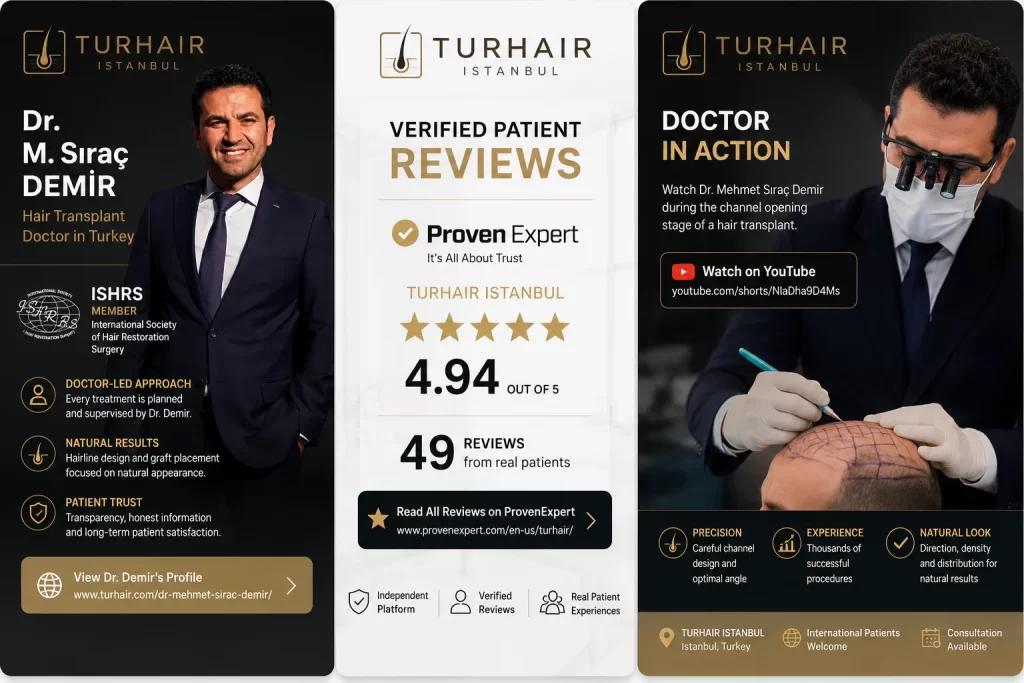
Doctor-Led Hair Transplantation
What Makes TurHair and Dr. Demir Different?
TurHair focuses on personalized, doctor-led hair transplantation rather than operating as a high-volume hair transplant factory. Every treatment plan is designed according to the patient’s facial structure, donor capacity, current hair loss and long-term needs.
Many hair transplant clinics advertise modern techniques such as FUE, Sapphire FUE or DHI. However, the name of the technique alone does not determine the quality of the final result. The experience of the medical team, the naturalness of the hairline, donor-area protection and the way the recipient channels are planned are far more important.
At TurHair, Dr. Demir personally evaluates the patient, designs the hairline and opens the recipient channels in the doctor-led VIP treatment plan. These stages directly influence the direction, angle, distribution and natural appearance of the transplanted hair.
| Comparison Point | TurHair & Dr. Demir | Typical High-Volume Clinic |
|---|---|---|
| Medical Evaluation | Individual evaluation based on donor quality, hair-loss pattern, age and future progression. | Frequently based on photographs and a standardized sales assessment. |
| Hairline Design | Designed according to facial proportions, age, hair direction and long-term donor capacity. | Similar or standardized hairline shapes may be used for many patients. |
| Recipient Channel Opening | In the doctor-led VIP plan, Dr. Demir personally opens the recipient channels. | This critical stage may be delegated depending on the clinic’s workflow. |
| Daily Patient Volume | Patient numbers are limited to support more personalized planning and supervision. | Multiple patients may be treated simultaneously in a production-line system. |
| Treatment Planning | Graft distribution is planned according to the frontal area, mid-scalp, crown and available donor supply. | The main sales focus may be the highest possible advertised graft number. |
| Donor-Area Protection | Extraction planning aims to protect the appearance and future capacity of the donor area. | Aggressive extraction may increase the risk of visible thinning or overharvesting. |
| Natural Hair Direction | Channel angles and directions are planned to follow the patient’s natural growth pattern. | Standardized implantation may create less natural angles in some cases. |
| Patient Communication | Clear information is provided about graft estimates, achievable density, recovery and limitations. | Communication may be primarily handled by sales representatives. |
| International Patient Support | Airport transfers, hotel accommodation, interpreter support, medication and post-operative guidance can be included according to the selected package. | Package details and follow-up services may vary considerably. |
| Long-Term Objective | Natural, age-appropriate and sustainable results with responsible donor management. | The immediate visual effect or maximum graft count may receive greater emphasis. |
Personalized Hairline
The objective is not to create the lowest possible hairline, but one that suits the patient’s face, age and future hair-loss pattern.
Doctor-Led Planning
Medical decisions concerning the hairline, recipient area and graft distribution are approached individually rather than through a standard template.
Limited Daily Patients
Limiting patient volume allows the medical team to dedicate more attention to planning, supervision and quality control.
Why Is Channel Opening So Important?
The recipient channels determine where each graft will be implanted. Their angle, direction, depth and distribution influence how natural and dense the result may appear.
Incorrect channel angles can cause the transplanted hair to grow in an unnatural direction. Channels placed too close together may affect blood circulation, while poor distribution can produce uneven density.
For this reason, the doctor-led VIP treatment at TurHair places particular emphasis on the involvement of Dr. Demir during hairline planning and recipient-channel creation.
Quality Is More Important Than an Advertised Graft Number
A higher graft number does not automatically mean a better result. The condition of the donor area, graft survival, natural direction, strategic distribution and long-term planning are more important than simply transplanting the largest possible number of grafts.
A More Personal Hair Transplant Experience
TurHair is designed for patients who want more than a low-cost, high-volume procedure. The focus is on individual planning, realistic expectations, natural hairline design and responsible management of the donor area.
International patients can also receive coordinated assistance with accommodation, airport transportation, interpretation, medication, the first hair wash and post-operative instructions, depending on the treatment package selected.
Every patient has a different donor capacity and degree of hair loss. Therefore, final recommendations and graft estimates are provided only after an individual assessment.
TurHair: Doctor-Led Planning, Natural Results
Choose a hair transplant plan based on medical evaluation, donor protection and long-term naturalness—not only on price or exaggerated graft promises.
Aşağıdaki E-E-A-T güven tablosunu makaleye ekleyebilirsin:
“`html
E-E-A-T & Patient Trust
Why Patients Trust Dr. Demir and TurHair
Google’s E-E-A-T principles focus on Experience, Expertise, Authoritativeness and Trustworthiness. These same principles are also useful when evaluating a hair transplant doctor or clinic.
| E-E-A-T Factor | What It Means | Dr. Demir & TurHair Approach | Patient Benefit |
|---|---|---|---|
| Experience | Practical involvement in real hair transplant planning and patient treatment. | Dr. Mehmet Sıraç Demir evaluates each case individually and is directly involved in critical stages of the doctor-led VIP treatment plan. | Treatment decisions are based on the patient’s donor area, hair-loss pattern and long-term needs. |
| Expertise | Medical knowledge, technical planning and understanding of natural hair growth. | Hairline design, graft distribution, donor protection and recipient-channel planning are approached as medical and aesthetic decisions. | Better control over hair direction, angle, density and the natural appearance of the final result. |
| Authoritativeness | A clear professional identity supported by consistent medical information and real patient outcomes. | TurHair presents doctor-led treatment information, real before-and-after cases, patient testimonials and educational hair transplant content. | Patients can evaluate the clinic through visible evidence rather than relying only on advertising claims. |
| Trustworthiness | Transparent communication, realistic promises and patient-first decision-making. | Patients receive clear information about graft estimates, package details, recovery, possible limitations and expected growth timelines. | Fewer surprises, more realistic expectations and greater confidence before surgery. |
| Doctor Involvement | Direct medical participation in the stages that influence the final result. | In the VIP doctor-led plan, Dr. Demir personally designs the hairline and opens the recipient channels. | Greater personalization of the hairline, angle, direction and graft distribution. |
| Realistic Planning | Recommendations based on medical suitability rather than exaggerated sales promises. | The proposed graft number depends on donor quality, recipient-area needs, hair characteristics and future hair-loss risk. | Helps protect the donor area and supports a more sustainable long-term result. |
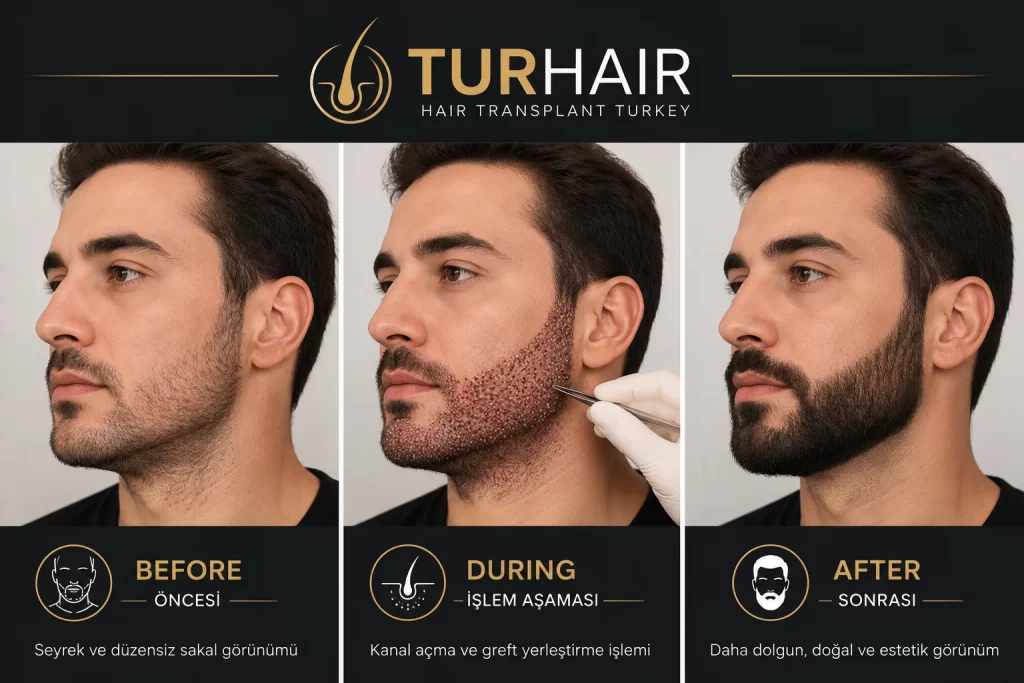
| Patient Evidence | Genuine examples that allow prospective patients to evaluate treatment quality. | TurHair shares real patient transformations, before-and-after photographs, video testimonials and patient reviews. | Patients can compare hairlines, density, donor healing and long-term growth results. |
| International Support | Reliable guidance before, during and after international medical travel. | Depending on the selected package, TurHair can coordinate airport transfers, hotel accommodation, interpretation, medication and the first hair wash. | A more organized and less stressful treatment journey in Istanbul. |
| Post-Operative Care | Continued support after the patient leaves the clinic. | Patients receive washing instructions, recovery guidance and remote follow-up support after returning home. | Questions can be addressed throughout healing and the hair-growth process. |
Real Experience
Individual patient assessment and direct involvement in critical treatment stages.
Medical Expertise
Planning focused on donor protection, natural direction and long-term hair restoration.
Transparent Care
Clear package details, realistic graft estimates and honest recovery information.
Long-Term Trust
Patient follow-up continues after the operation and after the patient returns home.
Trust Is Built Through Evidence, Not Promises
TurHair and Dr. Mehmet Sıraç Demir focus on personalized planning, doctor involvement, realistic expectations and visible patient results rather than exaggerated marketing claims.
Why Is Turkey the World’s Hair Transplant Capital?
Turkey performs one of the highest numbers of hair transplant procedures worldwide.
The reasons are simple:
- Affordable prices
- Highly experienced surgeons
- Modern hospitals
- Excellent tourism infrastructure
- Short waiting times
- Direct international flights
- Comprehensive all-inclusive packages
Unlike many countries where surgeons perform only a few procedures each month, experienced Turkish doctors often perform hundreds of surgeries annually, allowing them to develop exceptional expertise.
Is Turkey Safe for Medical Tourism?
Millions of international tourists visit Turkey every year for:
- Hair transplantation
- Dental treatment
- Plastic surgery
- Eye surgery
- Weight-loss procedures
Istanbul, in particular, has become one of Europe’s largest medical tourism hubs.
International airports, private hospitals, multilingual coordinators, luxury hotels, and professional transportation services make the experience straightforward for foreign patients.
For patients staying in organized medical tourism programs, safety concerns are generally minimal.
The Biggest Risk Isn’t Turkey—It’s Choosing the Wrong Clinic
Many people mistakenly believe the country itself is the biggest concern.
In reality, the greatest risk is selecting a clinic based solely on the lowest price.
Turkey has hundreds of hair transplant clinics.
Some maintain exceptional medical standards.
Others operate as high-volume businesses where doctors spend very little time with patients.
This difference has a much greater impact on your results than the destination itself.
What Makes a Hair Transplant Safe?
A successful procedure depends on several factors.
- Experienced surgeon
- Proper patient evaluation
- Sterile operating environment
- Correct graft extraction
- Natural hairline design
- Precise channel creation
- Professional post-operative care
These standards can be found at reputable clinics throughout Turkey.
Should You Worry About Infection?
Infection after modern FUE or DHI hair transplantation is extremely uncommon when surgery is performed in sterile conditions.
Professional clinics follow strict sterilization protocols including:
- Disposable surgical equipment
- Sterile operating rooms
- Single-use needles
- Medical-grade disinfectants
- Post-operative antibiotics when necessary
Following your aftercare instructions significantly reduces the already low risk of complications.
How Safe Is Istanbul?
Istanbul is one of Europe’s busiest international cities.
Medical tourists typically stay in reputable hotels located near their clinics and travel using organized VIP transfers.
Most patients spend:
- Airport → Hotel
- Hotel → Clinic
- Clinic → Hotel
- Hotel → Airport
This minimizes transportation stress and makes the overall experience very comfortable.
What About Language Barriers?
Professional clinics serving international patients employ multilingual coordinators.
Languages commonly available include:
- English
- German
- French
- Spanish
- Italian
- Russian
- Arabic
Your coordinator usually assists with:
- Airport pickup
- Hotel check-in
- Consultation
- Translation during surgery
- Medication instructions
- Follow-up communication
Is Flying Safe After a Hair Transplant?
Yes.
International patients fly home every day after their procedure.
Most clinics recommend:
- Remaining in Turkey for one or two nights
- Receiving the first hair wash before departure
- Avoiding pressure on the grafts during travel
- Keeping the head elevated while resting
These recommendations make flying home safe and comfortable.
How Can You Avoid Bad Clinics?
Choosing the right clinic is the most important decision.
Look for clinics that:
- Show real patient results
- Provide doctor consultations
- Explain graft estimates honestly
- Offer transparent pricing
- Have verified patient reviews
- Limit daily surgeries
- Provide long-term follow-up
Avoid clinics advertising unrealistic promises such as:
- Unlimited grafts
- Guaranteed density
- One-day miracle results
- Extremely cheap pricing
Questions You Should Ask Before Booking
- Who designs my hairline?
- Who opens the recipient channels?
- Who extracts the grafts?
- How many patients are treated daily?
- Will I meet the doctor before surgery?
- What happens if I need support after returning home?
Clear answers usually indicate a transparent and trustworthy clinic.
Doctor-Led Clinics vs High-Volume Clinics
| Doctor-Led Clinic | High-Volume Clinic |
|---|---|
| Personal consultation | Brief consultation |
| Customized planning | Standardized planning |
| Limited daily patients | Many surgeries per day |
| Greater surgeon involvement | Technician-heavy workflow |
| More personalized follow-up | Less individualized care |
Safety Tips Before Traveling
- Book directly with the clinic.
- Verify patient reviews.
- Ask for recent before-and-after photos.
- Discuss your medical history honestly.
- Follow all pre-operative instructions.
- Avoid smoking and excessive alcohol before surgery.
- Bring comfortable clothing that doesn’t touch your head.
Final Verdict: Is Turkey Safe for a Hair Transplant?
Yes.
Turkey remains one of the safest and most experienced destinations for hair transplantation when you choose a reputable, doctor-led clinic.
The country’s medical tourism infrastructure, experienced surgeons, affordable pricing, and comprehensive patient services have made it the global leader in hair restoration.
The key to a successful experience is not simply choosing Turkey—it is choosing a clinic that prioritizes patient safety, medical ethics, and natural long-term results over high patient volume.
Do your research, ask the right questions, and focus on quality rather than price alone. With the right clinic, Turkey can provide a safe, comfortable, and highly successful hair transplant experience.
What Happens During a Typical Hair Transplant Trip to Turkey?
Many first-time patients imagine that traveling abroad for surgery will be stressful or confusing. In reality, most reputable Turkish clinics have streamlined the entire process specifically for international visitors.
A standard hair transplant trip usually lasts between two and three days.
The journey typically follows this schedule:
- Arrival at Istanbul Airport
- VIP transfer to your hotel
- Pre-operative consultation
- Hair transplant procedure the following day
- First wash and post-operative check
- Airport transfer for your return flight
This organized process minimizes travel stress and allows patients to focus entirely on their treatment and recovery.
Why Experience Matters More Than Technology
Many advertisements emphasize advanced devices or the latest extraction tools. While modern equipment is important, technology alone does not guarantee excellent results.
The surgeon’s experience remains the single most important factor.
Two clinics may use identical FUE punches or implantation devices, yet produce dramatically different outcomes because of differences in planning, graft handling, and artistic hairline design.
Hair transplantation combines medical knowledge with aesthetic judgment. Even the best equipment cannot replace years of surgical experience.
Is the Low Price a Sign of Lower Quality?
One of the biggest misconceptions is that lower prices automatically mean lower quality.
Turkey offers lower treatment costs primarily because of:
- Lower operating expenses
- Favorable exchange rates
- High patient volume
- Competitive medical tourism market
However, prices that seem unrealistically low should raise questions.
If a clinic offers thousands of grafts for a fraction of the average market price, patients should carefully investigate what is included and who performs the surgery.
Choosing based solely on the cheapest offer can become far more expensive if corrective surgery is needed later.
Can You Trust Online Reviews?
Patient reviews are an important research tool, but they should never be your only source of information.
Instead of focusing only on five-star ratings, look for:
- Detailed patient experiences
- Long-term update photos
- Natural-looking results
- Video testimonials
- Independent review platforms
Real patients usually describe not only their results but also their consultation, surgery day, recovery process, and overall communication with the clinic.
Why Natural Hairline Design Is Essential
One of the easiest ways to identify an experienced clinic is by examining its hairline designs.
A natural hairline should:
- Match your facial proportions
- Respect your age
- Blend naturally with existing hair
- Avoid an artificial straight appearance
- Preserve donor hair for the future
Overly aggressive hairlines may initially appear attractive but can create unnatural results and unnecessarily consume valuable donor grafts.
The Importance of Donor Area Protection
Your donor area contains a limited number of permanent hair follicles.
Once these follicles are removed, they cannot regenerate.
This is why ethical surgeons carefully calculate:
- Safe extraction density
- Future hair loss progression
- Long-term planning
- Potential need for additional procedures
Protecting the donor area today increases your options if future hair restoration becomes necessary.
Recovery Is Usually Easier Than Patients Expect
Modern FUE hair transplantation involves minimal discomfort for most patients.
After surgery, you may experience:
- Mild swelling
- Temporary redness
- Small scabs
- Tightness in the donor area
These effects are temporary and generally improve within the first two weeks.
Most international patients return to office-based work within several days, depending on personal comfort and appearance preferences.
Common Myths About Hair Transplants in Turkey
Myth 1: Cheap Means Unsafe
Not necessarily. Lower operational costs allow many reputable clinics to offer excellent value while maintaining high medical standards.
Myth 2: Every Clinic Is the Same
False.
Quality varies significantly between clinics, making careful research essential.
Myth 3: More Grafts Always Produce Better Results
Not true.
Successful transplantation depends on strategic placement, graft survival, and natural density—not simply the number of grafts transplanted.
Myth 4: Hair Transplants Are Risk-Free
Like every surgical procedure, hair transplantation carries some risks. Choosing an experienced medical team and following post-operative instructions greatly reduces these risks.
What Should You Pack for Your Trip?
Preparing properly makes recovery easier.
Recommended items include:
- Button-up shirts
- Neck pillow for your flight
- Comfortable clothing
- Passport and travel insurance
- Prescribed medications
- Phone charger and power adapter
- Sunglasses (avoid hats immediately after surgery unless approved)
How to Identify a Professional Hair Transplant Clinic
Before making your decision, verify whether the clinic:
- Provides a detailed online consultation
- Evaluates your donor area carefully
- Discusses realistic expectations
- Explains every step of the procedure
- Offers transparent pricing without hidden fees
- Maintains communication after surgery
- Supplies written aftercare instructions
Professional clinics focus on educating patients rather than pressuring them into booking immediately.
Final Thoughts
Turkey has earned its reputation as the world’s leading destination for hair transplantation through decades of experience, modern medical facilities, and a strong focus on international patient care.
While the country offers outstanding opportunities for high-quality treatment, your experience ultimately depends on choosing a clinic that values patient safety, ethical medical practices, and long-term natural results.
Take the time to research your options, compare consultations, ask detailed questions, and prioritize quality over price alone. A well-planned hair transplant performed by an experienced medical team can provide natural, lasting results and make your journey to Turkey a safe and rewarding experience.
How Important Is the Initial Consultation?
The consultation is one of the most important stages of the entire hair transplant journey. A professional clinic should never recommend surgery without first evaluating your individual case.
During the consultation, the medical team should assess:
- Your age
- Family history of hair loss
- Current stage of baldness
- Donor hair quality
- Hair thickness
- Hair texture
- Scalp condition
- Future hair loss progression
A responsible surgeon may even advise postponing surgery if your hair loss is still progressing rapidly or if medical treatment should be tried first.
This honesty is often a sign that the clinic prioritizes long-term patient satisfaction rather than immediate sales.
Why Hair Transplants Require Long-Term Planning
A hair transplant is not simply about restoring today’s hairline.
It is also about planning for the next 10, 20, or even 30 years.
Since male pattern baldness often continues over time, experienced surgeons preserve donor hair whenever possible.
Instead of transplanting every available graft during the first procedure, they create a strategy that leaves enough donor reserves for future touch-ups if necessary.
This conservative approach usually produces the most natural lifelong results.
Understanding Realistic Expectations
One of the characteristics of reputable clinics is setting realistic expectations.
No ethical surgeon can promise:
- 100% hair density
- Instant results
- Guaranteed graft survival
- Unlimited graft numbers
- Perfect coverage regardless of donor quality
Instead, experienced doctors explain what is realistically achievable based on your donor capacity, hair characteristics, and pattern of hair loss.
Patients who understand realistic expectations are generally more satisfied with their final outcomes.
Does Hair Type Affect the Results?
Yes.
Hair characteristics play a significant role in the visual outcome.
Factors include:
- Hair thickness
- Hair color
- Curl pattern
- Contrast between hair and skin
- Donor density
For example, thick or curly hair often creates the appearance of greater density compared to very fine, straight hair.
This is why two patients receiving the same number of grafts may achieve noticeably different visual results.
Why Proper Aftercare Is Part of Safety
The surgery itself is only the beginning.
Proper aftercare significantly influences healing and graft survival.
Patients should carefully follow their clinic’s instructions regarding:
- Sleeping position
- Hair washing
- Exercise restrictions
- Sun exposure
- Smoking
- Alcohol consumption
- Medication use
Following these recommendations reduces complications and supports healthy graft growth.
Can International Patients Receive Follow-Up Care?
Modern communication has made long-distance follow-up much easier.
Most reputable clinics continue monitoring patients after they return home.
Follow-up usually includes:
- Photo evaluations
- Video consultations
- Recovery guidance
- Medication advice
- Progress assessments
This ongoing support helps answer questions throughout the recovery process and reassures patients during each stage of hair growth.
Warning Signs You Should Never Ignore
Before booking a procedure, be cautious if a clinic:
- Guarantees unrealistic graft numbers
- Refuses to identify the surgeon
- Offers unusually low prices without explanation
- Pressures you to pay immediately
- Avoids answering medical questions
- Cannot provide recent patient results
- Focuses only on discounts rather than medical care
Transparency is one of the strongest indicators of professionalism.
Safety Checklist Before Choosing a Clinic
| Question | Why It Matters |
|---|---|
| Who performs the consultation? | Confirms medical involvement from the beginning. |
| Who designs the hairline? | Determines the natural appearance of the final result. |
| Who opens the recipient channels? | Directly affects hair angle and density. |
| How many surgeries are performed daily? | Lower patient volume often allows more personalized care. |
| Is aftercare included? | Proper recovery is essential for successful outcomes. |
Turkey Continues to Set Global Standards
Turkey’s reputation in hair restoration did not develop overnight. It is the result of years of experience, continuous investment in medical tourism, and thousands of successful procedures performed every month.
International patients choose Turkey because they can receive:
- Experienced surgeons
- Modern facilities
- Competitive pricing
- Comprehensive travel packages
- Minimal waiting times
- High-quality patient care
When these advantages are combined with careful clinic selection, Turkey remains one of the safest and most reliable destinations for hair transplantation worldwide.
Conclusion
So, is Turkey safe for a hair transplant?
Absolutely—but your safety depends far more on which clinic you choose than on the country itself.
By selecting a reputable, doctor-led clinic with transparent communication, experienced medical professionals, realistic treatment planning, and comprehensive aftercare, you can significantly reduce risks and maximize your chances of achieving natural, long-lasting results.
A successful hair transplant is not simply a medical procedure—it is an investment in your appearance and confidence. Taking the time to research your options today can help ensure that your experience in Turkey is safe, comfortable, and rewarding for years to come.
Frequently Asked Questions About Hair Transplants in Turkey
Will I Feel Pain During the Procedure?
Most patients are surprised by how comfortable modern hair transplantation has become.
The only part that typically causes mild discomfort is the administration of local anesthesia. Once the scalp becomes numb, patients usually spend the rest of the procedure watching movies, listening to music, talking with the medical team, or even sleeping.
After surgery, mild soreness or tightness may occur for a few days, but severe pain is uncommon and can usually be managed with standard pain medication prescribed by the clinic.
How Long Does the Procedure Take?
The duration depends on the number of grafts being transplanted.
On average, patients can expect:
- 2,000 grafts: 4–5 hours
- 3,000 grafts: 5–7 hours
- 4,000–5,000 grafts: 7–9 hours
Most procedures include several short breaks for meals, hydration, and stretching.
How Soon Can I Return to Work?
This depends on your profession.
Patients with office-based jobs often return within three to seven days, while those with physically demanding occupations may benefit from taking one to two weeks off.
Visible redness and small scabs usually disappear within 10–14 days.
When Will I See Results?
Hair restoration is a gradual process.
Typical growth timeline:
- First month: Temporary shedding of transplanted hairs
- Months 3–4: Early regrowth begins
- Months 6–8: Noticeable improvement
- Months 9–12: Significant density develops
- Months 12–18: Final maturation of the results
Patience is essential, as natural hair growth takes time.
Can Women Safely Undergo Hair Transplants in Turkey?
Yes.
Hair transplantation is not limited to men. Women experiencing hair thinning, traction alopecia, eyebrow loss, or hairline recession may also be suitable candidates.
Female hair restoration often requires a different surgical approach because diffuse thinning patterns differ from male pattern baldness.
An experienced surgeon will evaluate whether surgery or medical treatment is the most appropriate option.
Medical Conditions You Should Discuss Before Surgery
Honesty during your medical consultation is extremely important.
Inform your surgeon if you have:
- Diabetes
- High blood pressure
- Heart disease
- Bleeding disorders
- Autoimmune diseases
- Scalp infections
- Previous scalp surgery
- Allergies to medications
Providing accurate medical information allows the clinic to prepare appropriately and reduce potential risks.
Why Good Communication Improves Patient Safety
Excellent communication is often overlooked when choosing a clinic.
Before booking your procedure, you should feel comfortable asking detailed questions.
A professional coordinator should respond clearly, promptly, and honestly without using high-pressure sales tactics.
Good communication before surgery usually reflects the level of support you will receive afterward.
Should You Choose a Clinic Based Only on Social Media?
Social media can be useful for discovering clinics, but it should never be your only source of information.
Beautiful before-and-after photos do not always tell the complete story.
Instead, consider:
- Independent reviews
- Long-term patient updates
- Video testimonials
- Medical credentials
- Consultation quality
- Transparency during communication
A balanced evaluation provides a much clearer picture of a clinic’s standards.
What Makes a Hair Transplant Look Natural?
Natural-looking results depend on much more than simply transplanting a large number of grafts.
Key elements include:
- Age-appropriate hairline placement
- Natural irregularity along the frontal hairline
- Correct hair direction
- Proper graft distribution
- Balanced density
- Preservation of donor hair
The goal is not to create the appearance of surgery but to restore hair in a way that nobody notices it has been transplanted.
Is Corrective Hair Transplant Surgery More Difficult?
Yes.
Repairing a poor-quality hair transplant is generally much more complex than performing an initial procedure.
Corrective surgery may involve:
- Removing poorly placed grafts
- Camouflaging scars
- Redesigning the hairline
- Managing limited donor reserves
- Improving density without overharvesting
This is another reason why choosing the right clinic the first time is so important.
Choosing Safety Over Marketing
The hair transplant industry has become increasingly competitive, and patients are often exposed to aggressive advertising, heavy discounts, and promotional offers.
While attractive pricing may catch your attention, medical decisions should never be based solely on marketing.
Instead, prioritize:
- Medical expertise
- Ethical patient care
- Transparent communication
- Realistic expectations
- Long-term support
The safest clinics focus on education rather than persuasion.
Final Recommendation
Turkey has rightfully earned its position as one of the world’s leading destinations for hair transplantation. Every year, patients from across the globe travel to Istanbul and other major cities seeking high-quality treatment at competitive prices.
Safety, however, should always come before cost.
Take time to compare clinics, ask detailed questions, verify credentials, and ensure that your chosen medical team places patient health above sales targets.
When you choose an experienced, doctor-led clinic with a strong reputation for ethical practice and personalized care, a hair transplant in Turkey can be both a safe medical procedure and a life-changing investment in your confidence.
Ultimately, informed decisions lead to better experiences—and better results.
How to Compare Hair Transplant Clinics in Turkey
With hundreds of clinics operating across Turkey, narrowing down your options can feel overwhelming. While many providers advertise similar packages, the quality of care can vary significantly.
Instead of comparing clinics only by price, evaluate them using the following criteria:
- Doctor’s experience
- Years of operation
- Medical licenses and certifications
- Number of procedures performed annually
- Before-and-after gallery quality
- Independent patient reviews
- Availability of long-term follow-up
- Transparency during consultation
Choosing a clinic based on objective medical standards rather than marketing claims greatly increases the likelihood of a successful outcome.
The Importance of Personalized Treatment Plans
No two patients experience hair loss in exactly the same way.
Your treatment plan should be based on your individual characteristics rather than a standard package offered to everyone.
A personalized plan considers:
- Current hair density
- Future hair loss risk
- Facial proportions
- Hair characteristics
- Donor capacity
- Personal expectations
This customized approach produces results that look natural not only immediately after surgery but also years later as your native hair continues to change.
Understanding the Role of the Surgeon
Many patients assume every member of the surgical team performs the same responsibilities.
In reality, an experienced hair transplant surgeon is responsible for several critical decisions that directly influence your final appearance.
These include:
- Medical evaluation
- Hairline design
- Recipient area planning
- Determining graft distribution
- Managing donor preservation
- Monitoring patient safety throughout surgery
These medical decisions require training, experience, and aesthetic judgment that cannot be replaced by equipment alone.
Why Conservative Planning Often Produces Better Results
Many first-time patients request the lowest possible hairline and maximum density.
While understandable, this approach is not always appropriate.
Experienced surgeons often recommend a more conservative design because it:
- Looks more natural
- Matches future aging
- Protects donor reserves
- Allows future procedures if necessary
- Maintains facial harmony
Good planning focuses on how your hair will look ten years from now—not just immediately after surgery.
Travel Tips for International Patients
Traveling to Turkey for medical treatment is generally straightforward, but a little preparation can make the experience even smoother.
Helpful recommendations include:
- Book direct flights whenever possible.
- Arrive one day before surgery.
- Stay well hydrated before traveling.
- Bring comfortable clothing with front buttons or zippers.
- Carry essential medications in your hand luggage.
- Keep digital copies of your travel documents.
- Save your clinic coordinator’s phone number before departure.
Planning ahead reduces unnecessary stress and allows you to focus on your recovery.
How Clinics Support International Patients
Leading Turkish clinics understand that international patients may be visiting Turkey for the first time.
Many therefore provide complete medical tourism packages that include:
- Airport pickup
- Hotel accommodation
- Interpreter services
- VIP transportation
- Medical consultation
- Hair transplant procedure
- First hair wash
- Medication and aftercare products
These services simplify the process and allow patients to receive treatment without worrying about logistics.
What If You Need a Second Hair Transplant?
Not every patient requires only one procedure.
The need for a second session depends on several factors, including:
- Extent of hair loss
- Future progression of baldness
- Available donor supply
- Desired density
- Individual healing characteristics
Responsible surgeons discuss this possibility during your initial consultation and develop a long-term strategy if additional treatment may eventually be beneficial.
How to Recognize Ethical Medical Practice
Ethical clinics prioritize patient welfare over sales.
Characteristics of an ethical clinic include:
- Honest assessment of candidacy
- No pressure to book immediately
- Clear explanation of risks and benefits
- Realistic graft estimates
- Transparent pricing
- Respect for patient questions
- Long-term communication after surgery
If a clinic appears more interested in closing a sale than discussing your medical needs, it may be wise to continue your search.
Hair Transplant Safety Checklist
| Checklist Item | Completed? |
|---|---|
| Medical consultation completed | ✔ |
| Surgeon’s credentials verified | ✔ |
| Recent patient results reviewed | ✔ |
| Procedure explained clearly | ✔ |
| Aftercare instructions provided | ✔ |
| Questions answered satisfactorily | ✔ |
Why Turkey Continues to Lead the Industry
Turkey remains the preferred destination for hair restoration because it combines medical expertise, advanced facilities, experienced professionals, and outstanding value.
Patients who carefully research their options frequently discover that they can receive world-class treatment while enjoying a comfortable travel experience in one of the world’s most visited countries.
The country’s success is built not only on affordability but also on decades of accumulated surgical experience and continuous innovation in hair restoration techniques.
Final Conclusion
If you are wondering whether Turkey is safe for a hair transplant, the evidence strongly suggests that it is—provided you choose a reputable, experienced, and ethical clinic.
The country has become a global leader in hair restoration by combining highly skilled surgeons, modern medical infrastructure, competitive pricing, and exceptional hospitality for international patients.
Ultimately, your safety and results depend on informed decision-making. Spend time researching clinics, asking detailed questions, verifying credentials, and selecting a medical team that values quality over quantity.
A successful hair transplant begins long before surgery—with careful planning, realistic expectations, and the confidence that you have chosen the right professionals to guide you throughout your hair restoration journey.
Why Research Before Booking Is So Important
Planning a hair transplant should never be an impulsive decision. Although Turkey offers many excellent clinics, spending extra time researching your options can make a significant difference in your final results.
Start your research several weeks—or even months—before your planned travel date.
Compare multiple clinics, request consultations, and don’t hesitate to ask detailed questions.
A reputable clinic will appreciate informed patients and will gladly explain every aspect of the procedure.
Questions You Should Ask During Your Consultation
Before committing to surgery, prepare a list of important questions.
Examples include:
- Am I a suitable candidate for surgery?
- How many grafts do you recommend?
- Why do you recommend that number?
- Will I likely need another procedure in the future?
- What type of anesthesia will be used?
- How long will recovery take?
- What medications should I stop before surgery?
- How will my progress be monitored afterward?
Clear, confident answers usually indicate an experienced medical team.
Understanding the Recovery Timeline
Knowing what to expect after surgery helps reduce unnecessary anxiety.
| Time After Surgery | Expected Changes |
|---|---|
| Day 1–3 | Mild swelling and redness |
| Week 1 | Scabs begin to heal |
| Weeks 2–4 | Temporary shedding phase |
| Months 3–4 | Early hair growth appears |
| Months 6–8 | Visible improvement in density |
| Months 12–18 | Final mature results |
Every patient heals differently, so slight variations in the timeline are completely normal.
Why Patience Is Essential
One of the biggest challenges after a hair transplant is waiting for the final result.
Many patients become concerned during the shedding phase, believing the procedure has failed.
In reality, temporary shedding is a normal part of the hair growth cycle.
The transplanted follicles remain healthy beneath the skin and gradually begin producing new hair over the following months.
Understanding this process helps patients remain confident during recovery.
Healthy Habits That Support Better Results
Your lifestyle can influence both healing and hair quality.
Many surgeons recommend:
- Eating a balanced diet rich in protein
- Staying well hydrated
- Getting adequate sleep
- Avoiding smoking whenever possible
- Limiting alcohol during early recovery
- Managing stress levels
- Following all post-operative instructions carefully
Healthy daily habits support your body’s natural healing process and may contribute to stronger hair growth.
Can Hair Loss Continue After a Transplant?
Yes.
A hair transplant restores hair to thinning or bald areas, but it does not stop the underlying process of androgenetic alopecia.
Your existing non-transplanted hair may continue to thin over time.
For this reason, many patients discuss medical therapies with their doctor to help maintain their native hair after surgery.
Long-term planning is one of the reasons experienced surgeons take a conservative approach when designing the hairline and allocating grafts.
How to Prepare Before Traveling to Turkey
A few simple preparations can make your trip more comfortable.
- Confirm your passport is valid.
- Review your flight itinerary carefully.
- Follow all pre-operative instructions from your clinic.
- Avoid blood-thinning medications if advised by your doctor.
- Limit alcohol before surgery.
- Get adequate rest before your flight.
- Keep your clinic’s emergency contact information available.
Being organized helps ensure a smooth and stress-free experience.
What Makes International Patients Return to Turkey?
Many patients who undergo successful treatment recommend Turkey to friends and family.
Common reasons include:
- Professional medical care
- Friendly hospitality
- Efficient organization
- Comfortable accommodations
- Transparent communication
- Excellent value for money
Positive patient experiences have helped establish Turkey as one of the most trusted destinations for hair restoration worldwide.
Key Takeaways
- ✔ Turkey is one of the world’s leading destinations for hair transplantation.
- ✔ Safety depends primarily on choosing a reputable clinic.
- ✔ Experienced surgeons and proper planning are more important than low prices.
- ✔ Realistic expectations lead to greater patient satisfaction.
- ✔ Comprehensive aftercare is essential for successful healing.
- ✔ Research, communication, and transparency should guide your decision.
Final Words
Turkey continues to attract patients from around the world because it offers an exceptional combination of surgical expertise, modern healthcare facilities, and outstanding value.
While the country itself has become a global center for hair transplantation, your personal experience will depend on selecting a clinic that emphasizes patient safety, ethical medical standards, individualized treatment planning, and long-term follow-up.
By investing time in careful research and choosing a qualified medical team, you can approach your hair transplant journey with confidence and significantly increase your chances of achieving natural, long-lasting results.
A successful hair transplant is not simply about restoring hair—it is about restoring confidence through safe, responsible, and patient-centered medical care.
Frequently Asked Questions
1. Is Turkey safe for a hair transplant?
Yes. Turkey is considered one of the world’s leading destinations for hair transplantation when you choose a licensed clinic, an experienced surgeon, and follow all medical instructions.
2. Why is Turkey so popular for hair transplants?
Turkey offers experienced surgeons, modern medical facilities, competitive prices, and comprehensive treatment packages for international patients.
3. How do I choose a safe hair transplant clinic in Turkey?
Look for a licensed clinic, doctor-led procedures, genuine patient reviews, before-and-after results, transparent pricing, and clear communication.
4. Is Istanbul the best city for a hair transplant?
Istanbul is the most popular destination because it has hundreds of specialized clinics, experienced surgeons, and excellent medical tourism services.
5. Are Turkish hair transplant clinics regulated?
Yes. Licensed clinics operate under Turkish healthcare regulations. Patients should always verify the clinic’s credentials before booking.
6. Is infection common after a hair transplant in Turkey?
No. Infection is uncommon when surgery is performed in a sterile environment and proper aftercare instructions are followed.
7. Can I fly home after a hair transplant?
Yes. Most patients can safely fly home one or two days after surgery, depending on their doctor’s recommendations.
8. How many days should I stay in Turkey?
Most patients stay for three to four days to complete the consultation, surgery, first hair wash, and post-operative check-up.
9. What are the risks of getting a hair transplant in Turkey?
The biggest risks involve choosing inexperienced clinics, technician-only procedures, poor hygiene standards, or selecting the cheapest option without proper research.
10. Is a doctor-led hair transplant safer?
Many patients prefer doctor-led procedures because the surgeon personally plans the treatment, designs the hairline, and performs the critical surgical stages.
11. Will language be a problem in Turkey?
Most clinics that treat international patients provide English-speaking coordinators, translators, and multilingual support.
12. Is a hair transplant in Turkey permanent?
Transplanted hair follicles are generally permanent. However, existing natural hair may continue to thin over time without proper treatment.
13. How much does a safe hair transplant in Turkey cost?
Costs vary depending on the clinic, surgeon, technique, and package, but Turkey generally offers excellent value compared to many Western countries.
14. Can women safely have a hair transplant in Turkey?
Yes. Female hair transplantation is commonly performed in Turkey after a detailed consultation to determine the most suitable treatment plan.
15. What should I check before booking a clinic?
Verify the doctor’s qualifications, clinic license, patient reviews, real before-and-after photos, package details, and aftercare services.
16. Is Turkey safer than other countries for hair transplants?
Turkey has earned a strong international reputation thanks to experienced surgeons and high patient volumes. Safety depends more on the clinic you choose than the country itself.
17. What is included in most Turkish hair transplant packages?
Many clinics offer airport transfers, hotel accommodation, medications, interpreter services, consultation, surgery, and the first hair wash as part of an all-inclusive package.
18. Can I combine my hair transplant with a vacation in Turkey?
Yes. Many patients enjoy a short holiday before or after their treatment, but strenuous activities and excessive sun exposure should be avoided during recovery.
19. How can I avoid hair transplant scams in Turkey?
Choose a licensed clinic, verify the surgeon’s credentials, avoid unrealistic discounts, request genuine patient results, and confirm who performs the surgery.
20. Why do international patients trust doctor-led clinics in Turkey?
Doctor-led clinics provide personalized treatment planning, natural hairline design, direct surgical involvement, and closer patient follow-up, giving many patients greater confidence in their results.
| Recommended Article | Internal Link |
|---|---|
| Hair Transplant Turkey Cost 2026 | Latest prices, packages and doctor-led procedures. |
| How Much Does a Hair Transplant Cost in Turkey? | Complete cost guide for international patients. |
| Hair Transplant Turkey Price Per Graft | Understand graft pricing and total treatment costs. |
| 3000 Grafts Hair Transplant Cost in Turkey | See if 3000 grafts are enough for your hair loss. |
| Hair Transplant Cost in Europe vs Turkey | Compare treatment costs across Europe. |
| Cheap vs Expensive Hair Transplant | Learn what really affects quality and safety. |
| DHI Hair Transplant Cost in Turkey | Everything you need to know about DHI pricing. |
| Is Hair Transplant Worth It? | Benefits, expectations and long-term results. |
| Hair Transplant in London vs Turkey | Compare quality, prices and doctor experience. |
| Hair Transplant in New York vs Turkey | Find out why thousands choose Turkey every year. |