Hair Transplant Turkey vs UK – Which Is Better?
July 22, 2026
Best Age for Hair Transplant
July 23, 2026The Hidden Risks of Technician-Only Hair Transplant Clinics
Choosing the right hair transplant clinic is one of the most important decisions you will ever make. While many patients compare prices, hotel packages, or the number of grafts offered, far fewer ask one critical question:
Who will actually perform my hair transplant surgery?
As hair transplant Turkey continues to attract thousands of international patients every month, the number of technician-only hair transplant clinics has increased significantly. Although many advertise low prices and fast availability, limited doctor involvement may affect both the safety of the procedure and the quality of the final result.
What Is a Technician-Only Hair Transplant Clinic?
A technician-only clinic is a facility where most—or sometimes all—of the surgical procedure is performed by technicians rather than an experienced hair transplant surgeon.
| Typical Process |
|---|
| Consultation performed by a sales representative |
| Doctor spends only a few minutes with the patient |
| Hairline designed by technicians |
| Recipient channels created by assistants |
| Graft implantation completed entirely by technicians |
| One doctor supervises multiple surgeries simultaneously |
Experienced technicians are valuable members of every surgical team, but they should work alongside the surgeon—not replace the surgeon during the most critical stages of the procedure.
Aşağıdaki bölüm, önceki tabloların tekrarına düşmeden **TurHair ve Dr. Demir’in farkını daha premium ve güven odaklı biçimde anlatır**. WordPress HTML alanına doğrudan yapıştırabilirsin.
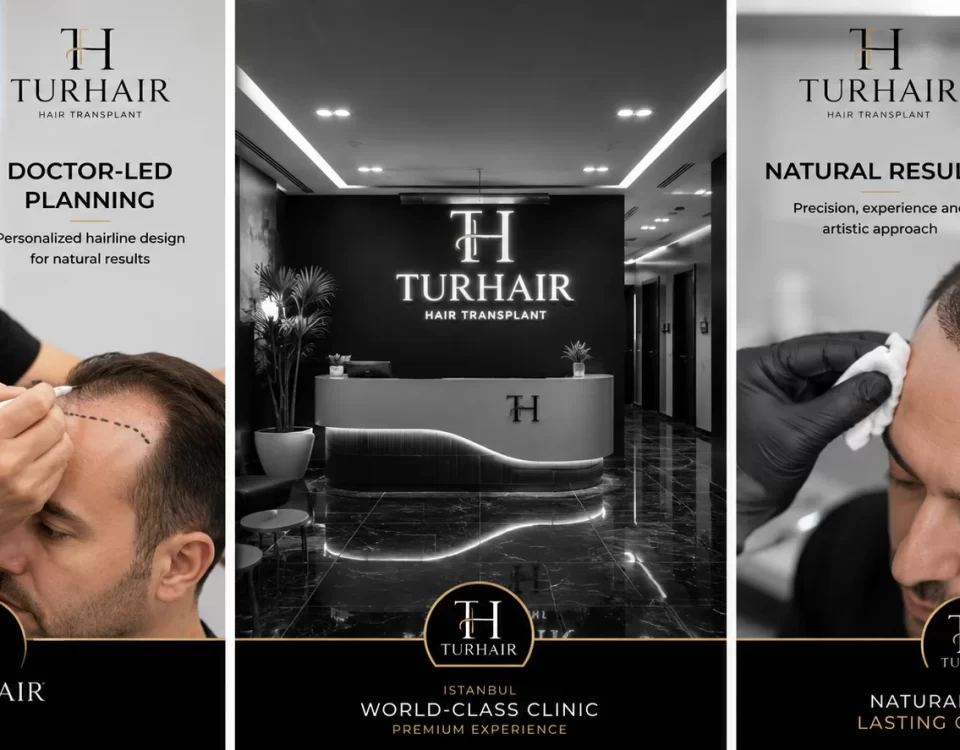
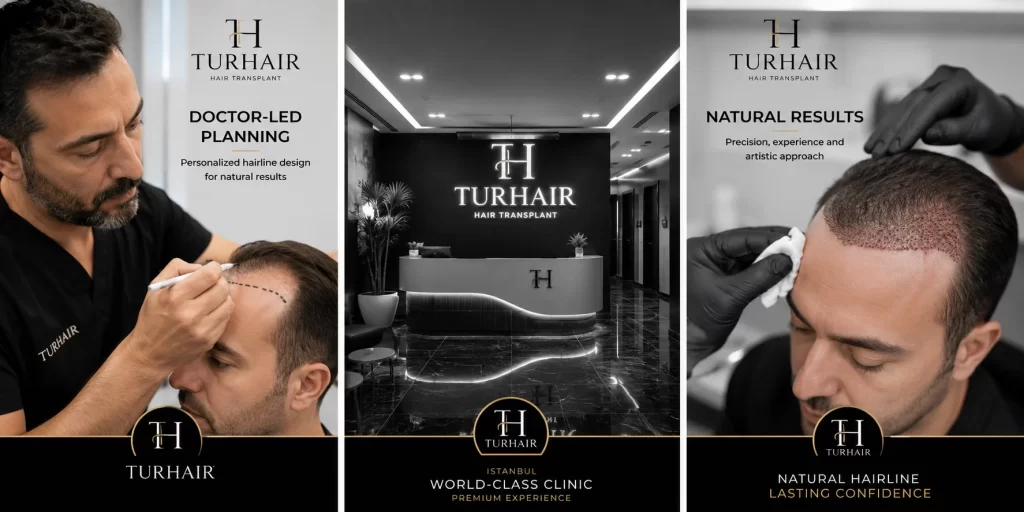
Doctor-Planned, Not Sales-Planned
Your treatment plan is not based only on a sales target or an advertised graft number. Your hair loss pattern, donor capacity, facial proportions, hair characteristics, age, and possible future hair loss are considered before the procedure is planned.
Hairline Designed for Your Face
TurHair does not use one standard hairline for every patient. Dr. Demir evaluates forehead proportions, temple structure, age, facial balance, existing hair direction, and long-term appearance to create a personalized and age-appropriate design.
Dr. Demir Creates the Recipient Channels
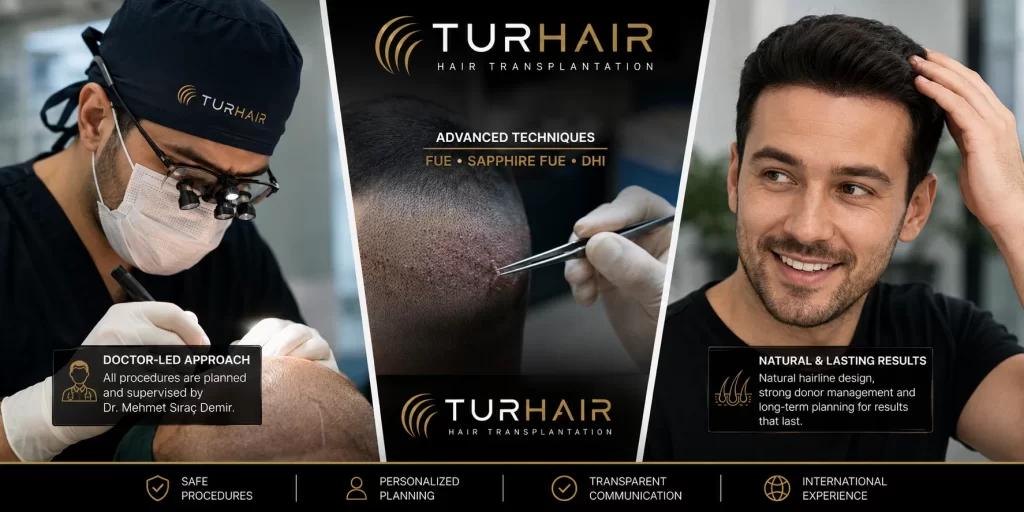
In the VIP procedure, Dr. Demir personally performs the recipient channel stage. This is one of the most decisive stages because it determines the angle, direction, distribution, and natural flow of the transplanted hair.
Limited Daily Patient Capacity
TurHair does not operate as a high-volume hair transplant factory. The number of patients is intentionally limited so that planning, medical supervision, communication, and quality control are not sacrificed for speed.
Donor Preservation Comes First
We do not promote unnecessarily high graft numbers simply to make an offer look more attractive. The goal is to extract the number of grafts that can be used safely while preserving the appearance and future potential of the donor area.
One Team, One Treatment Standard
Patients are not passed between unknown freelance teams. The procedure follows a defined clinical process with coordinated staff, medical supervision, consistent graft handling, and clear responsibility throughout the operation.
We Do Not Give the Same Procedure to Every Patient
Some patients need stronger frontal density. Others require careful crown planning, donor protection, temple restoration, or a more conservative hairline. At TurHair, the procedure is adapted to the patient rather than forcing every patient into the same package, graft count, or design.
| Treatment Standard | TurHair & Dr. Demir | Typical High-Volume Clinic |
|---|---|---|
| Hairline Planning | Personalized according to face, age, and future hair loss | Frequently based on standard templates |
| Recipient Channels | Personally created by Dr. Demir in the VIP procedure | Often delegated entirely to technicians |
| Patient Volume | Limited daily operations | Multiple simultaneous procedures |
| Graft Strategy | Safe extraction and long-term donor preservation | Maximum numbers often used as a sales message |
| Treatment Focus | Natural appearance and long-term planning | Fast turnover and standardized workflow |
| Communication | Direct, transparent, and patient-specific | Often managed mainly through sales coordinators |
The Goal Is Not Simply to Transplant Hair
The goal is to create a natural result that suits your face, protects your donor area, remains realistic as you age, and does not look like a visible hair transplant. This is where careful medical planning and Dr. Demir’s personal involvement make the difference.
“`
The Psychological Impact of a Poor Hair Transplant
Hair restoration is about much more than improving physical appearance. For many patients, undergoing a hair transplant is a deeply personal decision connected to self-confidence, social interactions, and professional life. Many men spend years researching treatments before finally deciding to undergo surgery.
Unfortunately, when expectations are not met, the emotional impact can be significant. An unnatural hairline, visible scarring, poor density, or uneven growth may leave patients feeling even more self-conscious than before surgery.
Revision procedures often require additional recovery time, extra financial investment, and more donor hair. In some situations, complete correction may not even be possible because donor resources are limited. This is one of the strongest reasons to choose an experienced, doctor-led clinic for the first procedure rather than assuming every clinic delivers the same quality of care.
Technology Alone Cannot Replace Surgical Experience
Many clinics advertise the latest technology, including Sapphire FUE, DHI implanter pens, robotic systems, advanced microscopes, and premium surgical instruments. While modern equipment can improve efficiency, technology alone does not guarantee excellent results.
The success of a hair transplant depends far more on the skill and judgment of the medical team than on the brand name of the instruments being used.
For example, even the most advanced sapphire blade cannot create a natural hairline if the recipient channels are designed incorrectly. Likewise, premium extraction punches cannot compensate for poor donor management or inaccurate graft placement.
Technology should support surgical expertise—not replace it. Patients should focus on the experience of the surgeon, consistency of results, and long-term patient satisfaction rather than marketing terms alone.
Consistency Is the Hallmark of an Experienced Surgeon
When reviewing before-and-after photos, many patients are naturally drawn to the most dramatic transformations. However, one excellent result does not necessarily reflect the overall quality of a clinic.
Instead, look for consistency across dozens or even hundreds of patients. A skilled surgeon aims to produce natural, predictable results regardless of hair type, ethnicity, or degree of hair loss.
Consistent outcomes usually demonstrate:
- Natural hairline design
- Even graft distribution
- Healthy donor preservation
- Appropriate density
- Minimal visible scarring
- High patient satisfaction
Consistency is often a stronger indicator of quality than a few exceptional marketing photographs.
The Importance of Individualized Treatment Plans
No two patients experience hair loss in exactly the same way. Genetics, age, lifestyle, medical history, and donor characteristics all influence the most appropriate treatment strategy.
An individualized treatment plan may include recommendations regarding:
- The optimal number of grafts
- Whether surgery should be performed in one or two sessions
- Medication such as finasteride or minoxidil
- PRP or supportive treatments
- Future maintenance strategy
- Long-term donor conservation
Clinics that recommend the same graft count or identical procedure for every patient may not be providing truly personalized medical care.
Understanding the Difference Between Value and Price
A lower price does not always represent better value. Likewise, the most expensive clinic is not automatically the best choice.
True value comes from receiving safe treatment, natural-looking results, and long-term satisfaction without requiring additional corrective procedures.
| Low Initial Price | Long-Term Value |
|---|---|
| May require revision surgery | Designed to achieve lasting results |
| Possible donor overharvesting | Conservative donor preservation |
| Limited doctor involvement | Continuous medical supervision |
| Higher risk of unnatural appearance | Natural-looking aesthetic planning |
| Potential additional expenses later | Greater long-term patient satisfaction |
How to Choose the Right Hair Transplant Clinic
Choosing the right clinic requires careful research rather than a quick online comparison. Before making your decision, spend time reviewing the surgeon’s credentials, clinical experience, patient reviews, and authentic long-term results.
You should also feel comfortable asking detailed questions about the procedure. A transparent clinic will gladly explain who performs each surgical step, how the donor area is managed, and what you can realistically expect from treatment.
Pay attention to how your consultation is conducted. If your evaluation focuses only on the number of grafts and the total package price, you may not be receiving a comprehensive medical assessment. A high-quality consultation should include discussion of your hair loss pattern, future expectations, donor limitations, medical history, and realistic treatment goals.
Aşağıdaki bölüm, önceki TurHair–Dr. Demir tasarımının devamı olarak hazırlanmıştır. İçerik tekrar etmez; daha çok hasta deneyimi, kalite kontrolü, doğal sonuç ve uzun vadeli planlama farklarına odaklanır.
“`html
More Than a Standard Hair Transplant
Why the TurHair Experience Is Different from Mass-Market Clinics
A hair transplant should never feel like an anonymous factory process. At TurHair, the patient journey is designed around careful evaluation, realistic expectations, medical responsibility, and a result that remains natural in the long term. The difference is not limited to one surgical stage. It is reflected in every decision made before, during, and after the procedure.
Realistic Planning Instead of Empty Promises
TurHair does not promise impossible density, unlimited graft numbers, or identical results for every patient. Each case is evaluated according to donor strength, scalp condition, hair caliber, existing loss, and future progression. Realistic planning protects the patient from disappointment and allows the surgical strategy to remain medically responsible.
Attention to Hair Direction and Natural Flow
Natural hair does not grow in one identical direction across the entire scalp. The frontal zone, temples, mid-scalp, and crown all require different angles and placement strategies. Dr. Demir considers these regional differences to help the transplanted hair blend smoothly with the patient’s existing growth pattern.
A Result Designed to Age Naturally
A hairline that looks attractive at thirty should not appear artificial at forty-five or fifty. TurHair plans the frontal design with future aging in mind. The objective is not to create the lowest possible hairline, but to build a balanced, age-appropriate frame that continues to suit the face over time.
Quality Control at Every Stage
A successful hair transplant is created through a sequence of carefully controlled steps. If one stage is rushed or poorly managed, the overall result may suffer. TurHair follows a coordinated process designed to maintain consistency from the first examination to the final postoperative instructions.
Medical Review
Health history, medications, scalp condition, and surgical suitability are considered before treatment.
Donor Mapping
The safe extraction zone is evaluated to reduce the risk of visible thinning and overharvesting.
Graft Selection
Single, double, and multiple-hair grafts are distributed according to the needs of each scalp region.
Final Inspection
Placement, donor appearance, scalp condition, and postoperative instructions are reviewed before discharge.
Small Details That Create a More Natural Result
Single-Hair Grafts at the Front
The first rows of a natural hairline should appear soft and irregular. Single-hair grafts are generally selected for this zone to avoid a thick, plug-like appearance.
Density Where It Matters Most
Visual impact is often created by strategic graft distribution rather than placing the same density everywhere. Frontal framing usually receives priority because it has the greatest effect on appearance.
Controlled Irregularity
Completely straight lines rarely exist in nature. Subtle irregularities can make the final hairline appear softer, more authentic, and better integrated with the patient’s facial structure.
TurHair Focuses on Patient Suitability, Not Just Booking
Not every patient is an ideal candidate for immediate surgery. In some cases, the safest advice may be to postpone treatment, stabilize active hair loss, choose a more conservative graft number, or avoid an unrealistically low hairline. This medical honesty is an important part of responsible hair restoration.
A clinic that accepts every patient without discussing limitations may be prioritizing turnover over long-term success. At TurHair, suitability and realistic expectations are considered before finalizing the treatment plan.
| Patient Journey | TurHair Approach | Standard Commercial Approach |
|---|---|---|
| Initial Evaluation | Case-specific medical and aesthetic assessment | Rapid quotation based mainly on photographs |
| Expectation Management | Realistic discussion of density, coverage, and limitations | Promotional promises focused on maximum coverage |
| Surgical Design | Adapted to face shape, donor quality, and future loss | Similar design used for many different patients |
| Postoperative Support | Clear instructions and continued communication | Limited contact after the patient leaves the clinic |
| Long-Term Objective | Natural aging, donor preservation, and balanced coverage | Immediate visual impact and high graft numbers |
The Difference Becomes Clear After the Hair Grows
Packages, transportation, hotels, and marketing may influence the booking decision, but the permanent result is determined by surgical planning and execution. Natural direction, appropriate density, a well-preserved donor area, and an age-appropriate hairline are the details patients continue to live with long after the trip is over.
TurHair and Dr. Mehmet Sıraç Demir focus on creating a result that does not immediately reveal that a transplant has been performed. The objective is for the hair to frame the face naturally, remain easy to style, and continue to look balanced as the patient ages.
“`
Conclusion
The popularity of hair transplant Turkey continues to grow because many clinics provide excellent care, experienced surgeons, and outstanding value for international patients. However, not every clinic follows the same standards. Understanding the difference between a doctor-led practice and a technician-only clinic is essential for making an informed decision.
A successful hair transplant is the result of careful planning, medical expertise, artistic judgment, and meticulous surgical execution. Hairline design, recipient channel creation, donor preservation, graft handling, and long-term treatment planning all require the knowledge of an experienced physician working closely with a skilled surgical team.
Rather than choosing a clinic based solely on marketing, discounts, or graft numbers, prioritize transparency, surgeon involvement, and consistently natural results. Investing in quality treatment today can help protect your donor hair, reduce the likelihood of revision surgery, and provide a natural appearance that you can enjoy with confidence for many years to come.
Hair Transplant Surgery Is More Than Moving Hair
Many people assume a FUE hair transplant simply involves extracting follicles from the donor area and placing them into bald areas.
In reality, every patient requires a personalized treatment plan based on:
- Facial proportions
- Hair characteristics
- Hair density
- Donor capacity
- Age
- Ethnicity
- Future hair loss pattern
- Scalp anatomy
These factors determine how natural your results will look not only today but also ten or fifteen years from now.
Hairline Design Is an Artistic and Medical Decision
The hairline is the first thing people notice after a hair transplant.
A well-designed hairline should match your facial anatomy, age, and future hair loss pattern.
| Common Mistake | Possible Result |
|---|---|
| Hairline too low | Unnatural appearance with age |
| Hairline too straight | Artificial “helmet” look |
| Symmetrical design | Less natural appearance |
| Wrong temple angles | Facial imbalance |
An experienced surgeon designs every hairline individually rather than using a standard template for every patient.
Recipient Channel Creation Is the Most Important Stage
Many hair restoration experts agree that recipient channel creation determines approximately 70–80% of the cosmetic outcome.
These microscopic incisions control:
- Hair direction
- Hair angle
- Hair density
- Natural flow
- Final appearance
Even healthy grafts cannot compensate for poorly designed recipient channels.
Protecting the Donor Area Matters
Every patient has a limited supply of donor follicles.
Removing too many grafts during the first surgery can permanently reduce future treatment options.
A doctor-led clinic carefully evaluates:
- Safe extraction zones
- Donor density
- Hair caliber
- Maximum safe graft count
- Future transplant needs
Protecting the donor area is just as important as restoring the recipient area.
Doctor-Led Clinic vs Technician-Only Clinic
| Doctor-Led Clinic | Technician-Only Clinic |
|---|---|
| Personal consultation with surgeon | Sales consultation |
| Individual hairline design | Standard templates |
| Doctor creates recipient channels | Technicians create channels |
| Personalized graft planning | High-volume extraction |
| Continuous medical supervision | Limited physician involvement |
| Focus on long-term natural results | Focus on procedure volume |
The Long-Term Cost of Choosing the Wrong Hair Transplant Clinic
For many patients, the decision to undergo a hair transplant is not only a financial investment but also an emotional one. Restoring lost hair often improves confidence, professional appearance, and overall quality of life. Unfortunately, selecting a clinic based solely on price can lead to disappointing outcomes that are far more expensive to correct later.
Revision hair transplant procedures are generally more complicated than primary surgeries. The surgeon must work around existing grafts, scar tissue, reduced donor reserves, and unnatural hair growth patterns. In many cases, there is simply not enough healthy donor hair left to fully repair the original mistakes.
For this reason, experienced surgeons often encourage patients to focus on the quality of treatment rather than the lowest advertised package price. Saving a few hundred euros initially may ultimately result in thousands of euros in corrective surgery.
Overharvesting: One of the Most Common Problems
One of the biggest concerns in technician-only clinics is donor overharvesting. Every person has a limited supply of permanent hair follicles located in the donor area at the back and sides of the scalp. These follicles represent a valuable lifetime resource.
Removing too many grafts during a single session may permanently reduce the donor area’s density, leaving visible patches even when the hair is kept at a moderate length.
Proper donor management requires careful evaluation of:
- Donor density per square centimeter
- Hair shaft thickness
- Hair color and texture
- Scalp elasticity
- Future hair loss progression
- Potential need for future procedures
Experienced surgeons often choose to preserve donor reserves rather than extracting the maximum possible number of grafts during the first procedure. This conservative strategy helps maintain natural donor appearance while allowing additional treatment if hair loss progresses in the future.
Why Natural Hair Angles Matter
Hair does not naturally grow straight upward. Every region of the scalp has its own unique angle and direction of growth. The frontal hairline, temples, mid-scalp, and crown all require different implantation techniques.
Creating recipient channels without understanding these natural growth patterns may produce results that appear artificial from almost every viewing angle.
Patients may notice:
- Hair standing upright after washing
- Difficulty styling the hair
- Visible rows of implanted grafts
- Uneven hair distribution
- Abnormal light reflection
These issues often become even more noticeable as transplanted hair grows longer.
The Importance of Proper Graft Handling
Hair follicles are living biological structures that require delicate handling throughout the transplantation process.
Poor graft handling may reduce graft survival before implantation even begins.
Every follicle should be:
- Extracted carefully
- Protected from dehydration
- Stored in appropriate preservation solutions
- Handled with minimal mechanical trauma
- Implanted efficiently
Well-trained surgical teams follow strict protocols to maximize graft survival and improve long-term growth rates.
High Patient Volume Does Not Always Mean Higher Quality
Some commercial clinics proudly advertise that they perform twenty or thirty hair transplant surgeries every day. While this may sound impressive, extremely high surgical volume can sometimes reduce the amount of personalized care each patient receives.
In high-volume environments:
- Doctors divide their attention between multiple operating rooms.
- Different technicians may work on different parts of the same procedure.
- Hairline planning becomes standardized.
- Consultation time may be limited.
- Patient questions may receive less detailed answers.
Many doctor-led clinics intentionally limit the number of daily surgeries in order to provide more individualized treatment and closer medical supervision.
A Hair Transplant Should Match Your Future Appearance
One of the biggest mistakes inexperienced clinics make is designing a hairline that looks attractive today but unrealistic ten years later.
Hair loss is progressive for many men. As native hair continues to thin, transplanted grafts remain permanent.
Without careful long-term planning, patients may develop isolated transplanted areas surrounded by balding scalp.
Experienced surgeons consider:
- Your current age
- Family history of baldness
- Current Norwood stage
- Potential medical treatments
- Long-term donor preservation
This forward-thinking approach helps maintain natural-looking results throughout the aging process.
Questions That Reveal the Quality of a Hair Transplant Clinic
Instead of focusing only on package prices, ask detailed questions before scheduling surgery.
| Question | Why It Matters |
|---|---|
| Who designs my hairline? | Determines natural appearance. |
| Who creates recipient channels? | Influences hair direction and density. |
| Who performs graft extraction? | Protects the donor area. |
| How many surgeries are performed daily? | Indicates the level of personalized care. |
| Will I meet my surgeon before surgery? | Shows transparency and doctor involvement. |
Final Recommendation
Choosing between a doctor-led hair transplant clinic and a technician-only clinic should never be based solely on price. A successful hair transplant depends on careful planning, artistic hairline design, conservative donor management, precise recipient channel creation, and continuous medical supervision.
Experienced technicians remain an essential part of the surgical team, but they work best under the guidance of a qualified hair transplant surgeon who is actively involved throughout the procedure. This collaborative approach improves patient safety, maximizes graft survival, preserves donor hair, and helps achieve natural-looking, long-lasting results.
Before making your final decision, take the time to research the clinic, speak directly with the surgeon, review authentic patient results, and ask detailed questions about who performs each stage of the operation. An informed decision today can help you avoid unnecessary revision procedures and ensure that your investment delivers the natural appearance you expect for many years to come.
Questions Every Patient Should Ask
Before booking your surgery, ask the clinic these important questions:
- Who will design my hairline?
- Who creates the recipient channels?
- Who performs the graft extraction?
- How much of the procedure does the doctor personally perform?
- Will the same surgeon stay involved throughout the surgery?
- How many patients does the clinic operate on each day?
- Can I speak directly with my surgeon before booking?
- Is my treatment plan customized?
Final Thoughts
A successful hair transplant depends on far more than the number of grafts implanted. Surgical planning, artistic hairline design, donor preservation, and recipient channel creation all play a crucial role in achieving natural, long-lasting results.
While experienced technicians are an essential part of the surgical team, they should complement the expertise of a qualified physician—not replace it. Choosing a doctor-led hair transplant clinic can significantly improve your chances of achieving a safe procedure and a natural-looking outcome that stands the test of time.
Frequently Asked Questions
Is it safe if technicians perform my hair transplant?
Technicians play an important supporting role, but the critical surgical stages—especially hairline design and recipient channel creation—are generally best performed by an experienced hair transplant surgeon.
Why is recipient channel creation so important?
Recipient channels determine the angle, direction, density, and overall natural appearance of transplanted hair, making them one of the most influential factors in the final result.
Can an unnatural hairline be corrected?
Revision surgery is possible in some cases, but it is often more complex, expensive, and limited by the remaining donor hair.
How do I know if a clinic is doctor-led?
Ask who designs the hairline, who creates the recipient channels, who performs graft extraction, and how involved the surgeon is throughout the procedure. Transparent clinics are usually happy to answer these questions.
Common Marketing Tactics Used by High-Volume Hair Transplant Clinics
The global demand for hair transplant surgery has created an increasingly competitive market. While many clinics maintain high medical standards and prioritize patient safety, others rely heavily on aggressive marketing strategies that may create unrealistic expectations. Understanding these tactics can help patients distinguish between genuine quality and promotional claims.
One of the most common marketing techniques is advertising an extremely high number of grafts for every patient. Seeing advertisements promising 5,000, 6,000, or even 7,000 grafts may sound attractive, but the ideal graft count should always depend on the individual’s donor capacity, hair characteristics, and long-term treatment plan.
Another common strategy is emphasizing luxury hotel accommodation, airport transfers, and sightseeing opportunities while providing very little information about the surgeon’s qualifications or level of involvement during surgery. Although comfortable travel arrangements are certainly valuable for international patients, they should never become more important than the medical aspects of the procedure.
Patients should also be cautious of clinics that guarantee unrealistic results or promise a perfect outcome for every case. Hair transplantation is influenced by numerous biological factors, including graft survival, healing response, hair thickness, donor quality, and future hair loss. No ethical surgeon can honestly guarantee identical results for every patient.
Why a Comprehensive Consultation Is So Important
A thorough consultation forms the foundation of a successful hair transplant procedure. It is during this stage that the surgeon evaluates whether surgery is appropriate, estimates donor capacity, discusses realistic expectations, and develops an individualized treatment strategy.
A comprehensive consultation should include a detailed examination of:
- Current hair loss pattern
- Donor area density
- Hair shaft diameter
- Scalp flexibility
- Medical history
- Current medications
- Previous hair transplant procedures
- Family history of androgenetic alopecia
Patients should also have enough time to ask questions without feeling rushed. If the consultation lasts only a few minutes or focuses mainly on payment options, it may not provide the level of medical assessment necessary for optimal treatment planning.
The Role of Medical Ethics in Hair Restoration
Ethical medical practice means recommending surgery only when it is genuinely in the patient’s best interest. An experienced hair transplant surgeon may occasionally advise delaying surgery, reducing the number of grafts, or beginning medical treatment before considering transplantation.
For example, younger patients experiencing rapidly progressing hair loss may benefit from stabilizing their condition before undergoing surgery. Likewise, patients with insufficient donor density may be advised to adopt a conservative approach rather than attempting maximum coverage during a single session.
Clinics that prioritize ethical decision-making typically place long-term patient satisfaction above short-term commercial success.
The Importance of Donor Area Evaluation Before Surgery
Every successful hair transplant begins with one critical step that many patients rarely think about—the evaluation of the donor area. While most people focus on the bald area that needs coverage, experienced surgeons often spend even more time examining the donor region because it represents the only permanent source of grafts available for both the current procedure and any future treatments.
The donor area is not unlimited. Each patient has a finite number of healthy follicles that can be safely harvested without affecting the natural appearance of the back and sides of the scalp. Once these follicles are removed, they cannot regenerate. For this reason, responsible donor management is one of the defining characteristics of a doctor-led clinic.
During the consultation, an experienced surgeon evaluates several important factors before recommending the number of grafts that can safely be extracted.
- Overall donor density
- Hair shaft diameter
- Hair texture
- Hair color compared with scalp color
- Scalp elasticity
- Previous surgeries
- Visible scarring
- Expected future hair loss
Patients with thick, curly hair often achieve greater visual coverage using fewer grafts than individuals with very fine, straight hair. Likewise, people with a strong contrast between dark hair and light skin may require a different surgical strategy than patients whose hair color closely matches their scalp.
These subtle differences highlight why every hair transplant should be customized rather than treated as a standardized procedure.
Hair Characteristics Influence the Final Cosmetic Result
Not all hair behaves the same after transplantation. Hair thickness, curl pattern, texture, and natural wave all influence the final appearance once growth is complete.
For example, curly hair naturally creates greater visual density because each hair occupies more space as it grows. Straight hair generally provides less coverage and may require additional grafts to achieve a similar cosmetic effect.
Similarly, coarse hair shafts often produce fuller-looking results than extremely fine hair. This is one reason why experienced surgeons avoid promising identical density for every patient. Instead, they evaluate the unique characteristics of each individual and explain what can realistically be achieved.
Understanding these biological differences helps patients develop realistic expectations and appreciate why two people receiving the same number of grafts may experience different visual outcomes.
Why Long-Term Planning Is More Important Than Immediate Density
Many patients naturally want the highest possible density during their first procedure. While this desire is understandable, experienced surgeons often adopt a more conservative approach designed to protect the patient’s long-term appearance.
Hair loss usually continues throughout adulthood. Even after a successful transplant, native hair may gradually become thinner over the following years. If too many donor grafts are used during the initial surgery, there may be insufficient donor reserves available for future procedures.
A carefully planned operation balances current cosmetic improvement with long-term donor preservation. This approach provides flexibility if additional treatment becomes necessary later in life.
Responsible planning also reduces the likelihood of creating isolated islands of transplanted hair surrounded by progressive hair loss—a pattern that often appears unnatural as patients age.
Patient Education Improves Satisfaction
One characteristic shared by reputable doctor-led clinics is a strong commitment to patient education. Rather than encouraging patients to book surgery immediately, experienced surgeons spend time explaining both the benefits and the limitations of hair transplantation.
Patients should understand that hair transplantation is a gradual process. Newly implanted follicles typically enter a temporary resting phase before beginning new growth several months later.
Typical recovery milestones include:
- Initial healing during the first two weeks
- Temporary shedding of transplanted hairs
- Early regrowth beginning around three to four months
- Visible improvement after six months
- Continued thickening between nine and twelve months
- Final maturation that may continue for up to eighteen months
Understanding this timeline helps reduce unnecessary anxiety during the normal recovery process.
Why Communication Matters Before and After Surgery
Excellent communication is often overlooked when comparing hair transplant clinics, yet it plays a vital role throughout the patient’s journey. Clear communication begins during the initial consultation and continues long after surgery has been completed.
Patients should feel comfortable discussing their goals, concerns, previous medical history, and expectations. Likewise, surgeons should explain every stage of the procedure in understandable language while encouraging questions whenever clarification is needed.
After surgery, responsive communication remains equally important. Patients may have questions regarding washing instructions, temporary swelling, redness, itching, or the normal shedding phase. Clinics that provide ongoing support help patients recover with greater confidence and peace of mind.
Choosing Quality Over Short-Term Savings
Price will always be an important consideration for many patients, particularly those traveling internationally for treatment. However, choosing a clinic based exclusively on cost may prove far more expensive over time if revision surgery becomes necessary.
The true value of a hair transplant should be measured by long-term satisfaction, natural appearance, donor preservation, and patient safety rather than by the lowest promotional offer available online.
A carefully performed procedure carried out by an experienced surgeon may reduce the likelihood of additional corrective operations, preserve valuable donor hair, and provide natural results that continue to look appropriate for many years.
Final Conclusion
Choosing between a doctor-led clinic and a technician-only clinic is one of the most important decisions a patient will make during the hair restoration journey. While experienced technicians contribute greatly to successful procedures, the planning, medical judgment, artistic hairline design, donor management, and recipient channel creation require the knowledge and experience of a qualified hair transplant surgeon.
By researching carefully, asking detailed questions, and prioritizing quality over marketing claims, patients can significantly improve their chances of achieving safe, natural-looking, and long-lasting results. A well-planned hair transplant is not simply a cosmetic procedure—it is a long-term investment in confidence, appearance, and quality of life that deserves thoughtful consideration from the very beginning.
Postoperative Care Is Part of the Overall Treatment
The success of a hair transplant does not end when the final graft has been implanted. Proper postoperative care plays an essential role in protecting newly transplanted follicles and supporting healthy healing.
Patients should receive clear instructions regarding:
- Sleeping position during the first week
- Hair washing techniques
- Physical activity restrictions
- Sun exposure
- Smoking and alcohol recommendations
- Medication schedule
- Expected shedding phase
- Follow-up appointments
High-quality clinics continue supporting patients long after surgery through regular follow-up assessments and ongoing communication. This continued care allows any concerns to be addressed promptly and provides reassurance throughout the recovery process.
Recognizing Realistic Expectations
A successful hair transplant creates the appearance of fuller hair rather than restoring the exact density present before hair loss began. Even under ideal circumstances, donor limitations make it impossible to recreate the original number of hair follicles across the scalp.
Experienced surgeons explain these limitations openly during consultation. Honest discussions regarding expected density, potential future procedures, and long-term maintenance help patients make informed decisions and reduce the risk of disappointment.
Patients should remember that natural-looking results are generally more important than achieving maximum density. Strategic placement of grafts, careful hairline design, and preservation of donor resources often produce superior cosmetic outcomes compared with simply transplanting the largest possible number of follicles.
Final Advice Before Booking Your Hair Transplant
Before selecting a clinic, invest time in independent research. Read verified patient reviews, examine long-term results taken at least twelve months after surgery, and confirm the surgeon’s qualifications and level of involvement. Do not hesitate to request clarification regarding any aspect of the procedure.
A reputable clinic will welcome informed patients and answer questions openly. Transparency regarding surgical techniques, expected outcomes, potential risks, and postoperative care reflects confidence in the quality of treatment being provided.
Ultimately, the best hair transplant is not defined by the lowest price or the highest advertised graft count. It is defined by careful planning, ethical medical practice, personalized treatment, skilled surgical execution, and natural-looking results that continue to look appropriate for many years. By choosing a doctor-led clinic with experienced professionals and a patient-centered approach, you significantly increase your chances of achieving safe, satisfying, and long-lasting hair restoration results.