How to Avoid Hair Mills?
August 15, 2026
Turkey Hair Transplant Cost vs UK (2026)
August 15, 2026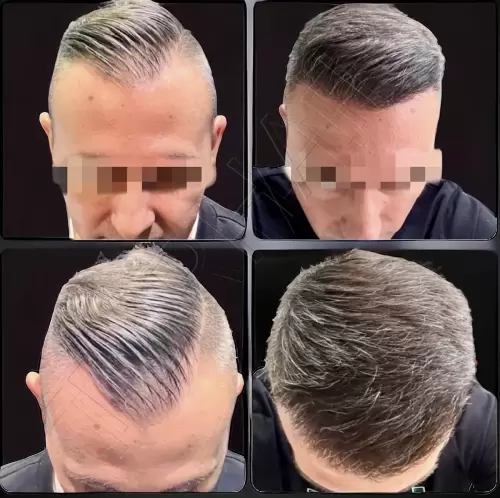



Hair Transplant Turkey Before After: Real Results, Timeline & What to Expect
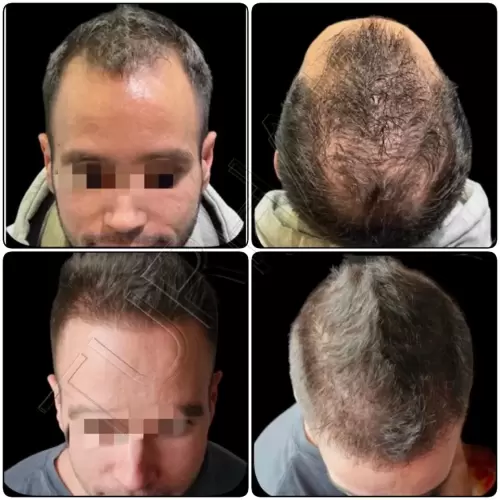
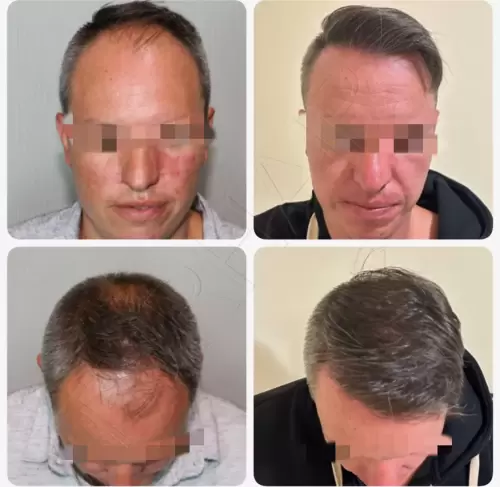
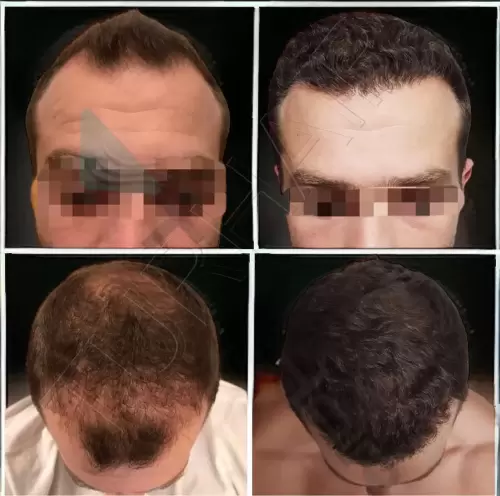
Hair transplant Turkey before after photos are among the most important resources for patients considering hair restoration in Istanbul. They can demonstrate how a receding hairline, thinning frontal area or bald crown may change following a professionally planned hair transplant. However, before-and-after photographs should never be evaluated only by looking at the final density. Hairline design, donor-area preservation, graft distribution, hair direction and the time elapsed after surgery are equally important.
Turkey has become one of the world’s most recognized destinations for hair transplantation. Thousands of international patients travel to Istanbul every year looking for FUE, Sapphire FUE and other modern hair-restoration procedures. But results can vary considerably between patients and clinics. Understanding what a genuine hair transplant before and after result should look like can therefore help patients make a more informed decision.
What Should You Look for in Hair Transplant Before and After Photos?
When viewing hair transplant before and after Turkey photographs, the first thing most people notice is density. Density is important, but it is only one part of a successful result.
A high-quality hair transplant should aim to create a natural transition between the forehead and existing hair. The direction and angle of transplanted follicles should also correspond with the patient’s natural hair-growth pattern.
- Natural hairline: The frontal hairline should complement the patient’s facial structure and age.
- Appropriate density: Grafts should be distributed strategically rather than simply concentrated in one area.
- Correct hair direction: Transplanted hairs should follow natural angles.
- Healthy donor area: The back and sides of the scalp should not appear excessively depleted.
- Consistent photography: Before and after images should ideally use comparable lighting, angles and hairstyles.
Hair Transplant Turkey Before After Timeline
One of the biggest mistakes patients make is expecting an immediate transformation. Hair transplantation is a biological process. The follicles require time to recover and begin producing new hair.
Before Hair Transplant
Before surgery, the physician should evaluate the patient’s hair-loss pattern, donor capacity, hair characteristics and expectations. The objective is not simply to determine how many grafts can be extracted. The objective is to create a long-term plan while protecting the donor area for the future.
First 10 Days
Immediately after surgery, redness and small crusts around the transplanted follicles are normal parts of the early healing process. The appearance during this stage should not be considered the final result.
1–3 Months
Many transplanted hairs may shed during the first several weeks. This can worry patients who are unfamiliar with the normal post-operative process. The follicles remain beneath the skin while the visible hair shafts may temporarily fall out.
3–6 Months
New growth generally becomes increasingly noticeable during this period. Early hairs may initially appear thin and immature.
6–9 Months
The cosmetic difference between the before and after hair transplant appearance usually becomes much easier to recognize. Hair continues developing in thickness and length.
9–12+ Months
For many patients, the result becomes substantially more mature around this period, although individual growth timelines vary. Crown areas can sometimes require additional time to mature.
| Period | Typical Appearance |
|---|---|
| Day 1–10 | Healing, redness and crust formation |
| 1–3 Months | Temporary shedding may occur |
| 3–6 Months | Early new hair growth |
| 6–9 Months | Increasing visible density |
| 9–12+ Months | Further maturation and thickening |
Why Do Hair Transplant Results Differ Between Patients?
Two people receiving the same number of grafts will not necessarily achieve identical results. This is why comparing only graft numbers can be misleading.
Important factors include donor density, hair diameter, hair texture, scalp-to-hair colour contrast, size of the recipient area, existing native hair and the patient’s individual hair-loss pattern.
For example, thicker or curly hair may visually cover a larger area than very fine straight hair. A patient requiring reconstruction of only the frontal third of the scalp may also achieve greater apparent density than someone attempting to cover extensive baldness with a similar number of grafts.
Donor Area: The Forgotten Part of Before and After Results
When searching for hair transplant Turkey before and after results, patients frequently examine only the front of the scalp. The donor area is just as important.
Hair transplantation does not create unlimited new follicles. It redistributes follicles from donor regions to areas affected by hair loss. Therefore, responsible donor management is essential.
Excessive extraction may leave visible thinning or an irregular appearance in the donor region. A successful result should therefore balance recipient-area improvement with preservation of the donor area.
Natural Hairline vs. Artificial Hairline
A natural-looking frontal hairline is one of the clearest differences between carefully planned hair restoration and poor-quality work.
The lowest possible hairline is not necessarily the best hairline. Hairline placement should consider facial proportions, age, current hair loss and possible future progression.
Natural hairlines also contain subtle irregularities. Perfectly straight, excessively low or aggressively dense hairlines can sometimes appear unnatural as the patient gets older.
Why the Doctor Matters
Patients researching hair transplant before and after results in Turkey should investigate who actually performs the critical stages of the procedure.
Do not evaluate a clinic only according to its hotel package, social-media popularity or advertised graft number. Ask who examines you, who designs the hairline, who plans the donor extraction and who creates the recipient sites.
International hair-restoration organizations have repeatedly encouraged patients to verify the qualifications of the medical professional performing their procedure.
Questions to Ask Before Choosing a Hair Transplant Clinic
- Who is the doctor responsible for my procedure?
- Will I meet the doctor before surgery?
- Who will design my hairline?
- Who will create the recipient channels or incisions?
- How will my donor capacity be evaluated?
- How many patients are treated per day?
- Can I see comparable before-and-after cases?
- Are the photographs taken under comparable conditions?
Can Hair Transplant Before and After Photos Be Misleading?
Yes. Photographic conditions can dramatically influence perceived density. Wet hair, dry hair, styling products, hair length, camera exposure, lighting and viewing angle can all change how dense a result appears.
Patients should therefore look for multiple photographs of the same case whenever possible: frontal view, top view, hairline close-up and donor-area photographs.
Videos can provide additional information because hair can be moved and examined from different directions.
How Many Grafts Are Needed for a Good Before and After Result?
There is no universal graft number that guarantees a good result. One patient may require relatively limited frontal restoration, while another may have advanced hair loss involving the frontal, mid-scalp and crown regions.
The appropriate number of grafts should be determined according to donor capacity and the area requiring coverage—not according to the largest number advertised by a clinic.
Hair Transplant in Turkey: Focus on Quality, Not Only Price
Turkey can offer international patients access to experienced hair-restoration professionals and modern medical facilities. However, choosing a clinic purely because it offers the cheapest package can be risky.
A hair transplant affects both the recipient area and a limited donor supply. Correcting an unsuccessful procedure can be considerably more difficult than planning the original surgery properly.
Hair Transplant Turkey Before After: Final Thoughts
The best hair transplant Turkey before after results are not simply the cases with the greatest apparent density. A successful transformation should combine a natural hairline, appropriate graft distribution, correct direction and angle, healthy growth and responsible donor management.
Before selecting a clinic in Turkey, compare several genuine patient cases and investigate the medical team behind those results. Ask exactly who will perform the surgical stages and whether your treatment plan has been designed specifically for your hair-loss pattern and donor capacity.
Remember: Every patient is different. Before-and-after photographs demonstrate previous patient outcomes and should never be interpreted as a guarantee that another patient will achieve an identical result.
Hair Transplant Turkey Before After: How to Compare Results Correctly
Looking at hair transplant Turkey before after photographs may seem simple, but evaluating a result correctly requires more than comparing two pictures. A dramatic transformation can look impressive at first sight, yet patients should examine the details that determine whether the transplant is natural, balanced and sustainable.
The objective of modern hair restoration should not simply be to move the maximum possible number of grafts. The objective should be to use the available donor supply intelligently and create an appearance that remains appropriate as the patient ages. This is particularly important for younger patients whose natural hair loss may continue after surgery.
For this reason, a good before-and-after result should be evaluated from several perspectives: hairline design, frontal density, transition zones, hair direction, donor preservation and overall facial harmony.
1. Hairline Design Can Make or Break the Result
The frontal hairline is usually the first area people notice when looking at Turkey hair transplant before and after pictures. Even a technically dense transplant can look artificial if the hairline has been positioned incorrectly.
A responsible hairline design should take into consideration the patient’s age, forehead dimensions, facial proportions, existing hair, degree of baldness and available donor capacity.
Patients sometimes request extremely low hairlines because they want to recreate their teenage appearance. However, using a large number of grafts to lower the hairline aggressively may consume valuable donor resources that could be needed later if hair loss progresses.
A conservative and individualized approach can therefore produce a more sustainable result.
2. Density Is Not Simply About Graft Numbers
One of the most common questions asked by patients is: “How many grafts do I need?”
Graft count matters, but it does not tell the entire story. Two patients receiving 3,500 grafts can have dramatically different visual results.
Several characteristics influence perceived density:
- Hair shaft thickness
- Curly, wavy or straight hair
- Hair-to-scalp colour contrast
- Size of the recipient area
- Existing native hair
- Distribution of transplanted grafts
- Number of hairs contained within individual follicular units
- Future progression of hair loss
This explains why professional surgical planning should focus on the individual patient rather than promising a predetermined graft number before an adequate assessment.
3. Why More Grafts Do Not Automatically Mean Better Results
Some advertisements promote extremely large graft sessions as if the highest number automatically represents the best treatment. This is not necessarily true.
The donor area is a limited biological resource. Once follicles are removed using FUE, those extracted follicles do not regenerate in their original donor positions.
Therefore, unnecessary or excessively aggressive extraction can compromise the appearance of the donor area and reduce the number of follicles potentially available for future procedures.
4. Hair Transplant Before After: Frontal Area vs Crown
Patients comparing hair transplant before and after Turkey cases should also understand that different areas of the scalp may require different strategies.
Frontal Hairline
The frontal region has the greatest impact on facial framing. For this reason, natural hair direction and appropriate placement of follicular units are especially important.
Mid-Scalp
The mid-scalp connects the frontal region with the crown. Strategic distribution can create visual continuity without unnecessarily consuming donor grafts.
Crown
The crown can be challenging because hair naturally grows in a circular or whorl pattern. It may also represent a relatively large surface area. Attempting extremely high density throughout a large crown can require substantial donor resources.
Consequently, patients with advanced hair loss often require prioritization rather than identical density across every part of the scalp.
5. Hair Direction and Angle Matter
One feature that separates natural-looking results from obvious transplants is the direction of growth.
Natural hair does not emerge from the scalp at identical angles everywhere. The angle changes depending on the anatomical region. Frontal hairs typically emerge differently from hairs in the temporal or crown regions.
The recipient-site plan should respect these natural patterns. When transplanted hairs grow at inappropriate angles, the result may be difficult to style and can appear unnatural even when survival is good.
6. Check the Donor Area in Before and After Pictures
Many clinic galleries show only the recipient area. Patients researching hair transplant Turkey before after results should also ask to see donor-area photographs.
The donor area normally includes the back and sides of the scalp, where follicles are selected for transplantation.
Warning signs worth investigating can include:
- Patchy donor appearance
- Visible areas of excessive thinning
- Irregular extraction patterns
- Concentrated extraction from small zones
- Noticeable differences between donor regions
The objective of careful FUE extraction is not only obtaining useful grafts but also maintaining an acceptable cosmetic appearance in the donor area.
7. Beware of Different Lighting in Before and After Photos
Photography can dramatically influence the apparent success of a hair transplant.
For example, strong overhead lighting may make the scalp more visible. Softer lighting can make hair appear considerably denser. Similarly, longer hair can cover the scalp more effectively than short hair.
When comparing photographs, examine whether the following conditions are similar:
| Factor | Why It Matters |
|---|---|
| Lighting | Different lighting can change perceived scalp visibility. |
| Hair Length | Longer hair may provide greater visual coverage. |
| Camera Angle | A frontal image may hide areas visible from above. |
| Wet/Dry Hair | Wet hair usually exposes more scalp. |
| Styling | Combing direction can increase apparent coverage. |
8. Why Video Results Can Be Valuable
Photographs remain useful, but videos can provide another perspective when evaluating hair transplant results in Turkey.
In a video, the hair can potentially be examined from different directions. The hairline can be viewed more closely, and changes in lighting or camera angle may reveal details that are difficult to evaluate from one carefully selected photograph.
When possible, patients can therefore compare photographs, videos and documented cases rather than relying on a single image.
9. Doctor-Led Planning vs High-Volume Hair Transplant Models
Another important issue behind a before-and-after photograph is something the picture cannot show: who actually performed the critical stages of the procedure?
Turkey has an enormous hair-transplant industry, ranging from physician-led practices to high-volume operations. Patients should not assume that seeing a doctor’s name on a website automatically means that doctor personally performs every important surgical stage.
Before booking, ask specific questions rather than accepting general statements such as “doctor supervised.”
Ask the Clinic Directly
✓ Who examines my donor area?
✓ Who determines the number of grafts?
✓ Who designs my hairline?
✓ Who creates the recipient sites/channels?
✓ Which stages are performed by medical assistants or technicians?
✓ How many patients are treated simultaneously?
✓ Will the named physician personally participate in my procedure?
10. Hair Transplant Turkey Before and After at TurHair
At TurHair in Istanbul, the philosophy is based on individualized planning rather than treating hair transplantation as a standardized production-line procedure.
Every patient’s hair loss is different. Donor capacity, hair characteristics, facial proportions, existing density and long-term expectations should therefore be considered before determining an appropriate surgical strategy.
The goal is not simply to advertise the largest possible graft number. The goal is to create a natural-looking improvement while considering the patient’s available donor resources.
11. What Makes a Hair Transplant Look Natural?
Naturalness is created by several small details working together.
A successful result should ideally look like naturally growing hair rather than “transplanted hair.” Someone meeting the patient should notice an improved appearance without immediately recognizing that surgery was performed.
Important elements include:
- Age-appropriate hairline position
- Natural irregularities along the frontal border
- Appropriate selection and distribution of follicular units
- Correct direction and angle
- Balanced density
- Integration with existing native hair
- Long-term donor planning
12. Hair Transplant Results After 12 Months
Patients frequently search for hair transplant Turkey before after 12 months because approximately one year is a commonly used point for evaluating substantial maturation of many hair transplant results.
However, biological variation exists. Some patients develop visible growth earlier, while others progress more slowly. Different scalp regions may also mature at different rates.
This is why patients should be cautious about judging a procedure too early. A photograph taken several months after surgery should not automatically be compared with a fully matured result from another patient.
13. How to Choose a Hair Transplant Clinic in Turkey
Before making a decision, patients should investigate the clinic beyond its Instagram gallery or advertised price.
Consider checking the physician’s identity and qualifications, documented patient cases, donor-management philosophy, surgical responsibilities, aftercare process and transparency about who performs each stage.
Price is naturally part of the decision, but it should not replace medical evaluation.
A hair transplant involves a limited donor supply. If the first procedure is poorly planned, corrective surgery may be more complicated because some of the strongest available donor follicles may already have been used.
Hair Transplant Turkey Before After: The Most Important Lesson
The most impressive hair transplant Turkey before after result is not necessarily the photograph showing the lowest hairline or the highest advertised graft count.
A genuinely successful result should balance natural appearance, density, hair direction, facial harmony and preservation of the donor region.
When researching a hair transplant in Turkey, look beyond marketing photographs. Compare multiple cases, examine donor areas, ask who performs the critical stages and understand why a particular treatment plan is appropriate for your individual pattern of hair loss.
Before-and-after photographs should be used as educational examples, not guarantees. Every patient’s donor capacity, hair characteristics, healing process and growth potential are different. A personalized medical assessment is therefore essential before deciding whether hair transplantation is suitable for you.
Real Hair Transplant Turkey Before After Results: What Patients Should Understand
When people search for hair transplant Turkey before after results, they usually want to answer one simple question: “What could I look like after a hair transplant?” Before-and-after cases can certainly help patients understand the potential of modern hair restoration, but they should be interpreted carefully. Every scalp, donor area, hair type and pattern of hair loss is different. For this reason, another patient’s transformation should never be considered a guarantee of an identical result.
A more useful approach is to examine what makes a particular result successful. Instead of looking only at the amount of visible hair, patients should evaluate hairline design, density distribution, donor preservation, direction of growth and how naturally the transplanted area integrates with existing hair.
Does Age Affect Hair Transplant Before and After Results?
Age can influence surgical planning because hair loss is usually progressive. A younger patient with early recession may continue losing native hair behind the transplanted area over the following years. Therefore, planning should consider not only what the patient looks like today but also how the pattern of hair loss could develop.
An extremely low and dense hairline may look attractive in a photograph immediately after maturation, but it may not necessarily represent the most responsible long-term strategy for every patient.
A mature, conservative hairline can preserve more donor follicles for possible future needs while still creating a significant cosmetic improvement.
Hair Characteristics Can Dramatically Change the Final Appearance
One reason hair transplant before and after results in Turkey can look very different despite similar graft numbers is hair quality.
Hair shaft diameter plays an especially important role in visual coverage. Thick hair generally creates greater apparent density than very fine hair because each shaft covers more visual surface area.
Texture matters as well. Wavy or curly hair can create greater visual coverage than very straight hair in some patients.
| Hair Characteristic | Possible Effect on Appearance |
|---|---|
| Thicker Hair | Can provide greater visual coverage per hair shaft. |
| Fine Hair | May provide less visual coverage with the same graft number. |
| Wavy / Curly Hair | May create greater apparent volume and coverage. |
| Straight Hair | Distribution and direction may be more visually noticeable. |
| Low Scalp Contrast | Can make the scalp less noticeable through the hair. |
Consequently, comparing two patients only according to graft count does not provide a complete picture of surgical success.
Why Hair-to-Scalp Contrast Matters
Colour contrast between the hair and scalp can also influence how dense a transplant appears.
When hair colour is relatively close to skin tone, visible scalp may be less noticeable. When there is strong contrast between dark hair and a lighter scalp, gaps between hairs can sometimes appear more visible under strong lighting.
This does not necessarily mean that one transplant contains fewer hairs. It demonstrates why Turkey hair transplant results must be assessed individually.
Should Before and After Photos Show the Top of the Head?
Yes. A frontal photograph alone is not sufficient for evaluating many hair transplant cases.
A patient can appear to have excellent density from the front while significant thinning remains visible from above. This is particularly relevant for patients with extensive hair loss involving the mid-scalp or crown.
Ideally, a comprehensive hair transplant Turkey before and after gallery should include several perspectives:
- Front view
- Left and right profile
- Top view
- Hairline close-up
- Crown view when relevant
- Donor area
Multiple angles provide a more realistic understanding of the result than one carefully selected photograph.
Wet Hair vs Dry Hair After Hair Transplant
One useful method of evaluating density is examining how the result looks under more demanding conditions.
Dry, styled hair can provide substantial coverage. Wet hair tends to group together, which may expose more scalp. This is completely normal, including in people who have never undergone a hair transplant.
However, when evaluating a result, seeing the hair under different conditions can help patients understand the actual distribution more accurately.
Why the First Hair Transplant Is So Important
Patients sometimes assume that an unsuccessful transplant can simply be corrected with another operation. While repair procedures are possible in selected cases, they may be more complicated than an initial procedure.
The reason is simple: donor hair is limited.
If a large number of follicles have already been extracted inefficiently, the remaining donor supply may be reduced. Similarly, correcting an unnatural hairline can require additional grafts.
The First Procedure Should Protect the Future
Hair transplantation should be approached as long-term hair restoration rather than a one-day cosmetic transaction. Hairline placement, donor extraction and graft distribution should consider the possibility that natural hair loss may continue in the future.
What Is Overharvesting in Hair Transplantation?
Overharvesting generally refers to excessive follicular extraction that negatively affects the cosmetic appearance of the donor region.
Patients searching for hair transplant Turkey before after photos often focus exclusively on the recipient area, but the back of the scalp deserves equal attention.
Extraction should be distributed appropriately according to donor characteristics. Taking too many grafts from limited zones may create an uneven or depleted appearance.
This is another reason why the highest advertised graft number should not automatically be interpreted as the best offer.
5000 Grafts: Is More Always Better?
Large sessions may be appropriate for selected patients with sufficient donor resources and extensive hair loss. However, there is no universal rule stating that every patient should receive 4,000, 5,000 or another predetermined number of grafts.
A patient requiring frontal restoration may need considerably fewer grafts than a patient with extensive frontal, mid-scalp and crown thinning.
The appropriate strategy should depend on the individual rather than a marketing package.
What About Extremely Cheap Hair Transplant Packages in Turkey?
Turkey is internationally known for competitive hair transplant prices. However, patients should distinguish between cost efficiency and choosing a procedure based entirely on the lowest advertised price.
Hair transplantation requires medical assessment, surgical planning, appropriate facilities, trained personnel and postoperative care. When comparing offers, patients should therefore ask what is actually included and, more importantly, who is responsible for the medical and surgical stages.
A hotel room, airport transfer or luxury vehicle may make a package more convenient, but these services do not determine the quality of the hairline or donor management.
Doctor Involvement: Ask Exactly What the Doctor Does
A clinic website may display a doctor’s photograph or name, but patients should investigate the physician’s actual involvement.
Instead of asking only, “Is there a doctor?”, ask specific questions.
Before Booking, Ask:
- Will the doctor personally examine my scalp?
- Who determines my donor capacity?
- Who designs and approves the hairline?
- Who creates the recipient sites?
- Who performs graft extraction?
- Who performs implantation?
- How many procedures take place on the same day?
- Will I meet the named physician before surgery?
Transparent answers allow patients to understand the treatment model before travelling to Turkey.
TurHair and Dr. Mehmet Sıraç Demir: Individualized Hair Transplant Planning
At TurHair Istanbul, hair restoration is approached according to the characteristics of the individual patient rather than applying exactly the same design and graft strategy to everyone.
Dr. Mehmet Sıraç Demir evaluates factors including the patient’s pattern of hair loss, donor resources, existing hair, facial proportions and expectations when developing an appropriate treatment plan.
Hairline design and recipient-area planning are particularly important because transplanted follicles must integrate naturally with the patient’s existing hair.
The philosophy is straightforward: a good hair transplant should not simply look impressive immediately after growth. It should also respect the donor area and remain visually appropriate as the patient ages.
Hair Transplant Turkey Before After: What Is a Successful Result?
Success cannot be reduced to a single number. A result with 4,500 grafts is not automatically superior to one using 3,000 grafts. Similarly, an extremely low hairline is not automatically more attractive than a conservative one.
A successful hair transplant Turkey before after transformation should ideally achieve several objectives simultaneously:
- A natural-looking frontal hairline
- Appropriate density for the patient’s donor resources
- Correct direction and angle of growth
- Good integration with existing hair
- Responsible preservation of the donor region
- A design appropriate for the patient’s age
- A strategy that considers possible future hair loss
Can Hair Transplant Results Last for Years?
Hair transplantation is intended as a long-term form of hair restoration, but transplanted hair and native hair should be considered separately. A patient may obtain good growth from transplanted follicles while continuing to experience progression of androgenetic hair loss in untreated native areas.
This is why long-term planning matters. Patients should discuss their existing hair, potential progression and appropriate management options with a qualified physician rather than viewing surgery as an isolated event.
How to Identify a Trustworthy Hair Transplant Before and After Gallery
A useful gallery should demonstrate variety rather than showing only a few spectacular cases. Look for patients with different degrees of hair loss, hair types, ages and restoration requirements.
Pay attention to consistency in photography and ask when each “after” image was taken.
A seven-month result should not be presented as if it represents the same stage as a 12- or 15-month result without clearly identifying the timeline.
Final Checklist Before Choosing Hair Transplant in Turkey
✓ Check: Who is the responsible physician?
✓ Check: Who performs the critical surgical stages?
✓ Check: Are multiple before-and-after angles available?
✓ Check: Can you see the donor area?
✓ Check: When were the after photographs taken?
✓ Check: Is the recommended graft number based on donor capacity?
✓ Check: Does the hairline look appropriate for the patient’s face and age?
✓ Check: Is future hair loss considered in the plan?
✓ Check: Are realistic expectations discussed before surgery?
Hair Transplant Turkey Before After – Conclusion
A convincing hair transplant Turkey before after transformation is about much more than filling a bald area with the maximum number of grafts. Natural hairline design, appropriate density, correct hair direction, donor preservation and long-term planning all contribute to the final appearance.
Patients considering a hair transplant in Turkey should therefore use before-and-after photographs as part of their research rather than as the only factor in their decision. Examine results from several angles, compare patients with hair-loss patterns similar to your own and investigate exactly who performs the important stages of the operation.
Most importantly, remember that your donor area and hair-loss pattern are unique. The goal should not be to copy another patient’s result. The goal should be to develop an individualized hair restoration plan that uses your available donor resources responsibly and creates the most natural result realistically achievable for you.
Medical disclaimer: Hair transplant outcomes vary between individuals. Previous patient photographs illustrate individual outcomes and do not guarantee identical graft survival, density, growth rate or cosmetic results for another patient. A medical assessment is necessary to determine suitability for hair transplantation.
“`html
Hair Transplant Turkey Before After: Understanding the Difference Between an Average and Excellent Result
Thousands of patients search for hair transplant Turkey before after photographs before deciding whether to travel to Istanbul for hair restoration. These images are useful because they show what modern hair transplantation may achieve in suitable candidates. However, patients should understand that the difference between an average result and an excellent result often lies in details that are not immediately obvious in a photograph.
Natural hairline architecture, donor-area management, graft placement, hair direction, density distribution and long-term planning all contribute to the final appearance. A successful procedure should therefore be evaluated as a complete hair-restoration strategy rather than simply by counting the number of transplanted grafts.
When examining hair transplant before and after Turkey cases, ask yourself whether the result looks natural from multiple angles and whether the donor area appears appropriately preserved. These questions can reveal considerably more than a dramatic frontal photograph alone.
What Does a Natural Hair Transplant Look Like?
The best hair transplant is often the one that other people cannot easily identify as a transplant. The new hairline should integrate with the patient’s existing hair and facial proportions rather than appearing like an artificial border across the forehead.
A natural result involves several elements working together:
- An age-appropriate hairline position
- Natural variation along the frontal border
- Appropriate follicular-unit selection
- Correct direction of transplanted hair
- Suitable exit angles
- Strategic density distribution
- Integration with existing native hair
- Responsible donor-area management
These details help explain why two clinics can use a similar number of grafts but produce visually different outcomes.
Why Hairline Planning Is More Important Than Simply Lowering the Hairline
Many patients considering a hair transplant in Turkey want to restore the hairline they had when they were younger. This is understandable, but placing the new hairline too low can consume a significant number of grafts.
The patient’s age, forehead shape, facial proportions, degree of hair loss and possible future progression should all be considered before finalizing the design.
For a patient with advanced or potentially progressive hair loss, using thousands of follicles to create an unnecessarily low hairline could reduce the donor resources available for the mid-scalp or crown in the future.
A Natural Hairline Is Not Simply a Low Hairline
The objective should be facial harmony and long-term planning. A slightly more conservative hairline with appropriate density can sometimes provide a more natural and sustainable result than an aggressively low design.
Single-Hair and Multi-Hair Grafts: Why Distribution Matters
Follicular units can contain different numbers of hairs. This characteristic can be considered when planning different areas of the recipient region.
The frontal transition requires particular attention because the goal is to avoid an abrupt, artificial-looking edge. Denser follicular units can then contribute to coverage behind the frontal zone when appropriate for the individual treatment plan.
Patients examining close-up hair transplant Turkey before after photos should look at the transition between the forehead and the transplanted region. A result that appears soft and natural at close range is generally more convincing than one that looks like a perfectly drawn line.
Hair Transplant Density: Why the Front Often Receives Priority
Patients with extensive baldness sometimes ask for identical density across the frontal area, mid-scalp and crown. The difficulty is that donor supply is limited while the recipient area can be very large.
Strategic planning may therefore prioritize areas that have the greatest cosmetic impact. For many patients, rebuilding the frontal frame creates a more noticeable improvement than spreading limited grafts equally across the entire scalp.
| Area | Planning Consideration | Cosmetic Role |
|---|---|---|
| Hairline | Natural transition and facial proportions | Very High |
| Frontal Area | Visual density and framing | Very High |
| Mid-Scalp | Continuity between front and crown | High |
| Crown | Large surface area and whorl pattern | Patient-dependent |
Hair Transplant Before and After for Norwood 3 Hair Loss
Patients with a Norwood 3-type pattern commonly experience recession around the temples and frontal hairline. Depending on individual characteristics, treatment may focus primarily on rebuilding the frontal frame and restoring the recessed areas.
Because the area requiring treatment can be smaller than in advanced baldness, selected patients may have the possibility of concentrating available grafts within a more limited recipient zone.
However, graft requirements cannot be determined accurately from the Norwood classification alone. Donor density, head dimensions, existing miniaturized hair and desired hairline position also matter.
Hair Transplant Before and After for Norwood 5–6 Hair Loss
Advanced hair loss requires a different strategy. When the frontal area, mid-scalp and crown are all affected, the total bald surface can be much larger than the donor area can realistically restore at native density.
For this reason, the goal should be realistic coverage and cosmetic improvement rather than promising the density of someone who has never experienced hair loss.
In some cases, staged treatment may be discussed depending on donor capacity and the patient’s objectives.
Why Donor Density Must Be Measured Before Surgery
The donor area is the foundation of an FUE hair transplant. Without an adequate donor supply, even the most attractive hairline design cannot be implemented responsibly.
A donor evaluation should consider more than the visible size of the back of the scalp. Hair density, follicular-unit characteristics, hair calibre and the safe extraction strategy all influence planning.
This is why claims such as “every patient receives 5,000 grafts” should be treated cautiously. Patients are biologically different, and responsible graft planning should reflect those differences.
Hair Transplant Turkey Before After: What Happens to the Donor Area?
During FUE, follicular units are individually extracted from donor regions. The surrounding hair can make the extraction sites increasingly difficult to notice as healing progresses, but donor appearance depends heavily on extraction planning and the patient’s characteristics.
The objective should be to distribute extraction in a manner that avoids unnecessarily concentrating removal in limited areas.
When evaluating Turkey hair transplant before and after results, ask to see photographs of both the recipient and donor regions. A dramatic frontal transformation should not distract from the importance of donor preservation.
Is 100% Graft Survival Guaranteed?
Patients should be cautious about absolute guarantees regarding graft survival, density or final appearance. Hair transplantation involves biological healing, and individual responses vary.
Many factors may influence the outcome, including graft handling, surgical technique, scalp characteristics, postoperative care and individual healing.
A responsible clinic should therefore explain realistic expectations rather than promise an identical result for every patient.
How Long Does It Take to See a Hair Transplant Transformation?
Hair transplantation requires patience. The appearance immediately after surgery is not the final result, and early shedding can occur before new growth becomes noticeable.
Patients often begin paying close attention to changes during the first several months, but meaningful cosmetic development generally takes time. Hair can continue to mature, lengthen and thicken over subsequent months.
For this reason, when looking at a hair transplant Turkey before after 6 months case, do not automatically compare it with another patient’s 12-month result.
6 Months vs 12 Months Hair Transplant Results
A six-month photograph can provide useful information about progress, but it may not represent the fully matured appearance.
By around 12 months, many patients have had substantially more time for growth and maturation. Some regions and individuals may continue changing beyond this point.
A transparent before-and-after gallery should therefore state when the photographs were taken.
Can a Hair Transplant Look Natural With Short Hair?
Short hairstyles can make certain details easier to evaluate because there is less opportunity to create coverage by styling longer hair over thinner regions.
Patients who plan to wear very short hairstyles should discuss this preference before surgery. Donor extraction patterns and the visibility of small FUE scars can be particularly relevant for patients who intend to shave their hair extremely short.
No surgical procedure is literally scar-free. Patients should be given realistic information about healing and potential visibility.
Why Identical Hairlines Should Be a Warning Sign
Every patient has a different forehead, facial shape, age and pattern of hair loss. Therefore, a clinic gallery in which every patient appears to receive nearly the same hairline shape may deserve closer examination.
Hairline design should be personalized rather than copied from a template.
A patient with a long, narrow face may require a different approach from someone with a wider facial structure. Existing temporal points and native hair also influence the overall design.
Before and After Results Should Match the Patient’s Starting Point
One of the best ways to use a hair transplant before and after gallery is to find patients whose starting condition resembles your own.
For example, if you have advanced Norwood 6 hair loss, a spectacular result from a patient who originally had only mild temple recession is not a particularly useful comparison.
Instead, search for cases with similar:
- Degree of hair loss
- Hair texture
- Hair calibre
- Donor characteristics
- Age range
- Recipient area
- Hair colour and scalp contrast
Why Choosing a Doctor Matters More Than Choosing a Package
International patients often compare hair transplant packages according to price, hotel category, transfers and the advertised number of grafts. These services can affect convenience, but they should not replace medical considerations.
Patients should know who is medically responsible for their treatment and who performs each important stage.
Ask whether the named doctor personally evaluates the donor area, participates in hairline planning and performs the stages represented as physician-performed by the clinic.
TurHair Istanbul: Doctor-Led Hair Restoration Planning
At TurHair Istanbul, the approach emphasizes individualized assessment and physician involvement. Dr. Mehmet Sıraç Demir evaluates the patient’s hair-loss pattern, donor resources and objectives to establish an appropriate treatment strategy.
Rather than viewing every patient as a predetermined graft package, planning considers what can realistically be achieved with the individual’s available donor supply.
Particular attention is given to hairline planning and recipient-site strategy because these elements strongly influence the direction, distribution and natural appearance of transplanted hair.
10 Questions to Ask When Comparing Hair Transplant Turkey Before After Results
- How many months after surgery was the final photograph taken?
- Can I see the result under similar lighting?
- Can I see a top view?
- Can I see the donor area?
- How many grafts were actually transplanted?
- Was only the frontal area treated or the entire scalp?
- Who designed the hairline?
- Who created the recipient sites?
- How similar was this patient’s starting condition to mine?
- Are these photographs representative of individual outcomes rather than a guaranteed result?
Hair Transplant Turkey Before After: Quality Should Come Before Marketing
Turkey remains one of the world’s most recognized destinations for hair restoration, but the size of the market means patients should research carefully. A polished website, luxury transportation or a large social-media following does not by itself demonstrate surgical quality.
The most useful hair transplant Turkey before after evidence combines transparent photography with clear information about the patient, treatment area, timeline and medical team.
Patients should focus on naturalness rather than simply searching for the most dramatic transformation. The frontal hairline should complement the face, transplanted hairs should follow appropriate directions and the donor area should be managed responsibly.
Final Advice for Patients Considering Hair Transplant in Turkey
Before travelling for a hair transplant in Turkey, take time to understand your own hair-loss pattern. Compare cases similar to yours and ask the clinic to explain why the proposed number of grafts, hairline position and coverage strategy are appropriate for you.
Do not select a procedure simply because another patient achieved an impressive transformation with a certain graft number. Your donor area is unique, and your treatment should be planned accordingly.
Ultimately, the goal of a successful hair transplant Turkey before after transformation should be a natural improvement that respects both the recipient and donor areas. Good hair restoration is not about using the maximum possible number of grafts. It is about using the available grafts intelligently, creating an appropriate hairline and planning for the patient’s long-term appearance.
Medical Disclaimer: Hair transplant results vary between patients. Before-and-after photographs show individual patient outcomes and cannot guarantee that another patient will achieve the same density, growth rate, graft survival or cosmetic appearance. Individual medical assessment is required before treatment.
Hair Transplant Turkey Before After – Frequently Asked Questions
Below are answers to the most frequently asked questions about hair transplant Turkey before after results, recovery, graft numbers, donor areas, natural hairlines and choosing a hair transplant clinic in Turkey.
1. What do hair transplant Turkey before after results look like?
Results vary according to the patient’s starting level of hair loss, donor capacity, hair thickness, hair texture, graft distribution and individual growth. A successful result should aim for a natural hairline, appropriate density and responsible preservation of the donor area.
2. How long does it take to see hair transplant results in Turkey?
Hair transplantation develops gradually rather than producing an immediate final result. Early growth generally becomes more noticeable during the following months, while substantial maturation may require around 9–12 months or longer depending on the patient and treated area.
3. Are hair transplant Turkey before after photos reliable?
They can be useful when presented transparently. Patients should compare photographs taken from similar angles and under similar lighting conditions. Ideally, galleries should include frontal, top, hairline and donor-area views and clearly state how many months after surgery the photographs were taken.
4. Can hair transplant before and after photos be manipulated?
Photography conditions can influence perceived density even without digital manipulation. Lighting, camera angle, hair length, styling and whether the hair is wet or dry can significantly change its appearance. This is why multiple photographs and videos can provide additional context.
5. How many grafts are needed for a good hair transplant result?
There is no universal graft number. The appropriate number depends on the size of the recipient area, donor capacity, hair characteristics, existing native hair and treatment objectives. A patient requiring frontal restoration may need a very different strategy from someone with extensive frontal, mid-scalp and crown hair loss.
6. Is 5,000 grafts better than 3,000 grafts?
Not automatically. More grafts do not necessarily mean a better result. The correct graft number should be based on individual donor capacity and recipient requirements. Excessive extraction may unnecessarily reduce the donor supply available for the future.
7. What should I look for in a natural hair transplant hairline?
A natural hairline should complement the patient’s age, facial proportions and existing hair. It should avoid an excessively artificial or perfectly straight appearance. Hair direction, exit angles and the transition from the forehead into greater density are also important.
8. Why is the donor area important in before and after results?
The donor area contains a limited supply of follicles that can be redistributed. A successful transplant should therefore improve the recipient area while maintaining an acceptable donor appearance. Patients should examine donor-area photographs as well as frontal results.
9. What is donor overharvesting?
Overharvesting generally refers to excessive or poorly distributed extraction that can leave the donor region visibly depleted or irregular. Responsible FUE planning should consider how many grafts can be removed while preserving the cosmetic appearance of the donor area.
10. When does transplanted hair start growing?
Patients should expect a gradual process. Temporary shedding can occur during the early period before new growth becomes increasingly visible. The speed of growth and maturation varies between individuals, so early photographs should not be treated as final outcomes.
11. Is a 6-month hair transplant result final?
Usually, six months should be considered a progress point rather than automatically being treated as the final result. Hair may continue developing in thickness, length and cosmetic appearance during subsequent months.
12. Is 12 months enough to evaluate hair transplant before and after results?
Around 12 months is commonly used to evaluate substantial maturation in many cases, although individual timelines vary. Some patients and certain scalp regions, particularly the crown, may continue to change beyond this period.
13. Why do two patients with the same graft number have different results?
Graft count is only one variable. Hair shaft thickness, texture, follicular-unit composition, scalp-to-hair colour contrast, size of the recipient area, existing hair and graft distribution can all influence the visual result.
14. Does curly hair give better hair transplant coverage?
Curly or wavy hair can sometimes provide greater visual coverage because of its shape and volume, but this does not mean every curly-haired patient will achieve greater density. Donor quality, calibre, graft numbers and recipient-area size must also be considered.
15. Can the crown take longer to show results?
Yes, individual growth rates and scalp regions can differ. Crown restoration also involves recreating a natural whorl pattern across an area that can be relatively large, so patients should follow the timeline provided by their physician rather than comparing themselves directly with another case.
16. Can a hair transplant look completely natural?
A well-planned transplant can create a very natural appearance in suitable candidates. Important factors include hairline design, graft selection and distribution, appropriate angles, donor quality and integration with the patient’s native hair.
17. Why should I ask who performs the hair transplant?
Patients should understand exactly who is responsible for each stage of their procedure. Before booking, ask who performs the medical assessment, hairline planning, extraction, recipient-site creation and implantation, and what role the named physician personally has in the treatment.
18. Is Turkey a good country for a hair transplant?
Turkey, particularly Istanbul, has become a major international destination for hair restoration. However, quality and treatment models vary between providers. Patients should research the responsible physician, surgical approach, before-and-after cases, donor management and aftercare rather than choosing according to destination or price alone.
19. How should I compare hair transplant clinics in Turkey?
Compare more than package prices. Ask who the responsible doctor is, which stages they personally perform, how many patients are treated per day, how donor capacity is assessed and whether the clinic can show comparable before-and-after cases from multiple angles.
20. Can TurHair guarantee the same result as another before and after patient?
No responsible hair transplant provider should promise that one patient will achieve exactly the same result as another. At TurHair Istanbul, treatment planning with Dr. Mehmet Sıraç Demir is based on individual characteristics including donor capacity, hair-loss pattern, hair quality and recipient-area requirements. Previous before-and-after cases demonstrate individual outcomes and should not be interpreted as guarantees.
Hair Transplant Turkey – Recommended Patient Guides
Explore our latest guides about hair transplant costs, countries, techniques,
safety, doctor involvement and choosing a hair transplant clinic in Turkey.
01. Hair Transplant USA vs Turkey 2026 – Cost & Results Comparison →
02. Hair Transplant Los Angeles vs Istanbul – Which Is Better? →
03. Hair Transplant New York vs Istanbul – Cost & Clinic Comparison →
04. Hair Transplant Poland vs Turkey 2026 – Prices & Results →
05. Hair Transplant Bulgaria vs Turkey – Cost & Quality Comparison →
06. Hair Transplant Finland vs Turkey 2026 – Complete Comparison →
07. Hair Transplant Denmark vs Turkey – Cost, Quality & Experience →
08. Hair Transplant Norway vs Turkey 2026 – Cost & Clinic Comparison →
09. Hair Transplant Sweden vs Turkey – Prices, Clinics & Results →
10. Hair Transplant Austria vs Turkey 2026 – Cost & Quality →
11. Hair Transplant Switzerland vs Turkey – Prices & Results →
12. Hair Transplant Belgium vs Turkey 2026 – Which Is Better? →
13. Hair Transplant Netherlands vs Turkey – Cost Comparison →
14. Hair Transplant Ireland vs Turkey 2026 – Cost & Results →
15. Hair Transplant Italy vs Turkey – Doctors, Prices & Results →
16. Hair Transplant France vs Turkey 2026 – Complete Cost Comparison →
17. Hair Transplant Germany vs Turkey 2026 – Prices & Doctor Comparison →
18. Hair Transplant Spain vs Turkey – Which Country Offers Better Value? →
19. Hair Transplant Turkey vs USA – Cost, Safety & Quality →
20. Hair Transplant in Turkey Istanbul 2026 – Complete Patient Guide →
21. Best Hair Transplant in Turkey Reddit 2026 – Can Reviews Be Trusted? →
22. Best Doctor-Led Hair Transplant Clinics in Turkey 2026 →
23. Hair Transplant Turkey All-Inclusive Packages – What Is Included? →
24. Hair Transplant Istanbul vs Other Turkish Cities – Which Is Better? →
25. Hair Transplant Turkey Before and After – Results & Timeline →
26. Hair Transplant Turkey Cost 2026 – Prices Explained →
27. Is Turkey Safe for a Hair Transplant? 2026 Patient Guide →
28. Hair Transplant Without Shaving – No-Shave FUE Turkey Guide →
29. Best Time for a Hair Transplant – Summer vs Winter →
30. Best Age for Hair Transplant – When Is the Right Time? →