Hair Transplant Turkey All-Inclusive Packages
July 26, 2026
Best Hair transplant in Turkey Reddit 2026
July 27, 2026Best Doctor-Led Hair Transplant Clinics in Turkey (2026 Guide)
Turkey has become the world’s leading destination for hair transplantation, attracting more than hundreds of thousands of international patients every year. However, choosing the right clinic is becoming increasingly difficult because there are now thousands of providers across the country. While many clinics advertise experienced surgeons, the reality is often very different. In numerous high-volume clinics, technicians perform most of the procedure while the doctor has only minimal involvement.
If you want the highest level of safety, natural hairline design, and long-term graft survival, choosing a doctor-led hair transplant clinic is one of the most important decisions you can make.
According to multiple independent evaluations, the most consistent long-term results come from clinics where the surgeon personally performs the most critical stages of surgery instead of delegating them entirely to technicians.
Why Turkey Is Home to the Best Doctor-Led Hair Transplant Clinics?
Turkey has become the world’s leading destination for hair transplantation, welcoming hundreds of thousands of international patients every year. While competitive pricing plays an important role, experienced patients quickly discover that the real reason for Turkey’s global reputation is the availability of highly skilled surgeons, advanced FUE technology, internationally accredited clinics, and decades of accumulated surgical experience. However, not every clinic in Turkey provides the same level of medical care. Choosing a doctor-led hair transplant clinic rather than a high-volume technician-based center is one of the most important decisions you can make for achieving natural, permanent, and safe results.
Many people assume that all Turkish hair transplant clinics operate under the same standards. In reality, there is a significant difference between premium doctor-led clinics and commercial “hair mills.” In a doctor-led clinic, every critical stage of the procedure—including patient evaluation, donor area assessment, hairline design, graft planning, channel opening, and overall surgical supervision—is personally performed or directly supervised by an experienced medical doctor. This medical approach allows every treatment plan to be customized according to the patient’s facial proportions, hair characteristics, donor capacity, age, ethnicity, and long-term hair loss progression.
By comparison, technician-led clinics often focus on performing as many procedures as possible each day. In these high-volume centers, patients may spend only a few minutes with the surgeon before the operation, while most of the procedure is delegated to technicians. Although experienced technicians are valuable members of any surgical team, important medical decisions such as designing the frontal hairline, calculating graft distribution, protecting donor reserves, and creating recipient channels require the expertise of a qualified physician. These decisions directly influence the natural appearance of the final result and cannot easily be corrected if mistakes are made.
The concept of a doctor-led clinic has therefore become one of the strongest indicators of quality for international patients. Rather than simply focusing on the number of grafts offered or the lowest available price, informed patients now prioritize surgical planning, medical safety, artistic hairline design, and long-term donor preservation. A successful hair transplant is not measured by graft count alone—it is measured by how natural the hair looks five, ten, or even twenty years after the procedure.
Another reason Turkey continues to dominate the global hair restoration industry is the concentration of experienced surgeons who perform hair transplantation every day. Years of specialization allow these physicians to refine techniques for maximizing graft survival, minimizing donor trauma, and creating age-appropriate hairlines that blend naturally with existing hair. International patients benefit from this extensive experience while also enjoying modern facilities, multilingual patient coordinators, all-inclusive treatment packages, and streamlined medical tourism services.
When comparing clinics, prospective patients should look beyond marketing claims and evaluate several important factors. Ask who personally designs the hairline. Confirm who opens the recipient channels. Verify how many patients are treated each day. Review genuine before-and-after photographs taken under consistent lighting conditions. Read independent patient reviews across multiple platforms. Check whether the surgeon participates in international organizations such as the International Society of Hair Restoration Surgery (ISHRS). Finally, ensure that realistic expectations are discussed during consultation rather than unrealistic promises of extremely high graft numbers.
Doctor-led clinics generally emphasize personalized treatment over production volume. Instead of rushing multiple surgeries simultaneously, these clinics typically limit the number of daily procedures so the surgeon can dedicate sufficient attention to each patient. This philosophy often results in improved graft survival, lower complication rates, more natural density, and aesthetically balanced hairlines designed specifically for the individual rather than following a standard template.
Patients should also remember that a hair transplant is a permanent medical procedure rather than a cosmetic purchase. Saving a small amount of money by selecting a high-volume clinic may ultimately lead to corrective surgeries, donor depletion, unnatural hairlines, or visible scarring that becomes far more expensive to repair later. Investing in experienced medical expertise from the beginning often provides better long-term value, greater peace of mind, and more predictable outcomes.
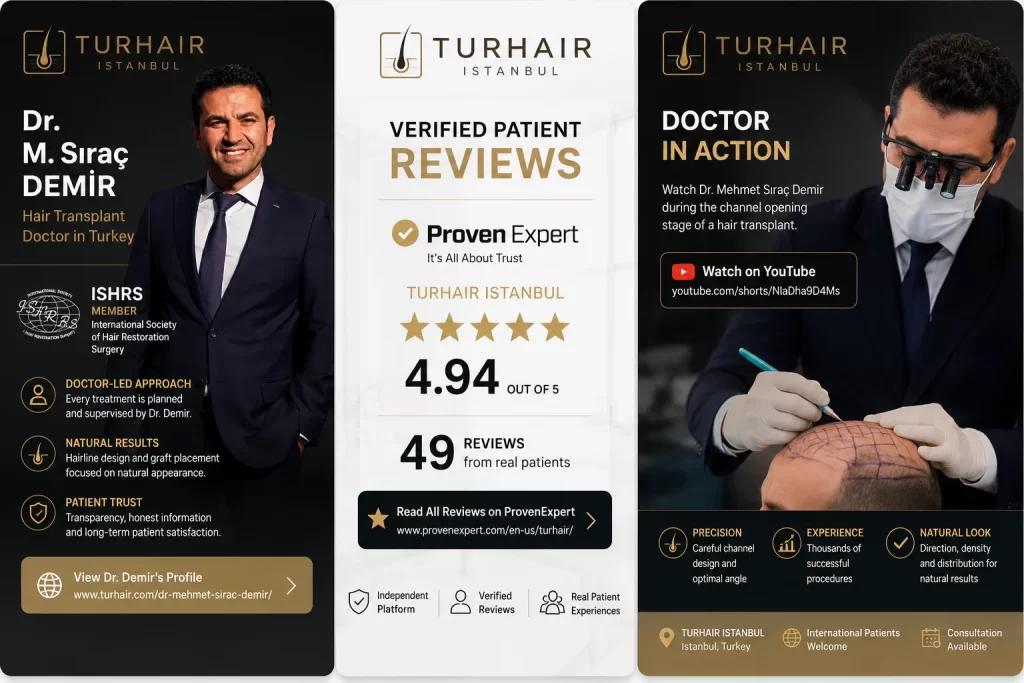
Among Turkey’s leading doctor-led clinics, TurHair has built its reputation by combining advanced FUE techniques with individualized surgical planning under the leadership of Dr. Mehmet Sıraç Demir. Rather than operating as a high-volume center, the clinic prioritizes medical precision, conservative donor management, natural hairline artistry, and comprehensive patient care before, during, and after surgery. Every treatment plan is tailored to the patient’s unique facial anatomy and long-term hair restoration goals, reflecting the core principles that distinguish a true doctor-led clinic from conventional technician-based models.
What Is a Doctor-Led Hair Transplant?
A doctor-led clinic means that the surgeon is directly involved in the essential surgical stages rather than simply supervising the operation.
In a genuine doctor-led procedure, the physician usually performs:
- ✔ Patient consultation
- ✔ Hairline design
- ✔ Donor area planning
- ✔ Local anesthesia supervision
- ✔ Channel opening (recipient incisions)
- ✔ Medical supervision throughout surgery
- ✔ Final quality control
Some clinics also have the doctor personally perform graft extraction or implantation depending on the technique and case complexity.
Why TurHair Is One of the Best Doctor-Led Hair Transplant Clinics in Turkey
TurHair combines direct doctor involvement, personalized surgical planning, limited daily patient numbers and comprehensive international patient care in one premium hair restoration experience.
“Not a Hair Factory. A Doctor-Led Hair Restoration Experience.”
| Comparison Factor | TurHair Doctor-Led Approach | Typical High-Volume Hair Clinic |
|---|---|---|
| Medical Consultation | Each patient is evaluated according to hair loss pattern, donor quality, age, facial proportions and long-term expectations. | Consultation may be completed quickly by a coordinator using standard graft estimates and package templates. |
| Hairline Design | Dr. Mehmet Sıraç Demir personally plans the hairline according to the patient’s facial structure, age and future hair loss risk. | Hairline design may be delegated to technicians or created from a standard shape used for many patients. |
| Channel Opening | In the doctor-led package, Dr. Demir personally opens the recipient channels, helping determine direction, angle and density distribution. | Channel opening may be delegated to technicians while the doctor provides only limited supervision. |
| Daily Patient Volume | TurHair limits daily procedures to protect quality, allow closer medical supervision and provide a more personalized experience. | Large facilities may operate on many patients simultaneously with different technician teams. |
| Donor Area Planning | Graft extraction is planned according to donor density, hair caliber and the possibility of future hair loss or an additional session. | Large graft numbers may be promoted without enough attention to long-term donor preservation. |
| Treatment Philosophy | The objective is not simply to transplant the highest number of grafts, but to create a balanced and natural result suitable for the individual patient. | Marketing may focus mainly on “maximum grafts,” “unlimited grafts” or package price. |
| Natural Hair Direction | Recipient channels are planned to follow natural growth directions across the frontal area, temples, mid-scalp and crown. | Standardized incision patterns may create less individualized angles and transitions. |
| International Patient Support | Patients receive assistance with airport transfers, hotel organization, interpreter support, operation planning and aftercare. | Support quality may vary depending on the coordinator or package selected. |
| Hotel Accommodation | Selected packages include two nights of accommodation in a comfortable four- or five-star hotel. | Accommodation may be excluded, located far from the clinic or offered only as a paid upgrade. |
| Private Transfers | Airport, hotel and clinic transportation can be organized as part of the all-inclusive patient journey. | Patients may need to organize their own transport or share vehicles with multiple patients. |
| PRP Support | PRP may be included in selected TurHair doctor-led packages as part of the complete treatment plan. | PRP is often promoted as a separate paid extra after the patient arrives. |
| Medication and Care Products | Post-operative medication, shampoo, foam and care instructions are provided according to the selected package. | Products may be incomplete, optional or charged separately. |
| First Hair Wash | The first wash and post-operative control are organized to show the patient how to clean and protect the transplanted area correctly. | Patients may receive only written instructions without a detailed practical demonstration. |
| Aftercare | TurHair continues supporting patients after they return home through remote follow-up, recovery guidance and progress evaluation. | Communication may become slower after payment and surgery are completed. |
| Transparency | Patients are informed about doctor involvement, package details, expected graft planning and the normal growth timeline before treatment. | Important details about the surgical team may remain unclear until the operation day. |
| Patient Experience | The journey is structured around comfort, medical guidance and personalized communication from consultation to recovery. | The experience may feel standardized because many patients pass through the clinic on the same day. |
| Final Position | TurHair is designed for patients seeking direct doctor involvement, limited daily procedures and a premium all-inclusive hair transplant experience in Istanbul. | High-volume clinics may suit patients whose main priority is the lowest available price rather than individualized doctor-led care. |
Why TurHair Stands Out
A successful hair transplant should never be treated like a standard production-line service. Every patient has a different donor area, hair loss pattern, facial structure and long-term expectation. TurHair stands out by combining a personalized consultation with direct medical planning and a doctor-led approach to the most important stages of the procedure.
Dr. Mehmet Sıraç Demir personally evaluates the patient’s needs and creates a treatment plan based on realistic density, natural hair direction and responsible donor management. This approach helps avoid excessively low hairlines, unnecessary graft extraction and standardized designs that may not remain natural as the patient ages.
For international patients who value medical transparency, doctor involvement, natural-looking results and complete travel support, TurHair represents one of the strongest doctor-led hair transplant choices in Turkey.
TurHair Istanbul
Doctor-Led. Patient-Focused. Naturally Different.
Choose a clinic where your treatment is planned around your face, your donor capacity and your future—not around daily patient volume.
Why Dr. Demir Stands Out Among Hair Transplant Doctors in Turkey
A successful hair transplant requires more than graft extraction and implantation. It requires medical planning, facial analysis, donor preservation, natural channel direction and a long-term strategy designed specifically for the patient.
“The Best Hair Transplant Is Not the One With the Most Grafts. It Is the One Planned Correctly.”
| Evaluation Area | Dr. Mehmet Sıraç Demir’s Approach | Why It Matters for the Patient |
|---|---|---|
| Doctor-Led Planning | Dr. Demir evaluates the patient’s hair loss pattern, donor capacity, age, facial structure and long-term expectations before creating the surgical plan. | Personalized planning helps avoid standardized procedures that may not suit the patient’s anatomy or future hair loss. |
| Personalized Hairline | The hairline is designed according to forehead height, facial proportions, age, temple structure, hair characteristics and expected future thinning. | A personalized design is more likely to look natural today and remain age-appropriate in the future. |
| Recipient Channel Creation | In the doctor-led treatment option, Dr. Demir personally creates the recipient channels that influence hair angle, direction and density distribution. | Channel planning plays an important role in determining whether the transplanted hair grows in a natural-looking direction. |
| Donor Preservation | Graft numbers are planned according to donor density and long-term needs rather than being selected only for marketing purposes. | Responsible donor management helps reduce the risk of visible thinning and preserves options for possible future treatment. |
| Natural Density Strategy | Grafts are distributed according to visual priority, with greater emphasis on the frontal zone and natural transitions toward the mid-scalp and crown. | Strategic distribution can create stronger visual coverage without wasting limited donor grafts. |
| Natural Hair Direction | Recipient sites are planned according to the natural direction of native hair in the frontal area, temples, mid-scalp and crown. | Correct angles help transplanted hair blend more effectively with the patient’s existing hair. |
| Age-Appropriate Design | Dr. Demir avoids designing unnecessarily low or aggressive hairlines that could become difficult to maintain as hair loss progresses. | A conservative and balanced design can provide a more sustainable appearance over time. |
| Limited Daily Procedures | The treatment model focuses on a limited number of patients rather than operating as a high-volume production-line clinic. | Lower daily volume allows more time for consultation, planning, medical supervision and quality control. |
| Individual Graft Planning | The recommended graft number is based on scalp size, donor quality, hair caliber, coverage goals and safe extraction capacity. | Patients receive a treatment plan based on their own anatomy instead of a generic “maximum graft” promise. |
| Facial Proportion Analysis | Hairline placement is evaluated in relation to the forehead, eyebrows, facial width, temple points and overall facial balance. | This helps create a result that complements the patient’s face rather than looking artificially added. |
| Ethical Expectations | Patients are informed about realistic density, recovery time, shedding, growth stages and possible limitations before treatment. | Honest expectations reduce disappointment and help patients make a more informed treatment decision. |
| Technique Selection | FUE, Sapphire FUE or other implantation approaches are considered according to the patient’s needs rather than selected only because of a popular name. | The technique should support the treatment plan; it should not replace medical judgment or surgical experience. |
| International Patient Experience | International patients receive coordinated support for consultation, arrival, transfers, accommodation, operation day and post-operative care. | Organized medical travel reduces stress and allows the patient to focus on treatment and recovery. |
| Post-Operative Guidance | Patients receive washing instructions, medication guidance, recovery recommendations and follow-up support after returning home. | Correct aftercare supports healing and helps protect the newly transplanted grafts during the early recovery period. |
| Long-Term Strategy | The treatment plan considers not only the current bald area but also the possibility of future progression and additional treatment needs. | Long-term planning helps protect donor resources and maintain a balanced appearance if native hair continues to thin. |
| Overall Difference | Dr. Mehmet Sıraç Demir combines doctor-led planning, individualized hairline design, responsible donor management and direct involvement in the critical aesthetic stages of the procedure. | This approach is designed for patients who value medical responsibility, personalization and natural-looking results over high-volume clinic production. |
What Makes Dr. Demir’s Approach Different?
Hair transplantation is both a medical procedure and an aesthetic design process. The quality of the final result depends not only on the number of grafts used, but also on where those grafts are placed, how the hairline is shaped, how the recipient channels are angled and how carefully the donor area is protected.
Dr. Mehmet Sıraç Demir’s treatment philosophy focuses on these details. Instead of applying the same hairline and graft number to every patient, he evaluates the individual’s facial structure, existing hair, donor capacity and likely future hair loss. This allows the treatment plan to be adapted to the patient’s current needs while also considering how the result may look years later.
For patients comparing the best doctor-led hair transplant options in Turkey, this combination of direct medical involvement, personalized planning, limited daily procedures and long-term donor preservation makes Dr. Demir a strong choice.
Doctor-Led Planning
Treatment is designed around the patient’s individual hair loss and donor capacity.
Natural Hairline Focus
Hairline shape, irregularity and density transitions are planned for a natural appearance.
Responsible Donor Use
Extraction planning aims to protect the donor area and preserve future options.
Limited Daily Patients
A lower-volume model provides more time for medical supervision and personalized care.
Dr. Mehmet Sıraç Demir · TurHair Istanbul
Designed by a Doctor. Planned for Your Future.
Choose a doctor-led hair transplant approach where the hairline, donor strategy and recipient channels are planned around your individual needs—not around a standard production-line package.
Why Doctor Involvement Matters
The most artistic and technically demanding part of hair transplantation is not implantation itself—it is designing the hairline and opening the recipient channels.
These steps determine:
- Natural appearance
- Hair direction
- Density distribution
- Future hair loss planning
- Donor preservation
- Long-term aesthetics
Independent industry reviews consistently identify surgeon involvement in these stages as one of the strongest indicators of high-quality outcomes. :contentReference[oaicite:1]{index=1}
Characteristics of the Best Doctor-Led Clinics
| Feature | Doctor-Led Clinic | High-Volume Clinic |
|---|---|---|
| Hairline Design | Doctor | Often technician |
| Channel Opening | Doctor | Usually technician |
| Daily Patients | 1–2 | 8–20+ |
| Personalized Planning | Excellent | Limited |
| Doctor Availability | Entire Procedure | Short Visits |
How to Identify a Genuine Doctor-Led Clinic
Before booking your procedure, ask these important questions:
- Who designs my hairline?
- Who opens the channels?
- Who performs graft extraction?
- How many patients are treated daily?
- Will I meet the surgeon before surgery?
- Can I speak directly with the doctor?
- Is the surgeon an ISHRS member?
If the clinic cannot clearly answer these questions, you should continue your research.
Top Features to Look For
- Experienced surgeon
- Transparent doctor involvement
- Natural hairline philosophy
- Low daily patient volume
- Excellent before & after results
- Modern FUE or Sapphire FUE techniques
- Personalized treatment planning
- Comprehensive aftercare
Doctor-Led vs Technician-Led Procedures
Many clinics advertise famous doctors on their websites while technicians complete almost every surgical step.
Although experienced technicians play an important role during implantation, most hair restoration experts agree that surgical planning, donor management, and channel creation should remain under direct physician control whenever possible. :contentReference[oaicite:2]{index=2}
Why International Patients Prefer Doctor-Led Clinics
Patients traveling from Europe, North America, and the Middle East increasingly prioritize surgeon involvement over the lowest possible price.
Reasons include:
- Greater confidence
- Natural-looking results
- Lower revision rates
- Better donor preservation
- Individual treatment plans
- Long-term satisfaction
TurHair’s Doctor-Led Philosophy
At TurHair, every surgical plan is built around individualized patient assessment rather than standardized graft packages. Dr. Mehmet Sıraç Demir personally performs the critical stages of surgery, including hairline design and channel opening, ensuring each procedure follows the patient’s facial anatomy, donor capacity, and future hair-loss pattern. The clinic limits the number of daily patients to provide more personalized care throughout the entire treatment journey. :contentReference[oaicite:3]{index=3}
Choosing the best doctor-led hair transplant clinic in Turkey is about much more than comparing prices. The surgeon’s experience, direct involvement, transparency, and individualized planning have a far greater impact on the final result than the clinic’s marketing.
Take time to research the surgeon, ask detailed questions about every stage of the procedure, review verified patient results, and prioritize medical quality over promotional offers. A well-executed doctor-led hair transplant can provide natural, permanent results that last a lifetime.
How Doctor-Led Clinics Achieve More Natural Hairlines
One of the biggest differences between premium doctor-led clinics and high-volume hair transplant centers is the approach to hairline design. A natural hairline is not simply a straight line placed across the forehead. It requires artistic planning, medical knowledge, and an understanding of facial proportions.
Experienced surgeons consider numerous factors before drawing the hairline, including:
- Patient age
- Current degree of hair loss
- Future hair loss progression
- Forehead size
- Facial symmetry
- Ethnic characteristics
- Donor hair quality
- Hair caliber and curl pattern
Rather than creating an unnaturally low hairline that may look attractive initially but become problematic later, doctor-led clinics focus on designing age-appropriate, realistic, and sustainable results.
The Importance of Proper Donor Area Management
The donor area is a patient’s lifetime reserve of healthy hair follicles. Once grafts are removed, they cannot regenerate. This makes donor preservation one of the most important aspects of modern hair transplantation.
A skilled surgeon carefully evaluates:
- Total donor density
- Hair thickness
- Scalp elasticity
- Future graft requirements
- Potential need for a second procedure
Overharvesting remains one of the most common mistakes seen in inexperienced clinics. Removing too many grafts from a small area can leave visible thinning and permanently reduce future treatment options.
Doctor-led clinics prioritize balanced extraction patterns that preserve both aesthetics and long-term donor health.
Advanced FUE Technology in Turkey
Turkey continues to lead the world in adopting advanced Follicular Unit Extraction (FUE) technologies. Modern doctor-led clinics combine experienced surgical teams with innovative equipment designed to maximize graft survival and patient comfort.
Popular techniques include:
- Micro FUE
- Sapphire FUE
- DHI Hair Transplant
- Hybrid FUE Techniques
- Manual FUE Extraction
Rather than focusing solely on the latest technology, experienced surgeons understand that excellent results depend far more on surgical skill than on marketing terms or expensive devices.
What Happens During a Doctor-Led Hair Transplant?
Although each clinic follows its own protocol, most doctor-led procedures include the following stages:
| Step | Description |
|---|---|
| Consultation | Hair loss assessment and treatment planning |
| Hairline Design | Customized by the surgeon |
| Donor Preparation | Safe extraction planning |
| Graft Extraction | Performed using FUE techniques |
| Channel Opening | Completed by the surgeon |
| Implantation | Carefully placed following natural angles |
| Aftercare | Medication, washing instructions, and follow-up |
Questions Every Patient Should Ask Before Booking
Before selecting any clinic, patients should request complete transparency regarding the surgical process.
- How many procedures are performed each day?
- Who performs the anesthesia?
- Who extracts the grafts?
- Who opens the recipient channels?
- How long has the surgeon been performing hair transplantation?
- Can recent patient results be provided?
- Is aftercare included?
- What happens if additional grafts are needed later?
A reputable doctor-led clinic will answer these questions openly without relying on vague marketing language.
Long-Term Results Matter More Than Immediate Density
Many patients become attracted to advertisements promising 5,000 or even 6,000 grafts in a single session. While large sessions may be appropriate for selected candidates, graft quantity alone does not guarantee success.
Natural density depends on:
- Correct graft distribution
- Healthy donor management
- Proper recipient site creation
- Hair shaft thickness
- Survival rate of transplanted follicles
- Future progression of androgenetic alopecia
Doctor-led clinics generally prioritize long-term planning rather than maximizing graft numbers for marketing purposes.
Post-Operative Care Is Part of the Treatment
The surgery itself represents only one stage of the hair restoration journey. Proper aftercare significantly influences healing, graft survival, and final cosmetic results.
Comprehensive doctor-led clinics typically provide:
- First hair wash
- Medical check-up
- Detailed recovery instructions
- Medication schedule
- Specialized shampoo and foam
- Long-term follow-up support
- Online progress monitoring
Patients should continue following their surgeon’s advice for several months after surgery to maximize final density and natural growth.
Why Turkey Remains the Global Leader
Turkey continues to dominate international medical tourism because it combines experienced surgeons, modern hospitals, competitive pricing, and extensive experience treating international patients.
Many clinics also provide complete all-inclusive packages that include:
- Airport transfers
- Hotel accommodation
- Interpreter services
- Medical examinations
- Hair transplant procedure
- Post-operative medications
- Follow-up consultations
This combination allows patients to receive world-class treatment while enjoying a streamlined medical travel experience.
Making the Right Choice
The best doctor-led hair transplant clinics in Turkey distinguish themselves through transparency, ethical medical practice, experienced surgeons, and consistently natural outcomes. Rather than focusing solely on low prices or aggressive advertising, patients should evaluate surgeon involvement, donor preservation, patient reviews, and long-term treatment philosophy.
Choosing a clinic where the doctor personally leads the critical surgical stages offers greater confidence, improved aesthetic outcomes, and a higher likelihood of achieving a natural-looking result that will continue to look excellent for years to come.
Understanding the Difference Between Medical Quality and Marketing
The hair transplant industry in Turkey has grown rapidly over the last decade, attracting patients from Europe, North America, the Middle East, and Australia. While this growth has increased competition and improved accessibility, it has also led to aggressive marketing tactics. Many clinics advertise “unlimited grafts,” “guaranteed density,” or “VIP treatment,” but these claims often do not reflect the actual medical quality of the procedure.
Patients should remember that successful hair restoration depends on medical expertise rather than promotional offers. A clinic with transparent communication, realistic expectations, and experienced surgeons is generally a safer choice than one relying solely on marketing campaigns.
The Role of Facial Analysis in Hairline Design
One of the greatest advantages of a doctor-led clinic is individualized facial analysis. Every patient has unique facial proportions, forehead dimensions, and hair characteristics. A skilled surgeon studies these elements before drawing the hairline to ensure the final result complements the patient’s appearance.
Important factors include:
- Forehead height
- Temple recession pattern
- Facial width
- Eyebrow position
- Age-related changes
- Ethnic hairline characteristics
- Expected future hair loss
This customized planning creates a natural look that continues to age gracefully over time.
Why Low Daily Patient Volume Matters
Many experienced surgeons intentionally limit the number of procedures performed each day. While high-volume clinics may treat ten or more patients daily, doctor-led practices often perform only one or two surgeries.
Lower patient volume allows for:
- Longer consultation time
- Detailed surgical planning
- Greater doctor involvement
- Closer monitoring during surgery
- Higher quality control
- More personalized aftercare
Although this approach may reduce the number of available appointments, it often results in more consistent outcomes and improved patient satisfaction.
How Graft Survival Influences Final Density
Harvesting a large number of grafts is only one part of the procedure. The long-term success of a hair transplant depends on graft survival after implantation. Healthy follicles require careful handling from the moment they are extracted until they are implanted into the recipient area.
Doctor-led clinics follow strict protocols to maximize graft survival, including:
- Minimal graft handling
- Appropriate storage solutions
- Reduced out-of-body time
- Precise implantation angles
- Controlled hydration
- Gentle extraction techniques
High graft survival rates contribute directly to fuller, denser, and more natural-looking results.
Common Mistakes Patients Should Avoid
| Mistake | Better Approach |
|---|---|
| Choosing only by price | Evaluate surgeon experience first |
| Ignoring doctor involvement | Ask who performs each stage |
| Believing unrealistic graft numbers | Focus on quality and donor safety |
| Skipping consultation | Request a personalized evaluation |
| Expecting instant results | Understand the normal growth timeline |
Hair Growth Timeline After Surgery
Hair transplantation is a gradual process. Patients should understand the expected recovery timeline before undergoing treatment.
- Week 1: Initial healing and scab formation
- Weeks 2–4: Temporary shedding of transplanted hairs
- Months 3–4: New hair begins to grow
- Months 6–8: Significant increase in density
- Months 9–12: Continued maturation and thickening
- Months 12–18: Final cosmetic result in most patients
Patience is essential, as the transplanted follicles require time to complete the natural growth cycle.
Who Is an Ideal Candidate for a Doctor-Led Hair Transplant?
Not every individual experiencing hair loss is immediately suitable for surgery. Responsible doctor-led clinics evaluate each patient carefully before recommending treatment.
Ideal candidates generally have:
- Stable donor hair
- Androgenetic alopecia
- Realistic expectations
- Good general health
- Adequate donor density
- Controlled medical conditions
Patients with active scalp diseases, severe diffuse thinning, or uncontrolled medical conditions may require additional treatment before surgery can be considered.
Why Personalized Treatment Plans Produce Better Outcomes
No two hair transplant patients are exactly alike. Hair loss patterns, donor capacity, hair texture, scalp characteristics, and long-term goals differ significantly from person to person. For this reason, experienced surgeons avoid standardized treatment plans.
A personalized treatment strategy may include:
- Customized graft allocation
- Future planning for progressive hair loss
- Medical therapy recommendations
- PRP support when appropriate
- Long-term follow-up schedule
- Potential second-session planning if needed
This individualized approach helps preserve donor resources while achieving balanced, natural-looking density.
The Future of Hair Transplantation in Turkey
Turkey continues to strengthen its reputation as a global center for hair restoration by combining experienced surgeons, advanced surgical techniques, internationally recognized medical standards, and comprehensive patient care. As patients become more informed, the demand for genuine doctor-led clinics continues to grow.
The future of hair transplantation is expected to focus even more on personalized treatment planning, minimally invasive techniques, improved graft preservation, and long-term aesthetic outcomes rather than simply increasing graft numbers. Patients who prioritize surgeon involvement, transparency, and medical expertise are more likely to achieve results that remain natural and satisfying for many years.
International Accreditation and Professional Standards
When searching for the best doctor-led hair transplant clinic in Turkey, many international patients also consider the surgeon’s professional qualifications and ongoing education. While membership alone does not guarantee surgical excellence, participation in respected international organizations demonstrates a commitment to continuous learning and ethical medical practice.
Experienced hair restoration surgeons often participate in:
- International scientific congresses
- Live surgical workshops
- Medical research projects
- Advanced FUE training courses
- Peer-reviewed educational programs
- International hair restoration societies
Continuous education helps surgeons stay updated with evolving techniques, patient safety standards, and improvements in graft handling and implantation methods.
The Value of a Comprehensive Consultation
A quality consultation should never feel rushed. Doctor-led clinics dedicate time to understanding the patient’s medical history, expectations, lifestyle, and long-term hair restoration goals.
During the consultation, patients should expect discussion about:
- Current stage of hair loss
- Family history of baldness
- Previous hair transplant procedures
- Current medications
- Scalp examination
- Donor density analysis
- Expected graft requirement
- Realistic outcome expectations
This information allows the surgeon to recommend the most appropriate treatment strategy rather than offering the same procedure to every patient.
Technology Supports the Surgeon—It Does Not Replace Experience
Many advertisements focus heavily on advanced devices such as Sapphire blades, Choi implanters, robotic systems, or AI-assisted analysis. While modern equipment certainly contributes to surgical precision, technology alone cannot replace years of medical experience.
Excellent results are primarily achieved through:
- Accurate diagnosis
- Careful surgical planning
- Precise incision placement
- Balanced graft distribution
- Natural angle creation
- Consistent quality control
Even the most advanced equipment depends on the skill of the surgeon using it.
Patient Safety Should Always Come First
Hair transplantation is a surgical procedure and should always be performed in a safe medical environment. Reputable doctor-led clinics follow strict protocols to reduce the risk of complications and ensure patient comfort throughout the operation.
Important safety measures include:
- Sterile operating rooms
- Disposable surgical instruments where appropriate
- Pre-operative blood testing
- Medical evaluation before surgery
- Continuous patient monitoring
- Emergency medical equipment
- Strict infection control protocols
Patients should never hesitate to ask about the clinic’s safety standards before making their decision.
Traveling to Turkey for Hair Transplant Surgery
One reason Turkey remains the world’s leading destination for hair restoration is the convenience offered to international visitors. Most doctor-led clinics provide organized treatment packages designed to simplify the patient’s entire journey.
Typical all-inclusive services may include:
- Airport pickup
- Private transportation
- Hotel accommodation
- English-speaking patient coordinators
- Medical consultation
- Hair transplant procedure
- Post-operative medications
- First hair wash
- Airport transfer after treatment
These services allow patients to focus on recovery rather than travel logistics.
Recovery Tips for the Best Possible Outcome
Following post-operative instructions is essential for protecting newly transplanted grafts during the healing process.
Patients are commonly advised to:
- Sleep with the head elevated during the first few nights.
- Avoid strenuous exercise for approximately two weeks.
- Protect the scalp from direct sunlight.
- Avoid scratching or rubbing the transplanted area.
- Use only recommended shampoos and lotions.
- Take prescribed medications as instructed.
- Attend scheduled follow-up appointments.
Careful adherence to these recommendations supports optimal healing and graft survival.
Signs of a Transparent Hair Transplant Clinic
Transparency is one of the strongest indicators of a trustworthy medical provider. Ethical clinics are willing to answer questions honestly and explain every stage of the procedure without exaggeration.
| Transparent Clinic | Potential Warning Signs |
|---|---|
| Explains limitations | Promises unrealistic perfection |
| Discusses risks openly | Claims there are no risks |
| Provides personalized planning | Offers identical plans to everyone |
| Shows verified patient cases | Uses only promotional photos |
| Answers technical questions clearly | Avoids discussing surgical details |
Why Many Patients Choose Istanbul
Although hair transplant clinics operate throughout Turkey, Istanbul remains the country’s primary center for hair restoration. The city combines internationally experienced surgeons, modern hospitals, excellent transportation links, and extensive medical tourism infrastructure.
Patients also benefit from:
- Large selection of experienced clinics
- International airports
- Luxury accommodation options
- Multilingual patient coordinators
- Comprehensive medical tourism services
- Easy access from Europe, Asia, and the Middle East
This combination has helped Istanbul become one of the most recognized destinations for hair transplantation worldwide.
Finding the best doctor-led hair transplant clinic in Turkey requires careful research rather than a quick comparison of prices. Patients should prioritize surgeon involvement, medical transparency, ethical treatment planning, and long-term donor preservation above marketing promises.
Review before-and-after results, ask detailed questions during the consultation, understand who performs each stage of the procedure, and choose a clinic that emphasizes patient safety and personalized care. A well-planned doctor-led hair transplant is an investment that can provide natural, confidence-boosting results for many years while preserving valuable donor resources for the future if additional treatment ever becomes necessary.
How to Compare Doctor-Led Hair Transplant Clinics
With so many clinics advertising similar services, comparing providers objectively can be difficult. Instead of relying on social media advertisements or promotional discounts, patients should evaluate clinics using measurable medical criteria.
Important comparison factors include:
- Years of surgical experience
- Doctor involvement during surgery
- Number of patients treated daily
- Before and after consistency
- Patient reviews across multiple platforms
- Consultation quality
- Aftercare program
- Transparency regarding surgical techniques
Looking at several of these factors together provides a much clearer picture than focusing on price alone.
Understanding Hair Density Expectations
Many patients expect immediate full density after surgery, but achieving a natural appearance requires careful planning rather than placing as many grafts as possible in one session.
Surgeons must balance:
- Available donor supply
- Recipient area size
- Hair thickness
- Hair color contrast
- Curl pattern
- Future hair loss progression
Patients with thick, wavy hair often achieve excellent visual coverage with fewer grafts, while individuals with fine, straight hair may require more grafts to create the same cosmetic effect.
Does Age Affect Hair Transplant Planning?
Age plays a significant role in treatment planning. Younger patients often continue losing native hair over the coming years, making long-term planning especially important.
Experienced surgeons avoid creating overly aggressive hairlines in younger individuals because:
- Future hair loss remains unpredictable.
- Additional procedures may become necessary.
- Donor hair must be preserved.
- Natural aging should be considered.
Older patients with stable hair loss patterns may be candidates for different treatment strategies depending on donor availability and cosmetic goals.
Medical Treatments That May Complement Surgery
Hair transplantation restores lost hair but does not stop the progression of androgenetic alopecia. Depending on the patient’s medical history, surgeons may recommend additional therapies to help preserve existing hair.
Possible supportive treatments include:
- Prescription medications
- Topical therapies
- Low-level laser therapy
- PRP (Platelet-Rich Plasma)
- Nutritional evaluation when appropriate
- Regular follow-up assessments
Not every patient requires these treatments, and recommendations should always be individualized following a medical consultation.
Common Myths About Hair Transplant Surgery
| Myth | Reality |
|---|---|
| More grafts always mean better results. | Strategic placement is more important than quantity. |
| Hair grows immediately. | Final results usually develop over 12–18 months. |
| Every patient needs the same number of grafts. | Requirements vary depending on hair loss and donor supply. |
| Technology guarantees success. | Surgeon experience remains the most important factor. |
| Hair transplantation stops future hair loss. | Native hair may continue to thin over time. |
Why Communication Is Essential
International patients often travel thousands of miles for treatment, making clear communication especially important. Doctor-led clinics typically assign multilingual patient coordinators who guide patients before, during, and after surgery.
Good communication includes:
- Detailed treatment planning
- Clear explanation of costs
- Travel assistance
- Recovery guidance
- Follow-up support after returning home
- Prompt responses to patient questions
Effective communication helps reduce anxiety and ensures patients know what to expect throughout every stage of their treatment.
What Makes a Hair Transplant Look Natural?
Natural results depend on much more than simply filling bald areas. Experienced surgeons recreate the subtle characteristics found in natural hair growth.
Key elements include:
- Irregular hairline shape
- Appropriate follicle distribution
- Correct hair angles
- Natural direction of growth
- Balanced temple design
- Gradual density transitions
When these details are carefully planned, the transplant blends seamlessly with existing hair and becomes virtually undetectable.
Choosing Quality Over Short-Term Savings
Although low-cost offers may appear attractive, revision procedures are often far more expensive than choosing a reputable clinic from the beginning. Repairing unnatural hairlines, correcting overharvested donor areas, or improving poor density can be challenging and may require multiple surgeries.
For this reason, many patients view a doctor-led procedure as a long-term investment rather than simply a cosmetic expense.
Conclusion: Finding the Best Doctor-Led Hair Transplant Clinic in Turkey
Turkey continues to set the global standard for hair restoration by combining experienced surgeons, advanced FUE techniques, comprehensive patient care, and competitive pricing. However, not all clinics follow the same medical philosophy.
The best doctor-led hair transplant clinics emphasize personalized treatment planning, direct surgeon involvement, ethical medical practice, donor preservation, and natural aesthetic outcomes. By carefully researching each provider, asking detailed questions, and prioritizing medical quality over promotional offers, patients can make informed decisions and achieve results that look natural, preserve future treatment options, and provide lasting confidence for years to come.
Why Personalized Hairline Design Is an Art and a Science
Creating a natural-looking hairline requires much more than following a standard template. Every face is different, and every patient has unique anatomical features that influence the final design. The best doctor-led hair transplant clinics in Turkey spend considerable time analyzing facial proportions before surgery begins.
A customized hairline should complement the patient’s:
- Forehead height
- Face shape
- Eyebrow position
- Hair texture
- Age
- Ethnic background
- Expected future hair loss
The goal is not to create the lowest possible hairline but rather one that appears completely natural throughout the patient’s lifetime.
The Importance of Natural Hair Angles
One of the defining characteristics of an outstanding hair transplant is the direction in which transplanted hairs grow. Even if graft survival is excellent, incorrect angles can make the transplant appear artificial.
Experienced surgeons carefully recreate the natural orientation of hair across different regions of the scalp.
Examples include:
- Forward direction in the frontal hairline
- Slight lateral angles in the temples
- Natural swirl patterns at the crown
- Smooth transitions between regions
This attention to detail helps transplanted hair blend seamlessly with native hair.
Why Consistency Matters More Than One Exceptional Result
Many clinics showcase a handful of impressive before-and-after photographs, but patients should look for consistency across dozens or even hundreds of documented cases. Reliable outcomes over many years are a stronger indicator of surgical quality than isolated success stories.
When reviewing patient galleries, consider:
- Different stages of hair loss
- Various hair types
- Long-term follow-up photos
- Different age groups
- Natural-looking density
- Well-preserved donor areas
Consistent results demonstrate standardized surgical protocols and experienced medical teams.
Essential Questions to Ask During Your Consultation
| Question | Why It Matters |
|---|---|
| Who designs my hairline? | Determines facial harmony |
| Who opens the channels? | Affects natural growth direction |
| How many patients are treated daily? | Indicates available attention and quality control |
| Will the doctor be present throughout surgery? | Confirms genuine doctor involvement |
| What happens if I need another procedure? | Shows long-term planning |
How the Best Clinics Manage Patient Expectations
Ethical surgeons never promise perfection. Instead, they explain what can realistically be achieved based on the patient’s donor capacity, hair characteristics, and pattern of hair loss.
Responsible consultations typically include discussions about:
- Expected graft numbers
- Likely density
- Possible future procedures
- Recovery timeline
- Potential limitations
- Medical alternatives if surgery is not recommended
Patients should appreciate honest advice, even when it means postponing surgery or modifying expectations.
Benefits of Choosing an Experienced Surgical Team
While the surgeon leads the procedure, successful hair transplantation is also supported by a skilled medical team. Experienced assistants contribute to graft preparation, implantation, and patient care while working under the surgeon’s supervision.
A coordinated team helps ensure:
- Efficient workflow
- Reduced graft handling time
- Consistent implantation quality
- Improved patient comfort
- High surgical precision
The combination of an experienced surgeon and a well-trained team creates an environment where quality remains the highest priority.
Red Flags That Should Not Be Ignored
Patients should be cautious if they encounter any of the following warning signs during the booking process:
- Guaranteed perfect results
- Extremely low prices without explanation
- No direct communication with the surgeon
- Pressure to book immediately
- Unclear answers about who performs surgery
- Lack of verified patient results
- No discussion of risks or recovery
Choosing a clinic should never be based solely on discounts or limited-time promotions.
Long-Term Hair Restoration Strategy
Hair transplantation should be viewed as part of a long-term strategy rather than a one-time cosmetic procedure. Hair loss may continue over time, making future planning an essential component of successful treatment.
An experienced doctor-led clinic develops a strategy that considers:
- Future donor preservation
- Age-related changes
- Progression of genetic hair loss
- Potential medical therapies
- Possibility of future touch-up sessions
This forward-thinking approach helps maintain natural-looking results for many years.
Why Doctor-Led Clinics Continue to Set the Standard
The reputation of Turkey as a global leader in hair transplantation has been built on experienced surgeons, advanced techniques, and exceptional value. Among the many available options, doctor-led clinics continue to stand out because they prioritize individualized care, medical ethics, and surgical precision over patient volume.
Patients seeking natural hairlines, healthy donor preservation, transparent communication, and long-lasting results should carefully evaluate the level of doctor involvement before making their final decision. By choosing a reputable doctor-led clinic, patients invest not only in restoring their hair but also in achieving a result that looks authentic, ages naturally, and maintains its quality for years to come.
Why Many International Patients Choose TurHair
After comparing doctor involvement, patient care, transparency, and long-term treatment philosophy, many international patients narrow their search to clinics that prioritize quality over volume. TurHair follows this doctor-led approach by focusing on individualized treatment planning instead of performing a large number of procedures each day.
Rather than using a one-size-fits-all strategy, every patient receives a personalized evaluation based on:
- Current hair loss pattern
- Donor area quality
- Facial proportions
- Long-term hair restoration goals
- Age and future hair loss expectations
- Hair characteristics and density
This individualized planning helps create natural-looking results while preserving valuable donor resources for the future.
The TurHair Difference
Choosing a hair transplant clinic should never be based solely on the lowest price. Instead, patients should evaluate who performs the critical surgical stages, how much time is dedicated to each patient, and whether the clinic follows a transparent medical approach.
TurHair focuses on several key principles:
- Doctor-led treatment planning
- Personalized hairline design
- Limited daily patient numbers
- Natural density goals
- Ethical donor management
- Comprehensive aftercare support
- International patient coordination
These principles reflect a quality-focused philosophy designed to prioritize patient safety and long-term satisfaction.
Dr. Mehmet Sıraç Demir’s Doctor-Led Approach
At TurHair, Dr. Mehmet Sıraç Demir personally evaluates each patient before surgery and remains directly involved in the most important surgical stages, including treatment planning, hairline design, and recipient channel creation. These steps have a major influence on the final aesthetic outcome because they determine hair direction, density distribution, and the overall natural appearance of the transplant.
By limiting the number of procedures performed each day, additional time can be devoted to careful planning and individualized patient care.
Comprehensive All-Inclusive Experience
International patients often travel long distances for treatment, so convenience is an important part of the overall experience. TurHair offers comprehensive packages designed to simplify every stage of the medical journey.
| Included Services | Benefit |
|---|---|
| Airport Transfers | Comfortable arrival and departure |
| Hotel Accommodation | Convenient recovery |
| Interpreter Support | Easy communication |
| Doctor Consultation | Personalized planning |
| Post-Operative Care | Recovery guidance and follow-up |
Why Patients Looking for a Doctor-Led Clinic Consider TurHair
Patients researching the best doctor-led hair transplant clinics in Turkey often compare several important factors before making a final decision. These include surgeon involvement, consistency of results, transparent communication, donor preservation, and long-term treatment planning.
TurHair is designed around these priorities by emphasizing:
- Personalized consultations
- Natural hairline aesthetics
- Careful donor area management
- Modern FUE techniques
- Individual treatment plans
- Comprehensive patient support
Rather than competing on procedure volume, the clinic’s focus is on delivering individualized care for each patient.
Final Verdict
There is no single clinic that can objectively be called the “best” for every patient, because the ideal choice depends on individual hair loss patterns, donor quality, expectations, and treatment goals. However, for patients specifically seeking a doctor-led hair transplant clinic in Turkey, TurHair offers many of the characteristics that experienced patients often look for: direct surgeon involvement in critical surgical stages, personalized planning, modern techniques, and comprehensive care from consultation through recovery.
If your priority is a clinic that emphasizes medical quality, individualized treatment, and natural-looking results rather than high daily patient volume, TurHair is a strong option to include on your shortlist. Scheduling a consultation allows you to discuss your hair restoration goals directly with the medical team and determine whether the clinic is the right fit for your individual case.
Frequently Asked Questions About Doctor-Led Hair Transplants in Turkey
Clear answers about surgeon involvement, hairline design, graft planning, FUE techniques, recovery, pricing and the TurHair patient experience.
“Doctor-Led Planning. Natural Results. Transparent Patient Care.”
1. What is a doctor-led hair transplant?
2. Why does doctor involvement matter in hair transplantation?
3. Who designs the hairline at TurHair?
4. Does Dr. Mehmet Sıraç Demir personally open the recipient channels?
5. How many grafts can be transplanted safely?
6. Is an FUE hair transplant permanent?
7. What is Sapphire FUE?
8. Is DHI better than FUE?
9. How long does a hair transplant operation take?
10. Is a hair transplant painful?
11. When can I return to work after a hair transplant?
12. When will transplanted hair begin to grow?
13. Is shedding after a hair transplant normal?
14. Can the donor area be overharvested?
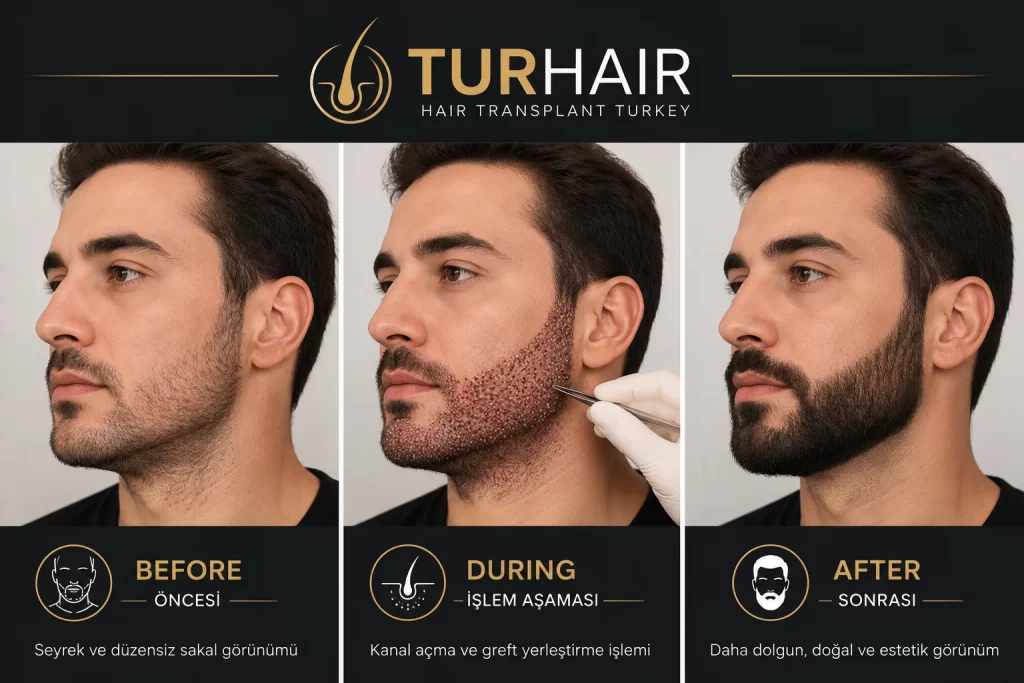
15. Can beard hair be used for a hair transplant?
16. What is included in TurHair’s all-inclusive packages?
17. How many days should I stay in Istanbul?
18. How much does a doctor-led hair transplant in Turkey cost?
19. Why do international patients choose TurHair?
20. How can I receive a personalized hair transplant assessment?
TurHair Istanbul
Have More Questions About Your Hair Transplant?
Request a personalized evaluation and learn how many grafts may be suitable for your donor area, hair loss pattern and long-term goals.
Continue Your Hair Transplant Research
Explore our doctor-led guides covering clinic selection, hair transplant costs, treatment safety, FUE and DHI techniques, recovery, international travel and natural hair restoration results in Turkey.
“Better Research Leads to Better Hair Transplant Decisions.”
Research the Procedure, Not Just the Price
The best hair transplant decision is based on doctor involvement, donor preservation, natural hairline planning, patient safety and long-term results. Use these guides to compare your options before selecting a clinic or treatment package.
TurHair · Dr. Mehmet Sıraç Demir
Ready for a Personalized Hair Analysis?
Send clear photographs of your hairline, top, crown and donor area to receive an initial doctor-led evaluation.
=