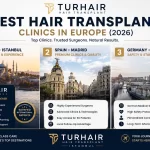
Best Hair Transplant Clinics in Europe
August 12, 2026
Best Hair Transplant in Turkey Price
August 13, 2026Where Is the Best Place to Get a Hair Transplant? Complete 2026 Guide
If you are experiencing hair loss and considering surgery, one of the first questions you will probably ask is: Where is the best place to get a hair transplant? The answer depends on more than simply choosing the cheapest country or the clinic with the biggest social-media following. A successful hair transplant requires an experienced medical team, careful donor-area management, natural hairline planning, appropriate graft handling and reliable postoperative care.
In 2026, patients commonly compare destinations such as Turkey, the United Kingdom, the United States, Spain, Germany and other European countries. Among these destinations, Istanbul has developed into one of the world’s most prominent centers for hair transplantation because of its large concentration of clinics, extensive international-patient infrastructure and experience with FUE-based procedures.
However, choosing Turkey alone does not guarantee a successful result. The individual doctor, medical team and treatment plan remain more important than the country itself.
What Is the Best Country for a Hair Transplant?
For international patients seeking a combination of experience, modern techniques and competitive treatment costs, Turkey is frequently considered one of the strongest destinations for hair transplantation. Istanbul in particular attracts patients from the UK, Germany, France, Spain, Italy, Scandinavia, the United States and many other countries.
The main reason is not simply lower pricing. Turkey has developed a highly specialized hair-transplant ecosystem. Because clinics treat large numbers of international patients, experienced teams can accumulate substantial practical exposure to different hair-loss patterns, donor characteristics and restoration requirements.
Nevertheless, patients should distinguish between experienced, medically supervised clinics and high-volume operations where important stages may be delegated without sufficient transparency. The International Society of Hair Restoration Surgery has specifically warned about hair-transplant procedures being performed by unlicensed individuals. Therefore, patients should investigate who actually performs the surgical stages, rather than selecting a clinic based purely on advertisements.
Why Is Istanbul Popular for Hair Transplants?
Istanbul has become particularly associated with modern hair restoration. The city combines experienced medical professionals with an infrastructure specifically designed for international patients.
Many clinics provide packages incorporating accommodation, airport transfers, medication, postoperative products and multilingual assistance. This can make treatment abroad significantly easier for patients who might otherwise need to organize every part of the journey independently.
Another important advantage is the availability of different transplantation approaches. Depending on the patient’s donor capacity, hair characteristics and recipient area, techniques may include FUE, Sapphire FUE and DHI implantation. However, the name of the technique should never be considered more important than surgical planning and the experience of the medical team.
Why Choose TurHair for a Hair Transplant in Istanbul?
When comparing hair transplant clinics in Turkey, price alone should not determine the final decision. The more important questions are who plans the procedure, who is medically responsible, how the donor area is protected, and whether the treatment is designed specifically for the patient. TurHair in Istanbul focuses on a doctor-led and individualized approach with transparent medical responsibility, long-term donor planning and natural hairline design.
| Comparison | TurHair & Dr. Mehmet Sıraç Demir | Typical High-Volume Hair Transplant Clinic |
|---|---|---|
| Doctor Identity | The responsible doctor is clearly identified. Patients can research Dr. Mehmet Sıraç Demir and understand the medical structure before booking. | The doctor’s role may be unclear, or patients may communicate mainly with sales representatives before arrival. |
| Hairline Design | Hairline planning is based on facial proportions, age, donor capacity, existing hair and long-term hair-loss progression. | Hairlines may follow more standardized patterns designed to process multiple patients efficiently. |
| Donor Area Management | The objective is to extract an appropriate number of grafts while preserving donor appearance and future options. | Marketing may focus heavily on maximum graft numbers rather than long-term donor preservation. |
| Treatment Planning | Each case is evaluated individually according to baldness pattern, donor strength, hair characteristics and treatment goals. | Patients may be offered similar graft numbers or packages despite having different levels of hair loss. |
| Available Techniques | Depending on medical assessment, options may include FUE, Sapphire FUE and DHI. | One technique may be marketed as the “best” method for almost every patient. |
| Graft Philosophy | The aim is not simply to transplant the highest possible number of grafts, but to use the available donor supply strategically. | Higher graft counts may be promoted as the main indicator of value. |
| Natural Result Focus | Hairline shape, graft distribution, angles, density strategy and facial harmony are considered together. | The main sales message may focus more on graft quantity and package price than aesthetic planning. |
| Medical Transparency | Patients are encouraged to understand who is responsible for their treatment and what the procedure includes. | Responsibilities may be described generally as being performed by “the medical team.” |
| International Patient Support | Treatment packages can include accommodation, transfers, medications, postoperative products and multilingual assistance. | Services vary considerably and may involve additional arrangements or unclear inclusions. |
| Long-Term Strategy | Future hair loss and possible second-session requirements are considered when planning the first transplant. | Planning may focus primarily on achieving the strongest immediate visual transformation. |
| Patient Volume | The treatment model emphasizes individualized assessment and medical attention rather than mass-processing patients. | High-volume clinics may manage several surgeries within the same day. |
| Price Philosophy | Competitive Istanbul pricing is combined with doctor-led planning, travel support and clearly structured packages. | The lowest advertised price may be used as the principal competitive advantage. |
TurHair: Not Maximum Grafts. Not Mass Production.
A Personalized Hair Transplant Plan Built Around Your Donor Area, Hairline and Long-Term Result.
The TurHair Difference: Doctor-Led Hair Transplant Planning
One of the most important differences between TurHair and many high-volume hair transplant clinics in Istanbul is the emphasis on medical transparency and individualized planning. Patients should know the identity of the doctor associated with their treatment, understand the role of the medical team and receive a treatment strategy based on their own donor capacity rather than a generic graft promise.
At TurHair, Dr. Mehmet Sıraç Demir is presented openly as the doctor connected with the hair transplant program. Depending on the selected package and individual assessment, his involvement can include essential planning stages such as hairline design and recipient-site creation. This doctor-led structure is particularly important for patients who want greater clarity about who is responsible for the medical and aesthetic aspects of their procedure.
Another central difference is the approach to donor area preservation. A hair transplant should not be treated as a competition to remove the highest possible number of grafts. Every patient’s donor supply is limited, and aggressive extraction can affect both the appearance of the donor region and the possibility of additional treatment in the future. TurHair therefore focuses on balancing coverage, density and long-term donor safety.
The treatment technique is also selected according to the individual case. Depending on hair characteristics, recipient area and medical assessment, the procedure may involve FUE, Sapphire FUE or DHI hair transplantation. Rather than presenting one technique as universally superior, the objective is to choose the method that best supports the patient’s treatment plan.
TurHair Hair Transplant Packages
| Package | Starting Price | Main Features |
|---|---|---|
| STANDARD | €2,500 | FUE hair transplant up to the medically appropriate graft limit, doctor supervision, hotel accommodation, transfers, medication, postoperative products and patient assistance. |
| VIP | €3,000 | Includes additional doctor involvement, personalized hairline design, recipient-site planning, PRP, hotel, transfers, medication and postoperative support. |
| VIP PLUS | €3,500 | Premium treatment planning with Sapphire FUE or DHI where medically appropriate, enhanced doctor involvement and international patient services. |
*Final technique, graft number and treatment plan are determined after individual medical assessment. Prices and package contents should be reconfirmed before booking.
Why This Matters When Choosing the Best Hair Transplant Clinic
The difference between hair transplant clinics is not simply whether they use FUE or DHI. The real difference is who plans the surgery, how the donor area is managed, how the hairline is designed and whether the procedure is adapted to the patient’s long-term needs. For patients searching for the best place to get a hair transplant in Turkey, these factors can be far more meaningful than choosing a clinic solely because it advertises the lowest price or highest graft number.
Turkey vs UK, USA and Europe: Which Is Better?
| Factor | Turkey | UK | USA | Western Europe |
|---|---|---|---|---|
| Hair Transplant Experience | Very High | High | High | High |
| FUE Availability | Extensive | Extensive | Extensive | Extensive |
| Typical Cost Level | €€ | €€€€ | €€€€€ | €€€–€€€€ |
| Medical Tourism Infrastructure | Very High | Moderate | Moderate | Moderate |
| All-Inclusive Packages | Common | Less Common | Less Common | Varies |
These comparisons are general rather than guarantees. An excellent surgeon in London, Madrid or New York may be preferable to an inexperienced clinic in Istanbul. Geography should therefore be treated as only one part of the decision.
What Should You Look for in the Best Hair Transplant Clinic?
Instead of searching only for the cheapest hair transplant, patients should evaluate several medical and practical factors.
1. Identify the Doctor
You should know the identity of the physician responsible for your treatment before booking. Ask about the doctor’s education, experience and responsibilities during the operation.
2. Ask Who Performs Each Stage
This is particularly important. Ask who performs the consultation, hairline design, donor planning, extraction, recipient-site creation and implantation. The answer should be clear rather than hidden behind phrases such as “our professional medical team.”
3. Examine Real Patient Results
Before-and-after photographs should show comparable lighting, angles and hair length whenever possible. Look beyond dramatic transformations and evaluate the hairline, density, donor area and overall natural appearance.
4. Evaluate Donor Management
A hair transplant does not create new follicles. It redistributes a limited supply of permanent donor hair. Consequently, removing the maximum possible number of grafts is not automatically better.
Experienced planning should consider current baldness, donor density, hair caliber, age and the possibility of future hair loss. Overharvesting can leave visible thinning in the donor area and reduce options for future procedures.
5. Consider Long-Term Hairline Design
A very low or aggressive hairline can look attractive immediately after surgery but may become unnatural as the patient ages or experiences additional hair loss. Hairline design should therefore balance density, facial proportions, available grafts and long-term progression.
Is FUE or DHI Better?
Patients frequently search for the best hair transplant technique, but there is no universal method that is automatically superior for every patient.
FUE describes follicular-unit extraction from the donor region. Sapphire FUE generally refers to the use of sapphire blades when creating recipient sites. DHI usually refers to implantation using an implanter-type device. The appropriate approach depends on the patient’s individual case and the clinic’s protocol.
The surgeon’s planning, graft handling, donor management, recipient-site direction and medical standards can ultimately be more important than marketing terminology surrounding a particular technique.
Is Turkey Safe for Hair Transplants?
Hair transplantation is surgery, so no destination can be described as completely risk-free. Possible complications can include bleeding, infection, scarring, poor graft growth and an unsatisfactory cosmetic outcome. The NHS similarly advises patients considering hair transplantation to investigate the surgeon’s qualifications, experience, complication history and follow-up arrangements.
Turkey has both highly experienced hair-restoration professionals and very high-volume providers. This makes careful clinic selection especially important. Patients should avoid choosing solely according to Instagram followers, advertising campaigns or unusually low prices.
How Much Does a Hair Transplant Cost?
Hair transplant prices vary considerably according to the country, surgeon, clinic model, number of grafts and complexity of the procedure.
Turkey is generally more affordable than countries such as the United States and United Kingdom because operating expenses, staffing costs and general healthcare costs differ substantially. Lower prices therefore do not automatically indicate lower medical quality.
At the same time, the lowest available price should not be the primary selection criterion. Saving several hundred euros is rarely worthwhile if it means compromising donor management, medical supervision or postoperative support.
Why Patients Consider TurHair in Istanbul
For patients researching hair transplantation in Istanbul, TurHair follows a doctor-led treatment model centered on individualized assessment rather than selecting a procedure purely according to graft numbers.
At TurHair, the objective is to evaluate the donor area, degree of hair loss, facial proportions and long-term restoration strategy before determining the appropriate transplantation plan. Depending on the selected package and medical assessment, treatment may involve FUE, Sapphire FUE or DHI-based implantation.
The clinic works with Dr. Mehmet Sıraç Demir, with particular emphasis placed on transparent doctor identity, hairline planning, medical supervision and clear communication regarding the responsibilities of the medical team.
International patients can also receive assistance with the practical aspects of their treatment journey, including accommodation, transfers and postoperative instructions depending on their package.
So, Where Is the Best Place to Get a Hair Transplant?
For many international patients, Istanbul, Turkey is one of the strongest destinations to consider for a hair transplant because it combines extensive hair-restoration experience, modern FUE and DHI options, competitive pricing and established medical-tourism infrastructure.
But the best place is ultimately not simply a country or city. It is a clinic where you know who the doctor is, who performs the critical stages of the procedure, how your donor area will be protected and what long-term plan is being created for your hair loss.
Whether you choose Istanbul, London, New York, Madrid or another destination, investigate the medical team rather than relying solely on clinic branding. Ask detailed questions, compare genuine patient results and understand exactly what will happen during your operation.
A hair transplant can affect your appearance for decades. The best decision therefore comes from balancing safety, surgeon experience, natural design, donor preservation, transparent medical involvement and realistic expectations—not simply finding the cheapest package.
How to Choose the Best Place for a Hair Transplant in 2026
Once you have narrowed your search to several countries or clinics, the next step is determining which option is genuinely suitable for your individual hair-loss pattern. Searching Google for “Where is the best place to get a hair transplant?” can produce hundreds of clinics claiming to offer the best results, latest technology or highest graft numbers. However, hair transplantation should never be evaluated like an ordinary consumer purchase. It is a medical procedure that permanently changes both the donor and recipient areas.
The best hair transplant clinic should therefore offer more than an attractive package. Patients should look for transparent medical responsibility, realistic graft planning, careful donor management, natural hairline design and structured postoperative care. These factors can be especially important for international patients traveling to destinations such as Istanbul, Turkey for treatment.
Why Surgeon Experience Matters More Than the Country
Turkey, the United Kingdom, Spain, Germany and the United States all have experienced hair transplant doctors. At the same time, quality can vary considerably between individual providers within the same country.
This is why asking “What is the best country for a hair transplant?” is only the beginning of the research process. A better question is: Who will evaluate my hair loss, design my hairline, plan my donor area and take medical responsibility for my procedure?
Hair transplantation requires both medical judgment and aesthetic planning. Two patients with apparently similar baldness may require very different strategies because their donor density, hair thickness, scalp characteristics, age and expected future hair loss can be different.
A responsible treatment plan should therefore be personalized rather than based exclusively on a predetermined graft target.
Why Turkey Has Become a Global Hair Transplant Destination
Turkey’s reputation for hair transplantation developed over many years. Istanbul now receives thousands of international patients researching FUE hair transplant, Sapphire FUE and DHI hair transplant procedures.
One important factor is treatment volume. Hair restoration has become a highly specialized field within Turkey’s medical-tourism sector, allowing experienced doctors and medical teams to focus extensively on hair transplantation.
Another advantage is accessibility. Istanbul has direct flight connections with numerous European, Middle Eastern and international cities. Patients traveling from London, Berlin, Amsterdam, Paris, Madrid, Rome or Scandinavian capitals can often reach Istanbul without complicated travel arrangements.
Many Turkish hair transplant packages also combine the procedure with hotel accommodation, private transfers, medication and postoperative products. For an international patient, this can simplify the entire treatment journey.
Hair Transplant in Turkey vs Europe: Why Is There a Price Difference?
One common misconception is that lower hair transplant prices in Turkey necessarily mean lower quality. In reality, treatment costs are influenced by numerous economic factors, including salaries, clinic operating expenses, property costs and local healthcare pricing.
A comparable procedure in London, New York or another high-cost city can therefore be significantly more expensive without automatically providing a better cosmetic outcome.
However, patients should also avoid the opposite mistake: assuming every inexpensive Turkish clinic represents good value.
Extremely low prices can sometimes indicate a high-volume business model in which multiple patients are treated simultaneously and important stages are heavily delegated. Price should consequently be evaluated together with doctor involvement, medical standards, experience and transparency.
How Many Grafts Do You Really Need?
Another important factor when choosing the best hair transplant clinic is graft planning. Patients frequently assume that a higher graft number automatically produces a better result. This is not always true.
The donor region contains a limited number of follicles that can be safely redistributed. Once grafts have been extracted, they cannot simply be replaced. Aggressive harvesting may create visible donor thinning and leave fewer grafts available if another procedure becomes necessary later.
The required graft number should instead be determined by factors such as:
- Current Norwood hair-loss pattern
- Size of the recipient area
- Donor density and donor quality
- Hair shaft thickness
- Hair-to-skin contrast
- Desired hairline position
- Existing native hair
- Potential future hair loss
- Possibility of requiring a second procedure
For this reason, statements promising a fixed number such as 4,000 or 5,000 grafts before properly evaluating the donor area should be interpreted carefully. The goal should be the appropriate number of safely obtainable grafts, not simply the largest possible number.
Natural Hairline Design Can Determine the Final Result
A successful hair transplant is not measured only by whether transplanted follicles grow. The final result should also appear natural.
Hairline design plays a major role in achieving this. A natural frontal hairline should consider the patient’s facial proportions, age, existing hair pattern and available donor supply.
The frontal zone generally requires careful distribution of finer follicular units. Direction and angle are also important because transplanted hairs that emerge at unnatural angles may remain noticeable even when overall density is good.
This is one reason patients comparing hair transplant clinics should ask specifically who designs the hairline and who creates the recipient sites. These stages can significantly influence the appearance of the final result.
What Are the Biggest Red Flags When Choosing a Hair Transplant Clinic?
Hair Transplant Clinic Warning Signs
- The doctor responsible for treatment is not clearly identified.
- The clinic cannot explain who performs each stage of surgery.
- Every patient is promised approximately the same graft number.
- Extremely aggressive density or hairline promises are made without donor assessment.
- The consultation focuses almost entirely on price.
- Guaranteed results are promised without discussing medical limitations.
- Only immediate postoperative photographs are presented as evidence of success.
- The clinic pressures patients to pay immediately to secure a discount.
- Long-term hair loss and donor preservation are barely discussed.
No single factor automatically proves that a clinic is unsuitable. Nevertheless, several warning signs appearing together should encourage a patient to conduct additional research before booking.
Should You Choose the Cheapest Hair Transplant?
Cost naturally matters, especially when procedures in some countries can cost several times more than treatment abroad. But choosing a clinic exclusively according to price can be risky.
A hair transplant is fundamentally different from purchasing a hotel room or airline ticket. If you dislike a hotel, you can choose another one next time. Poor donor extraction or an unnatural transplanted hairline can be much more difficult to correct.
Patients should therefore compare what is actually included in each quotation. Does the price include consultation, procedure, medication, postoperative washing, accommodation, transportation and follow-up? More importantly, what level of doctor involvement is included?
Is Istanbul the Best City for a Hair Transplant?
For international patients, Istanbul is arguably one of the most established cities in the world for hair transplantation. Its combination of specialized providers, international accessibility, competitive prices and medical-tourism infrastructure makes it particularly attractive.
That does not mean every Istanbul clinic is automatically superior to clinics elsewhere. The large number of providers makes careful selection even more important.
Patients should compare clinics according to measurable factors rather than advertising claims. Look at the doctor’s background, understand the surgical workflow, review long-term results and ask how many patients are treated each day.
Why a Doctor-Led Approach Matters at TurHair
At TurHair in Istanbul, the treatment philosophy focuses on transparent medical responsibility and individualized planning with Dr. Mehmet Sıraç Demir. Instead of presenting graft numbers as the only measure of value, the assessment considers the donor area’s capacity, recipient area, hair characteristics and long-term hair-loss pattern.
Depending on the patient’s assessment and selected treatment plan, procedures may incorporate FUE, Sapphire FUE or DHI techniques. The purpose of selecting a technique is not simply to use a popular marketing term, but to choose an approach appropriate for the patient’s individual requirements.
International patients can also receive organized logistical support depending on their package, including accommodation and transfers. This allows the patient to focus primarily on the procedure and early recovery rather than coordinating multiple services independently.
What Questions Should You Ask Before Booking?
Before paying a deposit or booking flights, patients should ask several direct questions. Who is the responsible doctor? Who designs the hairline? Who performs the extraction? Who creates the recipient sites? How is the graft number calculated? How many patients are treated simultaneously? What happens if additional hair loss develops? What postoperative support is available after returning home?
A reputable provider should be able to answer these questions clearly. Transparency before surgery can be just as important as communication on the operation day.
Best Place to Get a Hair Transplant: Final Verdict
If cost, experience, accessibility and the availability of modern hair restoration techniques are considered together, Istanbul, Turkey remains one of the leading destinations for hair transplantation in 2026. Its established medical-tourism infrastructure and concentration of hair restoration providers make it especially attractive to international patients.
Nevertheless, the best place to get a hair transplant should never be selected by country alone. A patient should identify an experienced doctor, understand exactly who performs the important stages, evaluate genuine long-term results and confirm that donor preservation is incorporated into the treatment strategy.
The central principle is simple: choose the medical team first and the destination second. A carefully planned transplant should aim not merely to move the maximum number of grafts, but to produce a natural appearance while preserving valuable donor resources for the future.
For patients comparing hair transplant clinics in Turkey, Europe, the UK or the USA, this combination of medical transparency, experience, natural design, donor management and realistic expectations is ultimately what defines the best place to get a hair transplant.
How to Choose the Best Place for a Hair Transplant in 2026
Once you have narrowed your search to several countries or clinics, the next step is determining which option is genuinely suitable for your individual hair-loss pattern. Searching Google for “Where is the best place to get a hair transplant?” can produce hundreds of clinics claiming to offer the best results, latest technology or highest graft numbers. However, hair transplantation should never be evaluated like an ordinary consumer purchase. It is a medical procedure that permanently changes both the donor and recipient areas.
The best hair transplant clinic should therefore offer more than an attractive package. Patients should look for transparent medical responsibility, realistic graft planning, careful donor management, natural hairline design and structured postoperative care. These factors can be especially important for international patients traveling to destinations such as Istanbul, Turkey for treatment.
Why Surgeon Experience Matters More Than the Country
Turkey, the United Kingdom, Spain, Germany and the United States all have experienced hair transplant doctors. At the same time, quality can vary considerably between individual providers within the same country.
This is why asking “What is the best country for a hair transplant?” is only the beginning of the research process. A better question is: Who will evaluate my hair loss, design my hairline, plan my donor area and take medical responsibility for my procedure?
Hair transplantation requires both medical judgment and aesthetic planning. Two patients with apparently similar baldness may require very different strategies because their donor density, hair thickness, scalp characteristics, age and expected future hair loss can be different.
A responsible treatment plan should therefore be personalized rather than based exclusively on a predetermined graft target.
Why Turkey Has Become a Global Hair Transplant Destination
Turkey’s reputation for hair transplantation developed over many years. Istanbul now receives thousands of international patients researching FUE hair transplant, Sapphire FUE and DHI hair transplant procedures.
One important factor is treatment volume. Hair restoration has become a highly specialized field within Turkey’s medical-tourism sector, allowing experienced doctors and medical teams to focus extensively on hair transplantation.
Another advantage is accessibility. Istanbul has direct flight connections with numerous European, Middle Eastern and international cities. Patients traveling from London, Berlin, Amsterdam, Paris, Madrid, Rome or Scandinavian capitals can often reach Istanbul without complicated travel arrangements.
Many Turkish hair transplant packages also combine the procedure with hotel accommodation, private transfers, medication and postoperative products. For an international patient, this can simplify the entire treatment journey.
Hair Transplant in Turkey vs Europe: Why Is There a Price Difference?
One common misconception is that lower hair transplant prices in Turkey necessarily mean lower quality. In reality, treatment costs are influenced by numerous economic factors, including salaries, clinic operating expenses, property costs and local healthcare pricing.
A comparable procedure in London, New York or another high-cost city can therefore be significantly more expensive without automatically providing a better cosmetic outcome.
However, patients should also avoid the opposite mistake: assuming every inexpensive Turkish clinic represents good value.
Extremely low prices can sometimes indicate a high-volume business model in which multiple patients are treated simultaneously and important stages are heavily delegated. Price should consequently be evaluated together with doctor involvement, medical standards, experience and transparency.
How Many Grafts Do You Really Need?
Another important factor when choosing the best hair transplant clinic is graft planning. Patients frequently assume that a higher graft number automatically produces a better result. This is not always true.
The donor region contains a limited number of follicles that can be safely redistributed. Once grafts have been extracted, they cannot simply be replaced. Aggressive harvesting may create visible donor thinning and leave fewer grafts available if another procedure becomes necessary later.
The required graft number should instead be determined by factors such as:
- Current Norwood hair-loss pattern
- Size of the recipient area
- Donor density and donor quality
- Hair shaft thickness
- Hair-to-skin contrast
- Desired hairline position
- Existing native hair
- Potential future hair loss
- Possibility of requiring a second procedure
For this reason, statements promising a fixed number such as 4,000 or 5,000 grafts before properly evaluating the donor area should be interpreted carefully. The goal should be the appropriate number of safely obtainable grafts, not simply the largest possible number.
Natural Hairline Design Can Determine the Final Result
A successful hair transplant is not measured only by whether transplanted follicles grow. The final result should also appear natural.
Hairline design plays a major role in achieving this. A natural frontal hairline should consider the patient’s facial proportions, age, existing hair pattern and available donor supply.
The frontal zone generally requires careful distribution of finer follicular units. Direction and angle are also important because transplanted hairs that emerge at unnatural angles may remain noticeable even when overall density is good.
This is one reason patients comparing hair transplant clinics should ask specifically who designs the hairline and who creates the recipient sites. These stages can significantly influence the appearance of the final result.
What Are the Biggest Red Flags When Choosing a Hair Transplant Clinic?
Hair Transplant Clinic Warning Signs
- The doctor responsible for treatment is not clearly identified.
- The clinic cannot explain who performs each stage of surgery.
- Every patient is promised approximately the same graft number.
- Extremely aggressive density or hairline promises are made without donor assessment.
- The consultation focuses almost entirely on price.
- Guaranteed results are promised without discussing medical limitations.
- Only immediate postoperative photographs are presented as evidence of success.
- The clinic pressures patients to pay immediately to secure a discount.
- Long-term hair loss and donor preservation are barely discussed.
No single factor automatically proves that a clinic is unsuitable. Nevertheless, several warning signs appearing together should encourage a patient to conduct additional research before booking.
Should You Choose the Cheapest Hair Transplant?
Cost naturally matters, especially when procedures in some countries can cost several times more than treatment abroad. But choosing a clinic exclusively according to price can be risky.
A hair transplant is fundamentally different from purchasing a hotel room or airline ticket. If you dislike a hotel, you can choose another one next time. Poor donor extraction or an unnatural transplanted hairline can be much more difficult to correct.
Patients should therefore compare what is actually included in each quotation. Does the price include consultation, procedure, medication, postoperative washing, accommodation, transportation and follow-up? More importantly, what level of doctor involvement is included?
Is Istanbul the Best City for a Hair Transplant?
For international patients, Istanbul is arguably one of the most established cities in the world for hair transplantation. Its combination of specialized providers, international accessibility, competitive prices and medical-tourism infrastructure makes it particularly attractive.
That does not mean every Istanbul clinic is automatically superior to clinics elsewhere. The large number of providers makes careful selection even more important.
Patients should compare clinics according to measurable factors rather than advertising claims. Look at the doctor’s background, understand the surgical workflow, review long-term results and ask how many patients are treated each day.
Why a Doctor-Led Approach Matters at TurHair
At TurHair in Istanbul, the treatment philosophy focuses on transparent medical responsibility and individualized planning with Dr. Mehmet Sıraç Demir. Instead of presenting graft numbers as the only measure of value, the assessment considers the donor area’s capacity, recipient area, hair characteristics and long-term hair-loss pattern.
Depending on the patient’s assessment and selected treatment plan, procedures may incorporate FUE, Sapphire FUE or DHI techniques. The purpose of selecting a technique is not simply to use a popular marketing term, but to choose an approach appropriate for the patient’s individual requirements.
International patients can also receive organized logistical support depending on their package, including accommodation and transfers. This allows the patient to focus primarily on the procedure and early recovery rather than coordinating multiple services independently.
What Questions Should You Ask Before Booking?
Before paying a deposit or booking flights, patients should ask several direct questions. Who is the responsible doctor? Who designs the hairline? Who performs the extraction? Who creates the recipient sites? How is the graft number calculated? How many patients are treated simultaneously? What happens if additional hair loss develops? What postoperative support is available after returning home?
A reputable provider should be able to answer these questions clearly. Transparency before surgery can be just as important as communication on the operation day.
Best Place to Get a Hair Transplant: Final Verdict
If cost, experience, accessibility and the availability of modern hair restoration techniques are considered together, Istanbul, Turkey remains one of the leading destinations for hair transplantation in 2026. Its established medical-tourism infrastructure and concentration of hair restoration providers make it especially attractive to international patients.
Nevertheless, the best place to get a hair transplant should never be selected by country alone. A patient should identify an experienced doctor, understand exactly who performs the important stages, evaluate genuine long-term results and confirm that donor preservation is incorporated into the treatment strategy.
The central principle is simple: choose the medical team first and the destination second. A carefully planned transplant should aim not merely to move the maximum number of grafts, but to produce a natural appearance while preserving valuable donor resources for the future.
For patients comparing hair transplant clinics in Turkey, Europe, the UK or the USA, this combination of medical transparency, experience, natural design, donor management and realistic expectations is ultimately what defines the best place to get a hair transplant.
What Makes a Hair Transplant Result Look Truly Natural?
When researching where is the best place to get a hair transplant, patients often focus on graft numbers, technique names and prices. However, the quality of a hair transplant is ultimately judged by how natural the final result looks. A successful procedure should not immediately reveal that the patient has undergone surgery. The transplanted hair should blend with existing hair, follow appropriate growth directions and create a hairline that suits the patient’s face and age.
Naturalness depends on several details working together. Hairline position, irregularity, graft distribution, density, direction and donor selection all influence the final appearance. This is why simply transplanting a large number of grafts does not guarantee an aesthetically successful result.
The best hair transplant clinics should approach the procedure as both a medical and aesthetic treatment. Planning should be based on the patient’s current hair loss while also considering how the appearance may change over the following years.
Why Single-Hair Grafts Are Important in the Frontal Hairline
Natural human hairlines are not usually formed by a perfectly straight wall of thick hair. The transition from forehead to denser hair is more gradual. For this reason, carefully selected follicular units containing fewer hairs are commonly important around the frontal edge.
Behind this transition zone, grafts containing more hairs can be strategically distributed to create the impression of greater density. The exact approach depends on the patient’s anatomy and available donor supply.
This level of detail is one reason why patients should investigate the medical team rather than simply searching for the cheapest hair transplant in Turkey. Two clinics may transplant a similar number of grafts but produce very different aesthetic outcomes depending on planning, graft selection and placement.
Why Donor Area Quality Can Be More Important Than Graft Numbers
The donor area is the foundation of every hair transplant. In most cases, follicles are extracted from the back and sides of the scalp because these regions generally contain hair that is more resistant to androgen-related hair loss.
But donor capacity is not unlimited.
A patient may request 5,000 grafts because another clinic advertised that number, while a safe extraction plan for that particular donor area could be significantly different. Attempting to reach an arbitrary graft target can potentially compromise donor appearance.
An appropriate donor assessment should consider density, hair caliber, follicular distribution, scalp characteristics and the size of the safe donor region. Future needs should also be considered, particularly in younger patients or those with progressive androgenetic alopecia.
Therefore, when comparing the best hair transplant clinics in Istanbul, patients should ask how donor capacity is calculated rather than asking only how many grafts the clinic promises.
Hair Transplant for Advanced Hair Loss
Patients with advanced baldness require especially careful planning. When the frontal area, mid-scalp and crown are all affected, the available donor supply may not be sufficient to restore every area at maximum density.
In these situations, strategic distribution becomes important. The frontal region often has a particularly strong impact on a person’s appearance because it frames the face. Depending on the individual case, a treatment plan may prioritize frontal reconstruction and mid-scalp coverage rather than attempting unrealistic density across the entire scalp.
Some patients may also require more than one procedure over time. This possibility should be discussed during planning rather than discovered only after the first transplant.
Should You Travel Abroad for a Hair Transplant?
Medical travel has made it possible for patients to access experienced hair restoration providers outside their home countries. This is particularly relevant for people living in countries where private hair transplantation can be expensive.
A patient in London, for example, may compare treatment locally with a hair transplant in Istanbul. A patient in New York may compare American surgical fees with treatment in Turkey. Similar comparisons are increasingly common among patients from Germany, Spain, France, Belgium, the Netherlands and Scandinavia.
Traveling abroad can provide substantial financial advantages, but price should not be the only reason for traveling. Patients should understand how communication, follow-up and postoperative support will work after returning home.
How Long Should You Stay in Turkey After a Hair Transplant?
Many international hair transplant journeys are relatively short. Depending on the clinic’s protocol and the patient’s treatment plan, the trip may include arrival before surgery, the operation itself and an initial postoperative check or washing session.
Patients should confirm the schedule before purchasing flights. It is also sensible to allow sufficient time for unexpected travel delays rather than arranging an extremely tight itinerary immediately around the procedure.
The first days after transplantation are important because the recipient area needs to be protected from unnecessary contact, scratching and trauma. Patients should follow the postoperative instructions supplied by their medical team rather than relying exclusively on general advice found online.
When Will You See the Final Hair Transplant Result?
A hair transplant does not create an instant final result. The appearance changes gradually over several months.
During the early period, transplanted hairs may shed. This can concern patients who are unfamiliar with the normal recovery process, but shedding of the visible hair shaft does not necessarily mean that the transplanted follicle has been lost.
New growth generally becomes progressively more noticeable over the following months. Hair can continue to mature, thicken and improve in appearance for an extended period. Crown areas may sometimes develop differently from frontal regions.
This is why patients comparing before-and-after photographs should pay attention to the timeframe. Photographs taken only a few weeks or months after surgery should not be treated as evidence of a final result.
Can a Hair Transplant Fail?
Like any surgical procedure, hair transplantation cannot offer an absolute guarantee of a particular cosmetic result. Outcomes can be influenced by patient biology, surgical planning, graft handling, postoperative care, scalp characteristics and other individual factors.
Potential problems can include insufficient density, unnatural direction, poor hairline design, excessive donor extraction, scarring, infection or lower-than-expected graft survival. Some complications are uncommon when appropriate medical standards are followed, but patients should still understand that no responsible clinic can promise perfection.
Be cautious when advertisements use phrases such as “100% guaranteed result” or suggest that every transplanted follicle will definitely survive. Ethical medical communication should include realistic expectations and limitations.
Hair Transplant Turkey: Cheap Clinic vs Doctor-Led Clinic
| Comparison | High-Volume Model | Doctor-Led Approach |
|---|---|---|
| Doctor Identity | May not always be emphasized | Clearly identified |
| Hairline Planning | May follow standardized patterns | Individual facial assessment |
| Donor Strategy | Graft-number focused | Long-term donor preservation |
| Patient Planning | More standardized | Case-specific |
| Primary Selling Point | Price / maximum grafts | Medical planning / natural result |
This does not mean that every large clinic produces poor results or that every small clinic provides superior treatment. The important issue is transparency. Patients should understand the treatment model before making their decision.
Why TurHair Focuses on Individual Hair Transplant Planning
At TurHair in Istanbul, patients are evaluated according to their individual hair-loss characteristics rather than being placed into a universal treatment template. The assessment considers the recipient area, donor capacity, existing hair, expected graft requirements and the overall objective of the procedure.
The clinic works with Dr. Mehmet Sıraç Demir and emphasizes a doctor-led approach with transparent information about medical involvement. Hairline planning and the distribution of available grafts are considered important components of achieving a natural-looking result.
Depending on the patient’s suitability and treatment plan, options can include FUE, Sapphire FUE and DHI hair transplantation. Technique selection should be based on the patient’s needs rather than automatically recommending the same method to everyone.
Why the Cheapest Hair Transplant Package Can Become Expensive
A low initial price can be attractive, particularly when comparing clinics online. But corrective surgery can be considerably more complicated than a properly planned first procedure.
If excessive grafts are removed from the donor region, the remaining supply may be insufficient for correction. Likewise, an unnaturally low hairline can consume valuable grafts that might have been needed to compensate for future hair loss.
Patients should therefore think in terms of lifetime donor management rather than simply the price of one operation.
A hair transplant should be planned for the next 10–20 years — not only for the next 10 months.
What Is the Best Age for a Hair Transplant?
There is no universal best age. Suitability depends more on the stability and pattern of hair loss than on a single number.
Younger patients require particularly careful assessment because their hair loss may continue substantially after transplantation. Creating an extremely low, dense hairline at a young age can consume a large portion of the available donor supply while untreated hair behind the transplanted region continues to thin.
Older patients can also be excellent candidates when donor quality and general medical suitability are appropriate. Ultimately, treatment should be based on the individual rather than age alone.
How to Compare Hair Transplant Clinics Before Booking
Create a shortlist and compare clinics using the same criteria. Identify the doctor, determine the doctor’s responsibilities, evaluate donor planning, examine comparable before-and-after results and understand the postoperative process.
Do not automatically select the provider offering the highest graft number. Likewise, do not assume the most expensive clinic must be the best.
The objective is to identify the strongest combination of medical responsibility, surgical experience, aesthetic planning, donor preservation, transparency and value.
Where Is the Best Place to Get a Hair Transplant in Europe?
Europe offers many established hair restoration options, including clinics in the UK, Spain, Germany, Belgium and other countries. However, treatment costs can be significantly higher depending on the location and surgeon.
For this reason, many European patients include Istanbul when comparing their options. Short flights from many European cities, extensive medical-tourism infrastructure and competitive treatment costs have helped make Turkey one of the most searched destinations for hair transplantation.
Patients should still remember that “Turkey” is not a quality standard by itself. The final decision must always come down to the individual clinic and medical team.
Where Is the Best Place to Get a Hair Transplant? The Bottom Line
For patients asking “Where is the best place in the world to get a hair transplant?”, there is no single clinic or country that can objectively be declared best for every individual. However, Istanbul, Turkey remains one of the leading destinations to consider in 2026 because of its extensive hair transplant experience, competitive costs, international accessibility and wide availability of FUE-based procedures.
The smartest approach is to compare doctors rather than advertisements. Verify who will be medically responsible for your operation. Ask who designs the hairline, who manages the donor area and who performs the critical surgical stages. Evaluate realistic long-term results rather than promotional promises.
Ultimately, the best place for a hair transplant is where your procedure is planned specifically for your face, donor capacity and future hair-loss pattern. A successful hair transplant should preserve the donor area, create natural proportions and remain aesthetically appropriate as you age.
For patients considering hair transplantation in Turkey, Istanbul offers numerous options. Choosing carefully among those options is far more important than simply choosing the city itself.
Hair Transplant FAQ: 20 Common Questions Answered
1. Where is the best place to get a hair transplant?
The best place is a clinic with an experienced medical team, transparent doctor involvement, careful donor management and natural hairline planning. Istanbul, Turkey is one of the most popular international destinations because it combines extensive hair transplant experience with competitive pricing and strong medical-tourism infrastructure.
2. Is Turkey a good country for a hair transplant?
Yes. Turkey, particularly Istanbul, is widely known for FUE, Sapphire FUE and DHI procedures. However, patients should compare individual doctors and clinics rather than assuming every clinic in Turkey offers the same quality.
3. Why are hair transplants cheaper in Turkey?
Hair transplant prices in Turkey are generally lower because of differences in operating costs, staffing expenses and healthcare pricing. Lower cost does not automatically mean lower quality, but extremely cheap offers should still be evaluated carefully.
4. Is Istanbul the best city for a hair transplant?
Istanbul is one of the leading global destinations for hair transplantation due to its large concentration of experienced clinics, international flight connections and established medical-tourism services.
5. How much does a hair transplant cost in Turkey?
Prices vary according to the clinic, doctor involvement, graft requirements, technique and package contents. At TurHair, packages are structured according to treatment level and medical assessment, with options including FUE, Sapphire FUE and DHI where appropriate.
6. How many grafts do I need?
The required number of grafts depends on the size of the balding area, donor density, hair thickness, hairline position and expected future hair loss. A responsible clinic should determine graft numbers after evaluating the individual donor area.
7. Is 5,000 grafts too many?
Not necessarily, but 5,000 grafts is not appropriate for every patient. The safe number depends on donor capacity. Excessive harvesting can leave the donor area visibly thin and reduce options for future surgery.
8. Is FUE better than DHI?
Neither technique is automatically better for every patient. FUE describes the follicular extraction process, while DHI generally refers to implantation with an implanter device. The most suitable method depends on the patient’s hair-loss pattern and treatment plan.
9. What is Sapphire FUE?
Sapphire FUE generally refers to an FUE procedure where sapphire blades are used during recipient-site creation. The quality of the final result still depends heavily on planning, graft handling, hairline design and medical experience.
10. How long does a hair transplant take?
Many hair transplant procedures require several hours and may take most of the day. The exact duration depends on the graft number, technique and complexity of the case.
11. Is a hair transplant painful?
Hair transplantation is typically performed under local anesthesia. Patients may experience temporary discomfort during anesthetic administration and some sensitivity or tightness during the early recovery period.
12. When does transplanted hair start growing?
Transplanted hairs commonly shed during the early recovery period. New growth develops gradually over the following months, and the final appearance can continue improving for approximately a year or longer depending on the area treated.
13. Are hair transplant results permanent?
Transplanted follicles are generally selected from areas that are more resistant to androgen-related hair loss. However, the patient’s existing non-transplanted hair can continue thinning, which is why long-term planning is important.
14. Can a hair transplant look completely natural?
A well-planned procedure can look very natural. Important factors include hairline design, correct graft distribution, appropriate angles, donor quality and careful use of single-hair follicular units around the frontal transition zone.
15. What happens if I continue losing hair after the transplant?
Native hair may continue thinning after surgery. This is why the original procedure should be planned with future hair loss in mind. Some patients may later require medical treatment or an additional transplant depending on their progression.
16. What is the best age for a hair transplant?
There is no single ideal age. Suitability depends more on the stability of hair loss, donor quality and expected future progression. Younger patients usually require particularly conservative long-term planning.
17. How do I know if a hair transplant clinic is reputable?
Look for a clearly identified doctor, transparent explanation of who performs each surgical stage, realistic graft planning, genuine patient results, clear postoperative instructions and honest discussion of risks and limitations.
18. Why is doctor involvement important?
Medical evaluation, hairline planning, donor strategy and recipient-site design can significantly influence both the safety and aesthetic outcome of a hair transplant. Patients should understand exactly what role the doctor has in their procedure.
19. What makes TurHair different from high-volume clinics?
TurHair focuses on transparent doctor identity, individualized planning, donor preservation and natural hairline design. The clinic works with Dr. Mehmet Sıraç Demir and offers treatment options including FUE, Sapphire FUE and DHI depending on the patient’s assessment and selected package.
20. How should I choose the best hair transplant clinic in Turkey?
Compare clinics according to medical transparency, doctor involvement, donor management, natural-looking results, long-term planning and postoperative support. The best clinic is not automatically the cheapest or the one promising the most grafts; it is the clinic that provides the most appropriate treatment plan for your individual case.
Helpful Hair Transplant Guides
Explore our latest hair transplant guides, cost comparisons, FUE and DHI resources, country comparisons and patient information to help you make a more informed decision before choosing a hair transplant clinic.
Hair Transplant in Turkey – Complete Guide
Hair Transplant Turkey Cost 2026
DHI Hair Transplant Cost in Turkey
Turkey Hair Transplant Reviews & Patient Experiences
Best Country for Hair Transplant in 2026
Does a Hair Transplant Hurt? Pain & Recovery Guide
Hair Transplant Turkey vs UK – Which Is Better?
Hair Transplant in Switzerland vs Turkey
Hair Transplant in Austria vs Turkey 2026
Hair Transplant in Sweden vs Turkey 2026
Hair Transplant in Norway vs Turkey 2026
Hair Transplant in Denmark vs Turkey 2026
Hair Transplant in Finland vs Turkey 2026
Hair Transplant in Ireland vs Turkey 2026
Hair Transplant Netherlands vs Turkey 2026
Hair Transplant in Belgium vs Turkey 2026
Hair Transplant in Poland vs Turkey 2026
Hair Transplant in Bulgaria vs Turkey 2026
Hair Transplant in USA vs Turkey 2026
Hair Transplant in New York vs Istanbul
Hair Transplant in Los Angeles vs Istanbul
Hair Transplant Germany vs Turkey 2026
Hair Transplant France vs Turkey 2026
Hair Transplant Italy vs Turkey 2026
Hair Transplant in London vs Turkey
Hair Transplant Cost in Europe vs Turkey
3000 Grafts Hair Transplant Cost in Turkey
Hair Transplant Turkey Price Per Graft
Research Before You Choose: Compare Hair Transplant Costs, Techniques, Countries and Doctor-Led Treatment Options.