Hair transplant in Turkey Istanbul (2026)
July 27, 2026
Hair Transplant in Spain vs Turkey (2026)
July 28, 2026Hair Transplant Turkey vs USA (2026): Cost, Quality, Safety & Results
Updated for 2026
Hair Transplant Turkey vs USA (2026): Cost, Quality, Safety & Results
A complete comparison of hair transplant prices, medical quality, surgeon involvement, safety standards, recovery, travel requirements and overall value in Turkey and the United States.
Turkey generally offers lower hair transplant costs and all-inclusive medical travel packages, while the USA provides easier local follow-up. Compare cost, doctor involvement, FUE, DHI, safety, recovery and long-term results to choose the option that best fits your needs.
Quick Answer: Is Turkey or the USA Better for a Hair Transplant?
Turkey is generally the more affordable choice for patients seeking a modern hair transplant with an all-inclusive medical travel package. The United States may be more convenient for American patients who prefer local consultations, easier in-person follow-up and no international travel. However, the final result depends more on the surgeon, clinic standards, donor management and treatment planning than on the country alone.
Hair Transplant Turkey vs USA: Main Differences
The comparison between a hair transplant in Turkey and the USA usually begins with price, but cost is only one part of the decision. Patients should also compare doctor involvement, surgical technique, graft planning, clinic workload, aftercare, travel logistics and the transparency of the package offered.
Turkey has become one of the most popular destinations for international hair restoration because clinics in Istanbul perform a high volume of FUE, Sapphire FUE and DHI procedures. This level of experience can be a major advantage when the clinic is properly managed and the procedure is genuinely doctor-led. However, Turkey also has a wide range of clinics, from premium medical practices to high-volume operators where technicians may perform most stages of the surgery.
The United States also offers highly experienced hair restoration surgeons, established medical regulations and convenient local follow-up. The main disadvantage is cost. American clinics commonly charge according to the number of grafts, while many Turkish clinics provide a fixed-price package that may include surgery, hotel accommodation, transfers, medications and post-operative support.
Doctor-Led Hair Transplant in Istanbul
Why Choose TurHair and Dr. Mehmet Sıraç Demir?
TurHair focuses on personalized planning, transparent doctor involvement, controlled patient numbers and long-term donor protection rather than high-volume, one-size-fits-all hair transplant procedures.
The Difference Between TurHair and High-Volume Hair Transplant Clinics
Not every hair transplant clinic in Turkey follows the same treatment model. Some large commercial clinics may treat several patients at the same time, use standardized hairline designs and delegate most surgical stages to rotating technician teams. TurHair follows a more personalized and doctor-led approach in which each patient is evaluated according to their donor capacity, age, facial proportions, hair characteristics and likely future hair loss.
The objective is not simply to advertise the highest graft number or the lowest package price. A responsible hair transplant plan must balance frontal density, natural hairline design and preservation of the donor area. Since donor hair is limited, excessive extraction can reduce the possibility of future treatment and may create visible thinning at the back and sides of the scalp.
At TurHair, the patient receives a treatment recommendation based on individual needs rather than a standard plan used for every case. Dr. Mehmet Sıraç Demir evaluates the medical and aesthetic factors that influence the result and is involved according to the selected treatment package.
| Comparison Factor | TurHair and Dr. Demir | Typical High-Volume Clinic Model |
|---|---|---|
| Treatment planning | Personalized according to donor area, age, facial proportions and future hair loss | May rely on standardized packages and repeated treatment templates |
| Doctor visibility | Doctor identity and package-specific involvement are explained clearly | The doctor may appear mainly in advertising or briefly during consultation |
| Hairline design | Planned according to the patient’s face, age and donor limitations | May use similar shapes for many patients |
| Daily patient numbers | Controlled patient volume to support organization and consistency | Several procedures may be managed simultaneously |
| Graft strategy | Safe graft planning and donor preservation are prioritized | Maximum graft numbers may be used as a sales message |
| Package transparency | Doctor involvement and package inclusions are defined before booking | The exact surgical roles may remain unclear |
| Long-term approach | Planning considers possible future hair loss and additional procedures | May focus primarily on immediate visual transformation |
| International patient support | Treatment coordination, accommodation, transfers and follow-up support | Service quality may depend on the sales coordinator or package level |
1. A Clearly Identified Medical Doctor
One of the most important differences between hair transplant clinics is whether the patient knows which doctor is responsible for the procedure. Some clinics promote a brand name without clearly showing the physician behind the treatment.
At TurHair, the responsible physician is clearly identified as Dr. Mehmet Sıraç Demir. Patients can understand who evaluates the case, who develops the treatment strategy and how the doctor participates according to the selected package. This transparency helps patients compare the medical service itself rather than relying only on marketing images, review numbers or social media advertising.
Why Doctor Identity Matters
Hair transplantation is not simply a cosmetic service. Hairline design, donor management, recipient-site planning and patient suitability require medical and aesthetic judgment. Patients should know which doctor carries responsibility for these decisions.
2. Personalized Hairline Design
A natural hairline should not look as if it was drawn with a ruler. Its height, shape, irregularity and density must suit the patient’s facial structure, age and existing hair. A very low or overly straight hairline may look attractive in early photographs but can appear unnatural as the patient becomes older or continues to lose native hair.
Dr. Demir’s planning approach considers the balance between aesthetic improvement and long-term sustainability. The design is adapted to the individual rather than selected from a standard template. Single-hair grafts can be placed at the frontal edge to create a softer transition, while stronger multi-hair grafts can be used behind the hairline to support visual density.
3. Donor Area Protection Before Maximum Graft Numbers
Some clinics promote large graft numbers because they are easy to use in advertisements. However, more grafts do not always mean a better result. The donor area contains a limited number of permanent follicles, and removing too many can cause visible thinning, patchiness or an overharvested appearance.
TurHair does not treat the highest possible graft number as the main objective. The aim is to determine how many grafts can be harvested safely and where they will create the strongest visual improvement. The treatment plan should also leave enough donor capacity for future needs whenever possible.
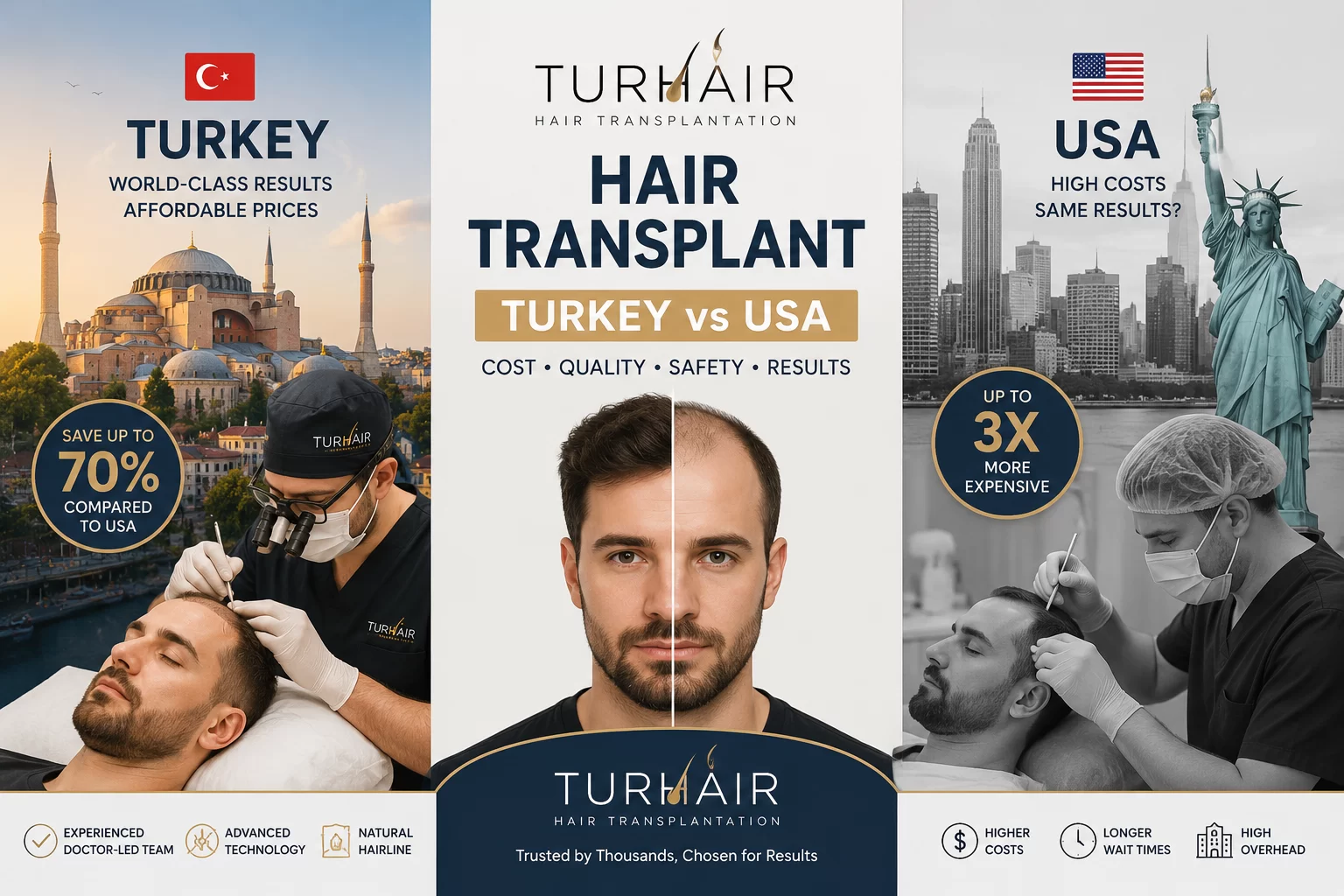
Compare Hair Transplant Turkey vs USA in 2026. Discover the differences in cost, quality, doctor-led surgery, recovery, and why international patients choose TurHair Istanbul.
A Responsible Graft Plan Should Consider
- Donor density and hair thickness
- The size of the recipient area
- Future hair loss progression
- The patient’s age and family history
- The visual priority of the frontal area
- The possibility of a future second procedure
4. Controlled Daily Patient Numbers
A clinic that treats a very high number of patients each day may depend heavily on multiple rotating teams. This can make consistency harder to maintain and may limit the time available for personalized consultation, hairline planning and post-operative explanation.
TurHair works with controlled patient numbers instead of following a mass-production model. This approach is intended to provide better coordination, clearer communication and more attention to each patient’s individual treatment plan.
Controlled volume does not mean that technicians and trained medical assistants have no role. Hair transplantation is commonly performed by a coordinated team. The important difference is that roles should be defined clearly and the patient should understand which stages are managed or performed by the doctor.
5. Clear Package-Based Doctor Involvement
One of the most common sources of confusion in Turkey is the phrase “doctor-led.” Some clinics use this expression even when the doctor only completes a short consultation or checks the patient briefly.
TurHair explains the level of doctor involvement according to the selected package. This allows the patient to understand what service is being purchased before making a deposit or booking flights. In premium packages, Dr. Demir’s involvement includes critical planning and surgical stages such as personalized hairline design and recipient-channel creation, according to the written package.
| Treatment Element | Why It Is Important | TurHair Approach |
|---|---|---|
| Medical evaluation | Determines suitability and treatment limitations | Personal assessment before the final plan |
| Hairline design | Defines the most visible part of the result | Customized according to facial structure and age |
| Recipient-channel planning | Influences direction, angle and distribution | Doctor involvement defined by package |
| Donor extraction strategy | Protects the appearance of the donor area | Extraction planned within safe donor limits |
| Graft distribution | Creates visual density where it matters most | Prioritized according to the patient’s pattern |
6. Long-Term Planning Instead of Short-Term Marketing
Hair loss may continue after surgery. A transplant does not prevent untreated native hair from becoming thinner in the future. For this reason, the first operation should not use the donor area without considering what may happen five, ten or fifteen years later.
TurHair’s planning approach considers the possibility of continued hair loss, especially in younger patients or those with advanced family patterns. A conservative and balanced hairline can provide a more sustainable appearance than an aggressive design created only for immediate visual impact.
An ethical clinic should also be willing to explain when a patient is not suitable, when expectations should be reduced or when medical treatment and observation may be more appropriate than immediate surgery.
7. Transparent All-Inclusive Support
International patients need more than the operation itself. They must understand their arrival plan, hotel arrangements, airport transfer, clinic schedule, medication, first wash and return flight timing.
TurHair packages can include hotel accommodation, private transfers, interpreter assistance, medication, shampoo, post-operative foam and follow-up support. Exact inclusions depend on the selected package and should be confirmed in writing before booking.
This level of transparency helps prevent unexpected costs and gives the patient a clearer understanding of the complete treatment journey.
What Patients Should Receive Before Booking
- The name of the responsible doctor
- The recommended technique and graft estimate
- The exact level of doctor involvement
- A written list of package inclusions
- Deposit and cancellation conditions
- Arrival, operation and departure schedule
- Clear post-operative and follow-up information
8. Natural Results Over Artificial Density
A successful hair transplant should not be recognizable as a transplant. The hairline should suit the face, the graft direction should match existing hair and the donor area should remain visually balanced.
TurHair’s treatment philosophy focuses on naturalness rather than simply creating the lowest hairline or using every available graft in one operation. Visual density is planned strategically, with priority given to the areas that have the greatest effect on the patient’s appearance.
The realistic result will still depend on the patient’s donor strength, hair thickness, scalp contrast, hair loss level and healing response. A trustworthy clinic should explain these limitations openly rather than promising identical results to every patient.
Who Is TurHair Best Suited For?
- Patients who want to know which doctor is responsible for their treatment
- Patients who value personalized hairline and donor planning
- Patients who prefer controlled clinic volume over mass production
- Patients who want transparent package-based doctor involvement
- International patients seeking organized hotel and transfer support
- Patients who prioritize natural, age-appropriate long-term results
- Patients who understand that the safest graft number may be more important than the largest graft number
TurHair’s Main Difference
TurHair combines a clearly identified doctor, personalized treatment planning, controlled patient numbers, donor-focused graft strategy and organized international patient support. The emphasis is placed on transparency and long-term naturalness rather than mass-volume surgery or aggressive marketing promises.
Questions to Ask When Comparing TurHair With Another Clinic
- Is the responsible doctor clearly named?
- Who will design my hairline?
- Who will create the recipient channels?
- How many patients will be treated on my surgery day?
- Is the graft number based on donor safety or marketing?
- Will my future hair loss be considered?
- Are package details and doctor roles provided in writing?
- Will the clinic remain available after I return home?
Personalized Assessment With Dr. Demir’s Team
Discover Whether TurHair Is Right for You
Send clear photographs of your hairline, temples, top, crown and donor area for an initial evaluation of your suitability, possible graft needs and recommended treatment package.
| Comparison Factor | Turkey | USA |
|---|---|---|
| Typical pricing model | Fixed package price | Often priced per graft |
| Average affordability | More affordable | Significantly more expensive |
| Hotel and transfers | Often included | Usually separate |
| Doctor involvement | Varies significantly by clinic | Often high in established practices |
| International travel | Required for foreign patients | Not required for US residents |
| Follow-up | Mostly remote after returning home | Easier in-person follow-up |
| FUE and DHI availability | Widely available | Widely available |
Hair Transplant Cost in Turkey vs USA
Cost is the biggest difference between the two countries. A hair transplant in the United States may cost several times more than a comparable procedure in Turkey. This does not automatically mean that the American procedure is better or that the Turkish procedure is lower quality. The difference is mainly influenced by salaries, clinic rent, insurance expenses, staffing costs, taxes and the general cost of operating a medical practice.
In the USA, many clinics calculate the final price according to the number of grafts. A patient who needs a larger session may therefore face a considerably higher bill. Additional expenses such as medication, accommodation, transportation and time away from work may also increase the total cost.
In Turkey, clinics frequently offer package-based pricing. A package may include the operation, hotel accommodation, airport and clinic transfers, medication, shampoo, post-operative foam, interpreter assistance and follow-up support. Patients should still request a complete written breakdown because not every clinic includes the same services.
What Affects Hair Transplant Cost?
- The number of grafts required
- The chosen technique, such as FUE, Sapphire FUE or DHI
- The experience and reputation of the doctor
- The degree of surgeon involvement during surgery
- The number of patients treated each day
- Hotel, transport and medication inclusions
- The complexity of the donor area and hair loss pattern
Why Is Hair Transplant Surgery Cheaper in Turkey?
The lower price of a hair transplant in Turkey is mostly connected to economic factors. Salaries, property expenses, hospital costs and administrative overheads are generally lower than in the United States. The strong competition between Istanbul clinics also encourages clinics to offer complete medical tourism packages at fixed prices.
Turkey also has a large and highly developed medical tourism sector. Clinics frequently work with international coordinators, translators, hotels and transfer companies. This allows them to organize treatment, accommodation and transportation as one service rather than requiring patients to arrange each part separately.
Lower prices should not be confused with guaranteed value. Some extremely cheap clinics reduce costs by treating many patients at the same time or limiting the doctor’s participation. Patients should ask who will design the hairline, who will extract the grafts, who will create the recipient channels and who will implant the grafts.
Important Warning About Very Cheap Clinics
An unusually low price can indicate limited doctor involvement, rushed planning or a high-volume clinic model. Patients should not select a clinic only because it offers the lowest quote. Hair transplant surgery permanently uses limited donor hair, so poor planning can create lasting damage that may be difficult or expensive to correct.
Quality of Hair Transplant Results in Turkey and the USA
Both Turkey and the United States can produce natural and permanent hair transplant results. Neither country guarantees a better outcome simply because of its location. The quality of the result depends on accurate diagnosis, realistic graft planning, donor protection, natural hairline design, correct graft handling and appropriate post-operative care.
Experienced Turkish clinics may have an advantage in procedure volume because they regularly treat international patients with different hair types and levels of hair loss. This can provide extensive practical experience. However, high procedure volume is beneficial only when the clinic maintains strict medical standards and limits the number of patients assigned to each doctor.
American clinics may offer longer face-to-face consultations and more convenient follow-up for local patients. They may also be easier to visit if the patient develops a concern after surgery. The disadvantage is that a large-graft procedure can become financially difficult for many patients.
Doctor-Led Hair Transplant vs Technician-Led Surgery
The most important comparison is not always Turkey versus the USA. In many cases, the more meaningful comparison is doctor-led surgery versus technician-led surgery. Hairline design, graft distribution, donor management and recipient-site creation require medical judgment and aesthetic experience.
A doctor-led clinic should clearly explain which stages are performed by the surgeon and which are delegated to trained assistants. Delegation is common in hair transplantation, but the patient should understand the exact role of every team member before booking.
At TurHair, treatment planning focuses on careful donor evaluation, a natural hairline and controlled patient numbers. Dr. Mehmet Sıraç Demir personally evaluates the patient and is involved in the critical stages defined within the selected treatment package. This approach is designed to prioritize consistency, safety and realistic long-term planning rather than high-volume surgery.
Which Country Offers Better Overall Value?
Turkey generally offers better value for international patients when the clinic is reputable, transparent and doctor-led. The USA may remain the preferred choice for patients who prioritize local access and in-person follow-up over cost savings.
Hair Transplant Safety in Turkey vs USA
Safety is one of the most important factors when comparing a hair transplant in Turkey vs the USA. Both countries have clinics capable of providing safe, modern and professional treatment. However, clinic standards can vary significantly within each country. Patients should therefore evaluate the medical team, hygiene protocols, doctor involvement and emergency procedures rather than making a decision based only on location.
In the United States, patients often feel more comfortable because treatment is performed close to home and follow-up appointments are easier to attend. American clinics may also offer detailed pre-operative consultations, local medical records and direct access to the surgeon after surgery. The disadvantage is that these services can contribute to a much higher total price.
In Turkey, many reputable clinics are designed specifically for international patients. They provide medical coordinators, interpreters, transport services and written aftercare instructions. The challenge is that the Turkish market includes both highly professional doctor-led clinics and high-volume operators that focus mainly on low prices. Patients must investigate the clinic carefully before making a deposit.
Safety Questions Every Patient Should Ask
- Who performs the medical consultation?
- Who designs the hairline?
- Who creates the recipient channels?
- How many patients are treated each day?
- What happens if a medical concern develops?
- Are medications and aftercare instructions provided in writing?
- Is the patient given realistic expectations before surgery?
FUE Hair Transplant in Turkey vs USA
Follicular Unit Extraction, commonly known as FUE, is one of the most widely used hair transplant methods in both Turkey and the United States. During an FUE procedure, individual follicular units are extracted from the donor area and transferred to thinning or bald areas.
The basic surgical principle is similar in both countries. The difference usually comes from the treatment model. In the USA, clinics may calculate the procedure cost according to the number of grafts. In Turkey, FUE is often sold as part of a fixed-price package that may include the procedure, hotel, private transfers, medication and aftercare products.
Patients should not assume that all FUE procedures are identical. Extraction quality, graft storage, channel direction, implantation density and donor protection can vary from one clinic to another. A well-planned FUE procedure should preserve the donor area while distributing grafts according to the patient’s age, hair loss pattern and future progression.
| FUE Comparison | Turkey | USA |
|---|---|---|
| Availability | Very widely available | Widely available |
| Pricing | Often fixed package pricing | Frequently calculated per graft |
| Travel package | Hotel and transfers may be included | Usually not included |
| Clinic volume | Can be high in medical tourism clinics | Often lower in private practices |
| Follow-up | Usually remote after travel | Easier for local patients |
DHI Hair Transplant in Turkey vs USA
Direct Hair Implantation, commonly called DHI, uses an implanter pen to place grafts into the recipient area. DHI is available in both Turkey and the USA, although the price difference between the two countries can still be substantial.
Some clinics market DHI as automatically superior to FUE, but this is an oversimplification. FUE describes the extraction method, while DHI mainly refers to the implantation approach. The best technique depends on the patient’s donor area, thinning pattern, desired density, hair characteristics and the experience of the medical team.
DHI may be suitable for selected cases where controlled implantation, smaller treatment zones or placement between existing hairs is required. However, it may not always be necessary for patients who need a large number of grafts. The clinic should recommend the technique according to medical suitability rather than choosing the most expensive option.
FUE or DHI: Which Is Better?
Neither technique is universally better. FUE can be highly effective for larger sessions and broad coverage, while DHI may be useful for selected implantation patterns. Hairline design, graft survival, donor management and surgical experience are generally more important than the name of the technique.
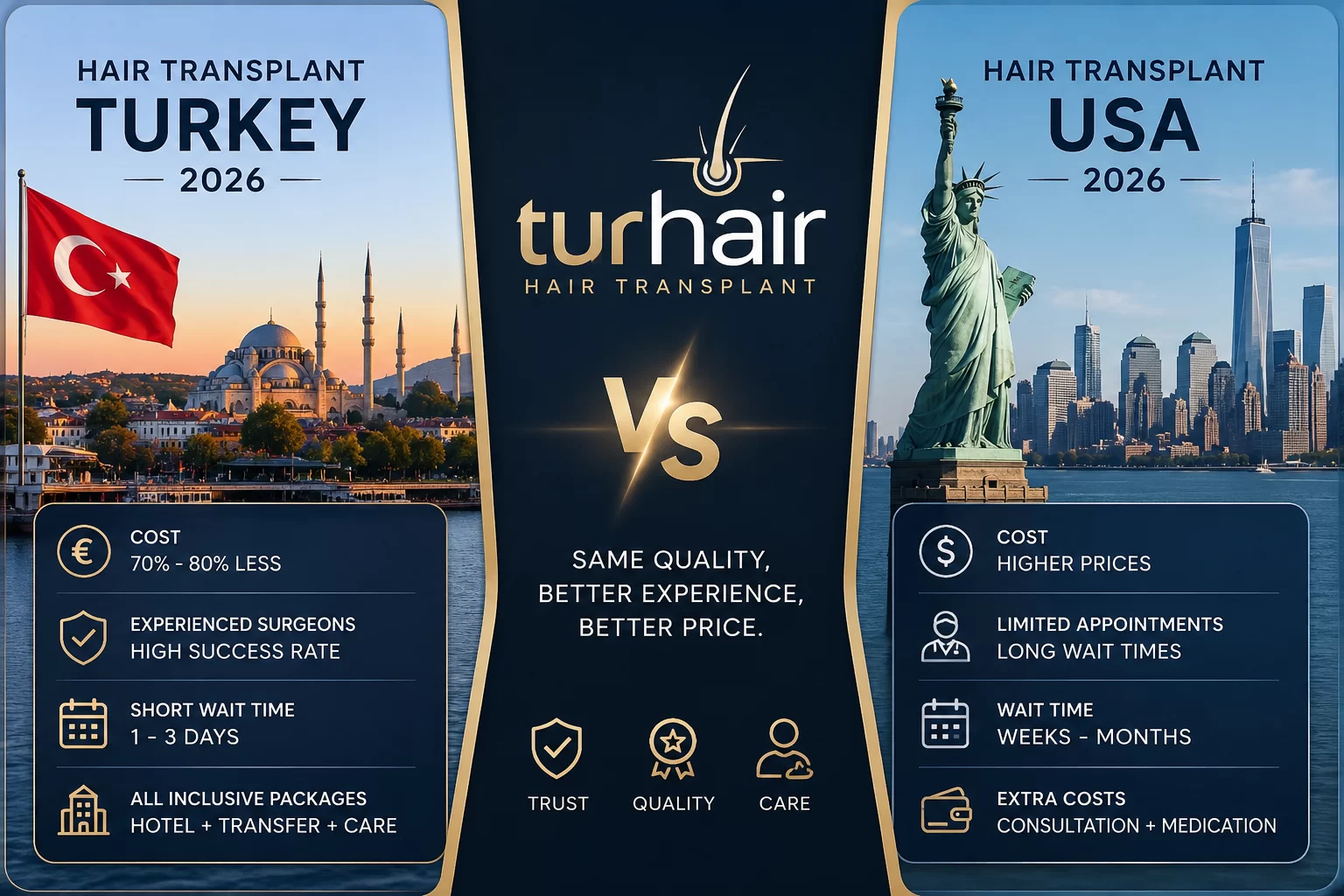
Compare Hair Transplant Turkey vs USA in 2026. Discover why thousands of international patients choose TurHair for affordable, doctor-led hair restoration with all-inclusive packages.
Sapphire FUE in Turkey vs USA
Sapphire FUE is widely promoted by Turkish clinics. The term usually refers to the use of sapphire blades during recipient-site creation. These blades are designed to create precise channels, but they do not replace the need for proper medical planning and surgical skill.
In the United States, some clinics may use similar channel-opening instruments without heavily marketing the procedure as Sapphire FUE. Patients should therefore focus on the surgeon’s technique, channel angle, depth control and graft distribution rather than the commercial name alone.
A sapphire blade cannot correct an unnatural hairline design, excessive donor extraction or poor graft placement. Technology is useful only when it is applied by an experienced team following a personalized treatment plan.
Hair Transplant Recovery in Turkey vs USA
The recovery process is generally similar whether the procedure is performed in Turkey or the United States. Patients can expect temporary redness, scabbing, sensitivity and mild swelling during the early healing period. The transplanted hairs may shed during the first several weeks before new growth begins.
The main difference is where the patient spends the first days of recovery. In the USA, local patients may return home after the procedure and attend follow-up appointments in person. In Turkey, international patients usually stay in a hotel and return to the clinic for the first wash or an early post-operative examination before flying home.
Patients travelling internationally should avoid planning a rushed journey. A well-organized package should provide enough time for the procedure, the first wash, a medical check and clear travel instructions. The clinic should also provide remote support after the patient returns home.
| Recovery Stage | What Patients May Experience | Recommended Action |
|---|---|---|
| First 3 days | Mild swelling, redness and sensitivity | Protect the grafts and follow sleeping instructions |
| Days 4–10 | Scabs gradually soften and clear | Wash only according to clinic instructions |
| Weeks 2–8 | Temporary shedding may occur | Remain patient and continue approved aftercare |
| Months 3–6 | Early new growth may become visible | Track progress with consistent photographs |
| Months 9–12+ | Density and texture continue improving | Attend final assessment when possible |
Travel Costs for a Hair Transplant in Turkey
The lower surgical price in Turkey should be compared with the complete travel budget. Patients may need to pay for flights, additional hotel nights, food, travel insurance and personal expenses. However, even after these costs are included, the total may still be considerably lower than the price of a comparable procedure in the United States.
Many Turkish clinics include two nights of hotel accommodation and private airport transfers. Patients should confirm whether the transfer covers both arrival and departure, whether a companion is included and whether additional hotel nights must be paid separately.
Flight prices vary according to the departure city, season and booking date. Patients travelling from the United States should also consider the length of the journey and allow enough time to rest before surgery.
Hidden Hair Transplant Costs to Consider
A low advertised price does not always represent the final amount. Some clinics may charge extra for additional grafts, blood tests, medications, PRP, special techniques, extra hotel nights or transportation outside the standard schedule.
In the USA, the initial quote may not include consultation fees, medications, post-operative products or follow-up treatments. In Turkey, a package may appear complete but still exclude flights, companion expenses or optional services.
Request a Written Price Breakdown
Before booking, ask the clinic to confirm the total surgery price, included services, possible extra charges, deposit conditions and cancellation policy. A transparent clinic should explain exactly what is included before the patient travels.
Is a Hair Transplant in Turkey Worth the Travel?
For many international patients, travelling to Turkey can provide substantial savings without automatically sacrificing quality. The strongest advantage is the combination of competitive pricing, extensive hair transplant experience and organized medical tourism services.
However, the trip is worthwhile only when the clinic has been selected carefully. Patients should avoid making a decision based on social media advertising, follower counts or the lowest quote. The doctor’s role, treatment plan, donor strategy and patient safety standards should be confirmed in advance.
Planning a Hair Transplant in Turkey?
TurHair provides personalized hair analysis, clear package information and doctor-led treatment planning for international patients considering Istanbul.
Doctor Experience in Turkey vs USA
Doctor experience is one of the most important elements in any hair transplant Turkey vs USA comparison. A clinic may use modern equipment and promote advanced techniques, but the long-term success of the procedure still depends on diagnosis, surgical planning, donor management and the aesthetic judgment of the doctor.
The United States has many established hair restoration physicians who operate within private medical practices. These doctors may offer extended consultations, detailed follow-up appointments and direct access throughout the treatment process. Some American surgeons also focus on a limited number of procedures each week, which can support a more personalized experience.
Turkey also has highly experienced hair transplant doctors, particularly in Istanbul, where clinics treat patients from Europe, North America, the Middle East and other regions. The large number of international procedures performed in Turkey means that experienced teams may regularly work with different hair types, donor characteristics and patterns of hair loss.
However, patients should distinguish between a clinic that is genuinely doctor-led and a commercial operation that uses a doctor’s name mainly for marketing. Before booking, patients should ask who will perform the consultation, create the treatment plan, design the hairline, open the recipient channels and supervise the procedure.
How to Evaluate a Hair Transplant Doctor
- Review the doctor’s medical background and hair restoration experience.
- Ask how many patients the doctor personally manages each day.
- Confirm which surgical stages are performed by the doctor.
- Examine consistent before-and-after results from similar cases.
- Look for natural hairlines rather than only high graft numbers.
- Ask how future hair loss is included in the treatment plan.
- Confirm that donor preservation is prioritized over short-term density.
Hairline Design: Turkey vs USA
Hairline design has a major influence on whether a hair transplant looks natural. A technically successful procedure can still produce an unsatisfactory result if the hairline is placed too low, too straight or too dense for the patient’s age and donor capacity.
A natural hairline should be planned according to facial proportions, age, forehead shape, existing hair, donor strength and the likelihood of future hair loss. It should not simply copy a celebrity photo or follow the same template used for every patient.
In both Turkey and the USA, excellent surgeons can create soft and age-appropriate hairlines. The difference usually comes from the individual clinic’s philosophy. Some high-volume clinics may prioritize dramatic immediate transformation, while a more conservative doctor-led clinic may preserve donor reserves and create a design intended to remain natural over many years.
| Hairline Factor | Poor Planning | Professional Planning |
|---|---|---|
| Hairline position | Too low or unrealistic | Balanced with age and facial proportions |
| Shape | Straight and artificial | Soft, irregular and natural |
| Graft selection | Thick multi-hair grafts at the front | Single-hair grafts in the frontal edge |
| Future hair loss | Ignored | Included in long-term planning |
| Donor preservation | Maximum graft extraction | Balanced extraction and reserve protection |
How Many Grafts Are Needed?
The number of grafts required depends on the size of the thinning area, donor density, hair thickness, hair color, curl pattern, scalp contrast and the patient’s expectations. Two patients with a similar level of hair loss may require different treatment plans.
Some clinics use high graft numbers as a sales tool. Advertising “maximum grafts” may sound attractive, but extracting more grafts does not automatically create a better result. Excessive extraction can leave the donor area thin, patchy or permanently damaged.
A responsible clinic should recommend the number of grafts that can be safely harvested and effectively used. The objective should be visual improvement and long-term donor protection, not simply reaching the highest possible number.
| Treatment Area | Possible Graft Range | Planning Consideration |
|---|---|---|
| Hairline only | Approximately 1,000–1,800 grafts | Natural shape and frontal softness |
| Hairline and frontal area | Approximately 1,800–3,000 grafts | Balance between density and donor supply |
| Front and mid-scalp | Approximately 2,800–4,000 grafts | Coverage priorities should be defined |
| Advanced hair loss | May require 4,000+ grafts or staged surgery | Long-term donor strategy is essential |
| Crown restoration | Varies widely | The crown can consume many grafts |
The graft ranges above are general examples only. A personal medical assessment is required to determine a suitable treatment plan.
Donor Area Management in Turkey vs USA
The donor area is a limited resource. Once grafts are removed, they do not regenerate in the extraction sites. This makes donor management one of the most important parts of hair transplant planning.
A strong donor area may allow a larger procedure, but the medical team must still distribute extraction points evenly. Removing too many grafts from a small area can create visible thinning, especially when the hair is cut short.
Patients comparing Turkey and the USA should not focus only on how many grafts a clinic promises. They should ask how the clinic evaluates donor capacity, whether miniaturization is considered and how many grafts should remain available for possible future procedures.
Signs of Responsible Donor Planning
- The clinic evaluates donor density before confirming a graft number.
- Extraction is spread evenly across the safe donor zone.
- The treatment plan considers future hair loss.
- The clinic avoids promising unlimited or guaranteed graft numbers.
- The doctor explains whether a second procedure may be possible later.
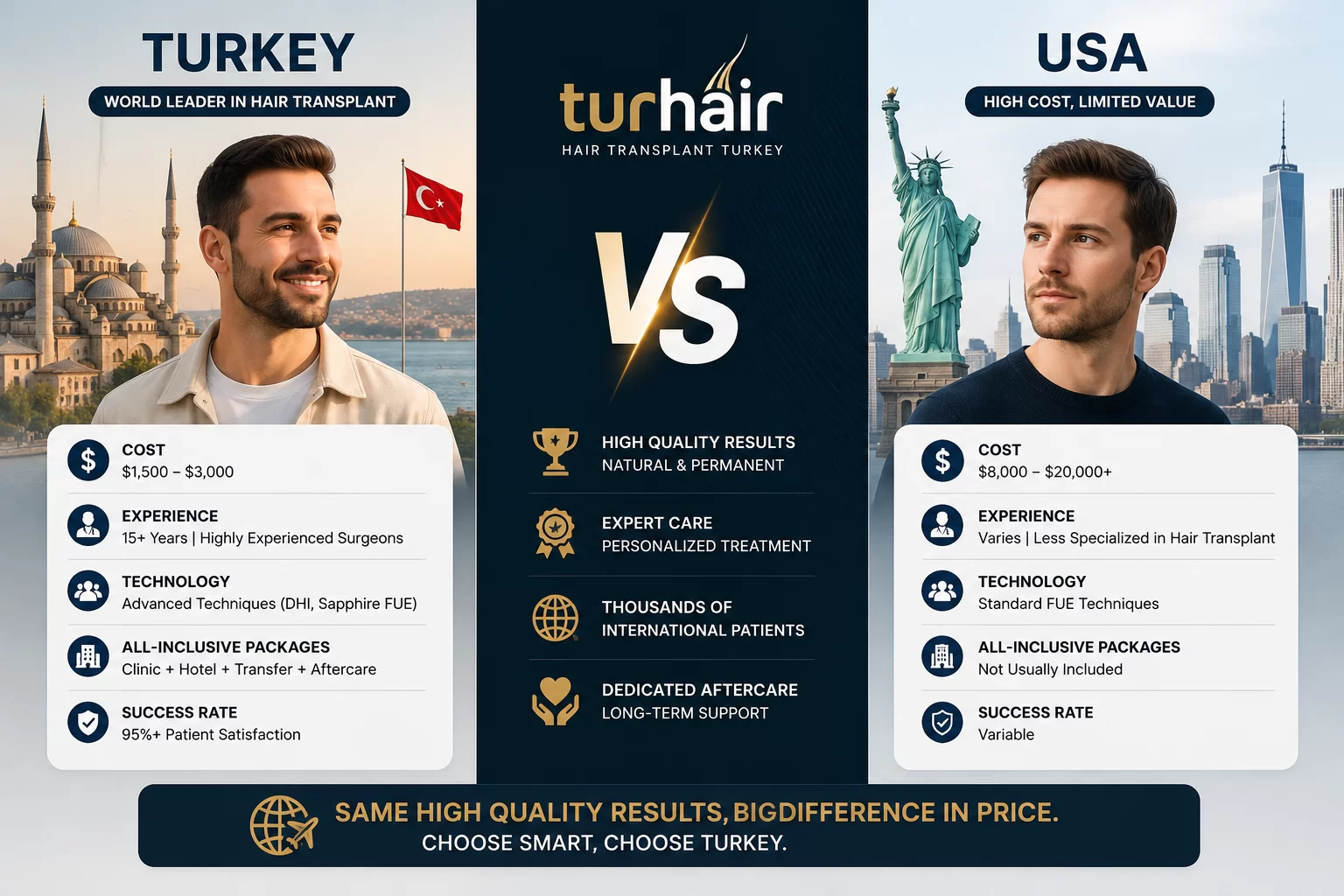
Compare hair transplant costs, quality, surgeon experience, and patient benefits between Turkey and the USA. Discover why international patients choose TurHair and Dr. Mehmet Sıraç Demir in Istanbul.
Hair Transplant Results: Turkey vs USA
Natural results can be achieved in either country. The most important factors are hairline planning, graft direction, density distribution, donor preservation and correct placement of single- and multi-hair grafts.
Patients should review results from cases similar to their own. A clinic may show an impressive result from a patient with thick, dark and curly hair, but this may not predict the result of a patient with fine, straight or low-density donor hair.
Before-and-after photos should be evaluated carefully. Lighting, hair length, styling products, camera angle and wet versus dry hair can significantly change the appearance of density. Consistent photography provides a more reliable impression.
| Result Factor | Why It Matters | What to Check |
|---|---|---|
| Hairline naturalness | Determines the visible aesthetic result | Soft irregularity and age-appropriate design |
| Graft direction | Affects styling and natural growth | Correct angle and orientation |
| Density distribution | Creates visual coverage | Priority in visible frontal zones |
| Donor appearance | Shows whether extraction was controlled | Even donor density without patchiness |
| Photo consistency | Prevents misleading comparisons | Same lighting, angle and hair length |
Long-Term Value of a Hair Transplant
The cheapest procedure is not always the lowest-cost option over time. A poorly planned transplant may require corrective surgery, additional grafts, scar treatment or long-term cosmetic camouflage.
A more expensive clinic may offer better value when the treatment is carefully planned, the donor area is protected and the result remains natural as the patient ages. On the other hand, a very high price does not guarantee superior results. Patients should compare medical quality and transparency rather than assuming that cost alone reflects skill.
Turkey can provide excellent long-term value when a patient selects a reputable doctor-led clinic. The USA can provide similar quality with easier local follow-up, but the total financial investment is usually considerably higher.
True Value Is More Than the Surgery Price
The real value of a hair transplant includes natural appearance, donor preservation, medical safety, clear communication, reliable aftercare and a treatment plan that remains appropriate as hair loss progresses.
Turkey vs USA: Which Option Is Right for You?
| Patient Priority | Turkey May Be Better If… | USA May Be Better If… |
|---|---|---|
| Budget | You want a lower all-inclusive price | Cost is not your main concern |
| Travel | You are comfortable travelling internationally | You prefer treatment close to home |
| Package convenience | You want hotel and transfers organized | You prefer arranging services independently |
| Follow-up | Remote follow-up is acceptable | You want easy in-person appointments |
| Clinic selection | You are willing to research doctor involvement carefully | You prefer a local private medical practice |
Why Doctor-Led Planning Matters at TurHair
TurHair follows a doctor-led approach focused on personalized planning rather than a one-size-fits-all procedure. Dr. Mehmet Sıraç Demir evaluates the patient’s donor area, hair loss pattern, facial proportions and long-term restoration needs before defining the treatment strategy.
The objective is not simply to extract the highest possible number of grafts. The treatment plan is designed to create a natural appearance while protecting the donor area for the future. Hairline design, channel planning and graft distribution are considered according to the patient’s individual characteristics.
International patients also receive support with treatment coordination, accommodation, transfers, post-operative products and follow-up. Package inclusions should always be confirmed according to the selected treatment option.
Compare Your Hair Transplant Options
Send clear photos of your hairline, top, crown and donor area to receive an initial assessment and a personalized treatment recommendation.
Hair Transplant Consultation in Turkey vs USA
A detailed consultation is essential before any hair transplant. Whether the procedure takes place in Turkey or the United States, the medical team should assess the donor area, degree of hair loss, scalp condition, hair characteristics and long-term progression before recommending a technique or graft number.
In the USA, the consultation is often completed in person before surgery. This allows the doctor to examine the scalp directly, discuss expectations and answer questions face to face. For local patients, this can create a strong sense of continuity and make it easier to build a relationship with the clinic.
In Turkey, international patients commonly begin with an online assessment. They are usually asked to send clear photographs of the front, temples, top, crown and donor area. A preliminary recommendation may then be provided before travel. However, the final treatment plan should only be confirmed after an in-person examination at the clinic.
What Should a Proper Consultation Include?
- Assessment of donor density and donor quality
- Evaluation of current and future hair loss
- Discussion of realistic graft numbers
- Hairline design based on facial proportions
- Review of medical history and medications
- Explanation of the recommended technique
- Clear information about risks, recovery and aftercare
Hair Transplant Packages in Turkey vs USA
One of the biggest practical differences between Turkey and the USA is the way treatment is packaged. In the United States, patients generally pay for the medical procedure itself and arrange accommodation, transportation and additional services independently.
In Turkey, clinics often offer all-inclusive packages designed for international patients. These packages may combine the hair transplant procedure with hotel accommodation, private transfers, interpretation, medications, post-operative shampoo, foam and follow-up support.
An all-inclusive package can make the process easier, but patients should not assume that every package is identical. Some clinics include two nights of accommodation, while others include three. Some provide airport transfers only, while others also cover daily hotel-to-clinic transportation.
| Package Element | Turkey | USA |
|---|---|---|
| Surgery | Usually included in one fixed package | Usually charged as a medical procedure |
| Hotel | Often included | Usually separate |
| Transfers | Frequently included | Usually arranged by the patient |
| Interpreter | Often available for international patients | Usually unnecessary for English speakers |
| Post-operative products | Commonly included | May be prescribed or sold separately |
| Follow-up | Mostly remote after departure | Often available in person |
Accommodation and Medical Travel Experience
Accommodation is an important part of the medical travel experience. Patients should stay somewhere clean, comfortable and close enough to the clinic to make transfers easy. The hotel does not need to be luxurious, but it should support rest during the early recovery period.
In Turkey, many clinics cooperate with selected hotels and organize private transport between the airport, hotel and clinic. This reduces stress for patients arriving in an unfamiliar city. It can also make the treatment schedule more efficient.
Patients should ask whether the hotel is included for one or two people, whether breakfast is included and what happens if an extra night is required. They should also confirm whether transfers are private or shared.
Medical Travel Checklist
- Confirm arrival and departure dates before booking flights.
- Check how many hotel nights are included.
- Ask whether a companion can stay in the same room.
- Confirm all airport and clinic transfer details.
- Keep clinic contact information easily accessible.
- Travel with loose, front-opening clothing for the surgery day.
How Long Should You Stay in Turkey?
Most international hair transplant patients stay in Istanbul for approximately two to four nights, depending on the clinic schedule, arrival time and flight availability. A common plan includes arrival one day before surgery, the procedure on the following day and a first wash or medical control before departure.
Patients should avoid booking a departure flight too soon after surgery. Enough time should be allowed for a final check, aftercare explanation and possible first washing session. A rushed schedule can create unnecessary stress and reduce the time available for medical support.
Long-haul travellers from the United States may prefer to add an extra night before or after surgery. This can help with fatigue, jet lag and a more comfortable return journey.
Flying After a Hair Transplant
Flying after a hair transplant is common, but patients should follow the clinic’s instructions carefully. The transplanted grafts are most vulnerable during the first days, so the scalp should be protected from pressure, rubbing and accidental contact.
Mild swelling may become more noticeable during the early recovery period. Patients should drink enough water, avoid alcohol, wear loose clothing and avoid lifting heavy luggage. A travel pillow may help maintain a more upright sleeping position during the journey.
The clinic should provide written instructions about medication, washing, sleeping position and what to do if the patient has a concern after returning home.
Before Your Return Flight
Make sure you have your medications, aftercare products, clinic contact details and written instructions in your hand luggage. Do not place essential medication or post-operative products in checked baggage.
Hair Transplant Aftercare in Turkey vs USA
Aftercare has a direct influence on healing and patient comfort. The basic instructions are generally similar in both countries, but the method of follow-up may differ. American patients treated locally may return to the clinic for in-person checks, while international patients treated in Turkey usually communicate through photographs, messaging and video consultation.
A reputable Turkish clinic should remain available after the patient travels home. The patient should know when to begin washing, how to remove scabs, when to return to exercise and which symptoms require medical attention.
Follow-up should not end when the patient leaves the clinic. Hair transplant growth develops over many months, so regular progress checks can help the clinic monitor healing and answer questions during the growth phase.
| Aftercare Topic | Typical Guidance | Why It Matters |
|---|---|---|
| Sleeping position | Keep the head elevated during the first nights | May reduce swelling and graft contact |
| Washing | Use the recommended gentle method | Protects grafts and supports clean healing |
| Exercise | Resume gradually according to medical advice | Reduces sweating, pressure and accidental injury |
| Sun exposure | Avoid strong direct sunlight during healing | Helps protect sensitive scalp skin |
| Progress photos | Send photos at scheduled intervals | Supports remote monitoring |
Hair Transplant Risks and Possible Complications
Hair transplantation is generally considered a minor surgical procedure, but it still carries risks. Possible complications may include infection, prolonged redness, swelling, temporary numbness, folliculitis, poor growth, visible scarring, unnatural hair direction or donor overharvesting.
The risk profile depends more on clinic standards and surgical planning than on whether the procedure is performed in Turkey or the USA. A high-quality clinic should screen patients properly, use sterile protocols and explain possible complications before surgery.
Patients should disclose all medications, health conditions and previous procedures. They should also follow instructions regarding smoking, alcohol, supplements and blood-thinning medications.
When to Contact the Clinic
Patients should contact the clinic promptly if they experience unusual bleeding, severe pain, increasing redness, fever, discharge, a strong allergic reaction or any symptom that causes concern. Medical advice should come from a qualified professional familiar with the procedure.
Hair Transplant for Women: Turkey vs USA
Women can also benefit from hair transplantation, but female hair loss often requires more careful diagnosis. Diffuse thinning, hormonal conditions, traction alopecia and pattern hair loss may require different treatment strategies.
A woman should not automatically be considered suitable for surgery simply because thinning is visible. The donor area must be stable and strong enough to support transplantation. In some cases, medical treatment may be more appropriate than surgery.
Both Turkey and the USA have clinics experienced in female hair restoration. The key is to choose a doctor who understands female hair loss and does not treat every case with the same standard approach.
Different Hair Types and Ethnic Hair Considerations
Hair characteristics can significantly affect extraction and implantation. Straight, curly, coarse and fine hair each require different planning. Curly hair may provide strong visual coverage, but the follicles can also curve beneath the skin, making extraction more technically demanding.
Patients with Afro-textured hair should select a clinic experienced in curved follicle extraction and natural hairline design for their specific hair type. The medical team should also understand the risk of scarring and the importance of preserving curl direction.
Turkey’s international patient volume means some clinics regularly treat a wide range of hair types. However, patients should still ask for relevant before-and-after cases rather than assuming every clinic has equal experience.
| Hair Characteristic | Planning Impact | What the Clinic Should Consider |
|---|---|---|
| Fine hair | May provide less visual density | Careful density distribution |
| Coarse hair | Can create stronger visual coverage | Natural direction and spacing |
| Curly hair | May be harder to extract safely | Experience with curved follicles |
| Low color contrast | Can improve the appearance of density | Realistic graft planning |
| High color contrast | May make scalp visibility more noticeable | Strategic placement in visible areas |
Who May Not Be a Suitable Candidate?
Not every person experiencing hair loss is a suitable candidate for surgery. Patients with unstable hair loss, very weak donor density, untreated scalp disease, unrealistic expectations or certain medical conditions may need to postpone or avoid a transplant.
Young patients should be assessed carefully because their final hair loss pattern may not yet be clear. Creating an aggressive low hairline at an early age can cause problems if surrounding native hair continues to thin.
A responsible doctor may recommend medical treatment, monitoring or a more conservative plan instead of immediate surgery. Refusing an unsuitable candidate can be a sign of ethical medical practice.
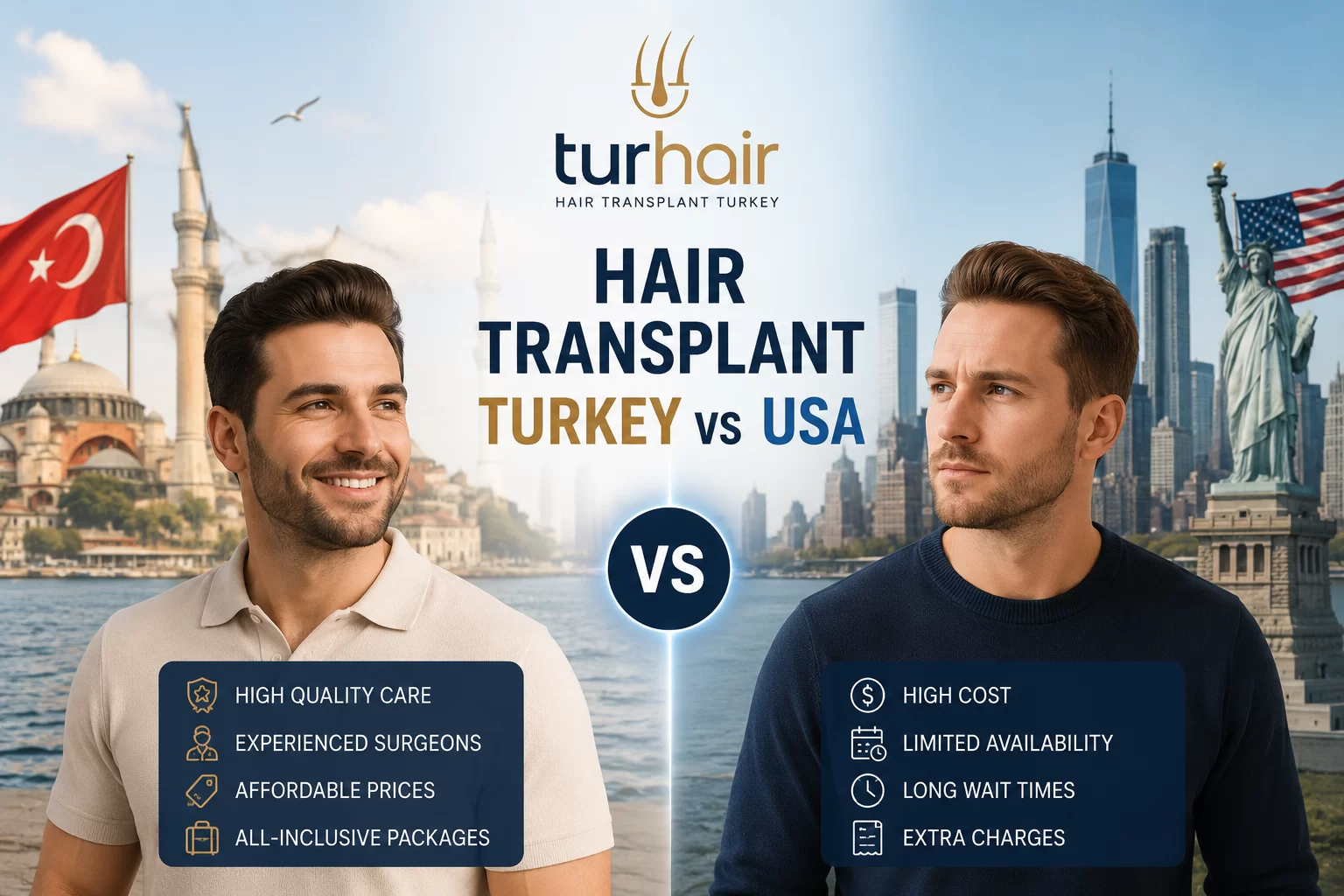
Compare Hair Transplant Turkey vs USA. Discover why thousands of international patients choose TurHair for affordable prices, doctor-led procedures, and high-quality results.
Start With a Professional Hair Assessment
A personalized evaluation can help determine whether you are suitable for FUE, Sapphire FUE or DHI and whether Turkey is the right option for your treatment goals.
Hair Transplant Turkey vs USA: Final Cost and Value Comparison
The final decision between a hair transplant in Turkey and the USA should not be based on price alone. Turkey is usually more affordable and may provide excellent value through fixed-price packages that combine surgery, accommodation, transfers, medication and follow-up support. The United States generally offers easier local access, face-to-face consultations and more convenient in-person follow-up, but the total cost is often significantly higher.
For many patients, the strongest argument in favor of Turkey is the opportunity to receive a large-session FUE, Sapphire FUE or DHI procedure at a lower overall cost. However, this advantage only matters when the clinic follows proper medical standards, limits daily patient volume and clearly explains the doctor’s involvement.
The USA may be the better option for patients who prefer treatment close to home, do not want to travel internationally or require frequent in-person support. It may also be suitable for patients who are comfortable paying a higher price for local convenience. Neither country is automatically superior. The quality of the clinic, surgeon and treatment plan remains the deciding factor.
| Decision Factor | Turkey | USA |
|---|---|---|
| Overall cost | Usually much lower | Usually much higher |
| Package value | Hotel, transfers and aftercare may be included | Most services are arranged separately |
| Travel requirement | International travel required | No international travel for US residents |
| Doctor involvement | Must be checked carefully | Often clearer in private practices |
| Hair transplant experience | Very high procedure volume in Istanbul | Strong specialist experience available |
| Follow-up access | Mostly remote after departure | Easier face-to-face follow-up |
| Best suited for | Patients seeking value and organized medical travel | Patients prioritizing local convenience |
How to Choose the Best Hair Transplant Clinic
Choosing the right clinic is more important than choosing the right country. A patient should look for transparent medical information, realistic treatment planning, clear doctor participation and consistent before-and-after results.
Patients should be cautious when a clinic promises guaranteed density, unlimited grafts or a perfect result. Hair transplantation is a medical procedure involving limited donor hair, individual healing and long-term hair loss. Ethical clinics explain both the possibilities and the limitations.
The clinic should also provide written information about the procedure, package inclusions, deposit, cancellation conditions, aftercare and possible additional costs. Transparent communication before travel can prevent misunderstandings later.
Clinic Selection Checklist
- Verify the doctor’s identity and medical background.
- Ask which stages are performed by the doctor.
- Confirm the number of patients treated each day.
- Review cases with similar hair loss and hair type.
- Request a written package and price breakdown.
- Ask how the donor area will be protected.
- Confirm how post-operative support is provided.
- Avoid choosing a clinic based only on the lowest price.
Red Flags to Avoid
Some clinics use aggressive marketing to attract patients quickly. A large social media following, polished videos or hundreds of online reviews do not always prove medical quality. Patients should investigate who actually performs the surgery and whether the clinic has a consistent doctor-led system.
| Warning Sign | Why It Matters |
|---|---|
| No clear doctor information | The procedure may be largely technician-led |
| Guaranteed graft numbers | Safe graft numbers require direct donor examination |
| Extremely low price | May indicate high-volume or reduced doctor involvement |
| Pressure to pay immediately | Patients should have time to review the treatment plan |
| No written package details | Extra costs may appear later |
| Identical plan for every patient | Hair transplant planning should be personalized |
Why Many American Patients Choose Turkey
Many patients from the United States travel to Turkey because the total treatment price can remain lower even after flights and personal expenses are included. Turkey also offers extensive experience with international hair transplant patients and organized packages that simplify accommodation and transportation.
Another reason is access to larger sessions at fixed prices. In the USA, paying per graft can make extensive restoration expensive. In Turkey, clinics often quote a complete package according to the patient’s case rather than charging separately for every graft.
However, American patients should not select a Turkish clinic simply because it offers a large number of grafts. The safest plan may involve fewer grafts, a conservative hairline or more than one procedure. A personalized medical assessment remains essential.
Hair Transplant Cost Per Graft: Turkey vs USA
One of the most common ways to compare hair transplant Turkey vs USA prices is to examine the cost per graft. In the United States, many clinics calculate the total price by multiplying the number of grafts by a fixed per-graft fee. In Turkey, clinics more commonly use package pricing, especially for international patients.
Per-graft pricing can make the total cost easier to understand, but it may become expensive for patients with advanced hair loss. A patient requiring 3,000 or 4,000 grafts may face a much higher bill in the USA than a patient receiving a smaller frontal procedure.
Turkish clinics often quote one total price for the recommended session. This may be more economical, but patients should still ask whether the package has a graft limit. They should also confirm whether the clinic will reduce the number of grafts if the donor area is weaker than expected during the in-person examination.
| Pricing Feature | Turkey | USA |
|---|---|---|
| Common pricing method | Fixed package price | Per-graft or procedure-based pricing |
| Large sessions | Often more affordable | Can become considerably more expensive |
| Hotel and transfers | Frequently included | Usually excluded |
| Price transparency | Depends on written package details | Depends on graft estimate and added fees |
| Best for | Patients seeking an all-inclusive solution | Patients seeking local treatment |
Important Note About Graft Pricing
The cheapest cost per graft does not automatically represent the best value. A successful procedure also depends on graft survival, donor preservation, hairline design, doctor involvement and the long-term treatment strategy.
Financing a Hair Transplant in the USA vs Paying for Treatment in Turkey
Some American clinics offer financing or monthly payment plans. This may make a higher-priced procedure easier to manage over time. However, financing can increase the final amount paid when interest, fees or extended repayment periods are included.
Turkish clinics generally expect payment through bank transfer, cash or another approved payment method. A deposit may be required to reserve the surgery date, hotel and medical team. Patients should always read the deposit and cancellation conditions before making a payment.
Patients comparing both options should calculate the complete financial commitment rather than looking only at the advertised surgery price. The comparison should include flights, hotel nights, local transportation, medications, time away from work and possible financing charges.
Complete Cost Checklist
- Surgery price
- Consultation or examination fees
- Flights and baggage
- Hotel accommodation
- Airport and clinic transportation
- Medications and aftercare products
- Meals and personal expenses
- Lost income or time away from work
- Financing interest or payment fees
Hair Transplant Timeline: Turkey vs USA
The medical stages of a hair transplant are similar in both countries, but the patient journey can be different. In the USA, consultations and surgery may be scheduled separately. In Turkey, international patients often complete the assessment, surgery and first wash within one organized trip.
| Treatment Stage | Turkey | USA |
|---|---|---|
| Initial consultation | Often online before travel | Often completed in person |
| Final examination | Completed after arrival | May occur before the surgery date |
| Surgery day | Usually part of a short medical trip | Usually an outpatient procedure |
| First wash | Often performed before departure | May be performed at home or in the clinic |
| Long-term follow-up | Mostly remote | Remote or in person |
Which Patients May Prefer Turkey?
Turkey may be especially suitable for patients who require a medium or large session and want to control the total cost. It can also be attractive to patients who value organized accommodation, private transfers and international patient support.
- Patients seeking a lower overall treatment price
- Patients comfortable with international travel
- Patients who want hotel and transfer arrangements included
- Patients requiring a larger FUE or DHI session
- Patients who can continue follow-up remotely
Which Patients May Prefer the USA?
The United States may be more suitable for patients who prioritize local access and direct continuity of care. Some patients prefer to meet the doctor several times before surgery and want the option of returning to the clinic quickly after the procedure.
- Patients who do not want to travel abroad
- Patients who want local in-person follow-up
- Patients seeking a small or limited procedure
- Patients who prefer financing options
- Patients for whom price is not the primary concern
Can Turkey Offer the Same Quality as the USA?
A reputable Turkish clinic can provide a level of medical planning, technique and patient care comparable to established clinics in the United States. The country itself does not determine quality. The decisive factors are the doctor, medical team, clinic standards, surgical planning and patient selection.
Patients should avoid comparing only the cheapest Turkish clinic with a premium American surgeon. A fair comparison should examine clinics with similar levels of doctor involvement, personalized planning and patient safety.
Turkey’s strongest advantage is value. The patient may receive a doctor-led procedure, organized travel support and long-term follow-up at a lower total cost. The USA’s strongest advantage is convenience and easier local access.
Best Choice by Priority
Best for affordability: Turkey
Best for local follow-up: USA
Best for all-inclusive packages: Turkey
Best for avoiding international travel: USA
Best medical result: The best-qualified and most transparent clinic, regardless of country
Questions to Ask Before Paying a Deposit
- Who is the doctor responsible for my treatment?
- Which surgical stages will the doctor perform?
- How many patients will be treated on the same day?
- What graft range is recommended and why?
- How will the donor area be protected?
- What exactly is included in the price?
- Are there any possible additional fees?
- What are the deposit and cancellation conditions?
- How is follow-up provided after I return home?
- What happens if I am not medically suitable after examination?
Hair Transplant Turkey vs USA: The Bottom Line
Turkey is usually the stronger option for patients focused on affordability, complete medical travel packages and access to experienced hair transplant teams. The USA is usually the stronger option for patients focused on local convenience, repeated in-person consultations and easier physical access to the clinic.
The best choice depends on individual priorities. Patients should compare the full cost, doctor involvement, clinic workload, donor strategy, package details and aftercare system before making a decision.
A well-planned hair transplant should look natural today and remain appropriate as the patient ages. This requires more than a low price or a famous destination. It requires a responsible doctor, an experienced team and a personalized long-term plan.
Personalized Hair Restoration Planning
Compare Your Options With TurHair
Send your hair photos for an initial review of your donor area, estimated graft needs and suitable treatment options in Istanbul.
Why Some Patients Still Choose the USA
The United States remains attractive for patients who value local access and direct continuity of care. The ability to attend consultations, surgery and follow-up appointments without international travel can provide additional convenience.
Some patients may also prefer familiar healthcare systems, easier access to medical records and the possibility of visiting the surgeon quickly if a concern develops. These advantages may justify the higher cost for patients with sufficient budget.
The USA may also be suitable for smaller procedures where the difference in total cost is less significant. Patients should compare complete written quotes from both countries before deciding.
Final Verdict: Turkey or USA?
Choose Turkey if you want a more affordable all-inclusive package, are comfortable travelling internationally and are prepared to research doctor involvement carefully.
Choose the USA if you prioritize local treatment, easier in-person follow-up and convenience more than cost savings.
Doctor-Led Hair Restoration in Istanbul
Get a Personalized Hair Transplant Assessment
Send clear photographs of your hairline, top, crown and donor area to receive an initial evaluation, estimated graft recommendation and suitable treatment package.
Hair Transplant Turkey vs USA: Frequently Asked Questions
Clear answers to the most common questions about hair transplant cost, quality, safety, techniques, travel, recovery and results in Turkey and the United States.
1. Is a hair transplant cheaper in Turkey than in the USA?
Yes. Hair transplant surgery in Turkey is usually significantly more affordable because clinic operating costs, staffing expenses and medical tourism services are generally lower than in the United States.
2. How much does a hair transplant cost in Turkey?
Prices vary according to the clinic, doctor involvement, graft number and technique. Many reputable Turkish clinics offer fixed-price packages that may include surgery, accommodation, transfers, medication and aftercare.
3. How much does a hair transplant cost in the USA?
Hair transplant prices in the USA are often calculated per graft and may become substantially higher for patients requiring large sessions. Consultation fees, medication and aftercare may also be charged separately.
4. Why is hair transplant surgery cheaper in Turkey?
The lower price is mainly related to lower operating costs, clinic rent, salaries and a highly competitive medical tourism market. Lower cost does not automatically mean lower quality, but clinic selection remains essential.
5. Does Turkey offer lower-quality hair transplants?
No country guarantees quality or poor quality. Turkey has both highly experienced doctor-led clinics and high-volume low-cost providers. Patients should research the medical team, doctor participation and donor planning carefully.
6. Is a hair transplant in Turkey safe?
It can be safe when performed in a reputable clinic with qualified medical supervision, sterile protocols, proper patient screening, realistic planning and reliable aftercare.
7. Is a hair transplant in the USA safer?
The USA may provide easier local follow-up and familiar healthcare access, but safety still depends on the individual clinic, surgeon, hygiene standards and patient suitability.
8. Which country offers better hair transplant results?
Excellent results are possible in both countries. Hairline design, donor management, graft handling, surgeon experience and long-term planning are more important than the country itself.
9. Is FUE available in both Turkey and the USA?
Yes. FUE is widely available in both countries. The procedure quality depends on extraction technique, donor protection, recipient-site planning and the experience of the surgical team.
10. Is DHI better than FUE?
DHI is not automatically better than FUE. DHI refers mainly to the implantation approach, while FUE describes graft extraction. The best method depends on the patient’s hair loss pattern, donor area and treatment goals.
11. What is Sapphire FUE?
Sapphire FUE generally refers to the use of sapphire blades during recipient-channel creation. The tool may support precise incisions, but doctor experience and correct planning remain more important than the blade material alone.
12. How many grafts can be transplanted in one session?
The safe graft number depends on donor density, scalp characteristics, hair loss level and the patient’s long-term needs. A direct examination is required before confirming a responsible graft estimate.
13. Are more grafts always better?
No. Excessive extraction can damage the donor area and create visible thinning. The goal should be effective visual coverage with safe donor preservation, not simply the highest possible graft number.
14. Are Turkish hair transplant packages all-inclusive?
Many Turkish clinics offer packages including surgery, hotel, private transfers, medication, interpreter assistance and aftercare products. Patients should still request a complete written list of inclusions.
15. Are flights included in Turkish hair transplant packages?
Flights are generally not included. Patients usually purchase their own airfare, while the clinic may arrange airport, hotel and clinic transfers after receiving the flight details.
16. How long should I stay in Turkey?
Many international patients stay approximately two to four nights. The schedule should allow enough time for arrival, consultation, surgery, first washing and a final medical check before departure.
17. Can I fly immediately after a hair transplant?
Many patients fly after the first washing session or medical control. The exact timing should follow the clinic’s instructions and allow sufficient time for early recovery support.
18. How long does hair transplant recovery take?
Initial redness, scabbing and swelling usually improve during the early healing period. Visible new growth often begins after several months, while final maturation can take approximately 12 months or longer.
19. Is shedding after a hair transplant normal?
Yes. Temporary shedding of transplanted hairs is a common part of the growth cycle. The follicles remain beneath the skin and may begin producing new hair during the following months.
20. When can I return to work?
Many patients return to non-physical work after several days, although visible redness or scabbing may remain. The recommended timing depends on the procedure and the nature of the patient’s job.
21. When can I exercise after surgery?
Exercise should be resumed gradually according to the clinic’s medical advice. Heavy training, sweating and contact sports may need to be avoided during the early recovery period.
22. Is follow-up available after returning home?
Reputable Turkish clinics usually provide remote follow-up through photographs, messaging or video consultation. The exact follow-up schedule should be confirmed before booking.
23. Can women have hair transplant surgery?
Yes, but female hair loss requires careful diagnosis. Surgery may be suitable when the donor area is stable and the cause of thinning has been properly evaluated.
24. Can patients with curly or Afro-textured hair have FUE?
Yes, but curved follicles can make extraction more technically demanding. Patients should select a clinic experienced with their specific hair type and follicle structure.
25. What are the risks of hair transplant surgery?
Possible risks include infection, prolonged redness, swelling, numbness, folliculitis, poor graft growth, visible scarring, unnatural direction and donor overharvesting.
26. Can a failed hair transplant be corrected?
Some poor results can be improved with corrective surgery, but repair procedures may be complex and depend on the remaining donor supply, scarring and previous graft placement.
27. Should I choose a clinic based on online reviews?
Reviews can provide useful context, but they should not be the only decision factor. Patients should also verify doctor identity, medical experience, surgery roles, real patient results and written package details.
28. What is a doctor-led hair transplant?
A doctor-led hair transplant is a procedure in which the doctor evaluates the patient, creates the treatment plan and remains actively involved in the medically and aesthetically critical stages of surgery.
29. Is Turkey worth travelling to for a hair transplant?
Turkey may offer strong value for patients who want lower treatment costs, extensive clinic experience and organized medical travel. The trip is worthwhile only when the clinic is selected carefully.
30. How do I choose between Turkey and the USA?
Choose Turkey when affordability and an organized all-inclusive package are major priorities. Choose the USA when local treatment and easier in-person follow-up are more important than cost savings.
Get a Personalized Hair Transplant Recommendation
Send clear photographs of your front, temples, top, crown and donor area to receive an initial assessment from TurHair.
Hair Transplant Turkey Guides
Explore doctor-led hair transplant guides covering Turkey prices, graft costs,
FUE and DHI procedures, international comparisons, PRP therapy and natural results.
01
Full Package Hair Transplant Turkey
Procedure, hotel, transfers and patient support explained
›
03
PRP Therapy for Hair Loss
PRP treatment benefits, procedure and recovery guide
›
04
Eyebrow Transplant Turkey
Natural eyebrow design, implantation and permanent results
›
05
Beard and Mustache Transplant Turkey
Facial hair restoration for patchy or thin beard growth
›
06
Hair Transplant in New York vs Turkey
Compare treatment prices, quality and clinic models
›
07
Hair Transplant in London vs Turkey
UK and Turkey hair transplant cost and quality comparison
›
08
Is a Hair Transplant Worth It?
Results, permanence, costs and long-term value explained
›
09
DHI Hair Transplant Cost in Turkey
DHI prices, candidates, packages and procedure details
›
10
Cheap vs Expensive Hair Transplant
What really determines safety, quality and natural results?
›
11
Hair Transplant Cost in Europe vs Turkey
European and Turkish clinic prices and package value
›
12
3000 Grafts Hair Transplant Cost in Turkey
Coverage, graft requirements and treatment prices
›
13
Hair Transplant Turkey Price per Graft
Understand graft pricing and fixed package differences
›
15
Hair Transplant Turkey Cost 2026
Current prices, techniques and expected treatment costs
›
Looking for a doctor-led hair transplant plan designed around your donor area, facial structure and long-term needs?
How useful was this post?
Click on a star to rate it!
Average rating 5 / 5. Vote count: 8741
No votes so far! Be the first to rate this post.
Related posts