Is Turkey Safe for a Hair Transplant?
July 25, 2026
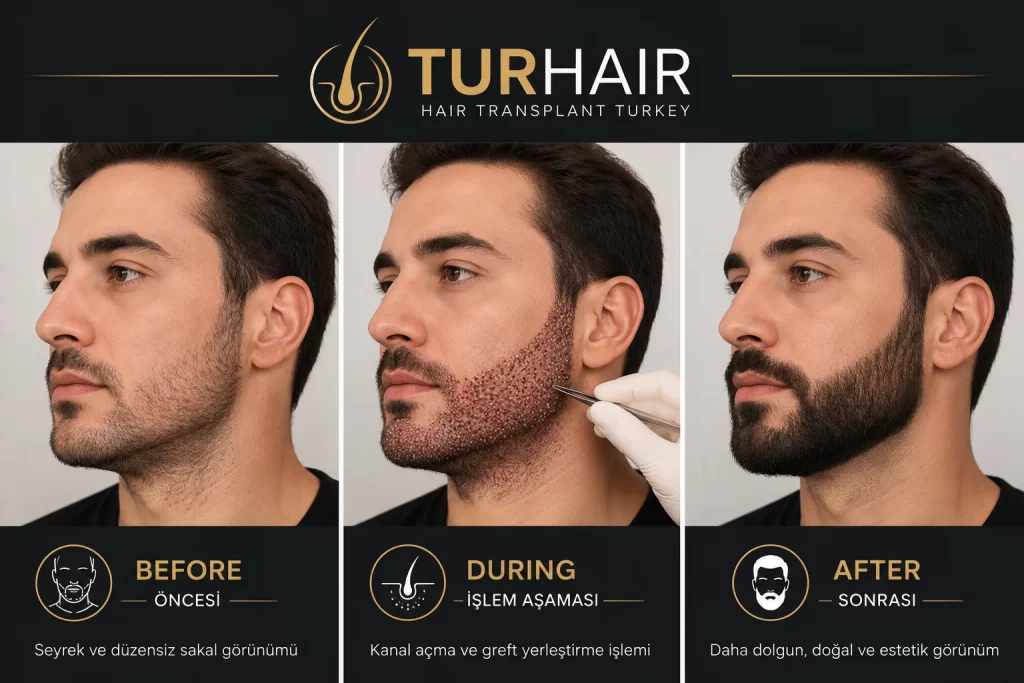
Hair Transplant Turkey Before and After
July 25, 2026Hair Transplant Turkey Cost Explained (2026): Real Prices, Hidden Costs & How to Choose the Right Clinic
Planning a hair transplant in Turkey is one of the smartest decisions many international patients make every year. Turkey remains the world’s leading destination for hair restoration thanks to experienced surgeons, modern hospitals, competitive pricing, and comprehensive all-inclusive packages.
The average hair transplant Turkey cost in 2026 generally ranges from approximately €2500 to €5,000 or more. The final price depends on the number of grafts, the selected technique, the surgeon’s involvement, the clinic model and the services included in the package. This guide explains FUE, Sapphire FUE and DHI prices, hidden expenses and how to compare Turkish hair transplant clinics safely.
However, many patients ask the same question:
Average Hair Transplant Cost in Turkey (2026)
The average hair transplant cost in Turkey in 2026 depends on several important factors, including the number of grafts required, the surgical technique, the surgeon’s experience, and whether the clinic offers an all-inclusive package. While Turkey continues to be one of the world’s most affordable destinations for hair restoration, patients should understand that choosing the cheapest clinic is not always the best decision. Experience, safety, and natural-looking results are equally important when evaluating the overall value of a procedure.
Budget clinics may advertise extremely low prices, but these packages often involve high patient volumes and limited doctor participation. Premium doctor-led clinics typically charge more because the surgeon personally designs the hairline, performs the most critical surgical stages, and limits the number of patients treated each day. This approach generally provides greater consistency, improved graft survival, and more natural long-term outcomes.
| Clinic Type | Average Price | Doctor Involvement | Typical Value |
|---|---|---|---|
| Budget Clinic | $1,200–$1,800 | Limited | Basic |
| Standard Package | $2,000–$2,700 | Moderate | Good |
| Premium Clinic | $2,800–$4,000+ | High | Excellent |
| Doctor-Led Clinic | $3,500–$4,500+ | Very High | Best Overall Value |
| DHI Hair Transplant | $2,700–$3,000 | High | Premium |
| Sapphire FUE | $2,300–$4,000 | High | Excellent |
Most reputable Turkish clinics include accommodation, airport transfers, medications, interpreter assistance, and follow-up care within their treatment packages. This makes the total treatment cost significantly lower than in countries such as the United Kingdom, Germany, Spain, or the United States, where patients often pay separately for surgery, hotel stays, transportation, and aftercare services.
When comparing clinics, patients should look beyond the advertised price. Factors such as surgeon experience, doctor involvement during surgery, clinic reputation, patient safety protocols, and transparent pricing ultimately determine the true value of a hair transplant. A slightly higher upfront investment often leads to better density, a more natural hairline, and a reduced likelihood of requiring corrective procedures in the future.
How much does a hair transplant cost in Turkey in 2026?
The answer depends on several important factors—not simply the number of grafts.
A reputable doctor-led clinic generally charges more than technician-only clinics because experience, safety, medical supervision, and long-term results matter far more than the cheapest price.
Recent 2026 industry pricing guides place legitimate all-inclusive procedures roughly between €2,500 and €5,000+, depending on clinic type, surgeon involvement, technique, and graft requirements.
Doctor-Led Hair Transplantation
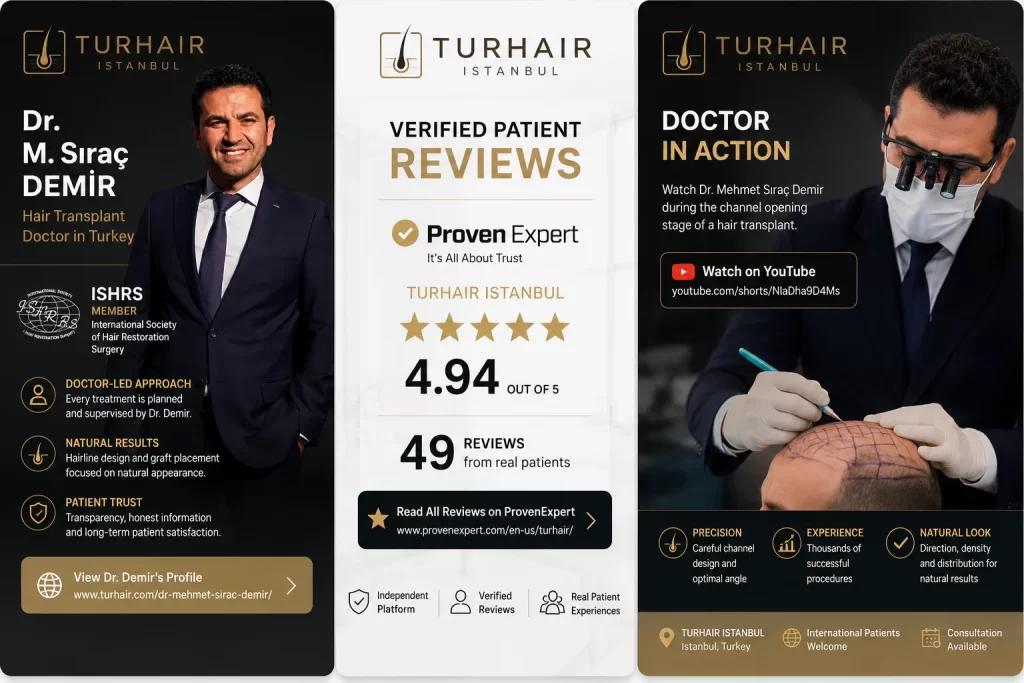
What Makes TurHair and Dr. Demir Different?
Not every hair transplant clinic in Turkey follows the same medical model. At TurHair, treatment planning is built around direct doctor involvement, limited daily patient numbers, transparent graft planning and personalized care.
Direct Doctor Involvement
Dr. Mehmet Sıraç Demir personally evaluates the patient, plans the hairline and determines the appropriate graft distribution according to the donor area and future hair-loss pattern.
Only One or Two Patients Daily
TurHair limits the number of daily procedures. This allows the medical team to dedicate more time to planning, supervision, graft handling and individual patient care.
International Professional Memberships
Dr. Demir is associated with international hair-restoration organizations, including ISHRS and FUE Europe, reflecting his continued professional involvement in the field.
Donor Area Protection
The goal is not to advertise the highest possible graft number. Each procedure is planned according to the safe capacity of the donor area to reduce the risk of overharvesting.
TurHair vs High-Volume Hair Transplant Clinics
Why Does Doctor Involvement Matter?
Hair transplantation is not only the process of moving grafts from one area to another. The natural appearance of the final result depends on medical assessment, hairline design, graft distribution, channel angle, depth, direction and donor-area management.
These decisions require medical experience and should be adapted to each patient. A low price cannot compensate for an unnatural hairline, incorrect growth direction or permanently damaged donor area.
Personalized Hairline Design
A natural hairline should not be copied from another patient. Dr. Demir evaluates the patient’s facial structure, forehead height, age, existing hair, degree of hair loss and donor capacity before preparing the design.
Single-hair grafts are generally preferred for the frontal transition zone, while grafts containing more hairs may be positioned behind the hairline to support visual density. Correct placement helps avoid an artificial, straight or plug-like appearance.
Safe and Realistic Graft Planning
The number of grafts is determined according to the donor area, hair thickness, follicular density, recipient area and future hair-loss risk. TurHair does not base treatment quality only on large graft-number claims.
In some patients, a carefully distributed procedure using fewer grafts may create a stronger cosmetic improvement than an aggressive extraction with a higher number. Preserving sufficient donor hair is also important in case another procedure is needed in the future.
Medical Evaluation
Suitability, donor capacity and health history are assessed before final planning.
Natural Direction
Grafts are planned according to natural hair angles and growth patterns.
Donor Preservation
Extraction is planned to reduce visible thinning and uneven harvesting.
Continued Support
Patients receive guidance before, during and after their stay in Turkey.
Who Is Dr. Mehmet Sıraç Demir?
Dr. Mehmet Sıraç Demir is a Turkish medical doctor working in medical aesthetics and hair transplantation. He graduated from Ondokuz Mayıs University Faculty of Medicine and has worked in hair restoration and medical aesthetics since 2008.
His professional approach focuses on personalized hairline planning, appropriate graft distribution, donor-area protection and direct medical supervision. He has treated international patients from numerous countries and continues to follow developments in modern hair-restoration techniques.
TurHair’s main difference: patients know who their doctor is, what role the doctor will perform and how the procedure will be planned before travelling to Turkey.
Transparent Package Options
TurHair offers different treatment packages according to the level of doctor involvement, selected technique and patient requirements. Before booking, patients receive information about the estimated graft range, included services, hotel stay, transfers, medication, aftercare and payment conditions.
In doctor-led packages, Dr. Demir personally completes key planning stages and may personally perform recipient channel opening, depending on the selected package. This provides patients with a clear understanding of the medical responsibilities during the procedure.
Choose Medical Quality, Not Only a Low Price
A hair transplant is a permanent medical procedure. The safest choice is a transparent clinic that clearly explains the doctor’s role, donor limitations, realistic coverage and long-term treatment plan.
| Clinic Type | Typical Price | Doctor Involvement | Recommended? |
|---|---|---|---|
| Technician Clinic | €1,500–2,200 | Minimal | ❌ Not ideal |
| Doctor-Led Clinic | € 3000–5000 | High | ✅ Recommended |
| Premium Boutique Clinic | €5000+ | Very High | ⭐⭐⭐⭐⭐ |
Why Are Hair Transplant Prices So Different?
Many people believe they are paying only for the operation. In reality, several medical and logistical factors influence the total price.
- Doctor experience
- Hair transplant technique (FUE, Sapphire FUE or DHI)
- Number of grafts
- Clinic reputation
- Hospital quality
- Medical equipment
- Aftercare support
- Hotel and transfers
A clinic advertising an extremely low price often reduces costs by increasing patient volume or limiting direct surgeon involvement. Premium clinics generally accept fewer patients each day and dedicate more time to individualized planning and surgery.
Average Hair Transplant Cost by Graft Count
| Estimated Grafts | Coverage | Average Price |
|---|---|---|
| 1500–2000 | Hairline | €1,800–2,500 |
| 2500–3500 | Hairline + Mid Scalp | €2,300–3,300 |
| 4000–5000 | Large Areas | €2,800–4,500 |
| 5000+ | Advanced Baldness | €3,500–5,500+ |
What’s Usually Included in an All-Inclusive Package?
Most reputable Turkish clinics offer comprehensive packages that simplify the patient’s entire medical journey.
- Medical consultation
- Hair analysis
- Doctor examination
- Hair transplant surgery
- Local anesthesia
- Hotel accommodation
- VIP airport transfers
- Clinic transportation
- Blood tests
- Medication
- First hair wash
- Aftercare products
- Translator assistance
- Online follow-up
Before booking, ask for a detailed written quotation so you understand exactly what is included and whether there are any additional fees for medication, PRP, transfers, or accommodation.
Hidden Costs to Watch Out For
The advertised package price is not always the final amount you will pay.
| Possible Extra Cost | Typical Amount |
|---|---|
| Flights | Depends on country |
| PRP Treatment | €150–400 |
| Extra Hotel Nights | €70–150/night |
| Additional Medication | €30–150 |
Should You Choose the Cheapest Clinic?
Price should never be the only deciding factor.
A hair transplant is a permanent surgical procedure. If the donor area is overharvested or the hairline is designed incorrectly, repairing the result can be difficult—and often much more expensive than choosing a qualified clinic in the first place.
Experienced doctors carefully evaluate:
- Donor capacity
- Future hair loss
- Hairline design
- Graft distribution
- Natural density
- Long-term planning
How to Compare Clinics Properly
| Question | Why It Matters |
|---|---|
| Who designs the hairline? | Natural appearance |
| Who opens the channels? | Growth direction |
| How many patients per day? | Quality control |
| Is the doctor involved? | Medical safety |
| What is included? | Avoid hidden fees |
Final Thoughts
Turkey continues to offer some of the world’s best value for hair transplantation in 2026. Patients benefit from internationally recognized surgeons, advanced FUE and DHI techniques, modern hospitals, and comprehensive medical tourism services at prices significantly lower than many Western countries. While lower-cost clinics exist, the safest long-term investment is choosing a reputable, doctor-led clinic with transparent pricing, documented results, and strong aftercare. A successful hair transplant should be evaluated not by the cheapest quote, but by the quality, safety, and natural-looking outcome you will enjoy for years to come.
Hair Transplant Cost by Technique in Turkey
The technique used during the procedure can influence the total cost of a hair transplant in Turkey. Although the basic principles of hair transplantation are similar, each method requires different instruments, planning, implantation procedures, and surgical time.
The three most commonly offered techniques in 2026 are FUE, Sapphire FUE, and DHI. The most expensive technique is not automatically the best option for every patient. The right choice depends on the condition of the donor area, the size of the bald area, the desired density, hair characteristics, and the surgeon’s medical recommendation.
| Technique | Typical 2026 Cost | Best Suited For | Key Feature |
|---|---|---|---|
| Standard FUE | €1,800–€3,500 | Most hair-loss patterns | Reliable and widely used |
| Sapphire FUE | €2,500–€4,500 | Patients seeking precise channel creation | Sapphire blade channel opening |
| DHI | €2,800–€5,000+ | Smaller areas and density work | Implantation with implanter pens |
Standard FUE Cost
FUE, or Follicular Unit Extraction, remains one of the most popular hair transplant techniques in Turkey. Individual follicular units are extracted from the donor area, usually from the back and sides of the scalp, and then implanted into the recipient area.
Standard FUE is often the most cost-effective option because it can be used successfully for a wide range of patients. It is particularly suitable for rebuilding the frontal hairline, filling the temples, restoring the mid-scalp, and covering the crown.
The final price depends less on the name of the technique and more on who performs the critical surgical stages. Patients should ask whether the doctor personally designs the hairline, creates the recipient channels, and supervises the extraction and implantation process.
Sapphire FUE Cost
Sapphire FUE uses blades made from synthetic sapphire to create recipient channels. These blades are designed to produce precise incisions and may allow the surgeon to control the angle, depth, and direction of implanted grafts carefully.
Because sapphire instruments and detailed channel planning may increase the procedure cost, Sapphire FUE packages are usually priced higher than standard FUE. However, the sapphire blade itself does not guarantee a better result. The surgeon’s planning, experience, and understanding of natural hair direction remain more important than the instrument alone.
DHI Hair Transplant Cost
DHI, or Direct Hair Implantation, uses specialized implanter pens to place grafts into the scalp. It is frequently promoted for procedures that require additional density between existing hairs or treatment of relatively limited areas.
DHI procedures may take longer and require a larger implantation team. For this reason, they are often more expensive. DHI is not necessarily the ideal technique for patients who require a very high number of grafts. A medical evaluation is necessary to determine whether DHI offers a real advantage in an individual case.
Does Turkey Charge Per Graft?
Many clinics in Europe and the United States calculate hair transplant prices according to the number of grafts. In Turkey, clinics commonly offer a fixed package price that covers a maximum graft range rather than charging for every individual follicular unit.
For example, a package may include up to 4,000 or 5,000 grafts, depending on the patient’s donor capacity. This pricing structure can make treatment easier to understand, but patients should be cautious when a clinic promises an unrealistically high graft number before examining the donor area.
Important: The maximum safe graft number is determined by donor density, hair thickness, skin condition, previous procedures, and the size of the extraction area. Removing too many grafts can permanently damage the donor region.
A trustworthy clinic should prioritize donor preservation rather than competing to advertise the highest number of grafts. In some patients, 3,500 carefully distributed grafts can create a better visual result than 5,000 poorly planned grafts.
Why Is a Hair Transplant Cheaper in Turkey?
Lower prices in Turkey do not automatically mean lower medical quality. Operating expenses, staff costs, accommodation expenses, and general business costs are usually lower than in the United Kingdom, the United States, Canada, or Western Europe.
Turkey also has a highly developed medical-tourism sector. Clinics frequently work with international patients and organize accommodation, transfers, interpreters, consultations, and aftercare as one coordinated package. High demand allows established clinics to provide complete services at competitive rates.
However, the large number of clinics has also created major differences in quality. Some facilities operate as high-volume businesses and perform several procedures at the same time. Others follow a boutique, doctor-led model and limit the number of patients treated each day.
Turkey vs UK, Europe and USA Hair Transplant Costs
| Destination | Estimated Cost | Package Structure |
|---|---|---|
| Turkey | €1,800–€5,000+ | Frequently all-inclusive |
| United Kingdom | £5,000–£12,000+ | Usually surgery only |
| Western Europe | €4,000–€10,000+ | Varies by country |
| United States | $8,000–$20,000+ | Often calculated per graft |
Even after including flights, many international patients find that the overall cost in Turkey remains substantially lower. Nevertheless, savings should be considered together with medical standards, surgeon credentials, communication quality, and follow-up support.
Are Flights Included in the Price?
International flight tickets are normally not included in Turkish hair transplant packages. Patients are generally responsible for arranging their own travel to Istanbul or another treatment destination.
Airport pickup may be included, but patients should verify which airport is covered. Istanbul has more than one airport, and additional charges may apply if the arrival airport differs from the one stated in the package.
Patients should also confirm whether hotel transfers, operation-day transportation, the first-wash appointment, and return transportation to the airport are included. A low advertised price may become less attractive when these services are charged separately.
How Much Should You Budget in Total?
In addition to the clinic package, patients should prepare a realistic travel budget. The total amount may include flights, meals, extra hotel nights, personal expenses, travel insurance, and medication required after returning home.
| Expense | Suggested Budget |
|---|---|
| Hair transplant package | €2,000–€5,000+ |
| Return flights | €150–€600+ |
| Meals and personal expenses | €100–€300 |
| Extra hotel accommodation | €70–€150 per night |
| Emergency reserve | €200–€500 |
Red Flags Behind Very Cheap Hair Transplant Offers
A very low quote may look attractive, particularly when it includes thousands of grafts, a hotel, transportation, medication, and additional treatments. However, patients should consider how a clinic can provide all these services at an extremely low price.
- The doctor’s identity is not clearly disclosed.
- Consultations are handled only by sales representatives.
- The clinic guarantees a graft number without medical examination.
- Several patients are operated on simultaneously.
- Unlicensed technicians perform critical surgical stages.
- Before-and-after photographs appear edited or inconsistent.
- The clinic pressures patients to pay immediately.
- There is no clear written aftercare policy.
The cost of correcting an unnatural hairline, depleted donor area, poor density, infection, or incorrect graft direction can be significantly higher than the original procedure. Some complications cannot be fully corrected because donor hair is limited.
Questions to Ask Before Paying a Deposit
- What is the full name and medical registration of the doctor?
- Which stages will the doctor personally perform?
- How many patients will be treated on the same day?
- Is the quoted price final and written?
- What happens if fewer grafts can be safely extracted?
- Are the hotel, transfers, medication, and aftercare included?
- Who will assist after the patient returns home?
- What is the cancellation and deposit policy?
Is a Hair Transplant in Turkey Worth the Cost?
A hair transplant in Turkey can provide excellent value when the procedure is performed in a medically responsible, doctor-led environment. Patients may receive modern treatment, extensive experience, organized travel support, and long-term follow-up for considerably less than they would pay in many other countries.
The most important goal should not be obtaining the lowest price. It should be achieving a natural hairline, protecting the donor area, maximizing graft survival, and creating a result that remains appropriate as future hair loss progresses.
Before making a decision, compare clinics according to medical leadership, transparency, real patient results, independent reviews, daily patient numbers, and the level of surgeon involvement. A carefully planned procedure is an investment that can influence your appearance and confidence for many years.
How Clinic Experience Affects Hair Transplant Pricing
Clinic experience is one of the most important factors affecting the cost of a hair transplant in Turkey. A clinic that has performed procedures for many years will usually have more established medical protocols, trained staff, reliable sterilization procedures, and stronger postoperative support.
Experienced clinics may charge more because they invest in qualified medical personnel, modern surgical instruments, patient safety systems, and long-term follow-up. They are also more likely to evaluate whether a patient is genuinely suitable for surgery instead of accepting every applicant.
Patients should remember that a hair transplant is not simply a cosmetic service. It is a medical procedure that requires planning, donor management, anesthesia, tissue handling, wound care, and postoperative monitoring. Paying more for a properly organized clinic may reduce the risk of poor growth, infection, overharvesting, and unnatural results.
Does the Surgeon’s Reputation Increase the Cost?
Hair transplant procedures performed by a well-known or internationally recognized doctor are often more expensive. This difference usually reflects the doctor’s experience, education, professional memberships, surgical involvement, and documented results.
A reputable surgeon may personally perform the consultation, design the hairline, determine the graft distribution, create the recipient channels, and supervise the entire procedure. In lower-cost clinics, these stages may be delegated almost completely to technicians.
The surgeon’s reputation should not be judged only by social media followers or advertising. Patients should review medical qualifications, registration details, professional memberships, years of experience, real patient cases, and the doctor’s exact role during the operation.
Key point: A higher price does not automatically guarantee quality, but clear doctor involvement, transparent credentials, limited daily patient numbers, and documented results are strong indicators of a more reliable clinic.
How Hair Type Can Influence the Final Price
Hair characteristics can affect both the surgical plan and the total treatment cost. Patients with thick, coarse, or curly hair may achieve greater visual coverage with fewer grafts than patients with very fine and straight hair.
The contrast between the hair color and scalp color also influences the appearance of density. Dark hair on a light scalp may require more careful distribution, while lower contrast can create a fuller visual effect.
Curly and Afro-textured hair can be more technically challenging because the follicle may curve beneath the skin. This requires greater extraction experience and may increase the procedure time. Some clinics may charge more for complex donor characteristics or highly specialized cases.
A professional clinic should assess:
- Hair thickness
- Hair curl and direction
- Donor density
- Scalp flexibility
- Hair and skin color contrast
- Existing miniaturized hair
Does Crown Hair Transplantation Cost More?
Crown restoration can require a large number of grafts because the area is broad and the natural hair grows in a circular pattern. Creating a realistic crown requires careful control of direction, angle, and graft distribution.
The crown also has a lower cosmetic priority than the frontal hairline for many patients. If the donor supply is limited, the doctor may recommend concentrating grafts in the frontal and mid-scalp areas first. This can produce a stronger visual improvement when the patient is viewed from the front.
Patients with advanced hair loss may require a second procedure for the crown. In such cases, the total long-term cost will be higher than a single-session transplant. A responsible clinic should explain this possibility before surgery rather than promising complete coverage in one operation.
Can a Hair Transplant Be Completed in One Session?
Many patients can be treated in one session, but this depends on the size of the bald area, donor strength, hair quality, medical history, and desired density.
A large session may involve several thousand grafts and can take many hours. However, performing the highest possible number of grafts is not always the safest option. Excessive extraction can leave visible thinning, patchiness, or permanent donor damage.
A second session may be recommended when:
- The bald area is very large
- The donor area has limited density
- The patient wants additional crown coverage
- Previous surgery requires correction
- More density is desired after the first result matures
Patients should consider the possible cost of future procedures when planning their budget. Hair loss may continue after surgery, especially if the surrounding native hair is not medically stabilized.
Hair Transplant Cost for Women in Turkey
Female hair transplantation is often more complex because women may experience diffuse thinning rather than a clearly defined bald area. The doctor must carefully evaluate the cause of hair loss before recommending surgery.
Women may require transplantation for:
- A naturally high hairline
- Wide forehead reduction
- Temple recession
- Traction alopecia
- Scar coverage
- Localized thinning
The price may be similar to male hair transplantation, but some female procedures require additional planning, partial shaving, or a no-shave approach. These factors can increase the duration and cost of the operation.
A proper medical assessment is essential because not every woman with thinning hair is a suitable candidate. Hormonal conditions, iron deficiency, thyroid disorders, and other medical causes should be considered before surgery.
Beard and Eyebrow Transplant Costs in Turkey
Turkey is also a popular destination for beard, moustache, sideburn, and eyebrow transplantation. These procedures generally involve fewer grafts than a full scalp transplant, but they require precise artistic planning.
Facial hair must be implanted at very shallow angles to match the natural growth pattern. Incorrect direction can create an artificial appearance that is difficult to correct.
| Procedure | Typical Graft Range | Main Consideration |
|---|---|---|
| Beard Transplant | 1,500–3,500 grafts | Natural density and direction |
| Moustache Transplant | 300–800 grafts | Fine angle control |
| Eyebrow Transplant | 200–500 grafts | Shape and symmetry |
Can You Finance a Hair Transplant in Turkey?
Some clinics offer installment options, credit card payments, or financing through third-party providers. However, payment conditions vary significantly between clinics.
International patients are often asked to pay a deposit to secure the surgery date. The remaining balance may be paid by bank transfer, cash, or credit card. Credit card payments may include an additional processing fee, so patients should ask about the final payable amount in advance.
Before sending a deposit, request:
- A written quotation
- The clinic’s official company details
- The doctor’s full name
- The cancellation policy
- The refund conditions
- Written confirmation of the surgery date
Patients should avoid sending money to unidentified personal accounts without receiving official documentation. Transparent payment procedures are an important sign of a professionally managed clinic.
Is PRP Included in the Hair Transplant Price?
PRP, or Platelet-Rich Plasma treatment, is sometimes included in premium packages and sometimes offered as an optional service. PRP uses a concentrated portion of the patient’s own blood and is intended to support tissue recovery and the existing hair environment.
Patients should not choose a clinic solely because free PRP is advertised. The success of a hair transplant depends mainly on donor management, graft handling, channel creation, implantation quality, and postoperative care.
Ask whether PRP is included in the quoted price, how many sessions are provided, and whether any additional treatments will be recommended after returning home.
What Happens After the Procedure?
A good hair transplant package should include clear aftercare instructions. Patients usually receive medication, washing guidance, sleeping instructions, and information about swelling, crusting, exercise, sun exposure, and returning to work.
The transplanted hairs commonly shed during the first few weeks. New growth develops gradually, and the final result cannot be judged immediately. Many patients begin to notice visible improvement after several months, while maturation continues over a longer period.
Long-term follow-up is valuable because patients may have questions after returning home. Clinics that provide structured postoperative communication often offer greater reassurance than clinics that stop responding once payment has been completed.
Frequently Asked Questions About Hair Transplant Turkey Cost
What is the average cost of a hair transplant in Turkey?
The average cost depends on the clinic, technique, graft requirement, hotel package, and level of doctor involvement. Doctor-led and boutique clinics generally charge more than high-volume technician-based centers.
Is 2,000 euros enough for a hair transplant in Turkey?
Some clinics offer packages around this level, but patients should carefully verify who performs the surgery, what services are included, and whether the clinic operates legally and transparently.
Why do some clinics offer unlimited grafts?
“Unlimited grafts” is usually a marketing phrase. The number of safely extractable grafts is always limited by donor capacity. A medical clinic should remove only the number that can be harvested without causing visible damage.
Does a more expensive clinic guarantee better results?
No price can guarantee a perfect result. However, experienced doctors, careful planning, limited patient volume, proper sterilization, and transparent follow-up can improve safety and treatment quality.
Can I receive an exact price from photographs?
Photographs can provide an initial estimate, but the final plan may change after an in-person examination of the donor area, scalp condition, hair characteristics, and medical history.
Final Cost Checklist Before Booking
- Confirm the final package price in writing.
- Check which stages the doctor personally performs.
- Confirm the hotel name and number of nights.
- Ask whether airport and clinic transfers are included.
- Verify medication and aftercare product costs.
- Ask about credit card or bank transfer fees.
- Review the deposit and cancellation policy.
- Check whether online follow-up is provided.
- Never choose a clinic based only on the lowest price.
Understanding the complete cost of a hair transplant in Turkey helps patients avoid misleading advertisements and unexpected expenses. The best value comes from combining a fair price with qualified medical leadership, safe donor management, transparent communication, and long-term support.
How to Get an Accurate Hair Transplant Quote in Turkey
An accurate hair transplant quote should be based on more than one photograph and a short online conversation. Although clear images can provide an initial estimate, a professional clinic should also ask questions about the patient’s age, medical history, previous procedures, current medications, family history of hair loss, and long-term expectations.
Patients are usually asked to send photographs of the front hairline, temples, top of the scalp, crown, and donor area. These images should be taken in natural light without hair fibers, concealers, styling products, or filters. Wet-hair photographs may also help the clinic evaluate the true degree of thinning.
A detailed online assessment should explain:
- The estimated number of grafts required
- The areas that can realistically be covered
- The proposed technique
- The level of doctor involvement
- The total package price
- What is included and excluded
- Whether a second session may be necessary
The final graft number should be confirmed after an in-person examination. Donor density can appear stronger or weaker in photographs, especially when the hair is long. A responsible clinic should be willing to revise the plan if the donor area cannot safely support the original estimate.
Why Extremely High Graft Promises Can Be Misleading
Some clinics advertise 5,000, 6,000, or even more grafts as part of a standard package. These numbers may sound impressive, but a higher graft count does not always mean a better result.
Every patient has a limited donor supply. Hair follicles removed from the permanent donor zone do not grow back in the extraction area. If grafts are taken too aggressively, the donor region may become visibly thin, uneven, or scarred.
The quality of a hair transplant depends on how effectively the available grafts are used. A skilled medical team should distribute single-hair grafts along the frontal hairline, use multi-hair grafts behind the hairline for density, and preserve enough donor hair for possible future procedures.
Better planning is more important than bigger numbers. A natural-looking result depends on graft quality, survival, direction, angle, placement, and long-term donor management—not simply the total number quoted in an advertisement.
How the Number of Patients Per Day Affects Cost
Daily patient volume is an important factor that many people overlook when comparing hair transplant prices in Turkey. Large clinics may perform several operations at the same time, using multiple technician teams under limited doctor supervision.
This high-volume model can reduce the cost per patient. However, it may also limit the time available for consultation, hairline design, surgical planning, and individual monitoring.
Boutique clinics generally treat fewer patients each day. Their prices may be higher because the doctor and medical team dedicate more time to each procedure. This model may allow for more detailed planning, closer supervision, and stronger communication throughout the day.
| Clinic Model | Typical Daily Volume | Main Advantage | Possible Concern |
|---|---|---|---|
| High-Volume Center | Multiple patients | Lower package prices | Limited personalized attention |
| Boutique Clinic | One or two patients | Detailed planning | Higher price |
| Doctor-Led Practice | Limited appointments | Direct medical involvement | Limited availability |
Correction Hair Transplant Costs in Turkey
Corrective hair transplantation is usually more complex than a first procedure. Patients may seek repair treatment after receiving an unnatural hairline, poor density, incorrect graft direction, visible scarring, plug-like grafts, or excessive donor extraction.
The price of a correction procedure may be higher because the doctor must work around scar tissue, existing grafts, and a reduced donor supply. In some cases, incorrectly placed follicles must be removed by FUE extraction or laser treatment before a new hairline can be created.
A repair plan may involve:
- Removing unnatural grafts
- Redesigning the frontal hairline
- Adding density between existing hairs
- Camouflaging scars
- Using beard grafts when scalp donor hair is limited
- Completing treatment over multiple sessions
Because donor hair is limited, not every unsatisfactory result can be fully corrected. This is one of the strongest reasons to choose a qualified clinic for the first operation rather than making a decision based only on price.
Does Beard Donor Hair Increase the Price?
Beard hair may be used as an additional donor source in selected patients with advanced hair loss or limited scalp donor density. These grafts are usually extracted from beneath the chin and may be blended with scalp hair to improve coverage in the mid-scalp or crown.
Beard extraction can increase the duration and technical difficulty of the procedure. The follicles are often thicker and grow differently from scalp hair, so they must be placed strategically. For this reason, clinics may charge an additional fee when beard grafts are required.
Beard hair is generally not the first choice for creating a soft frontal hairline. It is more commonly used behind the hairline, where thicker grafts can help produce visual density.
Does the Season Affect Hair Transplant Prices?
Hair transplant prices in Turkey may vary slightly depending on the season, clinic availability, hotel rates, and international travel demand. Some clinics may offer promotions during quieter periods, while popular dates may fill quickly.
Summer, Christmas holidays, Easter periods, and major public holidays can influence flight and hotel costs. Even when the clinic package remains unchanged, the total travel budget may increase significantly during high-demand periods.
Patients seeking better overall value may consider traveling during less crowded months. However, the season should not be the main factor in deciding when to undergo surgery. The best time is when the patient can follow postoperative instructions, avoid intense exercise, protect the scalp from strong sun exposure, and allow enough time for recovery.
How Long Should You Stay in Turkey?
Most international hair transplant patients stay in Turkey for two to four nights. A typical schedule includes arrival one day before surgery, the procedure on the following day, and a first-wash or control appointment before departure.
Some packages include two hotel nights, while others include three. Patients arriving late at night or departing very early may need additional accommodation. These extra nights should be included in the total budget.
| Day | Typical Schedule |
|---|---|
| Day 1 | Arrival, airport transfer, hotel check-in |
| Day 2 | Consultation, hairline design, blood tests, surgery |
| Day 3 | Recovery, clinic control, aftercare instructions |
| Day 4 | First wash and departure, depending on the clinic plan |
What Medical Tests Are Included in the Price?
Reputable clinics usually perform basic blood tests before surgery. These may include screening for infectious diseases, blood count evaluation, and checks related to clotting or general medical safety.
Patients with chronic medical conditions may need additional tests or written approval from their doctor. Diabetes, uncontrolled blood pressure, bleeding disorders, heart conditions, active skin disease, and certain medications may affect surgical eligibility.
The clinic should be informed about all prescription drugs, supplements, previous operations, allergies, and medical diagnoses. Patients should never stop prescribed medication without advice from an appropriate physician.
If special examinations or hospital consultations are required, these may not be included in the standard package. Asking about medical testing in advance helps prevent unexpected expenses or delays on the operation day.
Are Medications and Aftercare Products Included?
Most all-inclusive packages provide short-term medication and basic postoperative products. These may include antibiotics, pain relief, anti-swelling medication, special shampoo, washing foam, lotion, a neck pillow, and protective headwear.
The exact contents vary between clinics. Some packages include several months of vitamins or hair-care products, while others provide only the essentials needed during the first recovery period.
Patients should ask whether they will need to purchase additional medication after returning home. Long-term treatments such as minoxidil or prescription hair-loss medication are usually not included unless specifically stated.
Understanding Deposit and Cancellation Policies
A deposit is commonly required to reserve the medical team, hotel, transfers, and operation date. The amount may be fixed or calculated as a percentage of the total package price.
Before paying, patients should confirm whether the deposit is refundable, transferable to a new date, or retained if the patient cancels. Flight disruptions, visa problems, illness, and personal emergencies can affect travel plans, so the policy should be reviewed carefully.
The clinic should provide written confirmation containing the patient’s name, selected package, deposit amount, remaining balance, procedure date, and included services. Verbal promises made through messaging applications should also be reflected in an official quotation or booking document.
How Currency Changes Can Affect the Final Cost
International patients may receive quotations in euros, British pounds, US dollars, or Turkish lira. Exchange-rate changes can affect the final amount, particularly when the deposit is paid months before the procedure.
Patients should ask whether the price is fixed in the quoted currency or recalculated on the payment date. Bank transfer fees, foreign transaction charges, card-processing fees, and currency conversion costs may also increase the total payment.
To avoid confusion, the clinic should state the exact currency, the remaining balance, the accepted payment methods, and any additional transaction charges before the patient travels.
A Practical Hair Transplant Budget Example
A patient choosing a doctor-led package may prepare the following example budget:
- Hair transplant package: €3,000
- Return flight: €300
- Extra hotel night: €100
- Meals and personal expenses: €150
- Travel insurance: €50
- Emergency reserve: €300
- Estimated total budget: €3,900
This example is not a fixed price, but it shows why patients should calculate the complete journey rather than focusing only on the clinic advertisement.
The Real Meaning of Value in Hair Transplantation
The best-value hair transplant is not always the cheapest and not always the most expensive. True value means receiving appropriate medical care, realistic planning, a natural design, safe graft extraction, reliable implantation, transparent pricing, and continued support after the patient returns home.
A good clinic should explain both the possibilities and the limitations of surgery. It should not promise impossible density, guarantee an exact growth percentage, or pressure the patient into immediate payment.
When comparing 2026 hair transplant costs in Turkey, patients should evaluate the complete medical service rather than a single number. The doctor’s experience, the condition of the donor area, the planned technique, the number of patients treated each day, the quality of the facility, and the strength of the aftercare program all contribute to the final result.
Careful research before booking can help patients protect their donor hair, reduce avoidable risks, and achieve a result that looks natural for many years. A hair transplant is a long-term medical and aesthetic investment, so the decision should be based on trust, evidence, safety, and realistic expectations.
Hair Transplant Cost by Norwood Scale
One of the biggest factors influencing the overall cost of a hair transplant in Turkey is the degree of hair loss. Hair restoration specialists commonly use the Norwood Scale to classify male pattern baldness. Patients with early-stage hair loss generally require fewer grafts, while advanced stages often require larger procedures, careful donor management, and sometimes multiple operations.
The Norwood Scale ranges from Stage I, which represents minimal recession, to Stage VII, where only a horseshoe-shaped donor area remains. Understanding your stage helps both the patient and the surgeon estimate the number of grafts needed and determine whether a single session is realistic.
| Norwood Stage | Estimated Grafts | Typical Procedure | Relative Cost |
|---|---|---|---|
| II | 1,200–2,000 | Hairline restoration | Lower |
| III | 2,000–3,000 | Hairline + temples | Moderate |
| IV | 3,000–4,000 | Front + mid-scalp | Medium |
| V | 4,000–5,000 | Large coverage | High |
| VI–VII | 5,000+ | Multiple sessions possible | Highest |
Patients with advanced Norwood stages often require realistic planning. Complete restoration may not be possible if the donor supply is limited. A responsible surgeon will prioritize creating a natural appearance rather than attempting unrealistic coverage.
How Donor Density Influences Hair Transplant Cost
The donor area is the most valuable resource in hair transplantation. Unlike other cosmetic procedures, donor hair is limited. Every follicle extracted must be used wisely because it cannot be replaced once removed.
Patients with dense donor hair often achieve excellent coverage with fewer sessions. Individuals with naturally thin donor density may require a more conservative treatment plan or additional donor sources such as beard hair.
Doctors evaluate several donor characteristics before preparing a quotation:
- Hair density per square centimeter
- Hair shaft thickness
- Elasticity of the scalp
- Hair color
- Curl pattern
- Previous surgery
- Scarring
A patient with an excellent donor area may require fewer grafts to create the same visual density as someone with finer hair. This is one reason why clinics cannot provide identical prices for every patient.
How Age Can Affect Hair Transplant Planning
Age does not directly determine the cost of a hair transplant, but it strongly influences treatment planning. Younger patients often continue to lose native hair after surgery, so the surgeon must consider future hair loss when designing the hairline.
Creating a very low, dense hairline in a patient in their early twenties may look attractive initially, but it may become unnatural if hair loss progresses over the following decade.
Older patients generally have a more stable pattern of hair loss, allowing the surgeon to create a long-term design with greater confidence. However, age alone does not determine eligibility. Overall health, donor quality, and expectations remain the most important considerations.
Does Shaving Affect the Cost?
Some patients prefer a no-shave or partially shaved hair transplant because they wish to return to work quickly or avoid a dramatic change in appearance.
No-shave procedures usually require more preparation and careful handling of existing hair. The operation may take longer because the surgical team must separate and protect surrounding hairs during implantation.
For this reason, many clinics charge more for no-shave procedures than for standard shaved FUE. Patients should discuss whether they are suitable candidates because not every degree of hair loss can be treated effectively without shaving.
Tip: Choosing a no-shave procedure should be based on medical suitability rather than convenience alone. A surgeon may recommend shaving if it improves graft survival and surgical accuracy.
Should You Travel Alone or With Someone?
Many international patients travel to Turkey alone because clinics provide airport transfers, interpreter services, hotel accommodation, and postoperative support. However, some patients feel more comfortable bringing a family member or friend.
If you travel with a companion, remember to include additional expenses such as hotel upgrades, meals, and return flights in your overall budget. Some clinics can arrange accommodation for companions, while others charge an additional fee.
How Long Does Recovery Take?
Recovery time does not directly influence the clinic price, but it affects the patient’s personal budget. Some individuals can return to office work within a few days, while others prefer taking one or two weeks away from work.
Patients with physically demanding jobs should discuss recovery expectations with their clinic before booking surgery. Heavy lifting, contact sports, swimming, and intense exercise are usually postponed during the early healing period.
The financial impact of taking time away from work should also be considered when calculating the true cost of treatment.
Comparing Online Quotes
It is common for patients to request opinions from several clinics before making a decision. Comparing multiple consultations can be useful, but quotations should be evaluated carefully.
Instead of focusing only on price, compare:
- Estimated graft range
- Doctor involvement
- Technique recommended
- Daily patient numbers
- Hospital or clinic accreditation
- Package inclusions
- Aftercare program
- Communication quality
If one clinic recommends dramatically more grafts than every other clinic, patients should ask for a clear explanation. Significant differences may indicate different treatment philosophies or unrealistic marketing claims.
Questions to Ask During Your Consultation
Preparing questions before your consultation helps you make an informed decision. A transparent clinic should answer these questions clearly and without pressure.
- Who performs the consultation?
- Will the doctor examine my donor area personally?
- How many grafts are realistically available?
- Which technique do you recommend and why?
- How many procedures do you perform each day?
- Can I see unedited results from similar patients?
- What happens if I need another procedure later?
- What support is available after I return home?
- Is every cost included in the written quotation?
- Are there any situations that could change the final price?
Making an Informed Decision
The cost of a hair transplant in Turkey should always be viewed in the context of overall quality. The cheapest package may not provide the safest experience, while the highest price does not automatically guarantee the best outcome.
Successful hair restoration depends on careful diagnosis, realistic planning, appropriate graft allocation, precise surgical technique, proper healing, and long-term patient support. Choosing a clinic that communicates openly, provides transparent pricing, and explains both the benefits and limitations of treatment is often the best investment.
By comparing clinics carefully, asking the right questions, and understanding exactly what your package includes, you can make a confident decision based on medical quality rather than marketing promises. A well-planned hair transplant should deliver natural-looking results while protecting the donor area for the future, making it a worthwhile long-term investment rather than simply an expense.
Related Hair Transplant Guides
Continue reading our expert hair transplant guides to compare costs, techniques, clinics and treatment options before making your decision.
| Article | Why Read It? |
|---|---|
Hair Transplant Turkey Cost 2026 | Complete overview of 2026 prices, graft estimates, packages and factors affecting treatment costs. |
How Much Does a Hair Transplant Cost in Turkey? | Detailed explanation of pricing, doctor involvement and all-inclusive packages. |
Hair Transplant Turkey Price Per Graft | Learn how graft pricing works and why package prices vary between clinics. |
3000 Grafts Hair Transplant Cost in Turkey | Understand coverage expectations, pricing and whether 3,000 grafts are enough. |
Hair Transplant Cost in Europe vs Turkey | Compare treatment prices, quality and overall value across different countries. |
Cheap vs Expensive Hair Transplant | Discover what really affects quality beyond the advertised price. |
DHI Hair Transplant Cost in Turkey | Everything you need to know about DHI pricing, advantages and candidates. |
Hair Transplant in London vs Turkey | Compare UK and Turkish clinics, costs and doctor-led procedures. |
Hair Transplant in New York vs Turkey | See the differences in treatment costs, surgeon experience and patient value. |
Is Hair Transplant Worth It? | Learn who benefits most from hair transplantation and what results to expect. |
Hair Transplant Turkey Cost 2026 | Discover the latest 2026 hair transplant prices in Turkey, compare FUE, Sapphire FUE and DHI techniques, understand package inclusions, graft estimates and hidden costs before choosing a clinic. |
Hair Transplant in Turkey – Complete Guide | Learn how hair transplantation works in Turkey, why thousands of international patients choose Istanbul every year, how to select a doctor-led clinic and what to expect before, during and after surgery. |
Frequently Asked Questions About Hair Transplant Cost in Turkey (2026)
1. How much does a hair transplant cost in Turkey in 2026?
Most reputable clinics charge between €2,500 and €8,000 depending on the doctor, clinic reputation, technique, and package inclusions.
2. Why is hair transplantation cheaper in Turkey?
Lower operating costs, high patient volume, and medical tourism competition allow Turkish clinics to offer significantly lower prices than many Western countries.
3. Does a lower price mean lower quality?
Not always. However, extremely low prices often indicate technician-only clinics or reduced medical supervision.
4. Is the number of grafts included in the price?
Most clinics offer package pricing rather than charging per graft, although some clinics still calculate costs based on graft numbers.
5. What affects the final hair transplant price?
Factors include graft count, hair loss severity, doctor involvement, surgical technique, clinic reputation, and package services.
6. Is Sapphire FUE more expensive than standard FUE?
Yes. Sapphire FUE generally costs slightly more because of specialized blades and additional surgical precision.
7. Is DHI more expensive than FUE?
Yes. DHI usually requires more time and specialized equipment, making it one of the more expensive techniques.
8. Are hotel and airport transfers included?
Many international packages include hotel accommodation, airport transfers, interpreter services, medications, and aftercare.
9. Are there any hidden costs?
Some clinics charge extra for medications, PRP treatments, additional hotel nights, or premium surgical options, so always request a detailed quotation.
10. Does doctor involvement increase the cost?
Yes. Clinics where the surgeon personally designs the hairline and performs critical surgical steps generally charge higher fees.
11. Is Turkey still cheaper than Europe or the USA?
Yes. Patients often save between 50% and 75% while receiving internationally recognized treatment.
12. How many grafts do most patients need?
Most procedures involve between 2,500 and 4,500 grafts, depending on the size of the balding area.
13. How long does the procedure take?
Most hair transplant surgeries last between six and eight hours and are completed in one day.
14. When will I see the final results?
Initial growth begins around three to four months, while final density usually develops after 12 months.
15. Is a deposit required before booking?
Most clinics request a small refundable or non-refundable deposit to reserve the surgery date.
16. Can women also undergo hair transplantation?
Yes. Female patients can benefit from hair transplantation when they meet appropriate medical criteria.
17. Is financing available?
Some clinics provide installment plans or partner with financing companies, although international patients often pay in full.
18. Does PRP increase the total price?
PRP may be included in premium packages or offered as an optional add-on with additional cost.
19. Can I return home the day after surgery?
Yes. Most international patients fly home one or two days after the procedure following their first hair wash.
20. How do I choose the best value instead of the cheapest clinic?
Compare surgeon credentials, real patient results, doctor involvement, accreditation, package inclusions, and long-term follow-up—not just the advertised price.
Medical Content Transparency
Author, Medical Review & References
About the Author
Dr. Mehmet Sıraç Demir
This medical article was prepared with contributions from
Dr. Mehmet Sıraç Demir, a medical doctor with extensive
clinical experience in hair transplantation and medical aesthetics.
Dr. Demir is involved in patient evaluation, hairline planning, graft
distribution and doctor-led hair restoration procedures at TurHair.
He graduated from the Faculty of Medicine at Ondokuz Mayıs University
and has worked in the field of medical aesthetics and hair restoration
since 2008. He is also listed as a member of the International Society
of Hair Restoration Surgery.
Medical Review
| Medical Reviewer | Dr. Mehmet Sıraç Demir |
|---|---|
| Professional Field | Hair Transplantation and Medical Aesthetics |
| Last Medically Reviewed | July 25, 2026 |
| Editorial Standard | Reviewed for medical accuracy, clarity, patient safety and consistency with current hair-restoration practices. |
This article is intended for general educational purposes and does not
replace an individual medical examination, diagnosis or personalized
treatment recommendation. Hair-transplant suitability and expected
results vary according to the patient’s donor area, hair-loss pattern,
medical history and clinical assessment.
Sources & References
Trusted Medical Resources
TurHair medical content may be supported by peer-reviewed research,
international professional organizations and recognized public-health
resources. References should be selected according to the specific
subject discussed in each article.
Reference links are provided for transparency and further reading.
External organizations do not necessarily endorse TurHair, its services
or the conclusions presented on this page.