Hair Transplant Repair Turkey
June 10, 2026
How Much Does a Doctor-Led Hair Transplant Cost in Turkey?✨
June 10, 2026Technician Hair Transplant Turkey: What Every Patient Should Know Before Choosing a Clinic
Turkey has become one of the world’s leading destinations for hair restoration procedures. Thousands of international patients travel to Istanbul every year seeking affordable and effective hair transplant treatments. However, one of the most important factors that patients often overlook is who actually performs the hair transplant procedure.
Many clinics advertise experienced doctors and impressive results, but in reality, a large portion of the procedure may be performed by technicians. Understanding the difference between a technician hair transplant in Turkey and a doctor-led procedure can help patients avoid disappointing outcomes and costly repair surgeries.
TECHNICIAN HAIR TRANSPLANT TURKEY
Why Technician-Led Hair Transplants Can Be Dangerous
Hair transplantation is a permanent surgical procedure. When critical stages are performed without proper physician control, patients may face serious aesthetic, medical, and donor-area risks.
Permanent Donor Damage
The donor area is limited. Overharvesting or poor extraction can cause patchy thinning, visible scarring, and reduced future transplant options.
Unnatural Hairline
A hairline that is too straight, too low, or too dense can look artificial for life and may require difficult repair surgery.
Wrong Hair Direction
Incorrect channel opening can make transplanted hair grow upright or in the wrong direction, creating an obvious transplant appearance.
Why Patients Should Be Extremely Careful
Many patients travel to Turkey because of attractive prices and strong marketing. However, the most important question is not only the cost, but who actually performs the hair transplant procedure.
A hair transplant is not a simple beauty treatment. It involves medical planning, donor management, hairline design, graft extraction, channel opening, and implantation. If these stages are poorly performed, the result may be difficult or impossible to fully correct.
Patients should be cautious with clinics that avoid clear answers about doctor involvement, perform multiple surgeries at the same time, or promise perfect results with extremely low prices.
Major Risks
- Permanent donor area thinning
- Visible scarring
- Low graft survival
- Patchy or weak density
- Unnatural frontal hairline
- Need for revision surgery
Warning Signs
- No clear doctor involvement
- Very low package prices
- Pressure to book quickly
- No donor area analysis
- Unrealistic density promises
- No long-term patient results
Cheap Hair Transplant Can Become Expensive
A failed hair transplant may require repair surgery, extra travel, graft removal, scar correction, and months of emotional stress. The cheapest option is not always the safest option.
Questions Every Patient Must Ask
- Who designs my hairline?
- Who extracts the grafts?
- Who opens the channels?
- Who implants the grafts?
- How many surgeries are performed daily?
- Will the doctor supervise the full procedure?
- Can I see donor area results after 12 months?
- What happens if I need repair surgery?
Why Repair Surgery Is More Difficult
Many patients believe that a bad hair transplant can easily be fixed later. In reality, repair procedures are usually more complex than first-time surgeries. The surgeon may need to work with scar tissue, limited donor reserves, wrong graft angles, and an unnatural hairline.
In severe cases, complete correction may not be possible. This is why choosing a transparent, doctor-supervised clinic from the beginning is extremely important.
Protect Your Donor Area. Protect Your Future.
Before choosing a technician hair transplant in Turkey, patients should fully understand the risks. Hair transplantation is permanent, and poor surgical decisions can affect appearance for life.
What Is a Technician Hair Transplant?
A technician hair transplant refers to a procedure where non-physician staff members perform some or most of the critical stages of the surgery.
These stages may include:
- Graft extraction
- Hairline design assistance
- Channel opening
- Graft implantation
- Patient preparation
While technicians play an important supporting role in modern hair transplantation, problems can arise when key surgical decisions are delegated entirely to non-medical personnel.
Why Do Some Clinics Use Technicians?
The primary reason is volume.
Many high-volume clinics in Turkey perform multiple surgeries per day. In these facilities, doctors may briefly consult with patients before technicians carry out most of the procedure.
This model allows clinics to:
- Reduce costs
- Increase daily patient numbers
- Offer lower prices
- Shorten doctor involvement
Although this approach may be financially attractive, it can increase the risk of inconsistent results when surgical planning is not closely supervised by an experienced physician.
Risks of Technician-Led Hair Transplants
Hair transplantation is not simply a cosmetic treatment. It is a surgical procedure that requires artistic judgment, medical knowledge, and long-term planning.
Common risks associated with poorly supervised technician hair transplants include:
- Unnatural hairlines
- Overharvesting of donor areas
- Poor graft survival
- Incorrect angle placement
- Low density results
- Visible scarring
- Permanent donor depletion
- Need for revision surgery
Many international patients seeking hair transplant repair procedures originally underwent technician-led surgeries that produced unsatisfactory outcomes.
Who Should Open the Channels?
Channel opening is one of the most critical phases of a hair transplant.
The channels determine:
- Hair direction
- Hair angle
- Density distribution
- Natural appearance
- Future styling options
Even perfectly extracted grafts can produce poor results if channels are opened incorrectly.
This is why many leading hair restoration specialists believe channel creation should be performed directly by the surgeon.
The Importance of Hairline Design
The hairline is the first thing people notice after a hair transplant.
A natural-looking hairline requires consideration of:
- Age
- Facial proportions
- Ethnicity
- Future hair loss patterns
- Donor capacity
An aggressive or poorly designed hairline may look unnatural and create difficulties for future procedures.
Experienced surgeons often spend significant time planning the hairline because it determines the entire aesthetic outcome.
How to Identify a Doctor-Led Hair Transplant Clinic
Patients should ask direct questions before booking surgery.
Important questions include:
- Who designs the hairline?
- Who extracts the grafts?
- Who opens the channels?
- Who implants the grafts?
- How many surgeries are performed daily?
- Will the doctor be present throughout the procedure?
Transparent clinics should clearly explain every stage of the process.
Why Repair Cases Are Increasing
The growing popularity of low-cost hair transplants has unfortunately increased the number of repair cases.
Patients often seek correction because of:
- Pluggy hairlines
- Uneven density
- Damaged donor areas
- Wrong hair direction
- Visible scars
- Failed growth
Hair transplant repair procedures are typically more complex than first-time surgeries because donor resources may already be limited.
TURHAIR • DR DEMIR
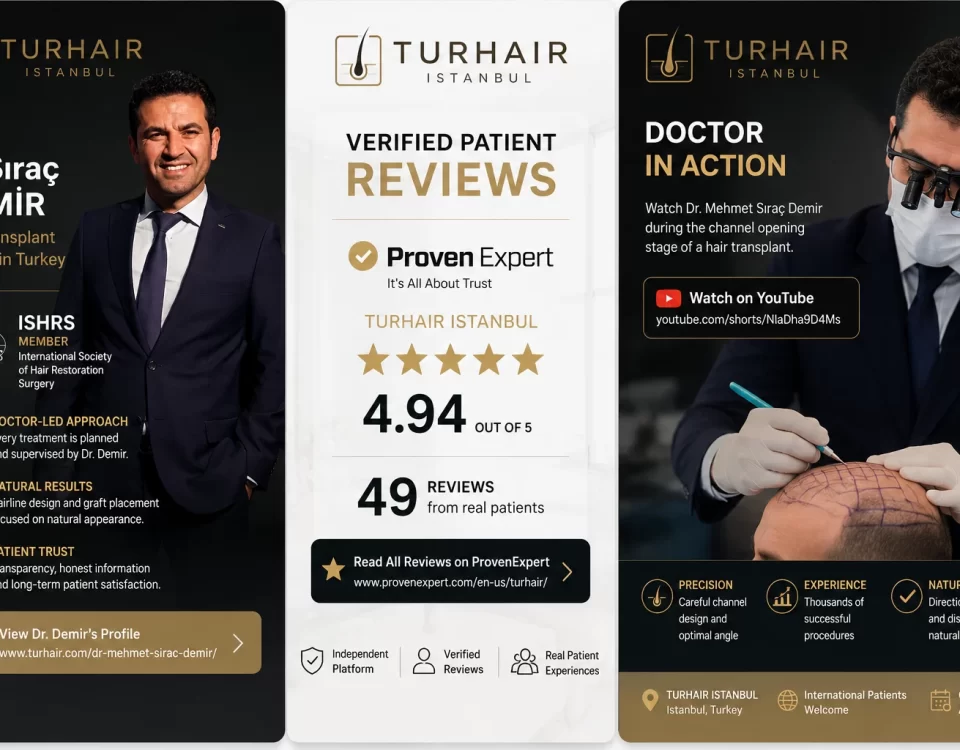
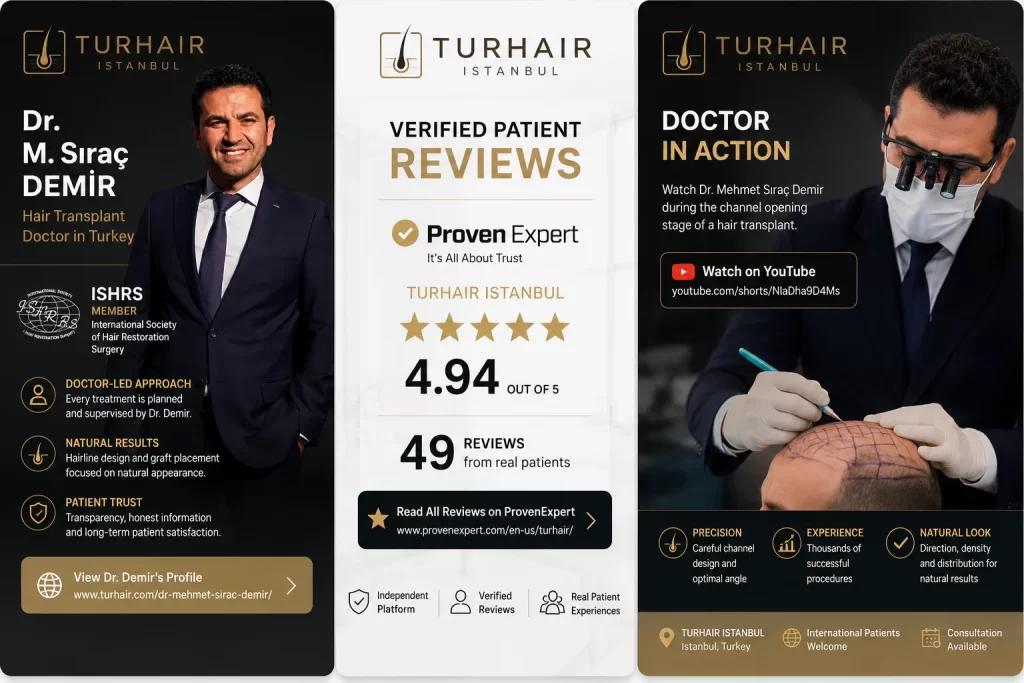
Why Dr. Demir and TurHair Are Important
Choosing the right clinic is not only about price. It is about doctor involvement, natural hairline design, donor protection, and long-term safety.
Doctor-Led Planning
Dr. Demir focuses on surgical planning, hairline design, donor capacity, and realistic graft strategy before the operation begins.
Natural Hairline
A natural hairline must match the patient’s age, face shape, donor strength, and future hair loss pattern.
Donor Protection
TurHair prioritizes donor area preservation because donor hair is limited and cannot be replaced once damaged.
Why This Difference Matters
In hair transplantation, small technical mistakes can create permanent aesthetic problems. Wrong graft angles, low-density planning, aggressive donor extraction, or an artificial hairline may later require repair surgery.
This is why Dr. Demir and TurHair focus on careful evaluation, realistic expectations, and a personalized plan instead of a standard one-size-fits-all approach.
TurHair Approach
- Personalized consultation
- Doctor-guided treatment plan
- Natural hairline design
- Careful donor management
- Long-term result planning
Common Risky Clinics
- Unclear doctor involvement
- Very high daily patient volume
- Generic hairline design
- Overharvesting risk
- No clear repair strategy
A Hair Transplant Is Permanent
The right first decision can protect the donor area, reduce repair risk, and create a more natural result for years to come.
Dr. Demir and TurHair Advantages
Medical Evaluation
Patient suitability and donor area are assessed before planning.
Hairline Design
The hairline is planned for natural appearance and long-term harmony.
Donor Strategy
Grafts are planned carefully to avoid unnecessary donor depletion.
Repair Awareness
Previous failed procedures are evaluated with a corrective strategy.
Choose Doctor-Led Hair Restoration
For patients researching hair transplant in Turkey, Dr. Demir and TurHair represent a more careful, transparent, and long-term focused approach.
Choosing Quality Over Price
Patients frequently compare clinics based on price alone.
However, a cheaper procedure can become significantly more expensive if corrective surgery is required later.
Factors that should be prioritized include:
- Doctor experience
- Clinic reputation
- Before-and-after results
- Patient reviews
- Medical standards
- Long-term planning
Hair transplantation is a lifelong investment, and choosing the right surgical team is often more important than choosing the lowest price.
What International Patients Should Look For
Before traveling to Turkey, patients should verify:
- Doctor credentials
- Medical licenses
- Real patient results
- Video testimonials
- Clinic transparency
- Post-operative support
Asking detailed questions before surgery can prevent disappointment and improve the likelihood of achieving natural, long-lasting results.
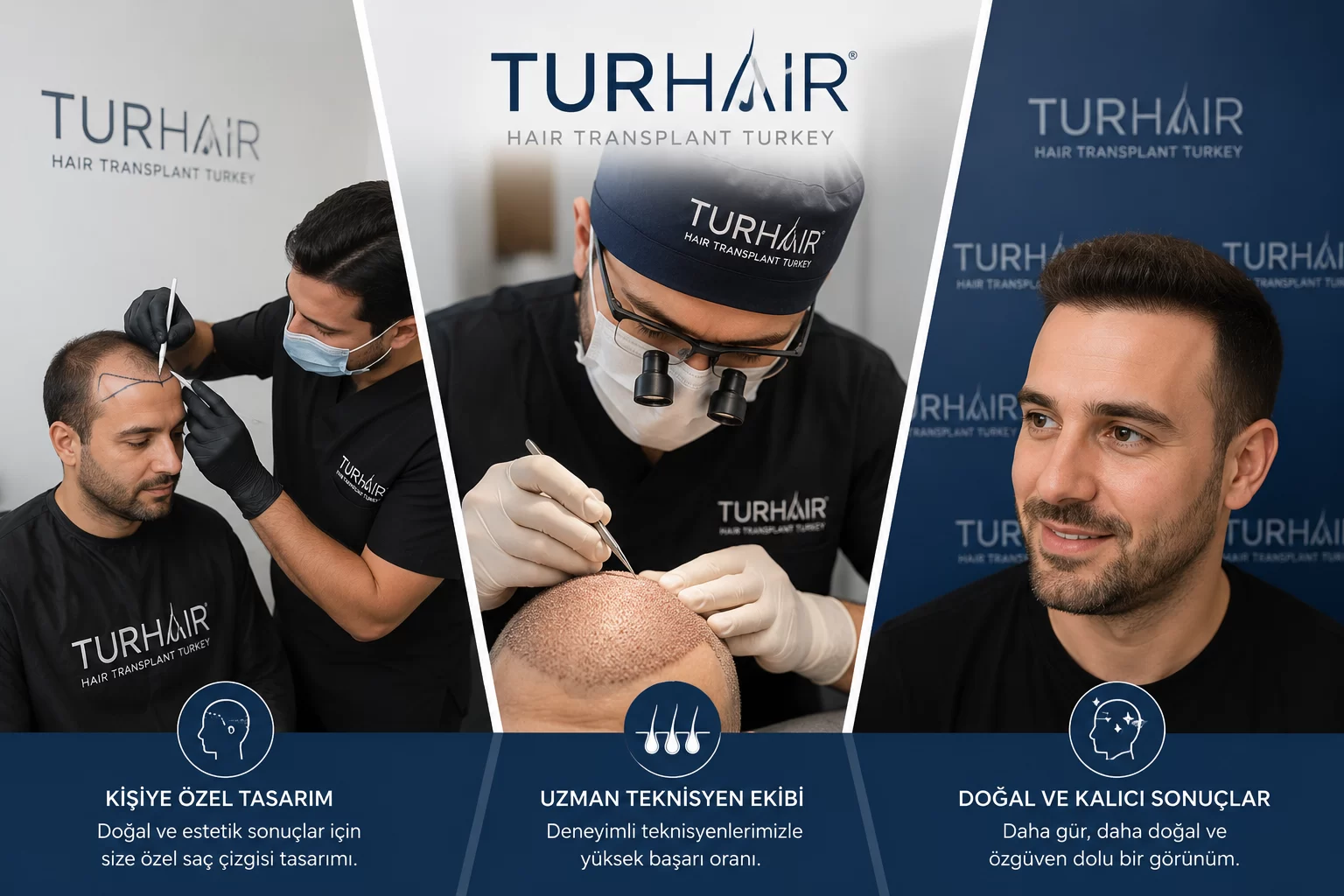
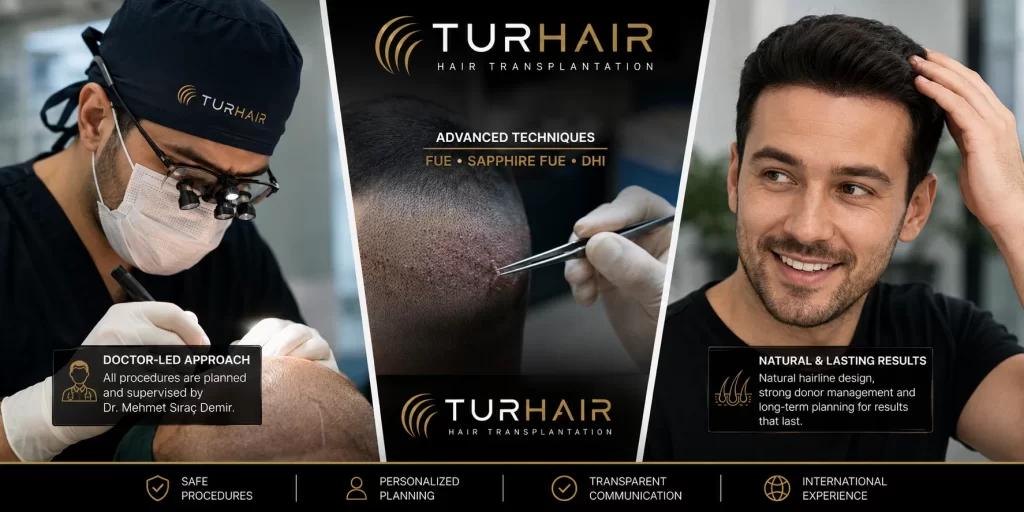
Professional Technician Hair Transplant in Turkey at TURHAIR – Advanced techniques, natural hairlines, and long-lasting results.
The debate surrounding Technician Hair Transplant Turkey continues to grow as more patients become aware of how different clinics operate.
While technicians remain an essential part of modern hair restoration teams, physician involvement in key surgical stages remains one of the most important indicators of quality and safety.
Patients considering a hair transplant in Turkey should focus on transparency, medical expertise, and proven results rather than price alone. Taking the time to research who performs each stage of the procedure can significantly improve both the aesthetic outcome and long-term satisfaction.
Technician Hair Transplant Turkey vs Doctor-Led Hair Transplant
One of the most searched topics among international patients today is the difference between a Technician Hair Transplant Turkey procedure and a doctor-led hair transplant. While both approaches can involve skilled professionals, the level of physician participation often makes a significant difference in the final outcome.
In many low-cost clinics, patients are attracted by aggressive advertising campaigns, social media promotions, and discounted package prices. However, what is rarely explained is who actually performs the surgery.
Many patients assume that the surgeon whose photo appears on the website will personally perform most of the procedure. Unfortunately, this is not always the case.
Some clinics schedule multiple surgeries simultaneously, limiting the doctor’s involvement to a brief consultation. Technicians may then perform the majority of the operation.
Why Surgical Planning Matters
A successful hair transplant begins long before the first graft is extracted.
The planning phase determines:
- The number of grafts required
- The long-term strategy for future hair loss
- The donor area preservation plan
- The shape of the hairline
- The density distribution
- The naturalness of the result
Patients experiencing progressive hair loss require careful planning to ensure that donor reserves remain available for future procedures.
Poor planning can create a temporary improvement but lead to major aesthetic problems years later.
The Donor Area: A Limited Resource
The donor area is often described as a patient’s hair bank.
Every extracted graft permanently reduces the available donor supply.
When inexperienced teams overharvest grafts, the donor area may develop:
- Visible thinning
- Patchy appearance
- Scarring
- Uneven density
- Limited future options
Repair surgeons frequently encounter patients whose donor areas were excessively harvested during previous technician-led procedures.
Once donor resources are depleted, correction becomes considerably more difficult.
The Hidden Cost of Cheap Hair Transplants
Turkey offers some of the world’s most competitive hair transplant prices.
While affordability is one reason for the country’s popularity, extremely low prices should prompt additional questions.
Patients should ask:
- How many surgeries are performed daily?
- How much time does the doctor spend with each patient?
- Who performs the critical stages?
- How many technicians are involved?
- What is the clinic’s revision rate?
In some cases, patients save money initially but later require expensive repair procedures, making the total cost significantly higher.
Common Mistakes Seen in Technician Hair Transplants
Hair transplant repair specialists often see recurring issues from poorly supervised procedures.
Examples include:
- Straight, unnatural hairlines
- Multi-hair grafts placed in the frontal hairline
- Incorrect graft angulation
- Excessive density in isolated areas
- Sparse coverage behind the hairline
- Visible rows of implanted grafts
- Donor overharvesting
- Asymmetrical design
These problems may not become fully visible until 12 months after surgery.
Understanding Natural Hair Growth Patterns
Natural hair does not grow in perfectly straight lines.
Hair grows at different angles and directions across the scalp.
A skilled surgeon studies these patterns before opening channels and placing grafts.
When grafts are implanted incorrectly, the result may appear artificial even if density is acceptable.
This is one reason why artistic judgment is often considered as important as technical skill in hair restoration surgery.
Revision Hair Transplant Surgery in Turkey
Turkey has also become a leading destination for hair transplant repair procedures.
Patients travel from around the world seeking correction of previous surgeries performed elsewhere.
Revision procedures may involve:
- Hairline redesign
- Scar camouflage
- Donor area restoration
- Density improvement
- Extraction of misplaced grafts
- Redistribution of existing grafts
Revision surgery is generally more challenging than a first-time transplant because donor resources are often limited.
Patient Safety Considerations
Beyond cosmetic outcomes, patient safety should always be a priority.
A qualified physician can identify medical conditions that may affect surgery, including:
- Bleeding disorders
- Scalp diseases
- Autoimmune conditions
- Medication interactions
- Infection risks
- Poor donor suitability
Proper medical evaluation helps reduce complications and improve overall treatment success.
Questions Every Patient Should Ask Before Booking
Before selecting a clinic, patients should obtain clear answers to the following questions:
- Will the doctor personally design my hairline?
- Who opens the channels?
- Who performs graft extraction?
- How many surgeries are performed per day?
- Can I see unedited patient results?
- What happens if I need a repair procedure?
- How is donor management planned?
- Will the surgeon be present throughout the surgery?
Transparent clinics welcome these questions and provide detailed explanations.
The Future of Hair Transplantation in Turkey
The Turkish hair transplant industry continues to evolve as patients become more educated and selective.
Increasingly, international patients are seeking:
- Doctor-led procedures
- Personalized treatment plans
- Natural hairline design
- Long-term donor preservation
- Ethical medical practices
- Transparent communication
As awareness grows, quality-focused clinics are differentiating themselves through surgeon involvement, patient safety standards, and consistent long-term results.
Technician Hair Transplant Turkey at TurHair – Advanced hair restoration techniques, natural hairline design, and professional patient care in Istanbul.
Conclusion
When researching Technician Hair Transplant Turkey, patients should understand that the key issue is not whether technicians participate in the procedure, but rather the level of physician supervision and involvement.
A successful hair transplant combines medical expertise, artistic planning, advanced techniques, and careful donor management. Choosing a clinic based solely on price can increase the risk of unsatisfactory results and future repair surgery.
By prioritizing transparency, surgeon involvement, and proven patient outcomes, individuals can significantly improve their chances of achieving natural-looking, long-lasting hair restoration results in Turkey.
How Technician Hair Transplants Can Affect Long-Term Results
Many patients focus only on the first 12 months after surgery. However, a successful hair transplant should still look natural five, ten, or even fifteen years later. This is where the difference between a carefully planned procedure and a poorly supervised technician hair transplant often becomes obvious.
Hair loss is progressive for most men. Even if transplanted grafts survive successfully, native hair may continue to thin over time. If the original procedure failed to account for future hair loss, patients may develop unnatural patterns that require corrective treatment.
Examples include:
- Isolated transplanted islands of hair
- Dense frontal hairline with bald areas behind it
- Visible contrast between transplanted and native hair
- Poor age-appropriate hairline positioning
- Insufficient donor reserves for future procedures
Experienced surgeons often create conservative and sustainable treatment plans because they understand that hair restoration is a lifelong process rather than a one-day procedure.
The Psychology of Hair Transplant Patients
Hair loss can significantly impact confidence and self-image.
Many patients arrive at clinics feeling frustrated, anxious, or desperate for a solution. Unfortunately, this emotional vulnerability can make some individuals more susceptible to unrealistic marketing promises.
Common claims that should be approached carefully include:
- Guaranteed density
- Unlimited graft numbers
- 100% growth rate
- Permanent prevention of future hair loss
- No risk of complications
- Perfect results for every patient
Ethical clinics provide realistic expectations rather than unrealistic guarantees.
Every patient has different donor characteristics, hair quality, scalp conditions, and future hair loss patterns.
Why Natural Results Matter More Than Maximum Density
One of the biggest misconceptions in hair transplantation is that more grafts automatically produce better results.
In reality, naturalness is often more important than extreme density.
A well-designed hairline with moderate density frequently appears more attractive than an unnaturally dense transplant that draws attention.
Key elements of natural-looking hair transplantation include:
- Irregular hairline design
- Appropriate density gradients
- Natural graft angles
- Proper hair direction
- Age-appropriate placement
- Balanced facial proportions
These details often separate excellent results from average outcomes.
How Social Media Influences Patient Decisions
Social media platforms have transformed the hair transplant industry.
Patients can now view thousands of before-and-after photos from clinics around the world.
While this increased transparency can be beneficial, it also creates challenges.
Many promotional photographs are taken:
- Under favorable lighting
- With wet hair styling products
- Immediately after haircuts
- From carefully selected angles
- Without showing donor areas
For this reason, patients should request:
- High-resolution photos
- Video results
- Outdoor lighting images
- Long-term follow-up cases
- Donor area photographs
Comprehensive documentation provides a more accurate picture of actual results.
The Importance of Donor Area Preservation
One of the most valuable principles in modern hair restoration is donor conservation.
Every patient has a limited supply of permanent donor hair.
Once grafts are removed, they cannot be replaced.
Responsible donor management focuses on:
- Strategic extraction patterns
- Avoiding overharvesting
- Preserving future options
- Maintaining donor density
- Reducing visible thinning
Many hair transplant repair patients regret choosing clinics that extracted excessive numbers of grafts during their first surgery.
Technology Cannot Replace Surgical Judgment
Modern hair transplant clinics frequently advertise advanced technology.
Examples include:
- Sapphire FUE
- DHI implantation
- Micromotor extraction
- High-definition imaging systems
- Digital hairline planning software
While these technologies can improve efficiency and precision, they cannot replace experience, artistry, and medical decision-making.
The skill of the surgical team remains the most important factor influencing the final outcome.
Hair Transplant Tourism in Turkey
Turkey remains one of the most popular destinations for medical tourism.
Patients travel from:
- United Kingdom
- United States
- Canada
- Germany
- France
- Spain
- Italy
- Middle Eastern countries
The combination of experienced clinics, competitive pricing, modern facilities, and international patient services has contributed to Turkey’s global reputation.
However, the rapid growth of the industry has also increased competition, making careful clinic selection more important than ever.
Warning Signs When Choosing a Hair Transplant Clinic
Patients should be cautious if they encounter any of the following warning signs:
- Pressure to book immediately
- Unrealistically low pricing
- Lack of doctor consultation
- No explanation of surgical stages
- No discussion of future hair loss
- Guarantees of perfect results
- Limited donor assessment
- Absence of long-term patient examples
Professional clinics prioritize education and transparency over aggressive sales tactics.
Why More Patients Are Researching Technician Hair Transplant Turkey
Awareness among patients continues to increase.
Many individuals now specifically ask who performs:
- Hairline design
- Graft extraction
- Channel opening
- Graft placement
This shift reflects a growing understanding that successful hair transplantation depends not only on the clinic brand but also on the expertise and involvement of the professionals performing the surgery.
As a result, doctor-led and surgeon-supervised procedures are becoming increasingly attractive to patients seeking natural, long-lasting results.
Final Conclusion
The topic of Technician Hair Transplant Turkey continues to be one of the most important considerations for patients researching hair restoration options.
While technicians remain valuable members of the surgical team, physician oversight, careful planning, donor preservation, and artistic hairline design remain essential components of successful hair transplantation.
Patients who take the time to understand how a clinic operates, who performs each stage of the procedure, and how future hair loss is managed are more likely to achieve natural-looking outcomes and avoid the need for costly revision surgeries.
Choosing quality, transparency, and long-term planning over short-term savings can make a significant difference in both appearance and satisfaction for years to come.
Patient Experiences After Technician Hair Transplants
Many patients initially feel satisfied immediately after surgery because the transplanted area appears full and the hairline looks defined. However, the true quality of a hair transplant can only be evaluated after the grafts have completed their growth cycle.
Hair transplant results typically develop over 12 to 18 months. During this period, patients may begin noticing issues that were not visible immediately after surgery.
Common complaints reported by repair patients include:
- Hair growing in the wrong direction
- Low density despite high graft numbers
- Visible scalp under bright light
- Artificial hairline appearance
- Poor donor area healing
- Uneven coverage across the scalp
These concerns often lead patients to seek a second opinion from experienced hair restoration specialists.
The Difference Between Quantity and Quality
Some clinics focus heavily on graft numbers during consultations.
Patients frequently hear promises such as:
- 4,000 grafts
- 5,000 grafts
- 6,000 grafts
- Mega-session procedures
While graft quantity is important, the quality of extraction, preservation, channel creation, and implantation is often far more significant.
A well-executed 3,000 graft procedure can produce better results than a poorly performed 5,000 graft transplant.
Success depends on:
- Graft survival rate
- Proper placement
- Natural angulation
- Strategic density planning
- Donor preservation
Hairline Design Is an Artistic Process
The most successful hair transplants often go unnoticed because they look completely natural.
This natural appearance starts with proper hairline design.
An experienced surgeon considers numerous factors:
- Forehead size
- Facial symmetry
- Patient age
- Ethnic characteristics
- Hair caliber
- Future hair loss progression
Creating a hairline that appears natural at age 30 and still appropriate at age 50 requires long-term planning and aesthetic judgment.
This level of planning cannot be achieved through a standardized approach used for every patient.
Why Repair Procedures Are More Difficult
Hair transplant repair surgery is among the most challenging procedures in the field of hair restoration.
Unlike first-time surgeries, repair cases often involve multiple complications simultaneously.
These may include:
- Scar tissue
- Limited donor reserves
- Poor hairline positioning
- Incorrect graft angles
- Visible plug-like grafts
- Donor overharvesting
Repair surgeons must correct previous mistakes while working with fewer available resources.
This is why choosing the right clinic for the initial procedure is extremely important.
The Role of Medical Ethics in Hair Transplantation
The rapid growth of medical tourism has created intense competition within the hair transplant industry.
Ethical clinics prioritize patient welfare over sales targets.
This means:
- Providing realistic expectations
- Rejecting unsuitable candidates
- Protecting donor reserves
- Avoiding unnecessary graft extraction
- Offering honest consultations
- Discussing potential risks openly
Patients should feel comfortable asking detailed questions about every aspect of the procedure.
Transparency is often a strong indicator of professionalism.
International Standards in Hair Restoration
Leading hair transplant clinics increasingly follow international standards designed to improve patient safety and outcomes.
These standards often emphasize:
- Comprehensive medical evaluation
- Detailed informed consent
- Proper sterilization protocols
- Accurate documentation
- Post-operative monitoring
- Long-term follow-up care
Patients should verify that their chosen clinic follows recognized medical practices rather than focusing solely on marketing claims.
Future Trends in Hair Transplant Turkey
The Turkish hair transplant industry continues to evolve as patient expectations increase.
Future trends are expected to include:
- Greater physician involvement
- Personalized treatment planning
- Enhanced donor management techniques
- Improved graft preservation methods
- More transparent clinic operations
- Increased focus on natural results
Patients are becoming more educated and increasingly value quality over volume.
This shift is encouraging many clinics to prioritize individualized care and long-term outcomes.
Making the Right Decision
Choosing a hair transplant clinic should never be based solely on price or social media popularity.
Patients should carefully evaluate:
- Doctor involvement
- Clinic reputation
- Repair case experience
- Patient reviews
- Long-term results
- Medical transparency
Taking time to research these factors can significantly reduce the risk of complications and improve overall satisfaction.
Final Words on Technician Hair Transplant Turkey
The discussion surrounding Technician Hair Transplant Turkey highlights an important reality in modern hair restoration: the quality of a procedure depends not only on the clinic name but also on who performs the critical stages of surgery.
While skilled technicians contribute greatly to successful outcomes, proper physician supervision, surgical planning, donor management, and hairline design remain essential for achieving natural and lasting results.
Patients who understand these differences are better equipped to make informed decisions, protect their donor resources, and achieve the appearance they desire without requiring future corrective procedures.
As Turkey continues to lead the global hair transplant market, informed patients will increasingly seek clinics that combine medical expertise, ethical standards, and personalized care to deliver the highest level of hair restoration excellence.
Understanding Graft Survival in Hair Transplant Surgery
One of the most important factors influencing the success of a hair transplant is graft survival. Regardless of how many grafts are extracted, the final result depends on how many survive and produce healthy hair growth.
Several factors can affect graft survival, including:
- Extraction technique
- Handling of grafts
- Storage conditions
- Implantation speed
- Scalp blood supply
- Surgical experience
When grafts are handled improperly, survival rates may decrease significantly, resulting in lower density and weaker coverage.
This is one reason why experienced surgical teams place great emphasis on every stage of the process.
Why Hair Transplant Results Differ Between Patients
No two patients are identical.
Even when the same technique is used, results may vary due to individual characteristics.
Important variables include:
- Hair thickness
- Hair color
- Skin color
- Donor density
- Scalp elasticity
- Degree of hair loss
For example, patients with thick dark hair often achieve greater visual coverage compared to patients with fine light-colored hair using the same number of grafts.
This is why personalized treatment planning is critical.
The Impact of Hair Direction and Angle
Natural hair grows in specific directions and angles across different regions of the scalp.
The frontal hairline typically grows at a very acute angle, while crown hairs follow circular patterns.
If channels are created incorrectly, patients may experience:
- Hair standing upright
- Difficulty styling hair
- Artificial appearance
- Visible transplant patterns
- Reduced naturalness
Correct angle placement requires precision, experience, and artistic understanding of facial aesthetics.
Why Some Patients Need Multiple Procedures
Not every patient can achieve their desired result with a single surgery.
This is especially true for advanced hair loss cases.
Factors influencing the need for additional procedures include:
- Extent of baldness
- Donor capacity
- Desired density
- Future hair loss progression
- Previous surgeries
Ethical clinics discuss these possibilities during the consultation process rather than promising unrealistic outcomes.
Advanced Hair Loss and Long-Term Planning
Patients with extensive hair loss require strategic planning.
Using too many grafts in the frontal area can leave insufficient donor reserves for future treatment.
Experienced surgeons often focus on:
- Frontal framing
- Natural density distribution
- Donor conservation
- Future treatment flexibility
This conservative approach frequently produces more sustainable long-term results.
The Importance of Post-Operative Care
Hair transplant success does not end when surgery is completed.
Proper aftercare plays a significant role in healing and graft survival.
Patients should carefully follow all post-operative instructions regarding:
- Washing routines
- Sleeping positions
- Physical activity restrictions
- Sun exposure
- Medication use
- Follow-up appointments
Ignoring post-operative recommendations may negatively affect final outcomes.
Common Myths About Technician Hair Transplants
Several misconceptions continue to circulate online regarding technician-led procedures.
Common myths include:
- All technician hair transplants fail
- Higher graft numbers always mean better results
- Hair transplantation is a simple cosmetic procedure
- Any clinic can repair a failed transplant
- Technology alone guarantees success
The reality is considerably more complex.
Successful outcomes depend on the overall quality of surgical planning, execution, and patient management.
How Patient Education Is Changing the Industry
Modern patients have access to more information than ever before.
Before scheduling surgery, many individuals now research:
- Doctor credentials
- Medical publications
- Patient forums
- Video testimonials
- Repair case studies
- Clinic transparency policies
This increased awareness is encouraging clinics to improve standards and provide more detailed information about who performs each stage of the procedure.
The Future of Doctor-Led Hair Transplantation
As patient expectations continue to rise, doctor-led and surgeon-supervised procedures are becoming increasingly valued.
Patients are seeking:
- Personalized consultations
- Natural-looking outcomes
- Long-term planning
- Ethical medical practices
- Preservation of donor resources
- Comprehensive follow-up care
This trend is helping shape the future of hair restoration in Turkey and worldwide.
Final Summary
The subject of Technician Hair Transplant Turkey remains highly relevant for patients researching hair restoration options.
While technicians play an important role within experienced surgical teams, physician oversight remains essential for critical stages such as treatment planning, hairline design, donor management, and channel creation.
Patients who prioritize expertise, transparency, and long-term results rather than focusing exclusively on cost are more likely to achieve natural hair growth, preserve donor resources, and avoid the need for complex revision procedures in the future.
Ultimately, the best hair transplant outcomes are achieved through a combination of medical knowledge, artistic vision, meticulous technique, and individualized patient care.
How to Evaluate a Hair Transplant Clinic Before Booking
Choosing the right clinic is one of the most important decisions a patient will make during the hair restoration journey. While Turkey offers hundreds of hair transplant providers, not all clinics operate under the same standards.
Before committing to a procedure, patients should conduct thorough research and evaluate several critical factors.
Review Real Patient Results
One of the most reliable indicators of quality is a clinic’s portfolio of completed cases.
Patients should look for:
- High-resolution photographs
- Video testimonials
- Donor area images
- 12-month results
- Repair cases
- Different hair loss stages
Clinics that consistently produce natural-looking results are often proud to share extensive documentation.
Understand the Surgical Team Structure
Many international patients are surprised to discover that not all clinics operate in the same manner.
Questions that should always be asked include:
- Who designs the hairline?
- Who performs extraction?
- Who opens the channels?
- Who places the grafts?
- Will the surgeon be present throughout the procedure?
The answers to these questions often reveal whether the clinic follows a doctor-led or technician-heavy model.
The Financial Cost of Hair Transplant Repairs
Many patients choose low-cost procedures hoping to save money.
Unfortunately, a failed transplant can become considerably more expensive than an initially higher-quality procedure.
Revision surgeries often require:
- Additional grafts
- Scar correction
- Hairline reconstruction
- Multiple treatment sessions
- Extended recovery periods
Repair procedures are typically more complex, more time-consuming, and more costly than primary hair transplants.
This is why experienced surgeons frequently advise patients to focus on value rather than price alone.
Why Natural Hairlines Age Better
A common mistake seen in aggressive hair transplant planning is creating a hairline that is too low or too dense.
While this may initially appear attractive, it can become problematic as the patient ages.
Natural hairlines evolve throughout life.
Experienced surgeons account for this process by designing hairlines that:
- Match facial proportions
- Preserve donor resources
- Look appropriate over time
- Allow future treatment flexibility
The goal is not simply to create hair but to create a result that remains believable for decades.
The Importance of Donor Area Assessment
Every successful hair transplant begins with a comprehensive donor analysis.
The donor region determines the total number of available grafts and directly influences treatment planning.
Factors evaluated include:
- Hair density
- Hair thickness
- Hair texture
- Scalp laxity
- Donor surface area
- Family history of hair loss
Without a proper donor assessment, patients risk overharvesting and future limitations.
What Makes Turkey a Global Hair Transplant Destination?
Turkey’s reputation as a leading hair transplant destination is based on several advantages.
- Experienced medical teams
- Large number of procedures performed annually
- Modern medical facilities
- Competitive pricing
- International patient services
- Convenient travel connections
These factors have attracted patients from Europe, North America, the Middle East, and beyond.
However, the popularity of the industry has also increased competition, making clinic selection more important than ever.
Warning Signs of a High-Volume Hair Mill
The term “hair mill” is often used to describe clinics that prioritize volume over individualized patient care.
Potential warning signs include:
- Multiple surgeries performed simultaneously
- Minimal doctor interaction
- Sales-focused consultations
- Generic treatment plans
- Limited discussion of future hair loss
- Unrealistic promises
Patients should carefully evaluate whether a clinic offers personalized treatment or a standardized approach.
Why Long-Term Satisfaction Matters
The true success of a hair transplant is not measured immediately after surgery.
Long-term satisfaction depends on:
- Natural appearance
- Stable growth
- Donor preservation
- Future flexibility
- Patient confidence
Patients who receive thoughtful, individualized treatment are generally more satisfied years after their procedure.
Patient Expectations and Reality
One of the most important parts of the consultation process is establishing realistic expectations.
Hair transplantation can create dramatic improvements, but it cannot always restore the density of adolescence.
Successful clinics explain:
- Expected density
- Growth timelines
- Potential limitations
- Future hair loss risks
- Need for maintenance treatments
Honest communication helps patients make informed decisions and avoid disappointment.
Conclusion: Technician Hair Transplant Turkey Explained
The growing interest in Technician Hair Transplant Turkey reflects an increasingly educated patient population seeking transparency and quality.
While technicians remain an important part of modern hair restoration teams, the most successful outcomes are generally associated with strong physician involvement, strategic planning, donor preservation, and meticulous surgical execution.
Patients considering hair transplantation in Turkey should focus on experience, ethics, transparency, and long-term results rather than selecting a clinic based solely on price.
By understanding who performs each stage of the procedure and how treatment decisions are made, patients can greatly improve their chances of achieving natural, lasting, and aesthetically pleasing hair restoration outcomes.
Related Hair Transplant Topics in Turkey
Explore trusted TurHair guides about doctor-led procedures, repair cases, risks, recovery and natural results for international patients.
Doctor Led Hair Transplant Turkey
Learn why doctor-supervised hair transplant procedures are safer and more precise.
Surgeon Performed Hair Transplant Turkey
Discover the difference of surgeon involvement in critical hair transplant stages.
Solutions for failed, unnatural or overharvested hair transplant results.
Hair Transplant Revision Turkey
Revision options for patients who need correction after a previous operation.
Understand possible risks of technician-led or low-cost hair transplant clinics.
Best Hair Transplant Doctors in Turkey
Find out what makes a qualified hair transplant doctor different from a technician clinic.
Detailed guide to FUE hair transplant techniques, recovery and natural density.
Explore DHI hair transplant benefits for precise implantation and natural direction.