Doctor Led Hair Transplant Turkey
June 9, 2026
Surgeon Performed Hair Transplant Turkey✨
June 10, 2026Hair Transplant Revision Turkey – Correcting Failed Hair Transplants with Dr. Demir
Hair transplantation can deliver life-changing results when performed correctly. Unfortunately, not every procedure meets patient expectations. Unnatural hairlines, poor graft survival, visible scarring, incorrect angles, and low density are among the most common reasons patients seek a second procedure. This is where Hair Transplant Revision Turkey services become essential.
Turkey has become the world’s leading destination for hair transplant revision procedures, attracting thousands of international patients every year. Patients from the United Kingdom, Europe, the United States, Canada, and the Middle East travel to Istanbul to repair unsuccessful hair transplants and restore a natural appearance.
At TurHair, Dr. Demir personally evaluates every revision case and creates a customized treatment plan designed to correct previous mistakes while preserving existing healthy grafts.
| Why Choose TurHair & Dr. Demir for Hair Transplant Revision Turkey? | Many High-Volume Clinics |
|---|---|
| Dr. Demir personally designs the hairline | Often delegated to consultants or technicians |
| Doctor-led revision planning | Standardized treatment plans |
| Special focus on failed hair transplant correction | Mainly focused on first-time procedures |
| Natural hairline reconstruction expertise | Often prioritizes graft numbers over aesthetics |
| Customized donor area preservation strategy | Aggressive donor extraction may occur |
| Personalized revision consultation | Quick sales-focused consultation |
| Advanced FUE and DHI correction techniques | Limited revision-specific planning |
| Focus on long-term natural results | Focus on short-term visual density |
| International revision patients from Europe and the UK | Mostly volume-based patient intake |
| Detailed scar and donor repair assessment | Often limited scar correction options |
The TurHair Difference
Unlike many clinics where revision procedures are treated like standard hair transplants, TurHair approaches every revision case as a highly specialized corrective surgery. Hair transplant revision requires advanced planning, donor preservation, artistic hairline reconstruction, and extensive experience in repairing unsuccessful procedures.
Dr. Demir personally evaluates each case, analyzes donor reserves, designs the new hairline, and determines the safest and most effective strategy for achieving a natural appearance. This doctor-led approach helps patients avoid the mistakes that often lead to failed hair transplants in the first place.
Why Patients Trust Dr. Demir for Hair Transplant Revision Turkey
- ✓ Personally designs every hairline
- ✓ Personally opens the recipient channels
- ✓ Extensive experience in revision procedures
- ✓ Natural and age-appropriate hairline planning
- ✓ Conservative donor area management
- ✓ FUE and DHI revision expertise
- ✓ Scar camouflage and donor repair solutions
- ✓ Focus on natural appearance rather than graft numbers
- ✓ International patient support
- ✓ Personalized treatment plans for every patient
Hair Transplant Revision Turkey with Dr. Demir
If you are unhappy with a previous hair transplant, choosing an experienced revision specialist can make all the difference. TurHair combines doctor-led treatment, advanced revision techniques, natural hairline design, and long-term planning to help patients achieve the results they originally hoped for.
Dr. Demir Personally Opens the Channels
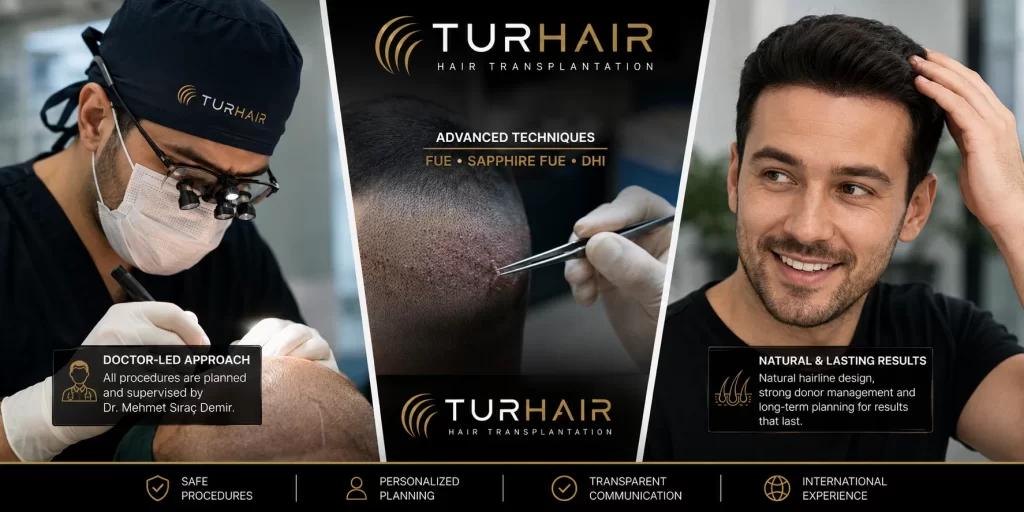
One of the most important differences between TurHair and many high-volume clinics is Dr. Demir’s direct involvement in the most critical stage of the procedure: channel opening. The angle, direction, depth, and distribution of recipient channels determine how the hair will grow for the rest of the patient’s life.
Many failed hair transplants occur because channels were opened incorrectly. Even healthy grafts cannot produce natural results if they are implanted into poorly designed channels. For revision patients, correcting these mistakes requires advanced expertise and meticulous planning.
At TurHair, Dr. Demir personally performs the channel opening stage to maximize naturalness, density, graft survival, and long-term aesthetic success.
| Critical Revision Factors | TurHair & Dr. Demir | Many Clinics |
|---|---|---|
| Hairline Design | Personally Designed by Dr. Demir | Consultant or Technician |
| Channel Opening | Performed by Dr. Demir | Often Delegated |
| Revision Planning | Customized Strategy | Standardized Protocol |
| Donor Preservation | Long-Term Focus | Often Aggressive Extraction |
| Natural Hairline Expertise | High Priority | Variable Quality |
| Failed Hair Transplant Repair | Specialized Experience | Limited Focus |
Why Revision Patients Need an Experienced Surgeon
A revision procedure is often the patient’s final opportunity to achieve a natural-looking result. Unlike a first-time hair transplant, revision surgery must work around previous grafts, scar tissue, donor limitations, and existing design flaws.
Every graft becomes more valuable because donor resources may already be partially depleted. This is why revision surgery should never be approached as a routine procedure.
Dr. Demir focuses on creating a realistic and sustainable long-term solution rather than pursuing aggressive graft numbers that may compromise future options.
The Goal Is Not More Hair — The Goal Is Better Hair
Many patients seeking Hair Transplant Revision Turkey already have transplanted hair. The problem is often not the amount of hair but how that hair was designed, placed, and distributed.
At TurHair, the objective is to improve naturalness, facial harmony, density distribution, and long-term aesthetics. A well-designed revision should never look like a hair transplant. Instead, it should look like naturally growing hair.
This philosophy has helped patients from the UK, Europe, North America, and the Middle East achieve natural-looking corrective results after disappointing previous procedures.
Choose Expertise for Your Hair Transplant Revision
Hair transplant revision is one of the most demanding procedures in modern hair restoration. Success depends on experience, planning, artistry, and physician involvement.
Whether you need hairline correction, donor area repair, scar camouflage, density improvement, or complete reconstruction after a failed procedure, choosing a doctor-led clinic can significantly improve your chances of achieving a natural and satisfying outcome.
At TurHair, Dr. Demir personally oversees every stage of the revision process to help patients transform unsuccessful hair transplants into results they can confidently live with for years to come.
Why Patients Choose Hair Transplant Revision in Turkey
- Lower costs compared to Europe and the USA
- Highly experienced revision specialists
- Advanced FUE and DHI techniques
- Natural hairline reconstruction
- Scar correction options
- High international patient satisfaction
- Comprehensive treatment packages
Dr. Demir Opens the Channels Himself
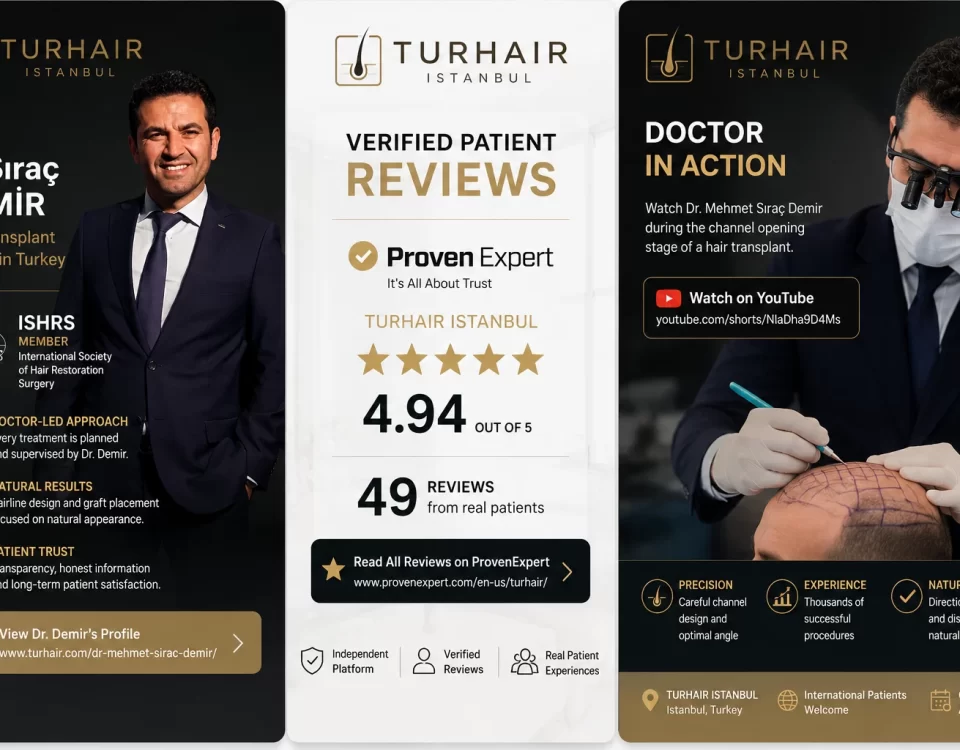
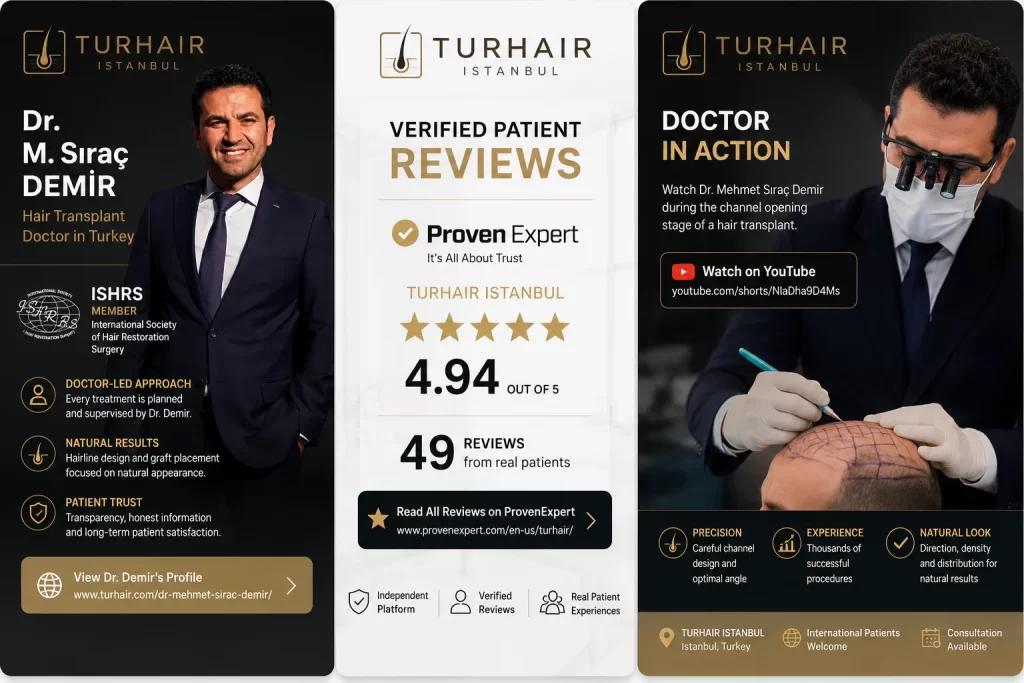
Watch Dr. Demir personally perform the channel opening stage of the hair transplant procedure. Unlike many clinics where technicians handle critical steps, Dr. Demir directly designs the hairline and opens the channels to ensure maximum graft survival, natural density, and aesthetically pleasing results.
✔ Doctor-Performed Channel Opening
✔ Natural Hairline Design
✔ Advanced FUE & DHI Techniques
✔ Personalized Hair Restoration
What Is Hair Transplant Revision?
A hair transplant revision is a corrective procedure performed after an unsuccessful or unsatisfactory hair transplant. Unlike a standard hair transplant, revision surgery requires advanced expertise because the surgeon must work around existing grafts, scars, and previously altered scalp areas.
The primary goal is not only to add density but also to improve the overall appearance and naturalness of the hair transplant.
Revision procedures may involve:
- Hairline redesign
- Density improvement
- Correction of unnatural graft angles
- Removal of poorly placed grafts
- Scar camouflage
- Repair of overharvested donor areas
- FUE graft redistribution
Signs You May Need Hair Transplant Revision Surgery
Many patients are unsure whether they need a revision procedure. Common signs include:
- Unnatural or straight hairline
- Low graft survival rate
- Patchy growth
- Visible scalp after surgery
- Pluggy appearance
- Incorrect graft direction
- Asymmetrical hairline
- Visible donor area scars
- Excessive donor harvesting
If any of these issues affect your appearance or confidence, a revision consultation may be beneficial.
Why Do Hair Transplants Fail?
Most failed hair transplants occur because of poor planning, inexperienced technicians, or improper surgical techniques. In many clinics, critical stages of the procedure are performed entirely by technicians without direct physician involvement.
Common causes of failed hair transplants include:
- Poor donor management
- Incorrect channel opening
- Wrong implantation angles
- Low-quality graft handling
- Excessive graft extraction
- Aggressive hairline design
- Insufficient medical supervision
Once these mistakes occur, revision surgery often becomes the only effective solution.
Why Turkey Is the Best Destination for Hair Transplant Revision
Turkey performs more hair transplant procedures annually than almost any other country. This extensive experience has also made Turkey a global leader in corrective and revision hair restoration procedures.
International patients choose Turkey because specialists frequently encounter complex revision cases and have developed effective techniques to address them.
Advantages include:
- Experienced revision surgeons
- Modern clinics and technology
- Affordable pricing
- Short waiting times
- VIP patient services
- Excellent post-operative support
Dr. Demir’s Approach to Hair Transplant Revision
| Standard Clinics | TurHair & Dr. Demir |
|---|---|
| Technician-focused procedures | Doctor-led revision planning |
| Generic hairline designs | Personalized hairline reconstruction |
| Limited revision experience | Extensive revision expertise |
| Focus on graft numbers | Focus on natural appearance |
Dr. Demir carefully analyzes each failed procedure before recommending corrective treatment. Every revision plan is customized according to donor capacity, scalp condition, previous surgery outcomes, and patient expectations.
Can Every Failed Hair Transplant Be Fixed?
While most hair transplant problems can be significantly improved, realistic expectations remain important. The extent of correction depends on:
- Remaining donor reserves
- Severity of previous damage
- Scar tissue formation
- Number of previous procedures
- Patient healing characteristics
Even in challenging cases, experienced revision surgeons can usually achieve substantial aesthetic improvements.
Hairline Revision: The Most Requested Procedure
One of the most common revision requests involves correcting an unnatural hairline. Poorly designed hairlines often appear too straight, too low, or excessively dense in inappropriate areas.
A natural hairline should feature:
- Soft irregularities
- Age-appropriate positioning
- Proper temporal recession
- Natural density gradients
- Correct graft angles
Hairline revision is often the most transformative aspect of corrective hair transplant surgery.
FUE Scar Repair and Donor Area Reconstruction
Some patients experience donor area damage after aggressive graft extraction. In severe cases, the donor region may appear patchy, thin, or overharvested.
Revision options may include:
- Donor area redistribution
- FUE graft implantation
- Scar camouflage
- Density restoration
- Scalp micropigmentation combination treatments
Proper donor management is critical for achieving a balanced and natural outcome.
Recovery After Hair Transplant Revision
Recovery following revision surgery is generally similar to standard hair transplantation.
- Days 1–7: Healing period
- Weeks 2–4: Temporary shedding
- Months 3–4: New growth begins
- Months 6–8: Visible improvements
- Months 12–18: Final results
Revision patients often require slightly longer timelines because scar tissue may affect healing and growth patterns.
Hair Transplant Revision Turkey Cost
The cost of hair transplant revision in Turkey varies according to the complexity of the case, graft requirements, donor condition, and previous procedures.
Compared with Europe, the United Kingdom, and North America, Turkey offers significant savings while maintaining world-class medical standards.
The best approach is always a personalized consultation where your previous results can be professionally evaluated.
If you are unhappy with a previous hair transplant, you are not alone. Thousands of patients seek corrective procedures every year. Thanks to advanced techniques and experienced surgeons, many failed hair transplants can be dramatically improved.
Hair Transplant Revision Turkey offers patients an opportunity to restore confidence, improve natural appearance, and finally achieve the results they originally expected. With personalized planning, advanced FUE techniques, and doctor-led treatment, Dr. Demir and the TurHair team help patients transform disappointing outcomes into successful long-term results.
Advanced Techniques Used in Hair Transplant Revision Turkey
Revision hair transplant surgery is often more complex than a first-time procedure. For this reason, experienced surgeons use advanced methods tailored to each patient’s unique situation. Modern revision techniques focus on preserving existing grafts while strategically improving density, symmetry, and natural appearance.
At TurHair, every revision case begins with a detailed scalp analysis to determine the most suitable approach.
Common Revision Techniques
- FUE Graft Redistribution
- DHI Density Enhancement
- Hairline Reconstruction
- Scar Camouflage Procedures
- Plug Graft Removal
- Donor Area Repair
- Temple Point Correction
- Crown Revision Surgery
Correcting Unnatural Hairlines
An unnatural hairline is one of the most visible signs of a failed hair transplant. Patients frequently complain that their hairline looks too straight, artificial, or inappropriate for their age.
Natural hairlines are never perfectly straight. Instead, they contain subtle irregularities and gradual transitions that mimic natural growth patterns.
Hairline revision may involve:
- Removing incorrectly placed grafts
- Softening harsh frontal zones
- Recreating temporal angles
- Adding single-hair grafts
- Adjusting density distribution
- Creating a more age-appropriate design
Hairline reconstruction alone can dramatically improve facial aesthetics and overall appearance.
Repairing Low Density Hair Transplants
Many patients seek revision surgery because their original transplant failed to provide adequate density. Although grafts were implanted, the final appearance remains thin and transparent.
Several factors may contribute to poor density:
- Insufficient graft numbers
- Poor graft survival
- Incorrect implantation depth
- Weak donor hair quality
- Improper post-operative care
Revision procedures can strategically increase density while maintaining a natural look.
Fixing Incorrect Hair Direction and Angles
One of the most challenging revision scenarios involves incorrectly angled grafts. Hair may grow upward, sideways, or in unnatural directions that make styling difficult.
Because hair growth direction greatly influences natural appearance, correction requires exceptional surgical precision.
Solutions may include:
- Selective graft extraction
- Reimplantation at correct angles
- Density balancing
- Hairline redesign
- Strategic camouflage techniques
Experienced revision specialists can often significantly improve even severe angle-related problems.
Overharvested Donor Area Repair
Overharvesting occurs when excessive grafts are extracted from the donor area during a previous procedure. This can leave visible thinning, patchiness, or a moth-eaten appearance.
Unfortunately, donor area damage is becoming increasingly common due to high-volume clinics that prioritize graft numbers over long-term donor preservation.
Repair options include:
- Redistribution of remaining donor grafts
- Beard hair transplantation
- Body hair transplantation
- Scalp micropigmentation
- Density balancing procedures
The objective is to restore a more uniform appearance while protecting remaining donor resources.
Beard Hair as a Valuable Resource in Revision Cases
When scalp donor reserves become limited, beard hair can serve as an excellent supplemental donor source. Beard follicles are often strong, thick, and resistant to hair loss.
Advantages include:
- Additional graft availability
- Strong survival rates
- Useful for crown and mid-scalp zones
- Effective scar camouflage option
Beard grafts are commonly used in advanced revision procedures where scalp donor capacity is insufficient.
Scar Revision After FUT Procedures
Patients who underwent FUT (strip) surgery may develop visible linear scars. While many scars heal well, others remain noticeable, especially with shorter hairstyles.
Hair transplant revision can improve FUT scars through:
- FUE implantation into scar tissue
- Scar reduction procedures
- Scalp micropigmentation
- Combined treatment approaches
Successful scar camouflage often allows patients greater freedom when choosing hairstyles.
Psychological Benefits of Hair Transplant Revision
Failed hair transplants often affect more than appearance. Many patients experience frustration, embarrassment, reduced confidence, and disappointment after investing significant time and money into a procedure that did not meet expectations.
Successful revision surgery can provide substantial psychological benefits:
- Improved self-confidence
- Enhanced social comfort
- Greater professional confidence
- Reduced anxiety about appearance
- Increased satisfaction with personal image
For many patients, revision surgery represents a second chance to achieve the appearance they originally envisioned.
Why Doctor-Led Revision Procedures Matter
Revision surgery leaves very little room for error. Every graft becomes valuable, particularly when donor resources are limited.
This is why physician involvement is critical throughout the process.
At TurHair, Dr. Demir personally:
- Designs the new hairline
- Evaluates donor reserves
- Plans graft distribution
- Opens recipient channels
- Supervises the entire procedure
Doctor-led planning significantly increases the likelihood of achieving natural and long-lasting results.
What Makes TurHair Different?
| Many Clinics | TurHair |
|---|---|
| Focus on volume | Focus on aesthetics |
| Standardized procedures | Customized revision plans |
| Limited doctor involvement | Doctor-led treatment |
| Quantity-focused approach | Natural appearance focus |
| Basic consultations | Comprehensive revision analysis |
Start Your Hair Transplant Revision Journey in Turkey
If your previous hair transplant left you dissatisfied, a carefully planned revision procedure may provide the solution you have been searching for. Whether you need hairline correction, density enhancement, donor area repair, or scar camouflage, modern revision techniques can produce remarkable improvements.
Hair Transplant Revision Turkey has become one of the most sought-after solutions for patients worldwide seeking expert corrective treatment. With advanced technology, experienced surgeons, and personalized treatment planning, Turkey continues to lead the field of hair restoration revision.
Contact TurHair today to receive a professional assessment of your previous hair transplant and discover how Dr. Demir can help restore a natural, confident appearance.
How Long Should You Wait Before a Hair Transplant Revision?
One of the most common questions patients ask is when they should undergo a revision procedure. In most cases, surgeons recommend waiting until the results of the original hair transplant have fully matured before considering corrective surgery.
Hair growth after transplantation is a gradual process. Immediate judgments often lead to unnecessary anxiety and unrealistic expectations.
General timelines include:
- 0–3 Months: Healing and shedding phase
- 3–6 Months: Early growth begins
- 6–9 Months: Noticeable improvement
- 9–12 Months: Significant maturation
- 12–18 Months: Final results evaluation
Unless there is a severe cosmetic issue, most revision specialists recommend waiting at least 12 months after the original procedure before proceeding with corrective treatment.
International Patients Choose Turkey for Revision Procedures
Thousands of patients travel to Turkey every year specifically for revision hair transplantation. Many have previously undergone procedures in their home countries or low-cost clinics abroad and are seeking a more experienced solution.
Patients commonly arrive from:
- United Kingdom
- Germany
- France
- Spain
- Italy
- United States
- Canada
- Australia
- Scandinavian Countries
- Middle Eastern Countries
Turkey’s reputation for advanced hair restoration continues to attract patients seeking both primary and corrective procedures.
Revision Hair Transplants Require Artistic Skill
Successful revision surgery is not simply about moving grafts. It is a combination of medical expertise, surgical precision, and artistic vision.
The surgeon must carefully consider:
- Facial proportions
- Age-appropriate hairline design
- Future hair loss progression
- Hair caliber and texture
- Donor preservation
- Natural density transitions
Creating a natural-looking result often requires a highly individualized approach rather than relying on standard templates.
Common Mistakes Seen in Failed Hair Transplants
After evaluating thousands of revision candidates, specialists frequently encounter similar errors made during previous procedures.
Most Common Errors
- Hairline placed too low
- Hairline designed too straight
- Multi-hair grafts placed in the frontal zone
- Poor graft angulation
- Insufficient density
- Donor area overharvesting
- Inadequate medical supervision
- Excessive focus on graft numbers
- Uneven graft distribution
- Visible scarring
Revision surgery is designed to address these problems while maximizing available donor resources.
Hair Transplant Revision for Women
Although revision procedures are most commonly associated with male patients, women can also require corrective hair transplantation.
Female revision cases may involve:
- Hairline correction
- Density enhancement
- Scar concealment
- Temple restoration
- Eyebrow transplant revision
Because female hairline aesthetics differ significantly from male patterns, treatment plans must be specifically tailored to female facial characteristics.
The Importance of Donor Area Preservation
The donor area is the foundation of every successful hair transplant. Unfortunately, many unsuccessful procedures consume donor reserves without achieving satisfactory results.
In revision surgery, donor management becomes even more critical because available resources may already be limited.
Experienced surgeons evaluate:
- Remaining donor density
- Scalp elasticity
- Extraction patterns
- Follicular unit quality
- Future transplantation potential
Every graft must be utilized strategically to achieve the greatest possible improvement.
Natural Results Are More Important Than High Graft Numbers
Many clinics advertise extremely high graft numbers as a marketing strategy. However, graft quantity alone does not guarantee success.
A natural result depends on:
- Hairline design
- Graft placement accuracy
- Correct angles
- Balanced density
- Proper donor management
- Artistic planning
Some of the most impressive revision outcomes are achieved with relatively modest graft numbers combined with excellent planning and execution.
Combining DHI and FUE in Revision Cases
Modern revision surgery often combines multiple techniques to achieve optimal results.
FUE may be used for graft extraction and donor preservation, while DHI can provide precise implantation in sensitive areas such as the hairline.
Benefits of combining techniques include:
- Improved density control
- Precise graft placement
- Minimal trauma
- Enhanced naturalness
- Better utilization of donor resources
The best technique depends on the individual characteristics of each revision case.
Hair Transplant Revision Success Rate
The success rate of revision procedures depends largely on proper patient selection, realistic expectations, donor availability, and surgeon expertise.
Factors influencing success include:
- Extent of previous damage
- Remaining donor reserves
- Scalp condition
- Number of previous surgeries
- Hair characteristics
- Surgeon experience
When planned correctly, revision surgery can significantly improve appearance and patient satisfaction even after disappointing previous experiences.
Why Many Patients Travel to Dr. Demir for Revision Surgery
Revision procedures represent some of the most demanding challenges in hair restoration. Patients often seek surgeons who possess both technical expertise and a deep understanding of aesthetic design.
Many international patients choose Dr. Demir because of his emphasis on:
- Doctor-led treatment planning
- Natural hairline reconstruction
- Conservative donor management
- Personalized revision strategies
- Long-term aesthetic outcomes
- Patient-centered care
Each revision case is approached individually rather than following a standardized protocol.
Achieving a Natural Appearance After a Failed Hair Transplant
The ultimate objective of revision surgery is not simply to add more hair. The goal is to restore harmony, balance, and natural aesthetics.
Successful revision procedures can:
- Improve facial framing
- Correct asymmetry
- Increase density
- Reduce visibility of scars
- Enhance styling flexibility
- Restore confidence
For many patients, revision surgery represents the final step in their hair restoration journey and provides the natural result they originally hoped to achieve.
Book a Professional Hair Transplant Revision Consultation
If you are unhappy with a previous procedure, a professional evaluation can help determine the best corrective strategy. Every revision case is unique, and treatment should always be based on a detailed assessment of donor capacity, scalp condition, and aesthetic goals.
Hair Transplant Revision Turkey continues to be one of the most effective solutions for patients seeking to repair failed hair transplants, improve natural appearance, and achieve lasting confidence. With advanced FUE and DHI techniques, doctor-led planning, and years of revision experience, TurHair and Dr. Demir provide personalized solutions for even the most challenging cases.
Who Is a Good Candidate for Hair Transplant Revision Turkey?
Not every patient who is unhappy with a previous procedure automatically requires revision surgery. A comprehensive medical evaluation is necessary to determine whether corrective treatment is the best option.
Ideal candidates for revision hair transplantation generally include patients who:
- Have visible cosmetic issues after a previous transplant
- Possess adequate donor reserves
- Maintain realistic expectations
- Are in good overall health
- Have completed the healing process from previous surgeries
- Desire a more natural appearance
The most successful revision outcomes occur when treatment is carefully planned around the patient’s unique anatomy and long-term hair restoration goals.
The Consultation Process for Hair Transplant Revision
A revision consultation is often more detailed than a standard hair transplant assessment. The surgeon must evaluate not only the current appearance but also the decisions made during previous procedures.
During the consultation, the following factors are analyzed:
- Previous transplant history
- Number of grafts transplanted
- Current hair density
- Donor area condition
- Scarring patterns
- Hair characteristics
- Future hair loss risk
- Patient expectations
This comprehensive evaluation helps create a customized treatment strategy that maximizes the chances of success.
Why Cheap Hair Transplants Often Lead to Revision Surgery
One of the most common reasons patients require revision procedures is choosing a clinic based solely on price.
While affordable treatment can be attractive, extremely low-cost clinics often reduce expenses by limiting physician involvement and relying heavily on technicians.
Potential consequences include:
- Poor graft handling
- Incorrect channel creation
- Unnatural hairline designs
- Low graft survival rates
- Visible donor damage
- Unsatisfactory cosmetic outcomes
Many revision patients ultimately spend more money correcting a failed procedure than they would have spent choosing an experienced surgeon initially.
The Importance of Hairline Design in Revision Cases
Hairline design remains one of the most important factors influencing the final appearance of a hair transplant.
A properly designed hairline should complement:
- Age
- Facial shape
- Ethnicity
- Hair characteristics
- Future hair loss progression
Many unsuccessful procedures involve hairlines that appear artificial because they ignore these fundamental principles.
Revision surgery provides an opportunity to redesign the frontal area and create a more balanced, natural appearance.
Correcting Pluggy Hair Transplants
Some patients still suffer from the effects of older transplantation techniques that produced large, unnatural graft groupings often referred to as “pluggy” results.
Characteristics may include:
- Doll-like appearance
- Visible graft clustering
- Harsh frontal edges
- Abnormal density patterns
- Poor blending with natural hair
Modern FUE revision techniques can significantly improve these outcomes by redistributing grafts and softening the hairline.
Temple Point Revision and Facial Framing
Temple points play an important role in facial aesthetics but are frequently overlooked during hair transplantation.
In some cases, previous procedures create an unnatural contrast between the frontal hairline and temple areas.
Temple point revision can help:
- Create facial balance
- Improve symmetry
- Enhance natural appearance
- Support hairline reconstruction
- Provide a younger aesthetic look
When performed correctly, temple restoration can dramatically improve overall results.
Revision Surgery for Crown Areas
The crown region presents unique challenges because hair naturally grows in a spiral pattern. Incorrect graft placement in this area can be particularly noticeable.
Common crown-related problems include:
- Poor density
- Visible scalp
- Incorrect swirl patterns
- Patchy growth
- Uneven coverage
Revision surgery focuses on recreating natural growth patterns while maximizing density and coverage.
Technology Used in Modern Hair Transplant Revision
Advances in technology have significantly improved the ability of surgeons to perform complex revision procedures.
Modern revision clinics may utilize:
- High-magnification microscopes
- Precision FUE extraction systems
- DHI implantation tools
- Digital hairline planning
- Advanced graft preservation solutions
- Enhanced imaging systems
These technologies help improve graft survival and overall treatment precision.
Why Experience Matters More in Revision Surgery
A surgeon performing revision procedures must often solve problems created by previous surgeries. This requires a level of expertise beyond that required for many standard hair transplant cases.
Revision specialists must understand:
- Scarring behavior
- Donor limitations
- Graft extraction techniques
- Hairline aesthetics
- Density planning
- Long-term restoration strategies
Experience becomes particularly important when donor resources are limited and every graft counts.
Long-Term Planning in Hair Restoration
Successful revision surgery is not only about correcting current problems. It must also account for future hair loss progression.
Long-term planning helps ensure:
- Natural aging of the hairline
- Efficient donor utilization
- Balanced density distribution
- Future treatment flexibility
- Long-lasting cosmetic outcomes
Patients should always choose a surgeon who considers both immediate and future aesthetic needs.
What to Expect After Revision Surgery
The recovery process following revision surgery is usually similar to a primary hair transplant procedure.
Patients can generally expect:
- Temporary redness
- Mild swelling
- Crust formation
- Temporary shedding
- Gradual regrowth over several months
Patience is essential because final results may take up to 12–18 months to fully develop.
Choosing the Right Clinic for Hair Transplant Revision Turkey
Selecting the right clinic may be the most important decision in the entire revision process.
Before proceeding, patients should carefully evaluate:
- Surgeon involvement
- Revision experience
- Before-and-after results
- Patient reviews
- Treatment philosophy
- Hairline design expertise
- Donor management approach
Choosing a clinic that specializes in complex corrective procedures significantly improves the likelihood of achieving a natural and satisfying outcome.
Hair Transplant Revision Turkey with Dr. Demir
Revision surgery requires a personalized approach, advanced technical skills, and artistic vision. Dr. Demir focuses on correcting unsuccessful procedures while preserving donor resources and creating natural-looking results.
Whether you require hairline correction, density enhancement, donor area repair, scar camouflage, temple reconstruction, or crown revision, a customized treatment plan can help restore confidence and improve overall appearance.
Hair Transplant Revision Turkey remains one of the most effective options for patients seeking world-class corrective hair restoration. Through careful planning, doctor-led treatment, and modern FUE and DHI techniques, TurHair helps patients transform disappointing results into natural and lasting success.
Hair Transplant Revision Before and After Results
One of the biggest concerns for patients considering revision surgery is whether meaningful improvement is possible. The answer depends on donor availability, scalp condition, and the severity of previous mistakes. However, many patients experience dramatic transformations after a properly planned revision procedure.
Successful before and after results typically show improvements in:
- Hairline naturalness
- Overall density
- Symmetry
- Donor area appearance
- Scar visibility
- Hair growth direction
- Facial harmony
In many cases, patients who were embarrassed by their previous hair transplant regain confidence and enjoy a much more natural appearance.
Can a Bad Hair Transplant Be Completely Fixed?
This is one of the most frequently asked questions in hair restoration. While complete correction is not always possible, substantial improvement is often achievable.
The degree of correction depends on several factors:
- Amount of remaining donor hair
- Extent of scalp scarring
- Number of previous surgeries
- Quality of existing grafts
- Patient healing characteristics
Even in difficult cases, experienced revision surgeons can usually create a significantly more natural and aesthetically pleasing result.
Managing Expectations in Revision Hair Transplant Surgery
Realistic expectations are essential. Revision surgery is often more complex than a primary procedure because it involves correcting existing problems rather than starting with untouched anatomy.
Patients should understand that:
- Perfection is not always possible
- Improvement is the primary goal
- Multiple sessions may sometimes be required
- Donor resources may be limited
- Results continue improving over time
A transparent consultation helps patients understand what can realistically be achieved.
How Dr. Demir Evaluates Revision Candidates
Every revision case is unique. Dr. Demir performs a detailed analysis before recommending treatment.
The evaluation process includes:
- Hairline assessment
- Donor area analysis
- Scalp elasticity evaluation
- Hair caliber examination
- Scar tissue assessment
- Future hair loss prediction
- Graft requirement calculation
This personalized approach allows for the development of a long-term restoration strategy rather than a temporary cosmetic solution.
Repairing Hair Transplants Performed by Technicians
One of the most common issues seen in Turkey and internationally is hair transplantation performed primarily by technicians without sufficient physician supervision.
This often leads to:
- Incorrect channel angles
- Poor hairline design
- Inconsistent density
- Donor area damage
- Low graft survival
- Unnatural growth patterns
Revision surgery can often correct these issues through careful planning and physician-led treatment.
Hair Transplant Revision for Afro Hair Patients
Afro-textured hair presents unique challenges due to the curved shape of the follicle beneath the skin. Revision procedures for Afro hair require specialized expertise and extraction techniques.
Important considerations include:
- Curved follicle anatomy
- Higher extraction difficulty
- Scar tissue management
- Natural curl pattern preservation
- Density planning
Experienced revision surgeons understand how to work safely with Afro hair while maximizing graft survival.
Combining Hair Transplant Revision with PRP Therapy
Some patients choose to combine revision surgery with supportive treatments such as PRP (Platelet-Rich Plasma).
Potential benefits may include:
- Enhanced healing
- Improved scalp condition
- Support for existing hair
- Reduced recovery time
- Healthier growth environment
PRP is not a substitute for revision surgery but may complement the overall treatment plan.
Hair Transplant Revision and Future Hair Loss
A common mistake in failed hair transplants is designing a hairline without considering future hair loss progression.
Successful revision planning accounts for:
- Family history
- Current age
- Hair loss pattern
- Donor reserves
- Long-term density requirements
This helps ensure that results continue looking natural as the patient ages.
Why Istanbul Leads the World in Hair Transplant Revision
Istanbul is widely recognized as the global capital of hair transplantation. The city attracts patients from across Europe, North America, the Middle East, and Asia.
Reasons include:
- High surgical volume
- Experienced specialists
- Advanced medical infrastructure
- Competitive pricing
- International patient services
- Expertise in difficult revision cases
Because surgeons encounter a large number of corrective cases every year, Istanbul has become a leading destination for revision procedures.
Benefits of Choosing a Doctor-Led Hair Transplant Clinic
| Technician-Based Clinics | Doctor-Led Clinics |
|---|---|
| Limited physician involvement | Direct medical supervision |
| Standardized procedures | Customized treatment plans |
| Focus on volume | Focus on aesthetics |
| Higher risk of mistakes | Greater precision and planning |
| Less revision expertise | Advanced corrective experience |
For revision procedures, physician involvement becomes even more important because donor resources are often limited and every decision affects the final result.
Frequently Asked Reasons Patients Seek Hair Transplant Revision
- Unnatural hairline design
- Visible pluggy grafts
- Low density results
- Poor graft survival
- Overharvested donor area
- FUT scar correction
- Temple point reconstruction
- Crown repair
- Asymmetrical appearance
- Incorrect graft angles
These concerns can often be significantly improved through modern revision techniques performed by experienced specialists.
Final Thoughts on Hair Transplant Revision Turkey
A failed hair transplant does not have to be permanent. Advances in FUE, DHI, donor management, scar camouflage, and hairline reconstruction have made it possible to correct many of the most common problems seen after unsuccessful procedures.
Hair Transplant Revision Turkey continues to attract patients from around the world seeking expert corrective treatment. With personalized planning, artistic hairline design, advanced surgical techniques, and doctor-led care, Dr. Demir and the TurHair team strive to deliver natural, long-lasting, and confidence-restoring results.
If you are dissatisfied with a previous hair transplant, a professional revision consultation may be the first step toward achieving the appearance you originally wanted.
Understanding Donor Area Limitations in Hair Transplant Revision
The donor area is often the most valuable asset in any hair transplant procedure. In revision cases, careful donor management becomes even more important because previous surgeries may have already utilized a significant portion of available grafts.
Many patients arrive for consultation believing they have unlimited donor resources. Unfortunately, this is rarely the case.
A revision specialist must evaluate:
- Remaining donor density
- Scalp laxity
- Previous extraction patterns
- Follicular unit quality
- Long-term hair loss progression
The goal is to maximize cosmetic improvement while preserving grafts for future needs if necessary.
Why Hair Transplant Revision Is More Challenging Than a First Procedure
Primary hair transplantation is performed on untouched tissue with healthy donor reserves and predictable anatomy. Revision surgery is completely different.
Revision surgeons often face:
- Scar tissue
- Damaged donor areas
- Incorrectly implanted grafts
- Unnatural growth patterns
- Limited graft availability
- Previous surgical complications
These challenges require advanced planning and extensive experience. Every graft must be placed strategically to achieve the greatest possible improvement.
Creating Natural Density During Revision Surgery
One of the biggest misconceptions in hair restoration is that density depends solely on the number of grafts transplanted. In reality, natural-looking density depends on artistic placement and proper distribution.
Experienced revision surgeons focus on:
- Strategic graft positioning
- Natural layering effects
- Appropriate density gradients
- Correct angulation
- Hair caliber matching
When these principles are followed, even a moderate number of grafts can create impressive visual density.
How Hair Characteristics Affect Revision Outcomes
Not all hair behaves the same way. Hair texture, thickness, color, curl pattern, and contrast with skin tone all influence the final appearance.
Factors affecting results include:
- Hair shaft diameter
- Hair color
- Curl characteristics
- Growth direction
- Skin-to-hair contrast
Patients with thick or curly hair often achieve greater visual coverage with fewer grafts, while individuals with fine straight hair may require more extensive planning.
Revision Surgery for Multiple Failed Hair Transplants
Some patients have undergone two, three, or even four previous procedures before seeking expert corrective treatment.
These complex cases require:
- Detailed donor mapping
- Scar assessment
- Long-term planning
- Conservative graft utilization
- Realistic expectations
Although challenging, many multiple-revision patients still achieve significant improvements when treatment is performed by an experienced specialist.
How Scarring Influences Hair Transplant Revision
Scar tissue behaves differently from healthy scalp tissue. Blood supply may be reduced, elasticity can be limited, and graft survival rates may vary.
For this reason, revision surgeons carefully evaluate:
- Scar size
- Scar location
- Scar maturity
- Tissue quality
- Vascular supply
Modern FUE techniques allow many scars to be effectively camouflaged, improving both appearance and patient confidence.
Repairing Hair Transplant Scars with FUE
FUE has become one of the most effective tools for scar repair. By strategically implanting grafts into scar tissue, surgeons can reduce visibility and improve overall aesthetics.
Common scar correction targets include:
- FUT linear scars
- Wide strip scars
- Punch extraction scars
- Previous surgical scars
- Trauma-related scalp scars
The success of scar camouflage depends on both surgical skill and the characteristics of the scar itself.
What International Patients Expect from Revision Surgery
Patients traveling to Turkey for revision treatment typically have very specific goals. Most are not seeking dramatic transformations but rather natural corrections that eliminate obvious cosmetic issues.
Common expectations include:
- More natural hairline
- Improved density
- Better symmetry
- Scar concealment
- Enhanced donor appearance
- Greater styling flexibility
Clear communication between surgeon and patient is essential for achieving these goals.
Why Revision Cases Require Individualized Treatment Plans
No two revision patients are identical. Previous surgeries, donor reserves, hair characteristics, and cosmetic concerns vary greatly from person to person.
This is why successful revision surgery requires:
- Customized planning
- Detailed analysis
- Personalized hairline design
- Individual graft allocation
- Patient-specific objectives
Standardized treatment approaches rarely produce optimal outcomes in revision cases.
The Future of Hair Transplant Revision Turkey
Turkey continues to lead the global hair restoration industry. As more patients seek corrective treatment after unsatisfactory procedures performed elsewhere, demand for revision specialists continues to grow.
Future developments are expected to include:
- Enhanced graft preservation technologies
- Improved extraction systems
- Advanced imaging solutions
- More precise implantation methods
- Refined donor management techniques
These innovations will further improve outcomes for patients requiring complex corrective procedures.
Why Patients Trust Dr. Demir for Hair Transplant Revision Turkey
Revision surgery demands technical expertise, artistic judgment, and extensive experience. Patients frequently choose Dr. Demir because of his commitment to doctor-led treatment and personalized planning.
Key advantages include:
- Comprehensive revision assessments
- Natural hairline reconstruction
- Conservative donor preservation
- Advanced FUE and DHI techniques
- Focus on long-term results
- Individualized treatment plans
Every case is approached with the understanding that revision patients deserve a solution tailored specifically to their needs.
Restore Confidence with Hair Transplant Revision Turkey
An unsuccessful hair transplant can be frustrating, but it does not have to define your future appearance. Modern revision techniques offer effective solutions for correcting unnatural hairlines, improving density, repairing donor areas, and camouflaging scars.
Whether your concerns involve poor growth, asymmetry, visible scarring, or an unnatural result, professional revision surgery can often provide dramatic improvement.
Hair Transplant Revision Turkey remains the preferred choice for patients worldwide seeking advanced corrective hair restoration. Through meticulous planning, doctor-led procedures, and a commitment to natural aesthetics, TurHair and Dr. Demir help patients move beyond previous disappointments and achieve results they can feel proud of for years to come.
Hair Transplant Revision Turkey FAQ
What is hair transplant revision in Turkey?
Hair transplant revision in Turkey is a corrective procedure designed to repair failed or unsatisfactory hair transplant results, including unnatural hairlines, low density, visible scars, poor graft direction, and donor area damage.
Who is a good candidate for hair transplant revision?
A good candidate is someone unhappy with a previous hair transplant who has enough donor hair available and realistic expectations. Patients with unnatural hairlines, patchy growth, low density, or visible scarring may benefit from revision surgery.
How long should I wait before revision surgery?
Most patients should wait at least 12 months after their previous hair transplant before considering revision surgery. This allows the final growth result to fully mature before planning corrective treatment.
Can a failed hair transplant be fixed completely?
Many failed hair transplants can be significantly improved, but complete correction depends on donor availability, scar tissue, previous graft placement, and the severity of the problem. A detailed consultation is necessary.
Why choose Dr. Demir for hair transplant revision Turkey?
Dr. Demir personally evaluates revision cases, designs the hairline, opens the recipient channels, and creates a personalized treatment plan focused on natural results, donor preservation, and long-term success.
Can an unnatural hairline be corrected?
Yes. An unnatural hairline can often be improved by removing poorly placed grafts, softening the frontal zone, redesigning the hairline, and implanting single-hair grafts at proper angles for a more natural appearance.
How much does hair transplant revision cost in Turkey?
The cost of hair transplant revision in Turkey depends on the complexity of the case, number of grafts needed, donor condition, scar repair requirements, and whether FUE or DHI techniques are used.
Is revision hair transplant more difficult than a first procedure?
Yes. Revision surgery is usually more complex because the surgeon must work with scar tissue, previous grafts, limited donor reserves, and existing design problems. This is why doctor-led planning is very important.
Related Hair Transplant Topics
Hair Transplant Recovery
Recovery stages after revision surgery.
Hair Transplant Risks
Common causes of failed hair transplants.
Hair Transplant Success Rate
Factors that affect graft survival.
FUE Hair Transplant Turkey
FUE method for correction cases.
DHI Hair Transplant Turkey
DHI technique for density and precision.
Best Hair Transplant Doctors in Turkey
Why doctor experience matters.
Doctor-Led Hair Transplant Turkey
Doctor-supervised revision planning.