Female Hair Transplant in Turkey: Cost, Results & Recovery (2026)
August 16, 2026
Afro Hair Transplant Turkey
August 18, 2026Best Hair Transplant in Istanbul: How to Choose the Right Clinic and Surgeon in 2026
Searching for the best hair transplant in Istanbul can quickly become overwhelming. Istanbul is one of the world’s most established destinations for hair restoration, with clinics offering FUE, Sapphire FUE, DHI and different variations of these techniques. However, the large number of options also creates an important problem for international patients: not every hair transplant clinic operates according to the same medical standards.
The difference between two clinics may have little to do with the hotel included in the package, the airport transfer or even the number of grafts advertised. What matters much more is who evaluates your hair loss, who designs your hairline, who determines the donor strategy, who creates the recipient sites and how closely a qualified physician is involved in the procedure.
This guide explains how to identify the best hair transplant clinic in Istanbul for your individual situation, which questions you should ask before booking, how FUE and DHI differ, what realistic graft planning means and why surgeon involvement can be more important than choosing a clinic simply because it offers the lowest price.
At TurHair, our philosophy is based on physician-led planning, conservative donor management and creating a natural result that remains appropriate as the patient’s hair loss progresses. Rather than considering hair transplantation as a one-day cosmetic procedure, we approach it as a long-term hair restoration strategy.
When searching for the best hair transplant in Istanbul, patients should compare clinics based on medical involvement, surgeon experience, donor management and natural hairline planning rather than choosing solely by price or the highest advertised graft number. Istanbul is one of the world’s leading destinations for FUE, Sapphire FUE and DHI hair transplantation, but treatment models can differ significantly between clinics. A high-quality hair transplant should begin with an individual assessment of the donor area, hair-loss pattern, age, hair characteristics and potential future hair loss.
Patients should also ask who will design the hairline, create the recipient sites and supervise the critical stages of surgery. At TurHair in Istanbul, treatment planning is performed under the medical direction of Dr. Mehmet Sıraç Demir, with an emphasis on natural hairline design, responsible donor management and individualized graft distribution. Rather than automatically targeting the maximum possible number of grafts, the objective is to determine how many grafts can be used safely and where they can create the greatest visual improvement. TurHair currently offers hair transplant packages from approximately €2,500 to €3,500, including options for FUE, Sapphire FUE and DHI when appropriate for the individual patient.
When comparing the best hair transplant clinics in Istanbul, patients should therefore look beyond hotel packages, airport transfers and promotional graft numbers. The responsible doctor’s identity, actual physician involvement, donor preservation strategy, documented results and postoperative support are more meaningful factors. Ultimately, the best hair transplant in Istanbul is not necessarily the cheapest procedure or the one promising the most grafts; it is the treatment plan that aims to create a natural result while protecting the patient’s limited donor supply for the future.
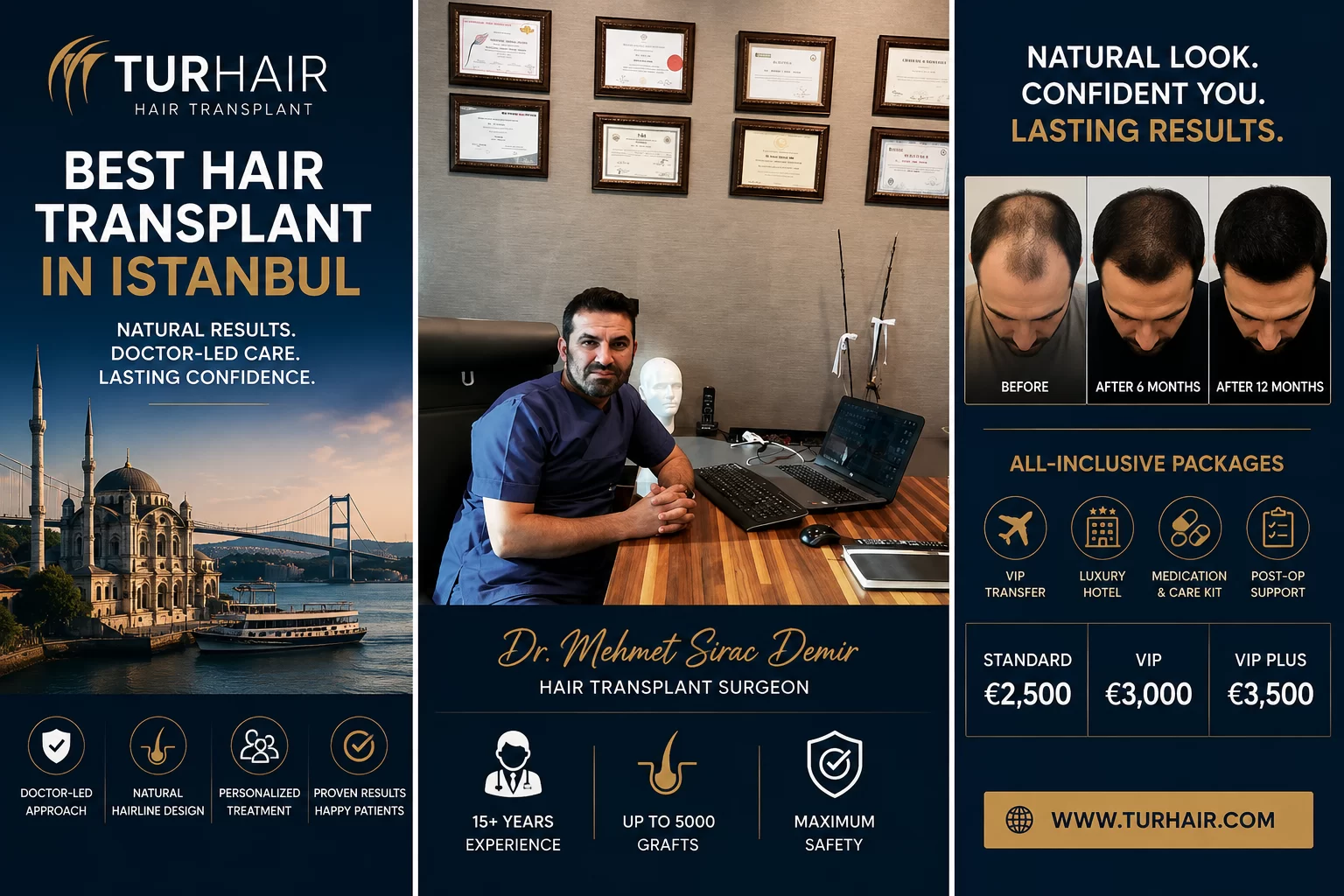
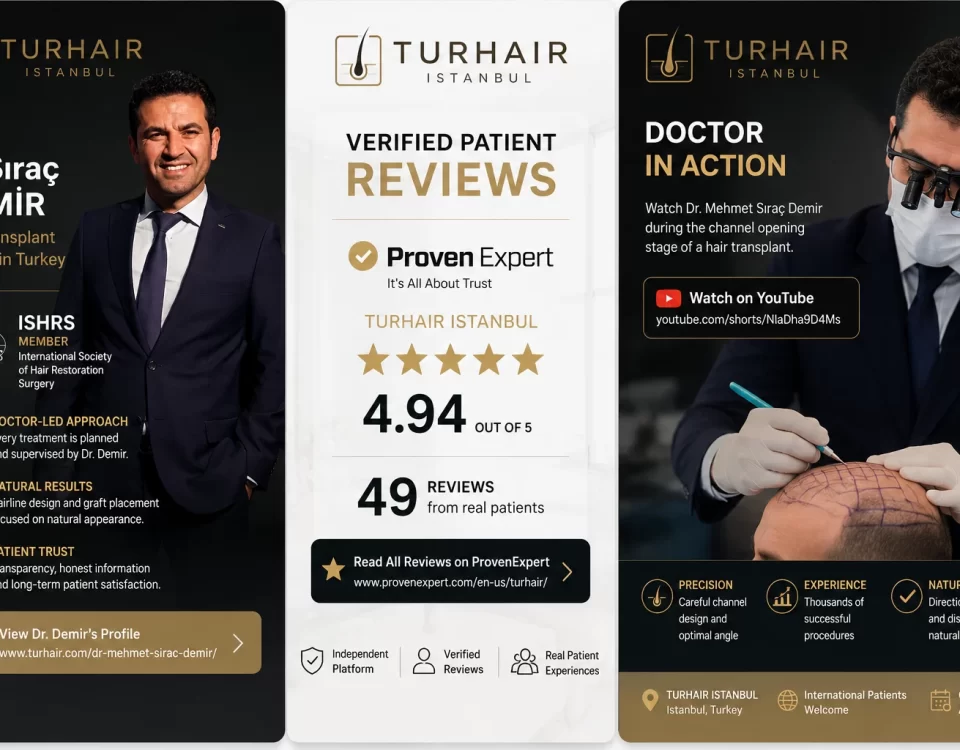
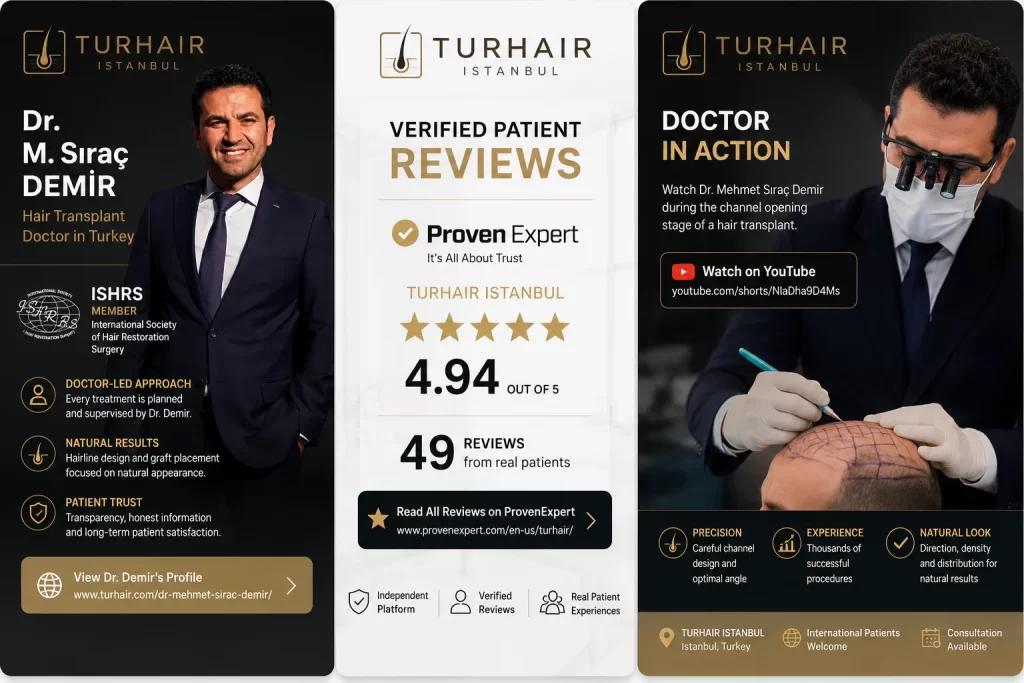
TurHair Istanbul – doctor-led hair transplant planning with Dr. Mehmet Sıraç Demir, natural hairline design and FUE hair transplantation.
What Does “Best Hair Transplant in Istanbul” Actually Mean?
There is no single clinic that can objectively be described as the best choice for every patient. A 25-year-old patient with early frontal recession requires a very different strategy from a 45-year-old patient with Norwood 5 or Norwood 6 hair loss. Likewise, a patient with Afro-textured hair, a previous unsuccessful transplant, diffuse thinning or a limited donor area requires an individualized surgical plan.
For this reason, the phrase best hair transplant in Istanbul should not simply mean the clinic with the most Instagram followers, the largest advertising campaign or the cheapest all-inclusive package.
A high-quality hair transplant should ideally combine:
- A clearly identified and qualified physician
- Individual medical assessment
- Realistic donor-area evaluation
- Age-appropriate hairline design
- Careful graft extraction
- Correct recipient-site direction and angle
- Appropriate graft distribution
- Natural density planning
- Safe medical protocols
- Transparent communication
- Realistic expectations
- Structured postoperative follow-up
The best clinic for you is therefore the clinic that can create the safest and most sustainable plan for your particular donor area, hair characteristics, age and pattern of hair loss.
Why Istanbul Became a Global Hair Transplant Destination
Istanbul has developed an enormous hair restoration industry over the last two decades. Patients travel from the United Kingdom, Ireland, Germany, Spain, Italy, Poland, Bulgaria, Scandinavia, the United States, Canada, Australia and many other countries for hair transplantation in Turkey.
There are several reasons behind this development.
First, Turkish medical teams have accumulated extensive practical experience with FUE procedures because of the large number of international patients treated in the country.
Second, operating and staffing costs in Turkey can be lower than in countries such as the United Kingdom or United States. This allows clinics to offer procedures at prices that may be significantly below those charged by premium Western European or North American practices.
Third, Istanbul is one of the world’s largest international aviation hubs. Direct flights from many European cities make medical travel relatively convenient.
Finally, the medical tourism infrastructure surrounding hair transplantation has become highly developed. Many clinics provide packages incorporating airport transfers, hotel accommodation, translators, postoperative medication and follow-up assistance.
However, popularity should never be confused with quality.
The enormous growth of the sector has created both highly professional medical practices and high-volume operations in which the identity and role of the physician may be unclear. Therefore, patients searching for the best hair transplant clinic in Istanbul need to look beyond marketing.
The Most Important Question: Who Actually Performs Your Hair Transplant?
This is arguably the most important question to ask before booking:
“Which doctor is responsible for my surgery, and exactly which stages will that doctor perform?”
Do not accept vague answers such as:
- “Our medical team performs the procedure.”
- “The doctor supervises everything.”
- “Our specialists have many years of experience.”
- “The doctor will check you before surgery.”
These statements do not tell you who actually performs the critical surgical stages.
Ask specifically about:
- Medical consultation
- Donor assessment
- Hairline design
- Graft-number planning
- Extraction
- Recipient-site creation
- Implantation
- Postoperative medical assessment
A transparent clinic should be able to explain its surgical workflow clearly before you pay a deposit.
Doctor-Led Hair Transplant vs Technician-Led Hair Transplant
One of the biggest differences between Istanbul hair transplant providers is the degree of physician involvement.
Hair transplantation is often described online as though it were simply a matter of moving follicles from the back of the scalp to the front. In reality, several decisions made before and during surgery can substantially influence the appearance of the final result.
These include:
- How low or high the hairline should be
- How many grafts can safely be removed
- Where density should be concentrated
- Which follicular units should be used in the hairline
- The angle of recipient sites
- The direction of growth
- The transition between native and transplanted hair
- How much donor reserve should remain for the future
This is why TurHair places particular emphasis on a doctor-led treatment model.
The goal is not simply to transplant the maximum possible number of grafts. The goal is to use the available donor supply intelligently.
Why Hairline Design Is So Important
A hair transplant can grow successfully and still look unnatural.
This often happens because the hairline was designed incorrectly.
A natural male hairline is not simply a straight line drawn across the forehead. It contains irregularities, changes in density, temporal transitions and subtle variations that create the appearance of naturally occurring hair.
The hairline must also be appropriate for the patient’s age.
A very low juvenile hairline may look attractive immediately after transplantation in a young patient, but it can become problematic if hair loss continues behind the transplanted region.
Good planning therefore considers both the patient’s current appearance and the likely progression of androgenetic alopecia.
Hairline Design Should Consider:
- Patient age
- Facial proportions
- Forehead dimensions
- Current Norwood classification
- Potential future hair loss
- Donor capacity
- Hair calibre
- Hair colour and skin contrast
- Hair curl
- Existing temporal points
The best hair transplant in Istanbul is therefore not necessarily the transplant with the lowest hairline or the greatest graft number. In many patients, conservative planning produces a more believable and sustainable result.
Not Just Another Istanbul Hair Transplant Clinic.
Doctor-Led Planning. Natural Hairlines. Responsible Donor Management.
TurHair combines the cost advantage of having a hair transplant in Istanbul with a more personalized treatment model led by Dr. Mehmet Sıraç Demir.
What Makes TurHair Different from Many Hair Transplant Clinics in Istanbul?
Istanbul has hundreds of hair transplant providers. Many clinics compete primarily on price, hotel packages, maximum graft numbers and the promise of performing several thousand grafts in a single day.
At TurHair, the approach is different. The objective is not simply to perform the largest possible procedure. The treatment plan is built around the patient’s donor capacity, facial proportions, existing hair, age and possible future hair loss.
Under the medical direction of Dr. Mehmet Sıraç Demir, the focus is on creating a natural-looking result while protecting the donor area for the long term.
The Goal Is the Right Grafts in the Right Places.”
TurHair vs Typical High-Volume Hair Transplant Clinics in Istanbul
| Comparison | TurHair & Dr. Demir | Typical High-Volume Istanbul Model |
|---|---|---|
| Responsible Doctor | Dr. Mehmet Sıraç Demir is clearly identified before treatment | Doctor identity or exact involvement may vary |
| Hairline Design | Individually planned according to facial proportions and long-term hair loss | May follow a more standardized template |
| Recipient-Site Planning | Doctor-led planning of angle, direction and graft distribution | Can depend heavily on rotating technical teams |
| Graft Philosophy | Clinically appropriate graft number based on donor capacity | Marketing may emphasize the highest possible graft number |
| Donor Management | Long-term preservation and future procedure planning | Approach can vary significantly between providers |
| Patient Volume | Controlled patient flow with emphasis on individualized planning | Several simultaneous operations may be common |
| Technique | FUE, Sapphire FUE or DHI selected according to the case | Technique may be sold primarily as a package upgrade |
| Future Hair Loss | Considered during hairline and graft planning | May receive less attention in one-day package models |
| Main Objective | Natural result + donor preservation | Can focus more heavily on volume, graft count and package price |
TurHair Hair Transplant Prices in Istanbul
TurHair offers three principal treatment levels. The most suitable option depends on your hair-loss pattern, donor capacity and preferred degree of physician involvement.
| Package | Price | Treatment | Best For |
|---|---|---|---|
| STANDARD | €2,500 | FUE hair transplant, doctor supervision, hotel, transfers, medication and postoperative support | Patients seeking strong value with medical oversight |
| VIP | €3,000 | Doctor-designed hairline, physician involvement in key planning stages, FUE and PRP | Patients prioritizing greater doctor involvement |
| VIP PLUS | €3,500 | Premium physician-led planning, Sapphire FUE and DHI option where medically appropriate | Patients looking for the highest TurHair treatment level |
Why Isn’t TurHair the Cheapest Hair Transplant in Istanbul?
Istanbul has extremely low-cost hair transplant packages, but TurHair does not compete by trying to become the cheapest provider in the city.
Our pricing reflects a treatment model focused on doctor-led planning, controlled patient volume, individualized hairline design and responsible donor management.
Don’t Choose an Istanbul Clinic by Price Alone.
Send your hairline, top, crown and donor-area photos and receive an initial assessment for your expected graft requirement and suitable TurHair package.
Why Dr. Mehmet Sıraç Demir’s Role Matters
A hair transplant is not simply an extraction-and-implantation process. The result depends heavily on decisions made before and during surgery.
Dr. Mehmet Sıraç Demir’s role within TurHair focuses on the medical and aesthetic strategy behind the procedure, including the hairline, recipient-area planning, donor limitations and long-term distribution of available grafts.
A Doctor-Led Treatment Philosophy.
For patients who want more than a low-cost package and a large graft number.
Which Type of Istanbul Hair Transplant Clinic Is Right for You?
| Your Priority | What to Look For |
|---|---|
| Lowest possible price | High-volume package providers may offer cheaper options |
| Maximum advertised graft count | Many Istanbul package clinics compete heavily on graft numbers |
| Doctor-led planning | TurHair & Dr. Mehmet Sıraç Demir |
| Long-term donor preservation | TurHair individualized treatment model |
| Natural age-appropriate hairline | Doctor-led hairline and recipient planning |
Looking for the Best Hair Transplant in Istanbul?
Start by finding out what your donor area can realistically support — not by choosing the clinic offering the biggest number of grafts.
Final graft count and technique are determined after individual medical assessment.
Donor Area Management: The Resource You Cannot Replace
Your donor area is finite.
This concept is fundamental to hair transplantation.
Follicular units extracted from the permanent donor zone do not regenerate as new follicles in the extraction sites. Once grafts have been harvested, the remaining donor supply must still provide adequate visual coverage.
This means that promises such as “unlimited grafts” should be treated cautiously.
A patient may theoretically have thousands of follicular units available, but that does not mean all of them should be extracted during a single procedure.
Overharvesting can create:
- Patchy donor density
- Visible scalp
- An uneven appearance
- Limited graft availability for future procedures
- Permanent aesthetic damage to the donor zone
An experienced hair transplant doctor should therefore evaluate the donor area before deciding the graft target.
More Grafts Does Not Automatically Mean a Better Hair Transplant
One of the most common misconceptions among patients comparing Istanbul clinics is that the clinic offering the largest graft number automatically provides better value.
For example, one clinic may advertise 5,000 grafts while another recommends approximately 3,500–4,000 grafts.
The first offer may appear superior.
But graft numbers cannot be evaluated without understanding:
- Donor density
- Recipient surface area
- Hair calibre
- Number of hairs per follicular unit
- Future hair loss
- Desired density
- Previous transplantation
A safe transplant should use the number of grafts medically appropriate for the patient rather than a predetermined marketing number.
At TurHair, packages may allow transplantation of a high graft count when clinically appropriate, but the maximum number is not automatically treated as the surgical target.
FUE Hair Transplant in Istanbul
Follicular Unit Extraction (FUE) is one of the most widely used approaches in modern hair transplantation.
During FUE, individual follicular units are harvested from the donor region using small punches. The grafts are then prepared and implanted into recipient sites according to the surgical plan.
The technique avoids the linear donor scar associated with traditional strip surgery, although patients should understand that FUE does not mean “scarless surgery.” Every extraction produces a microscopic wound that heals with some degree of tissue change.
Advantages of FUE may include:
- No linear strip scar
- Ability to wear relatively short hairstyles
- Large numbers of grafts can potentially be harvested
- Useful for many male-pattern hair loss cases
- Relatively straightforward postoperative donor care
However, the word “FUE” alone tells you very little about the quality of the transplant.
Two clinics can both perform FUE while producing completely different outcomes because technique is only one component of surgery.
What Is Sapphire FUE?
Sapphire FUE generally refers to an FUE procedure in which sapphire blades are used during recipient-site creation.
The sapphire blade itself does not determine whether the transplant will look natural.
The person creating the recipient sites must still determine:
- Direction
- Angle
- Density
- Distribution
- Depth
For this reason, patients should avoid choosing a clinic solely because the package includes the word “Sapphire.”
The surgical planning and experience of the medical team remain more important than the material from which a blade is manufactured.
DHI Hair Transplant in Istanbul
DHI is another commonly advertised term in Istanbul.
It usually describes implantation using pen-like implanter devices. Follicular units are loaded into the device and subsequently inserted into the recipient region.
DHI may be appropriate in selected situations, including procedures where implantation among existing hair is desirable.
However, DHI is not automatically superior to FUE.
The correct technique depends on:
- Recipient area
- Existing hair
- Required graft number
- Hair characteristics
- Surgeon’s preferred surgical strategy
A clinic claiming that every patient requires the same technique should be questioned.
FUE vs DHI: Which Is Better?
| Feature | FUE | DHI / Implanter Approach |
|---|---|---|
| Donor extraction | Individual follicular units | Individual follicular units |
| Implantation | Usually into pre-created recipient sites | Implanter device may be used |
| Large sessions | Often suitable | Case dependent |
| Existing hair | Can be used | May offer practical advantages in selected cases |
| Automatically better? | No | No |
The correct question is therefore not simply “Is DHI better than FUE?”
The better question is:
“Which surgical approach is most appropriate for my donor area, recipient area and long-term hair restoration plan?”
How to Identify a Hair Mill
The term hair mill is commonly used online to describe high-volume hair transplant businesses where the commercial operation can become more prominent than individual medical planning.
High patient volume alone does not prove that a clinic is unsafe. Nevertheless, patients should understand how their operation will actually be performed.
Potential warning signs include:
- The surgeon is not clearly identified before payment.
- You communicate almost exclusively with sales representatives.
- Every patient receives approximately the same graft recommendation.
- The clinic immediately promises the maximum possible graft number.
- The physician’s exact surgical role cannot be explained.
- Multiple operations are performed simultaneously without clear medical responsibility.
- You are pressured to pay a deposit immediately.
- Hairline design appears standardized.
- Potential complications are rarely discussed.
- The clinic advertises guaranteed density or guaranteed growth percentages.
Price is not enough to determine whether a clinic follows a high-volume model. Instead, examine how the surgery is organized.
TurHair’s Doctor-Led Approach in Istanbul
TurHair’s philosophy is designed around a different principle:
Your hair transplant should begin with a medical plan — not a sales package.
Hair restoration procedures at TurHair are planned under the medical direction of Dr. Mehmet Sıraç Demir.
The treatment strategy focuses on four fundamental priorities:
- Natural hairline design
- Responsible donor management
- Appropriate graft distribution
- Long-term planning for progressive hair loss
Rather than asking, “How many grafts can we sell?”, the important question is:
“How many grafts should this particular patient receive?”
TurHair vs High-Volume Hair Transplant Model
| Criteria | TurHair Approach | Typical High-Volume Model |
|---|---|---|
| Medical planning | Individualized | May be standardized |
| Doctor identity | Clearly identified | May not always be clear before booking |
| Hairline | Individually planned | Can be template-driven |
| Graft target | Based on donor capacity and need | May emphasize maximum graft numbers |
| Donor strategy | Long-term conservation | Varies considerably |
| Future hair loss | Considered during planning | May receive less emphasis |
How Many Grafts Do You Need?
The graft requirement varies considerably between patients.
A small recession of the frontal corners may require relatively few grafts, while reconstruction involving the frontal third, mid-scalp and crown can require substantially more.
Very approximate ranges sometimes discussed during initial planning include:
| Area | Possible Planning Range |
|---|---|
| Minor hairline recession | Approximately 1,000–1,800 grafts |
| Hairline + frontal area | Approximately 2,000–3,000 grafts |
| Frontal third | Approximately 2,500–3,500 grafts |
| Front + mid-scalp | Approximately 3,500–4,500 grafts |
| Advanced hair loss | 4,000+ grafts or staged treatment |
These figures should never be interpreted as a medical recommendation. The same bald surface can require different graft numbers depending on hair thickness, curl, colour contrast and donor density.
What Makes a Hair Transplant Look Natural?
Density alone does not create naturalness.
The human eye recognizes several subtle characteristics of naturally growing hair.
1. Correct Hair Direction
Hair does not grow vertically from the scalp. Different regions have different natural directions.
Recipient sites should follow these patterns.
2. Appropriate Angles
Hair emerging at an excessively upright angle can create an artificial appearance even when graft survival is excellent.
3. Single-Hair Follicular Units at the Hairline
Natural frontal hairlines generally contain finer single hairs at the leading edge.
Placing thick multi-hair follicular units directly at the front can create a plug-like appearance.
4. Irregularity
Natural hairlines contain controlled micro-irregularities.
A perfectly straight geometric line rarely looks natural.
5. Gradual Density
The transition from the frontal edge toward the denser central area should be gradual.
Best Hair Transplant in Istanbul for Different Hair Types
Hair transplantation cannot be planned identically for every ethnicity and hair type.
Fine Straight Hair
Fine hair may provide less visual coverage per graft. Density planning becomes particularly important.
Thick Hair
Thicker shafts generally create greater visual coverage, potentially allowing an impressive appearance with fewer grafts compared with very fine hair.
Curly Hair
Curly hair often provides strong visual coverage because each shaft occupies more apparent space.
Afro-Textured Hair
Afro-textured hair transplantation requires particular experience because the follicle beneath the skin can be curved even when the visible hair appears tightly curled.
Extraction strategy therefore requires careful attention to reduce follicular transection.
Best Hair Transplant in Istanbul for the Crown
The crown is one of the most challenging areas to restore.
It can consume a large number of grafts because of its surface area and spiral growth pattern.
For patients with extensive hair loss, using too many grafts in the crown can leave insufficient donor reserve for the frontal region.
In many cases, frontal framing should receive priority because the hairline and frontal third contribute more strongly to facial appearance.
This is another reason why simply asking for the maximum graft number is not necessarily the correct strategy.
Hair Transplant in Istanbul Before and After Results
Before-and-after photographs can be valuable, but they should be evaluated critically.
When comparing results, look for:
- Similar lighting
- Similar hairstyle
- Comparable camera angles
- Wet versus dry hair differences
- Donor-area photographs
- Close-up hairline images
- Cases resembling your own hair-loss pattern
Videos can sometimes provide additional information because they make it more difficult to conceal density limitations through selective photography.
Most importantly, do not assume that photographs displayed by a clinic prove that the same medical team will perform your procedure.
Ask who performed the cases you are viewing.
How Much Does the Best Hair Transplant in Istanbul Cost?
Hair transplant prices in Istanbul vary substantially.
The cheapest offers are not necessarily the best value, while the most expensive clinics do not automatically guarantee the best result.
Pricing can depend on:
- Surgeon involvement
- Clinic patient volume
- Technique
- Number of grafts
- Complexity of the case
- Previous transplantation
- Hotel package
- Transfers
- Postoperative services
International patients should therefore compare what is actually included rather than looking only at the headline price.
TurHair Hair Transplant Packages in Istanbul
TurHair provides different treatment options depending on the level of physician involvement, surgical technique and individual requirements.
| Package | Starting Price | Key Features |
|---|---|---|
| STANDARD | €2,500 | FUE, medical supervision, up to clinically appropriate graft capacity, hotel, transfers and postoperative support |
| VIP | €3,000 | Doctor-designed hairline, physician involvement in critical planning/stages, FUE and PRP |
| VIP PLUS | €3,500 | Premium physician-led planning, Sapphire FUE and DHI option where medically appropriate |
The final treatment plan should always be based on medical evaluation rather than simply selecting the largest package.
What Is Usually Included in an Istanbul Hair Transplant Package?
International hair transplant packages may include:
- Hair transplant procedure
- Medical consultation
- Hairline planning
- Blood tests
- Local anaesthesia
- Hotel accommodation
- Airport transfers
- Clinic transfers
- Postoperative medication
- Aftercare products
- First wash
- Translator assistance
- Remote follow-up
Patients should obtain written confirmation of exactly what is included before booking flights.
How Long Should You Stay in Istanbul?
Most international patients can organize the journey around several key stages:
- Arrival: normally before the procedure.
- Surgery: hair transplantation is performed according to the treatment plan.
- Postoperative control / first wash: usually performed after surgery according to the clinic protocol.
- Departure: once medically cleared.
At TurHair, typical international packages are structured to make the process practical for patients travelling from abroad.
Hair Transplant Recovery Timeline
Days 1–3
Mild swelling, redness and sensitivity may occur. Small crusts begin forming around transplanted follicles.
Days 4–10
The recipient area continues healing. Washing instructions should be followed carefully.
Weeks 2–6
Many transplanted hairs shed. This is commonly expected and does not necessarily mean the follicles have been lost.
Months 3–4
Early new growth may begin becoming visible.
Months 5–6
Density gradually becomes easier to appreciate.
Months 8–10
The cosmetic improvement becomes significantly clearer in many patients.
Months 12–18
Maturation continues. Crown growth can sometimes develop more slowly than frontal growth.
Questions to Ask Before Choosing a Hair Transplant Clinic in Istanbul
Before paying a deposit, ask the clinic the following questions:
- What is the full name of the doctor responsible for my surgery?
- What are the doctor’s qualifications?
- Who will design my hairline?
- Who creates the recipient sites?
- Who performs extraction?
- Who implants the grafts?
- How many patients are treated simultaneously?
- How is my graft number determined?
- How will my donor area be protected?
- What happens if my donor area is weaker than expected?
- Which technique is recommended and why?
- Can I see cases similar to mine?
- What exactly is included in the price?
- How does postoperative follow-up work?
- Who should I contact if I experience a problem after returning home?
A clinic competing for the title of best hair transplant clinic in Istanbul should be comfortable answering these questions.
Red Flags When Comparing Istanbul Hair Transplant Clinics
Be cautious when you encounter:
- “Guaranteed 100% growth”
- “Scarless hair transplant”
- “Unlimited grafts”
- “Maximum grafts for everyone”
- “No risks”
- “Permanent guaranteed density”
- Pressure to book immediately
- No clearly identified doctor
- No medical assessment before quotation
Hair transplantation is surgery. Ethical communication should acknowledge limitations and uncertainty rather than pretending that every outcome can be guaranteed.
Is Istanbul Safe for Hair Transplant Surgery?
Istanbul itself should not be treated as a quality guarantee or a warning sign. The safety and quality of a hair transplant depend primarily on the medical facility, the responsible physician, the surgical team, patient selection and postoperative protocols.
Patients should verify the clinic, understand who is medically responsible for their procedure and disclose their medical history honestly before surgery.
Why Cheap Hair Transplants Can Become Expensive
A cheap first transplant can become extremely expensive if revision surgery becomes necessary.
Repairing an unnatural hairline or depleted donor area is usually more difficult than performing a carefully planned first transplant.
Revision may require:
- Additional scalp grafts
- Beard donor hair
- Removal or redistribution of poorly positioned grafts
- Hairline reconstruction
- Scar camouflage
- Multiple surgical sessions
For this reason, patients should think about lifetime donor management, not simply the price of the first procedure.
Who Is a Good Candidate for Hair Transplantation?
A good candidate generally needs an adequate donor area and a pattern of hair loss that can realistically be improved surgically.
Candidate assessment should consider:
- Age
- Cause of hair loss
- Hair-loss stability
- Donor density
- Hair calibre
- Scalp condition
- Previous surgery
- Medical history
- Medication
- Expectations
Not every person who sends photographs should automatically be accepted for surgery.
Sometimes the medically responsible recommendation is to delay transplantation, investigate the cause of hair loss or consider medical treatment first.
Why Long-Term Planning Matters
Transplanted follicles may be relatively resistant to androgenetic hair loss, but the patient’s existing non-transplanted hair can continue thinning.
Therefore, a transplant should not be planned as though the patient’s current hair pattern will remain unchanged forever.
This is particularly important for younger patients.
A conservative hairline and preserved donor reserve may provide much more flexibility if a second procedure becomes necessary years later.
So, What Is the Best Hair Transplant in Istanbul?
The answer depends on how you define “best.”
If “best” means the cheapest possible package, Istanbul provides numerous options.
If it means the largest advertised graft number, many clinics will compete for attention.
But if best hair transplant in Istanbul means creating a natural-looking result while protecting the donor area and maintaining options for future hair loss, the selection criteria should be different.
Prioritize:
- A clearly identified doctor
- Transparent physician involvement
- Individualized planning
- Natural hairline philosophy
- Conservative donor management
- Realistic graft estimates
- Documented results
- Clear postoperative support
Why International Patients Consider TurHair in Istanbul
TurHair is positioned for patients who do not want to choose an Istanbul hair transplant provider solely on the basis of price.
Under the medical direction of Dr. Mehmet Sıraç Demir, the objective is to combine the cost advantages of treatment in Turkey with a more personalized, doctor-led approach.
The fundamental philosophy is simple:
The goal is not to transplant the most grafts.
The goal is to use the right grafts, in the right places, for the right patient.
Every patient has a different donor capacity, facial structure, hair-loss pattern and long-term risk of progression. Treatment planning should reflect those differences.
Choosing the Best Hair Transplant Clinic in Istanbul
Istanbul offers an extraordinary range of hair transplant options. This creates opportunities for patients, but it also makes careful research essential.
Do not choose a clinic because it offers 500 more grafts than another provider.
Do not choose a clinic simply because the hotel looks luxurious.
Do not assume DHI is automatically better than FUE.
Do not assume that a clinic using a doctor’s photograph in advertising means that doctor will perform the important stages of your surgery.
Instead, investigate the medical structure behind the package.
Ask who evaluates you.
Ask who designs your hairline.
Ask who creates the recipient sites.
Ask how many operations are being performed at the same time.
Ask how the donor area will be protected.
And above all, ask whether the proposed plan still makes sense if your hair loss progresses over the next ten or twenty years.
Those questions are far more useful than simply asking:
“How many grafts can you give me?”
If you are researching the best hair transplant in Istanbul, the objective should not be finding the clinic making the biggest promise. It should be finding a medical team capable of explaining why its proposed strategy is appropriate specifically for you.
Request a Hair Transplant Assessment
Send clear photographs of your hairline, frontal area, crown and donor region for an initial assessment by the TurHair team.
Medical disclaimer: This page provides general educational information and does not constitute an individual medical diagnosis or guarantee of surgical results. Hair transplant candidacy, graft requirements, technique and expected outcome must be assessed individually by a qualified medical professional.
How to Compare the Best Hair Transplant Clinics in Istanbul
When patients search online for the best hair transplant in Istanbul, they often find dozens of clinics making very similar claims. Many advertise advanced techniques, experienced teams, natural results, VIP transfers and thousands of successful cases. Because the marketing language can sound almost identical, choosing between clinics becomes difficult.
A better approach is to compare clinics using measurable criteria rather than promotional slogans. Instead of asking which clinic looks the most impressive on Instagram, ask which clinic can clearly explain its medical process.
Important comparison points include:
- Who is the responsible doctor?
- How involved is the doctor in the procedure?
- How many patients are treated per day?
- How is the donor area assessed?
- Who designs the hairline?
- Who determines graft distribution?
- Are graft numbers individualized?
- Are previous failed transplants accepted?
- Are long-term hair loss risks discussed?
- Is postoperative follow-up provided?
Patients should also pay attention to how the clinic communicates before surgery. A clinic that provides detailed, medically relevant answers before payment is generally more informative than one that responds only with package prices and hotel photographs.
Best Hair Transplant Surgeon in Istanbul: Why the Doctor Matters
Many patients search specifically for the best hair transplant surgeon in Istanbul because they understand that the individual responsible for planning and surgical decisions can have a major influence on the final result.
Hair transplantation requires both technical execution and aesthetic judgment. A doctor must consider not only how many grafts can be moved, but how those grafts should be used to create a result that looks natural today and remains appropriate in the future.
Important decisions include:
- The height and shape of the hairline
- Which donor zones are safest to harvest
- How many grafts should be reserved for future surgery
- Whether the crown should be treated during the first session
- Where higher density should be concentrated
- How single, double and multi-hair grafts should be distributed
- The angle and direction of recipient sites
For this reason, patients should not focus only on the clinic brand. They should investigate the doctor associated with the procedure and understand that doctor’s actual role.
Why a Natural Hairline Is More Important Than Maximum Density
Density is important, but a dense transplant with an unnatural hairline can still look obviously surgical.
The frontal hairline is the most visible part of a hair transplant and often determines whether the result appears natural at conversational distance.
A successful hairline should normally include:
- Appropriate height
- Facial symmetry without excessive geometric perfection
- Soft frontal transition
- Fine single-hair follicular units at the leading edge
- Gradual increase in density behind the first rows
- Direction compatible with native hair
- Age-appropriate recession
One common mistake is lowering the hairline too aggressively in a younger patient. Although this can create an attractive immediate transformation, it may consume a large number of grafts and leave fewer options if hair loss progresses later.
A more conservative design may therefore provide greater long-term flexibility.
Why “Unlimited Grafts” Should Be Treated Carefully
The phrase unlimited grafts is frequently used in hair transplant advertising, particularly in competitive medical tourism markets.
From a medical planning perspective, however, the donor area is not unlimited.
Every patient has a finite number of follicular units that can be safely harvested while maintaining acceptable donor appearance.
The safe extraction capacity depends on factors such as:
- Donor density
- Scalp characteristics
- Hair thickness
- Hair colour
- Hair-to-skin contrast
- Previous extractions
- Size of the permanent donor zone
For this reason, a responsible clinic should not promise a predetermined graft number before assessing the donor area properly.
The goal should be adequate coverage with sustainable donor management rather than extracting the maximum possible number simply because the package allows it.
Can 5,000 Grafts Be Transplanted in One Session?
Large FUE sessions are possible in selected patients, but 5,000 grafts should never be treated as a standard target for everyone.
Some patients have strong donor density and extensive baldness and may be suitable for a high-graft session. Others may have thinner donor hair, lower density or previous transplantation, making a more conservative graft count safer.
The decision should depend on:
- Total donor capacity
- Recipient size
- Hair characteristics
- Risk of overharvesting
- Duration of surgery
- Future restoration requirements
Patients comparing offers should therefore be cautious when one clinic recommends 3,500 grafts and another immediately promises 5,000 without detailed examination. The larger number is not automatically the better recommendation.
Best Hair Transplant in Istanbul for High Norwood Cases
Patients with advanced hair loss, including Norwood 5, Norwood 6 and selected Norwood 7 patterns, require particularly careful planning.
The main challenge is that the bald recipient area can be very large while donor supply remains limited.
Attempting to create uniform high density across the entire scalp may not be realistic.
Instead, the surgeon may need to prioritize:
- Frontal framing
- Hairline reconstruction
- Frontal third density
- Mid-scalp transition
- Selective crown coverage
In advanced cases, a staged strategy may be preferable to trying to cover everything in a single operation.
This approach can help preserve donor resources and allows the patient to evaluate the first result before deciding whether additional surgery is worthwhile.
Should the Crown Be Transplanted at the Same Time?
Patients frequently want both the frontal area and crown restored during the same trip to Istanbul.
Whether this is appropriate depends on the total available graft supply.
The crown can require a surprisingly large number of grafts because it is a broad circular area with a spiral pattern. Creating strong visual density there can consume donor resources quickly.
For patients with limited donor supply, prioritizing the front may create a more significant aesthetic improvement.
The face is framed primarily by the frontal hairline and frontal third. For many patients, improving this region provides greater visual impact than spreading grafts too thinly across the entire scalp.
Hair Transplant Density: What Is Realistic?
Patients often ask whether transplanted hair can achieve the same density they had at age 18.
In most cases, this is not a realistic objective.
Natural scalp density can be extremely high, and recreating identical density over a large bald area would require more donor follicles than are safely available.
Hair transplant surgery therefore relies on creating the visual impression of density.
This depends on:
- Hair shaft thickness
- Number of hairs per graft
- Hair colour
- Scalp colour
- Hair curl
- Direction of implantation
- Distribution of grafts
- Length and styling of hair
A strategically planned transplant can therefore look dense even when the transplanted follicular-unit density is lower than the original native density.
Best Hair Transplant in Istanbul for Afro Hair
Patients with Afro-textured or tightly curled hair require a clinic that understands the unique characteristics of curved follicles.
The visible hair shaft may curl strongly above the scalp, while the follicle below the skin can also follow a curved path.
This can make extraction more technically demanding because the punch must follow the follicle accurately to reduce transection.
At the same time, curly hair can provide excellent visual coverage because each strand occupies more apparent space.
Important factors in Afro hair transplantation include:
- Experience with curved follicles
- Appropriate punch selection
- Conservative extraction
- Natural hairline design
- Understanding curl direction
- Careful graft handling
Patients researching the best hair transplant in Istanbul for black men should therefore ask clinics directly about their experience with Afro-textured hair rather than assuming all FUE procedures are identical.
Female Hair Transplant in Istanbul
Women can also benefit from hair transplantation, but female hair loss requires careful diagnosis.
Not every woman with thinning hair is a good candidate for surgery.
Female pattern hair loss may involve diffuse thinning that affects both the recipient and potential donor areas. In these cases, surgical planning becomes more complex.
Hair transplantation may be considered for selected women with:
- Stable frontal recession
- Hairline lowering needs
- Traction-related hair loss
- Localized scarring alopecia after stabilization
- Previous surgical scars
- Suitable donor density
A proper medical evaluation should attempt to clarify the cause of hair loss before transplantation.
Hair Transplant Repair in Istanbul
Istanbul is also a destination for patients seeking repair after an unsatisfactory first transplant.
Repair cases can be significantly more complex than primary procedures because both the donor and recipient areas may already have been altered.
Common problems include:
- Unnatural straight hairline
- Large multi-hair grafts at the frontal edge
- Incorrect hair direction
- Low-density result
- Patchy donor area
- Overharvesting
- Visible scarring
- Asymmetry
Repair surgery may involve adding finer grafts, redesigning the hairline, removing selected grafts or redistributing available donor hair.
In some cases, beard grafts may be considered to supplement scalp donor supply, particularly when the scalp donor region has already been heavily used.
Beard Hair as an Additional Donor Source
Beard hair can sometimes serve as a secondary donor source in advanced or repair cases.
However, beard grafts are not identical to scalp hair.
They are often thicker and may have different growth characteristics. For this reason, they are usually more suitable for adding density in selected areas rather than forming the soft leading edge of a frontal hairline.
Beard donor planning should consider:
- Beard density
- Hair calibre
- Skin healing
- Potential visible extraction marks
- Recipient placement strategy
Body hair from the chest or other regions may also be discussed in very selected situations, but scalp hair generally remains the preferred donor source whenever available.
How Important Is PRP with Hair Transplant Surgery?
Platelet-rich plasma, commonly called PRP, is frequently offered as an additional treatment with hair transplantation.
PRP is prepared from the patient’s own blood and contains concentrated platelets.
Some clinics use PRP as part of their postoperative protocol. However, patients should avoid viewing PRP as a substitute for good surgical planning.
A poorly designed hairline will not become natural because PRP was added to the package.
Likewise, excessive donor extraction cannot be corrected with PRP.
The foundations of a successful transplant remain:
- Correct candidate selection
- Donor management
- Hairline design
- Graft handling
- Recipient-site planning
- Postoperative care
Hair Transplant Istanbul vs UK
One reason Istanbul attracts so many British patients is the substantial difference in treatment pricing.
In the United Kingdom, hair transplant procedures can become expensive when pricing is based on graft count, surgeon time or premium clinic positioning.
Istanbul clinics often operate with lower overall costs and can therefore offer packages including surgery, hotel and transfers at a lower total price.
However, price should not be the only comparison.
Patients should compare:
- Doctor involvement
- Number of patients treated daily
- Medical facility standards
- Aftercare availability
- Revision policy
- Travel requirements
A lower price can represent excellent value when medical standards are high. It can represent false economy if the patient later requires corrective surgery.
Hair Transplant Istanbul vs USA
Patients from the United States also travel to Istanbul because hair restoration procedures in major American cities can be considerably more expensive.
For a US patient, the main tradeoff is usually travel distance.
A transatlantic journey requires more planning, but the financial difference can still make Istanbul attractive, particularly for larger sessions.
Patients travelling from the United States should pay particular attention to postoperative communication because they will be returning far from the operating clinic.
Before surgery, ask:
- Who will answer postoperative questions?
- How can complications be reported?
- Will photographs be reviewed remotely?
- How often should follow-up updates be sent?
- What symptoms require local medical assessment?
What Happens on Hair Transplant Day?
Although protocols differ between clinics, a typical FUE hair transplant day may include several stages.
1. Medical Review
The patient meets the medical team, discusses the treatment plan and confirms relevant medical information.
2. Hairline Design
The planned frontal hairline and recipient areas are marked.
3. Donor Preparation
The donor region is prepared according to the chosen technique.
4. Local Anaesthesia
Local anaesthetic is administered to allow the procedure to be performed while the patient remains awake.
5. Graft Extraction
Follicular units are individually harvested from the donor area.
6. Graft Preparation
Extracted grafts are counted, classified and kept under appropriate conditions before implantation.
7. Recipient-Site Planning
The recipient region is prepared according to the intended direction, angle and density.
8. Implantation
Grafts are inserted into the recipient area according to the treatment plan.
9. Final Medical Check
The donor and recipient regions are reviewed and postoperative instructions are provided.
How Painful Is a Hair Transplant?
Most hair transplant surgery is performed under local anaesthesia.
Patients may experience temporary discomfort during the initial anaesthetic injections, while the extraction and implantation stages are generally much more comfortable once the scalp is numb.
After surgery, mild tenderness or tightness may occur in the donor area.
Pain tolerance varies between individuals, so clinics should provide realistic information rather than promising that the procedure is completely painless.
Hair Transplant Swelling After Surgery
Temporary swelling can occur after hair transplantation, particularly around the forehead.
It may become more noticeable during the first several days before gradually resolving.
Patients are commonly given postoperative instructions designed to reduce unnecessary swelling and protect the grafts.
Following the clinic’s sleeping-position and washing guidance can be important during the early recovery period.
When Can You Return to Work?
The answer depends on the type of work and whether the patient is comfortable with visible redness or crusting.
Patients working remotely may resume light work relatively quickly.
Those who work in public-facing roles may prefer a longer period before returning because the transplant can remain visible during the early healing phase.
Patients performing physically demanding work may need additional recovery time to avoid heavy exertion.
When Can You Exercise After a Hair Transplant?
Exercise should usually be restricted during the early postoperative period.
Heavy lifting, intense cardio and activities that produce significant sweating can increase scalp irritation and should not be resumed too early.
The exact timing depends on the clinic’s protocol and the patient’s healing progress.
Contact sports require additional caution because accidental impact to the recipient area could damage healing grafts.
When Can You Wear a Hat?
Patients frequently ask about wearing a cap after surgery because they want to conceal the visible signs of transplantation.
The main concern is avoiding friction, compression or contact with newly implanted grafts.
Any headwear used during early recovery should therefore follow the clinic’s specific instructions.
A tight hat should not be placed over the recipient region prematurely.
When Will the Transplanted Hair Start Growing?
Hair transplantation requires patience.
Many transplanted hairs initially shed during the first several weeks. New growth develops gradually from the transplanted follicles.
Early growth may become noticeable after several months, but the density and texture continue developing over a longer period.
Patients should not evaluate the final result at three or four months.
Hair transplantation is a long-term process, not an instant cosmetic treatment.
Does Transplanted Hair Last Forever?
Follicles taken from a stable donor zone are generally selected because they are more resistant to the hormonal processes responsible for androgenetic hair loss.
However, the appearance of the scalp can still change over time because existing non-transplanted hair may continue thinning.
This is why long-term planning matters.
A transplant can be technically successful while the surrounding native hair continues to recede.
Medical management may therefore be discussed in appropriate patients.
Finasteride and Minoxidil After Hair Transplantation
Some patients use medications such as finasteride or topical/oral minoxidil as part of a broader hair-loss management strategy.
These treatments are separate from hair transplantation and are not suitable for every patient.
Medication use, benefits, contraindications and potential side effects should be discussed with a qualified medical professional.
Patients already using hair-loss medication should inform the transplant doctor before surgery and ask whether any temporary adjustment is necessary around the operation.
Can a Hair Transplant Fail?
No surgical procedure can guarantee a perfect result.
Problems can occur due to a variety of factors, including:
- Poor patient selection
- Incorrect donor assessment
- Excessive graft trauma
- Improper recipient-site design
- Infection
- Vascular problems
- Postoperative trauma
- Unrealistic expectations
This is another reason patients should avoid clinics promising guaranteed growth percentages or guaranteed density.
How to Read Hair Transplant Reviews Correctly
Online reviews can be useful, but they should not be the only basis for choosing a clinic.
When reading reviews, look for details rather than star ratings alone.
Useful reviews often discuss:
- Consultation quality
- Doctor involvement
- Communication
- Surgical organization
- Postoperative follow-up
- Donor healing
- Hairline appearance
- Long-term growth
Be cautious when all reviews sound nearly identical or focus exclusively on airport pickup, hotel quality and friendly translators without discussing the medical procedure itself.
Why Before-and-After Videos Can Be More Useful Than Photos
Still photographs can be affected by lighting, hair length, styling products and camera angle.
Video can sometimes provide a more realistic impression of:
- Hairline softness
- Actual density
- Scalp visibility
- Temple design
- Donor appearance
When possible, compare multiple patient cases rather than relying on one spectacular transformation.
Best Hair Transplant Clinic in Istanbul: A Practical Checklist
Before booking, confirm that you can answer YES to most of the following:
- I know the full name of the responsible doctor.
- I understand which stages the doctor performs.
- The clinic has explained my donor limitations.
- The graft estimate appears individualized.
- I have seen results similar to my case.
- The clinic has discussed possible future hair loss.
- The hairline design is not simply a fixed template.
- The clinic has explained risks and limitations.
- I know what postoperative support is provided.
- I know the total price before travelling.
Choosing the right hair transplant clinic in Turkey requires more than comparing prices, package features or the maximum number of grafts advertised by different providers. Turkey has a large and competitive hair restoration industry, particularly in Istanbul, where international patients can find clinics offering FUE, Sapphire FUE and DHI procedures. However, the medical approach, level of doctor involvement and treatment philosophy can vary significantly between clinics. Patients who want to understand the most important criteria before making a decision can read our detailed guide to the best hair transplant clinic in Turkey, including what to examine when comparing doctors, surgical teams, donor management and long-term treatment planning.
One of the first questions patients should ask is who will actually be responsible for their procedure. A clinic may advertise an experienced surgeon, but this does not necessarily mean that the same doctor personally plans or participates in the medically important stages of every operation. Understanding who evaluates the donor area, designs the hairline, determines the appropriate graft number and creates the recipient sites can provide a much clearer picture of how a clinic operates.
Donor preservation is another important consideration. The donor area contains a limited supply of follicles, and grafts removed during a transplant cannot simply be replaced. For this reason, treatment planning should focus on using the number of grafts necessary to create appropriate coverage while maintaining sufficient donor reserves for possible future hair loss. Advertising a very high graft number does not automatically indicate a better treatment plan.
Natural hairline design also depends on individualized planning. Facial proportions, age, existing hair, donor capacity and the potential progression of hair loss should be considered before determining the position and shape of a new hairline. The direction, angle and distribution of transplanted follicles are equally important because these details influence how naturally the transplanted area blends with native hair.
At TurHair, treatment planning is carried out under the medical direction of Dr. Mehmet Sıraç Demir. The objective is to create an individualized strategy based on the patient’s hair-loss pattern, donor characteristics and long-term needs rather than following the same treatment template for every case. Technique selection, including FUE, Sapphire FUE or DHI, is also considered according to the requirements of the individual patient.
International patients should additionally evaluate transparency, communication and aftercare. Knowing what is included in the treatment, who performs each stage and what support is available after returning home can make the overall process easier to understand. Ultimately, selecting a hair transplant clinic in Turkey should involve comparing medical responsibility, doctor involvement, donor preservation, natural design, realistic expectations and long-term planning rather than making a decision based solely on price, marketing claims or the largest advertised graft number.
For international patients considering a hair transplant in Istanbul, choosing the right clinic involves much more than comparing package prices or advertised graft numbers. Istanbul has become one of the world’s leading destinations for hair restoration, attracting patients from the United Kingdom, Europe, the United States and many other countries. Clinics may offer similar procedures such as FUE, Sapphire FUE and DHI, but the way these treatments are planned and performed can differ considerably. Patients researching a hair transplant in Istanbul should therefore consider physician involvement, donor management, treatment planning and the responsibilities of the medical team before making a final decision.
A careful hair transplant assessment should begin with the patient’s individual characteristics rather than an advertised maximum graft number. Donor density, hair thickness, follicular distribution, current hair-loss pattern, age and the possibility of future thinning can all influence the appropriate treatment strategy. Because donor follicles are a limited resource, extracting the largest possible number of grafts is not necessarily beneficial. A well-planned procedure should aim to achieve appropriate coverage while preserving the donor area for the patient’s long-term needs.
Hairline planning is another important part of achieving a natural appearance. The position and shape of a hairline should complement the patient’s facial proportions, age and existing hair rather than following an identical template for every patient. The direction, angle and distribution of transplanted follicles also need careful consideration so that newly transplanted hair blends naturally with the patient’s native growth pattern.
At TurHair, treatment planning is carried out under the medical direction of Dr. Mehmet Sıraç Demir. Each patient is evaluated individually, with particular attention to donor preservation, hairline planning and appropriate graft distribution. The choice between FUE, Sapphire FUE and DHI is also based on the requirements of the individual case rather than assuming that one technique is suitable for every patient.
Patients travelling internationally should also consider the complete treatment experience. Pre-operative communication, airport and clinic transfers, accommodation arrangements, post-operative washing instructions and access to aftercare can all make the process easier to understand and manage. It is equally important to have realistic expectations about recovery. Hair transplantation does not provide an immediate final result; transplanted hairs may initially shed before gradual new growth begins, and development continues over the following months.
Ultimately, choosing a clinic in Istanbul should involve evaluating medical planning, transparency, physician involvement, donor strategy and long-term treatment considerations rather than focusing only on price or promotional graft numbers. Asking who designs the hairline, how the required number of grafts is determined and who performs the critical stages of the procedure can help patients compare clinics more effectively and make a better-informed decision about their hair restoration treatment.
Why TurHair Focuses on a Limited Patient Model
A personalized hair transplant requires time.
The medical team must evaluate the donor area, plan the hairline, determine recipient distribution and monitor the progression of surgery.
For this reason, TurHair’s positioning is based on maintaining a more controlled patient flow rather than operating as a mass-volume hair transplant center.
The objective is to preserve enough time for individualized medical planning and quality control.
This can be especially important for:
- Advanced Norwood cases
- Afro-textured hair
- Repair procedures
- Weak donor areas
- Young patients
- Complex hairline reconstruction
Dr. Mehmet Sıraç Demir and TurHair’s Medical Philosophy
At TurHair, treatment planning is led by Dr. Mehmet Sıraç Demir, with emphasis on natural appearance, donor preservation and individualized strategy.
The philosophy is based on the idea that a successful hair transplant is not simply measured by the number of grafts extracted in one day.
Instead, the result should be evaluated according to:
- Whether the hairline suits the face
- Whether the donor area remains visually healthy
- Whether grafts are distributed efficiently
- Whether the result remains natural as the patient ages
- Whether future treatment options remain available
This long-term approach is particularly important in a field where aggressive marketing can encourage patients to focus on graft numbers and immediate transformations rather than sustainable planning.
Final Advice for Patients Searching for the Best Hair Transplant in Istanbul
If you are comparing Istanbul clinics, do not rush the decision.
Collect information from several providers and compare their answers carefully.
The strongest clinic may not be the one offering the cheapest package, the most grafts or the most luxurious hotel.
The strongest option is usually the one that can explain:
- Why you are a suitable candidate
- Why a particular hairline is appropriate
- Why a certain number of grafts is recommended
- Why one technique is preferred over another
- How the donor area will be preserved
- Who performs each surgical stage
- What will happen if your hair loss progresses
That level of transparency should be one of the main standards used when searching for the best hair transplant in Istanbul.
Hair transplantation is not simply a travel purchase. It is a permanent surgical redistribution of a limited biological resource.
Choose accordingly.
Frequently Asked Questions About Hair Transplants in Istanbul
Below are answers to some of the most common questions patients ask when searching for the best hair transplant in Istanbul, comparing clinics, doctors, techniques, graft numbers and prices.
1. What is the best hair transplant clinic in Istanbul?
2. How do I choose the best hair transplant in Istanbul?
3. How much does a hair transplant cost in Istanbul?
4. Why are hair transplants cheaper in Istanbul?
5. Is Istanbul good for hair transplantation?
6. Who should design my hairline?
7. What makes Dr. Mehmet Sıraç Demir and TurHair different?
8. What is a hair mill in Istanbul?
9. Is a doctor-led hair transplant better?
10. Is FUE or DHI better in Istanbul?
11. What is Sapphire FUE?
12. How many grafts do I need?
13. Can I have 5,000 grafts in one hair transplant?
14. Does more grafts mean a better result?
15. What does “up to 5,000 grafts” mean?
16. Can overharvesting damage the donor area?
17. Can the crown and hairline be transplanted together?
18. Is Istanbul suitable for Afro hair transplants?
19. Can women have a hair transplant in Istanbul?
20. Can a failed hair transplant be repaired in Istanbul?
21. Can beard hair be used for a hair transplant?
22. Is hair transplantation painful?
23. How long should I stay in Istanbul after a hair transplant?
24. When can I return to work after a hair transplant?
25. When can I exercise after a hair transplant?
26. When will transplanted hair start growing?
27. Is transplanted hair permanent?
28. Can a hair transplant fail?
29. What should I send for an online hair transplant assessment?
30. Why should I consider TurHair for a hair transplant in Istanbul?
Still Comparing Hair Transplant Clinics in Istanbul?
Don’t choose your clinic only by price or the largest advertised graft number. Send your photos and find out what your donor area can realistically support.
Get Your Initial Hair Assessment
Individual candidacy, graft requirements and surgical technique are determined after medical assessment.