Best Hair Transplant Doctor in Turkey (2026)
October 5, 2026
Best Hair Transplant Clinics in Turkey 2027
October 21, 2026Top 10 Hair Transplant Clinics in Turkey (2026): Complete Guide to Choosing the Best
Searching for the Top 10 Hair Transplant Clinics in Turkey is an important first step for international patients considering hair restoration. Turkey, particularly Istanbul, has become a major destination for FUE, Sapphire FUE and DHI hair transplantation. Thousands of patients research Turkish clinics because of their experienced medical professionals, international treatment packages and comparatively accessible prices.
However, finding the best hair transplant clinic in Turkey requires more than reading advertisements or comparing before-and-after photographs. Hair transplantation is a surgical procedure involving medical decisions that may affect a patient’s appearance for decades. The experience of the responsible physician, donor-area assessment, hairline design, graft distribution and long-term planning should all influence the final decision.
Some online lists rank clinics according to popularity, advertising visibility, patient reviews or package prices. These factors can provide useful information, but they cannot independently establish surgical quality. A well-known clinic brand does not necessarily tell patients who will perform their procedure or how their donor area will be protected.
This 2026 guide therefore presents ten essential standards for evaluating hair transplant clinics in Turkey. Rather than publishing an unverified ranking of competing providers, it explains the medical, technical and practical factors patients should investigate before booking.
Choose a medical treatment plan, not simply a famous clinic name or an attractive package.
What Defines the Top Hair Transplant Clinics in Turkey?
The phrase “top hair transplant clinic” should represent more than commercial success. A reputable provider should demonstrate medical accountability, appropriate patient selection, realistic expectations and transparent communication. Patients should understand the qualifications of the responsible doctor and the responsibilities of every person participating in the operation.
Hair transplantation involves relocating follicular units from a suitable donor region to areas affected by hair loss. The procedure must balance the desire for visible density against the biological limitations of the donor area. The donor supply is finite, while androgenetic alopecia may continue progressing after surgery.
Consequently, a clinic that offers the largest number of grafts is not automatically the strongest choice. Equally, a clinic charging premium prices does not necessarily provide better surgical planning. The appropriate provider is one that can explain why a particular treatment is suitable for the individual patient.
Top 10 Essential Criteria for Choosing a Hair Transplant Clinic in Turkey
1. An Experienced and Identifiable Hair Transplant Surgeon
The first criterion is the identity and professional background of the physician responsible for the procedure. Patients should not have to travel internationally before discovering who their doctor will be. The physician’s name, medical qualifications, relevant experience and responsibilities should be available before the patient makes a final decision.
Experience is particularly relevant because hair transplantation combines medical diagnosis with surgical and aesthetic judgment. A doctor must consider the patient’s age, family history, degree of hair loss, donor density, scalp characteristics, existing hair quality and potential future progression.
When comparing providers, patients should distinguish between a clinic’s years of commercial operation and the actual experience of the physician responsible for their treatment. A brand may have operated for many years while employing different doctors over time.
Professional memberships and educational activities can help patients research a physician’s background, but membership alone does not guarantee a successful outcome. Patients should evaluate qualifications together with medical transparency, clinical planning and documented results.
2. Direct Physician Involvement in Important Surgical Stages
Hair transplantation normally involves teamwork. Experienced assistants may perform appropriate tasks under medical supervision, depending on applicable regulations and the clinical treatment model. Nevertheless, patients should understand the physician’s direct role before surgery.
The phrase “doctor supervised” can describe different arrangements. In one clinic, the physician may personally perform hairline design and recipient-site creation. In another, the doctor may primarily conduct an initial consultation while other members of the team perform most procedural stages.
Patients should therefore ask who evaluates the donor area, determines the final graft number, designs the hairline, performs follicular extraction, creates recipient channels and implants the grafts. These responsibilities should be explained clearly rather than hidden behind general references to a medical team.
Physician involvement is important because the procedure requires decisions about graft distribution, direction, density and long-term donor preservation. The patient’s expectations must also be assessed realistically before irreversible surgical decisions are made.
3. Limited Daily Patient Volume and Individual Attention
Daily patient volume is another factor worth investigating. Some hair transplant providers operate multiple surgical rooms and teams simultaneously, while others intentionally schedule fewer patients. Neither model automatically determines clinical quality, but patients should understand how their procedure will be organized.
A lower-volume practice may offer more opportunities for individualized consultation, detailed planning and communication with the responsible physician. However, the number of patients alone is not a substitute for professional competence, proper staffing or appropriate medical facilities.
Ask how many patients will receive surgery on the same day, whether the same team remains responsible throughout the procedure and how medical supervision is organized. Patients should also ask who will be available if an unexpected complication develops.
Transparency about scheduling can help patients understand whether they are receiving an individually planned medical service or a highly standardized treatment package.
4. Long-Term Donor Area Preservation
The donor area is one of the most valuable resources in hair restoration. Hair transplantation redistributes existing follicles rather than creating new ones. Once follicular units have been extracted, they cannot simply be replaced in their original positions.
Responsible donor management therefore requires careful assessment of density, follicular-unit distribution, hair calibre, scalp characteristics and the size of the safe donor region. The surgeon must also consider whether the patient could need additional treatment in the future.
Excessive extraction can create visible thinning, uneven donor density or reduced options for future surgery. This risk is particularly important for younger patients whose hair loss may continue progressing for many years.
Patients should be cautious when a clinic guarantees a very high graft number before examining the donor area properly. A preliminary estimate from photographs can be useful, but final surgical planning may require direct assessment.
The objective is not to extract the maximum possible number of grafts. It is to use an appropriate number while protecting the patient’s long-term donor capacity.
5. Natural Hairline Design and Realistic Density Planning
A natural-looking hair transplant depends on more than the total graft count. Hairline position, irregularity, graft selection, implantation angle and direction all contribute to the final appearance.
The frontal hairline should be designed according to facial proportions, age, existing hair characteristics and anticipated future hair loss. A very low hairline may initially appeal to a younger patient but could become difficult to maintain if surrounding native hair continues to recede.
Natural hairlines commonly contain subtle irregularities rather than perfectly straight edges. Single-hair follicular units can help create a softer frontal transition, while grafts containing multiple hairs may contribute to density farther behind the leading edge.
Direction and angle are equally important. Hair grows differently in the frontal region, temples, mid-scalp and crown. Incorrectly positioned follicles can create an unnatural appearance even when graft survival is satisfactory.
Patients should request close-up photographs of completed hairlines and discuss how the proposed design will look not only after twelve months, but potentially ten years later.
6. Appropriate FUE, Sapphire FUE and DHI Technique Selection
FUE, Sapphire FUE and DHI are among the most frequently advertised hair restoration options in Turkey. However, these terms describe different aspects of the surgical process and should not automatically be treated as competing procedures with one universal winner.
FUE refers to follicular unit excision, in which individual follicular units are extracted from the donor area. Sapphire FUE generally describes the use of sapphire blades during recipient-site creation. DHI commonly refers to implantation using implanter pens.
Technique selection should depend on the patient’s hair-loss pattern, donor characteristics, recipient area, existing hair density and surgical objectives. In some situations, implantation among existing hairs may influence the choice of technique. In others, conventional recipient-site creation and implantation may be appropriate.
Patients should be skeptical of claims that one instrument automatically guarantees higher density, faster healing or superior graft survival. Surgical planning, graft handling, appropriate implantation and postoperative care remain fundamental regardless of the technique used.
7. Authentic Before-and-After Patient Results
Before-and-after photographs can help patients evaluate a clinic’s work, but images should be interpreted carefully. Lighting, camera angle, hairstyle, hair length and wet or dry conditions can dramatically change the appearance of density.
Look for cases with similar hair-loss patterns, donor characteristics and treatment objectives. Ideally, photographs should show the frontal hairline, mid-scalp, crown and donor area from multiple angles.
Graft numbers should be provided when documented, but patients should not assume that a larger number automatically represents a better result. A successful treatment should be judged according to naturalness, appropriate coverage, donor preservation and realistic expectations.
Hair restoration develops gradually. Temporary shedding may occur after surgery, followed by new growth over subsequent months. Many patients assess substantial results around nine to twelve months, although maturation can continue and timelines vary.
For examples of documented treatments, explore TurHair real patient cases and results.
8. Transparent Prices and Clearly Defined Medical Responsibilities
International patients often compare packages that include surgery, accommodation, airport transfers, medication, translation and postoperative services. These arrangements can make travel easier, but the medical procedure should remain the primary consideration.
Patients should understand the full treatment price, included services, payment conditions and any additional charges. More importantly, they should know whether package differences reflect surgical technique, physician involvement or mainly hospitality upgrades.
A premium hotel does not guarantee premium surgical quality. Similarly, an inexpensive package is not necessarily unsafe. The relevant question is what level of medical assessment, professional involvement, treatment planning and postoperative support is provided.
Ask for a clear explanation of the proposed treatment and its limitations before paying a reservation deposit.
9. Medical Safety, Hygiene and Appropriate Patient Selection
Hair transplantation is an elective surgical procedure and should be approached with appropriate medical precautions. Clinics should evaluate relevant medical history, medications, allergies, previous procedures and factors that may affect healing or surgical suitability.
The treatment environment should follow applicable licensing, infection-control and sterilization requirements. Patients should understand who is medically responsible during the operation and how complications would be managed.
Not every patient is automatically suitable for surgery. Certain scalp conditions, unstable hair loss, inadequate donor capacity or medical concerns may require further evaluation or a different treatment strategy.
A responsible provider should be willing to postpone or decline a procedure when the anticipated benefits do not justify the risks or when realistic cosmetic objectives cannot be achieved.
10. Comprehensive Aftercare and Long-Term Hair Restoration Planning
Successful hair transplantation does not end when the patient leaves the clinic. Appropriate postoperative instructions, wound-care guidance, follow-up arrangements and realistic expectations are important parts of the treatment process.
Patients should understand normal recovery stages, including temporary redness, crusting and possible shedding of transplanted hairs. They should also know which symptoms require medical attention and how to contact the responsible medical team.
Hair transplantation does not stop androgenetic alopecia from progressing in non-transplanted hair. For this reason, future thinning should be considered during the initial treatment plan. Some patients may benefit from discussing appropriate medical hair-loss management with their physician.
The strongest long-term strategy balances immediate cosmetic improvement with donor preservation, realistic density and the possibility of future treatment.
Hair Transplant Clinic Comparison: What Should Patients Look For?
| Selection Factor | Positive Indicator | Potential Warning Sign |
|---|---|---|
| Doctor Identity | Named and verifiable physician | Doctor unclear before booking |
| Surgical Responsibility | Each stage explained | Vague descriptions |
| Donor Management | Individual assessment | Guaranteed maximum grafts |
| Hairline Design | Age-appropriate and personalized | Identical design for everyone |
| Technique Selection | Based on clinical needs | Marketing-driven selection |
| Results | Documented cases | Only promotional images |
| Aftercare | Clear medical follow-up | No defined support process |
Why TurHair Istanbul Focuses on the Doctor Rather Than the Clinic Brand
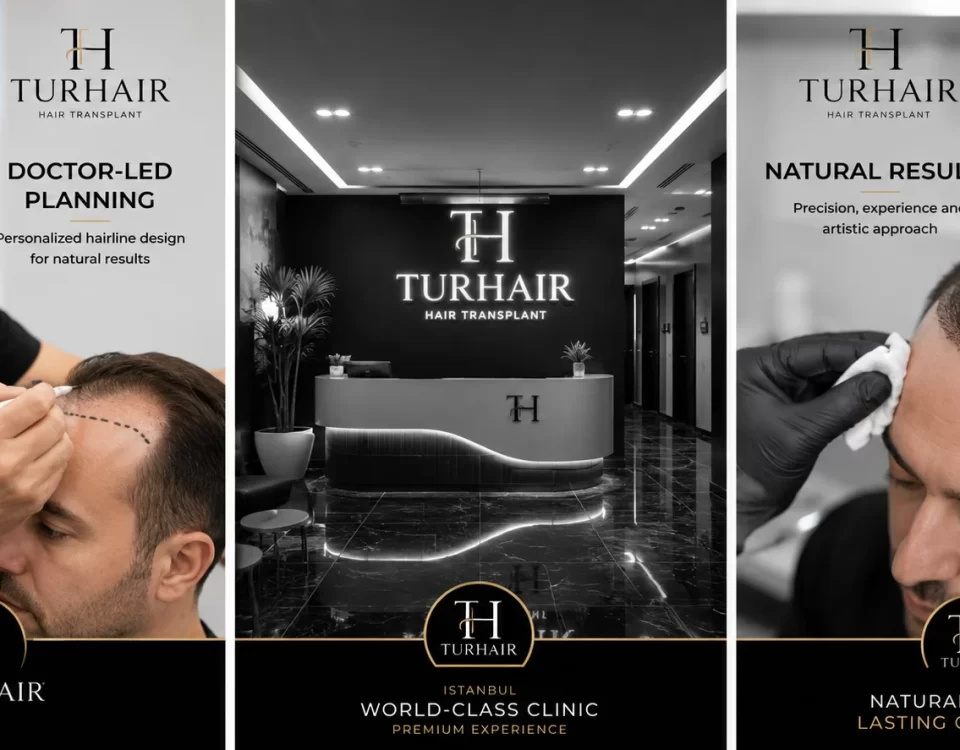
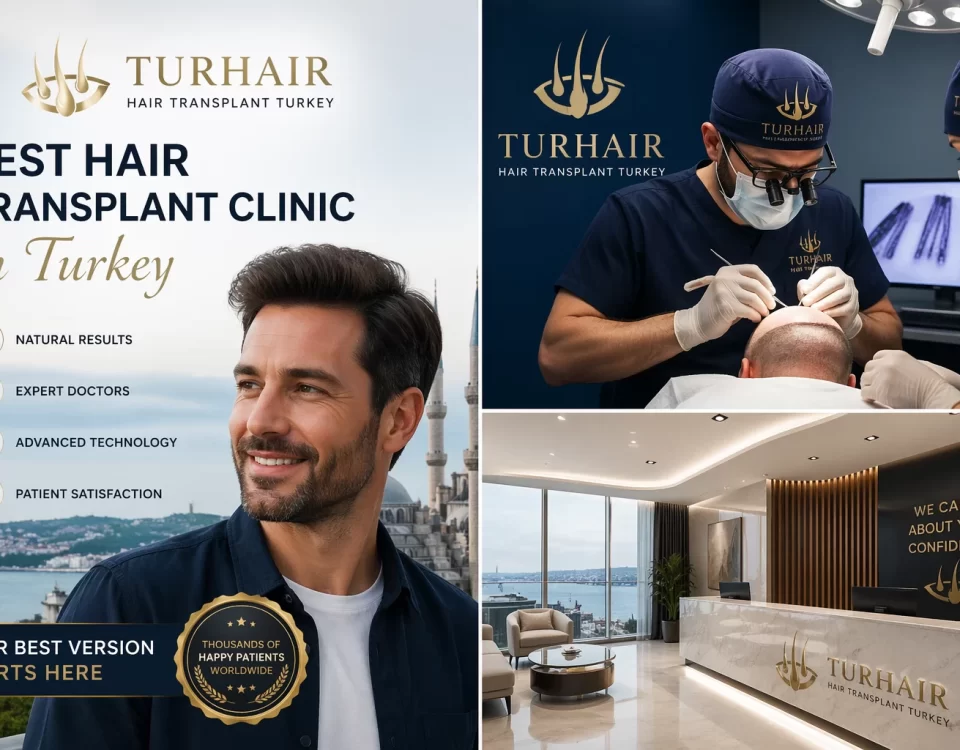
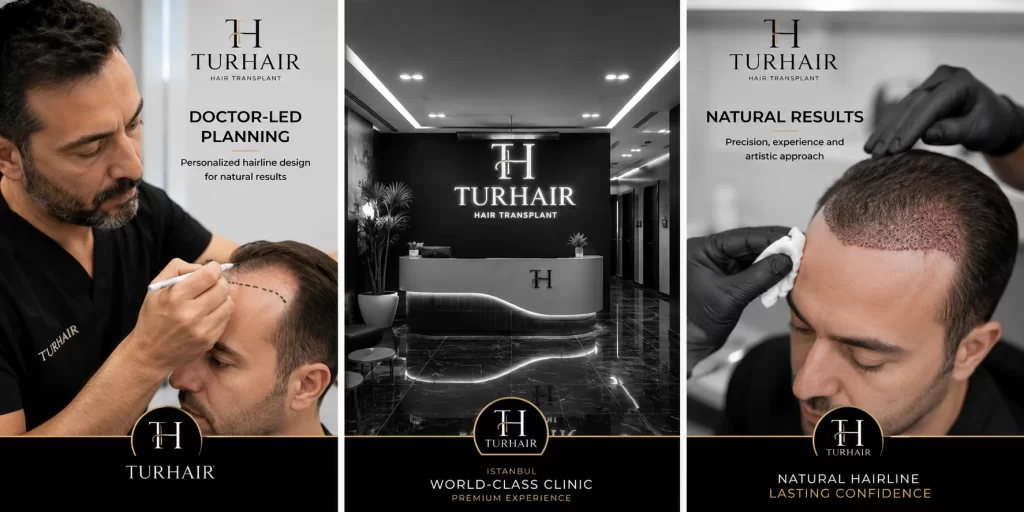
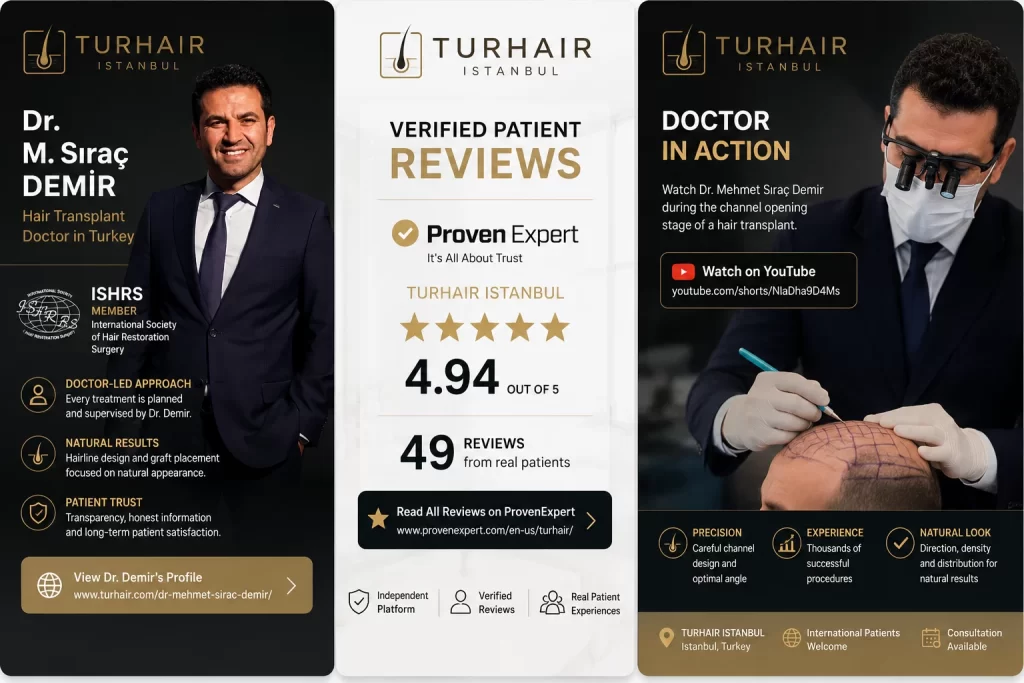
At TurHair Istanbul, the treatment philosophy focuses on identifiable medical responsibility, individualized surgical planning and preservation of the patient’s donor resources. The clinic is associated with Dr. Mehmet Sıraç Demir, allowing patients to research the responsible physician before travelling to Turkey.
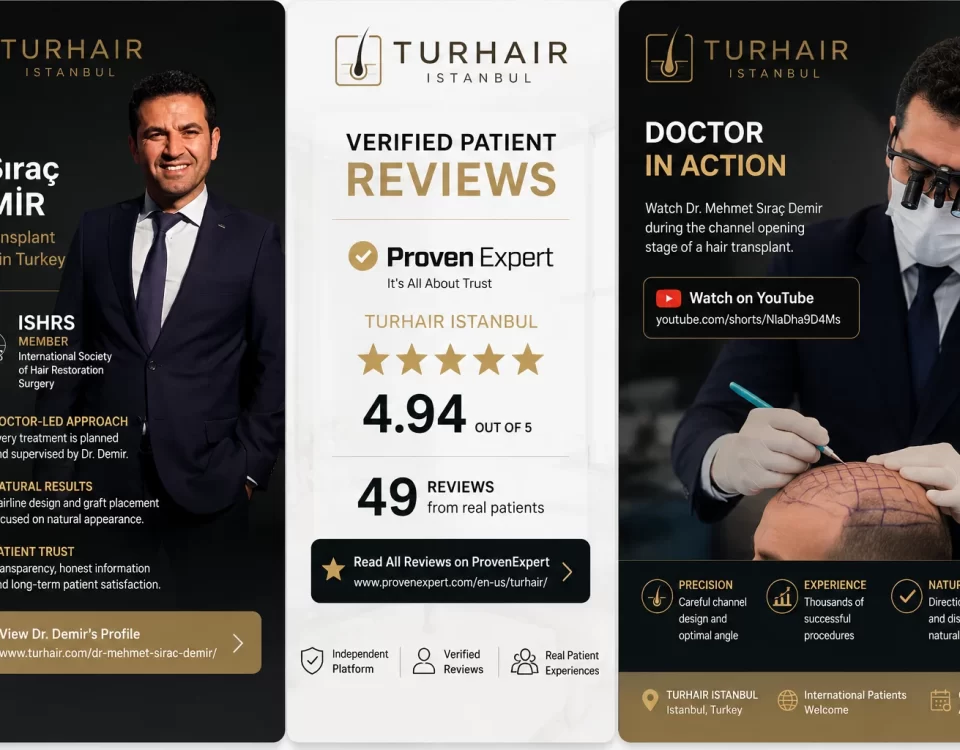
Dr. Demir has more than 18 years of professional experience in hair restoration and is presented by TurHair as a member of the International Society of Hair Restoration Surgery (ISHRS). Professional credentials should always be considered alongside direct medical involvement, appropriate surgical planning and realistic patient expectations.
Unlike approaches that emphasize the largest possible number of operations, TurHair schedules a maximum of one or two patients per day. This model is intended to support individual attention, organized medical supervision and clear communication throughout the treatment process.
TurHair also emphasizes the importance of preserving donor capacity. The objective is not to extract as many grafts as possible, but to use an appropriate number according to the patient’s donor characteristics, recipient needs and long-term hair-loss pattern.
Dr. Mehmet Sıraç Demir is clearly identified as the physician associated with the treatment process.
A maximum of one or two patients per day supports personalized treatment organization.
Donor preservation and realistic graft distribution are central considerations.
What Does Dr. Mehmet Sıraç Demir Personally Perform?
One of the most important questions patients should ask before choosing a hair transplant clinic is which stages are performed by the responsible physician and which stages are performed by the surgical team.
At TurHair, Dr. Demir is involved in medical planning and supervision. In the VIP treatment plan, he personally designs the frontal hairline and opens the recipient channels. Follicular extraction and implantation are performed by experienced members of the surgical team under medical supervision.
The exact treatment technique and responsibilities should be confirmed according to the selected package and individual surgical plan. Transparency about these stages allows patients to understand what they are purchasing before arriving in Istanbul.
TurHair Hair Transplant Prices in Turkey — 2026
TurHair offers three treatment packages designed to provide different levels of physician involvement and technique selection. Patients should compare the medical features of each package rather than making a decision based only on hotel category or advertised graft capacity.
| Package | Price | Medical Features | Hotel |
|---|---|---|---|
| STANDARD | €2,500 | FUE under doctor supervision | 4-star |
| VIP | €3,000 | Doctor-designed hairline and doctor-performed recipient channel opening | 4- or 5-star |
| VIP PLUS | €3,500 | Premium treatment plan with Sapphire FUE or DHI options | 5-star |
Packages include two nights of hotel accommodation, airport transfers, postoperative support and additional services according to the selected treatment plan. The final technique and number of grafts depend on medical evaluation.
Although TurHair can perform procedures involving up to approximately 5,000 grafts in medically suitable cases, this number represents an upper capacity rather than a standard treatment target. Patients with smaller recipient areas or limited donor resources may require substantially fewer grafts.
TurHair Compared With a High-Volume Clinic Model
Patients comparing hair transplant clinics in Turkey often focus on package prices and promotional photographs. However, the medical structure behind the procedure deserves equal attention.
The following table compares TurHair’s stated treatment approach with characteristics that patients may encounter in some high-volume clinic models. It is an illustration of different operating approaches, not an independently verified assessment of specific competing providers.
| Factor | TurHair Istanbul | Potential High-Volume Model |
|---|---|---|
| Doctor Identity | Dr. Mehmet Sıraç Demir identified | Doctor may be less prominent than clinic brand |
| Daily Patients | Maximum 1–2 patients | Multiple simultaneous procedures may be scheduled |
| Medical Planning | Individual donor and recipient assessment | Standardized workflows may be used |
| Doctor Involvement | Defined according to package | Level of direct involvement may vary |
| Graft Philosophy | Appropriate graft number and donor preservation | Marketing may emphasize maximum graft packages |
| Technique | FUE, Sapphire FUE or DHI according to plan | Technique selection depends on provider |
A larger clinic is not automatically inferior, and a smaller clinic is not automatically superior. What matters is the quality of medical care, transparency of surgical responsibilities and suitability of the treatment plan.
Why Maximum Graft Numbers Can Be Misleading
Many international patients begin their research by comparing graft numbers. A clinic advertising 5,000 grafts may appear more attractive than one recommending 3,000. However, graft quantity alone does not determine the quality of a hair transplant.
The number of grafts required depends on the size of the recipient area, existing hair density, hair thickness, curl, colour contrast and desired coverage. A patient with thick, curly hair may achieve a different visual result from a patient with fine, straight hair, even when both receive the same number of grafts.
Donor extraction must also be distributed carefully. Excessive removal from a limited region can produce visible thinning. In patients with advanced baldness, attempting to restore the entire scalp at high density in one session may not be realistic.
A responsible treatment plan should explain the balance between coverage, density and preservation of donor resources. In some cases, prioritizing the frontal third of the scalp may provide a greater cosmetic improvement than spreading grafts thinly across every affected region.
FUE vs Sapphire FUE vs DHI: Which Technique Should You Choose?
The best surgical approach depends on individual characteristics. Patients should understand the terminology before comparing premium packages.
FUE: Follicular unit excision involves extracting individual follicular units from the donor area. The extracted grafts are then implanted into recipient sites according to the surgical plan.
Sapphire FUE: This term generally refers to FUE transplantation in which sapphire blades are used to create recipient sites. The blade material does not independently determine graft survival or guarantee a superior result.
DHI: Direct Hair Implantation commonly involves implanter pens used during the implantation stage. It may be considered in selected situations, including procedures involving existing hair, depending on the clinical plan.
Patients should not assume that the most expensive or newest-sounding technique is automatically the best. Proper diagnosis, graft handling, donor preservation, hairline planning and the experience of the medical team remain essential.
Real Hair Transplant Results and Patient Case Studies
Authentic clinical cases are an important resource when researching hair transplant clinics in Istanbul. Patients should look beyond a single attractive photograph and consider the original hair-loss pattern, number of grafts, donor characteristics and time elapsed since surgery.
Photographs taken under consistent lighting and from comparable angles can help patients understand the development of a result. Frontal hairline images, crown photographs and donor-area views are particularly useful.
It is also important to understand that outcomes vary. Two patients receiving similar graft numbers may experience different visual density because of hair calibre, curl, scalp contrast, healing and individual growth characteristics.
Explore documented hair transplant procedures, graft numbers and before-and-after photographs.
Hair Transplant Recovery and Long-Term Results
Recovery is a gradual process. During the first days after surgery, patients may experience redness, swelling, crusting and temporary discomfort. The medical team should provide instructions about washing, sleeping positions, physical activity and protection of the treated area.
Temporary shedding of transplanted hair shafts is common during the early recovery period. This does not necessarily mean the follicles have failed. New growth typically develops gradually over subsequent months, although the exact timeline varies.
Many patients begin noticing meaningful cosmetic improvement after several months. Substantial results are often evaluated around nine to twelve months, while some areas may continue maturing afterward.
Patients should understand that a transplant does not stop future loss of native hair. The possibility of continued thinning should therefore influence the initial hairline design, graft allocation and long-term treatment strategy.
Frequently Asked Questions About Hair Transplant Clinics in Turkey
1. What is the best hair transplant clinic in Turkey?
There is no universally verified clinic that is best for every patient. The appropriate choice depends on the responsible physician, medical safety, donor characteristics, treatment planning and individual expectations.
2. How much does a hair transplant cost in Turkey in 2026?
Prices vary by provider, technique, physician involvement and included services. TurHair’s listed packages range from €2,500 to €3,500.
3. Is Istanbul a good destination for hair transplantation?
Istanbul has an established international hair restoration sector. However, standards vary between providers, so patients should evaluate the physician, clinical facilities and surgical responsibilities carefully.
4. Is DHI better than FUE?
Neither technique is automatically superior for every patient. The choice depends on recipient-area requirements, donor characteristics and the medical plan.
5. How many grafts are needed?
Some patients may require approximately 2,000–2,500 grafts, while others may need 3,500–4,500 or a staged treatment strategy. Final requirements must be determined through medical assessment.
6. Can every patient receive 5,000 grafts?
No. Donor capacity differs significantly. A 5,000-graft procedure may be unsuitable for patients with limited donor density or smaller recipient requirements.
7. Does the doctor perform the procedure at TurHair?
Dr. Demir is involved in medical planning and supervision. In the VIP plan, he personally designs the hairline and opens recipient channels. Extraction and implantation are performed by the surgical team under supervision.
8. Can a hair transplant stop future hair loss?
No. Hair transplantation redistributes suitable follicles but does not automatically stop androgenetic alopecia affecting native hair.
9. When will the final result become visible?
Growth develops gradually. Substantial results are often assessed around nine to twelve months, although individual timelines vary.
10. What should I ask before booking a hair transplant?
Ask who the responsible doctor is, which surgical stages they personally perform, how the graft number is calculated, how the donor area will be protected and what postoperative support is available.
Final Verdict: Choosing Among the Top 10 Hair Transplant Clinics in Turkey
The most important lesson for patients researching the Top 10 Hair Transplant Clinics in Turkey is that no commercial ranking can replace an individualized medical evaluation. Clinic reputation, online reviews, pricing and photographs can help patients create a shortlist, but they should not be the only factors influencing a surgical decision.
The responsible physician, level of medical involvement, donor preservation strategy, hairline planning, realistic graft requirements, documented outcomes and long-term follow-up deserve greater attention.
At TurHair Istanbul, the stated treatment philosophy emphasizes transparent doctor identity, personalized planning and responsible use of donor resources. Patients should understand the exact surgical responsibilities and proposed treatment before confirming their procedure.
Do not choose a hair transplant simply because a clinic has the biggest name. Choose a treatment plan that makes medical sense for your present and future hair-loss pattern.
YOUR FUTURE MATTERS.
Know your doctor. Protect your donor area. Plan for the future.
Hair Transplant Surgeon | TurHair Istanbul
Medical reviewer: Dr. Mehmet Sıraç Demir. Review and approval should be confirmed before publication.
Published: October 9, 2026
Editorial Standard: Educational comparison based on ten clinic-selection criteria. This article does not represent an independently verified ranking of competing providers.
Medical disclaimer: This article is intended for general educational purposes and does not replace an individual medical consultation. Hair transplant suitability, graft requirements and surgical techniques must be assessed by an appropriately qualified medical professional.