Best Hair Transplant in Istanbul
August 18, 2026
Best Hair Transplant in Turkey for Black Men
August 18, 2026Afro Hair Transplant Turkey: Complete Guide to Afro-Textured Hair Restoration
Afro hair transplant in Turkey has become an increasingly searched treatment option for men and women with Afro-textured, curly or tightly coiled hair who are considering surgical hair restoration. However, an Afro hair transplant should not simply be approached in the same way as a standard straight-hair FUE procedure. The visible curl above the scalp is only part of the difference. In many patients with African, Afro-Caribbean, mixed or tightly curled hair types, the follicle itself can also follow a curved path underneath the skin. This anatomical characteristic can make graft extraction, donor management and implantation considerably more demanding.
Turkey, and particularly Istanbul, has developed into one of the world’s major destinations for hair transplantation. Patients travel from the United Kingdom, United States, Canada, France, Germany, the Netherlands, Scandinavia, Africa and the Middle East for procedures including FUE, Sapphire FUE and DHI. Yet patients researching an Afro hair transplant in Turkey should look beyond package prices and advertised graft numbers. Experience with Afro-textured hair, physician involvement, donor-area planning, graft extraction strategy, hairline design and the clinic’s ability to adapt surgical technique to curly follicles are particularly important.
The goal of Afro hair restoration is not simply to implant as many grafts as possible. A successful procedure should preserve the donor area, minimize follicular damage, create appropriate density, respect natural curl direction and design a hairline that suits the patient’s facial structure and ethnic characteristics. These factors require individualized surgical planning rather than a standardized production-line approach.
AFRO HAIR REQUIRES AFRO-SPECIFIC PLANNING
The visible curl is only part of the challenge. The follicle beneath the skin may also curve, making precise extraction and donor management essential.
What Is an Afro Hair Transplant?
An Afro hair transplant is a surgical hair restoration procedure performed on patients whose hair has Afro-textured, tightly curled, coiled or significantly curved characteristics. Healthy hair follicles are generally extracted from genetically resistant areas of the scalp—most commonly the back and sides of the head—and transplanted into areas affected by hair loss.
The general biological principle is the same as in other modern hair transplant procedures: follicles that are genetically resistant to androgenetic hair loss retain many of their original characteristics after transplantation. However, the technical process can be different because Afro-textured follicles may curve beneath the skin rather than travelling in a relatively straight line from the scalp surface to the follicular root.
This means that what appears to be a straightforward extraction from the surface can become technically demanding underneath the skin. If the punch direction does not correctly follow the follicle’s path, the graft may be transected or damaged. Consequently, clinics performing Afro hair transplantation in Turkey need to understand both the surface characteristics and the subcutaneous structure of curly hair.
The term Afro hair transplant can include patients with a broad range of hair patterns. Not every patient of African ancestry has the same follicular curvature, just as not every patient from another ethnic background has perfectly straight follicles. Hair characteristics exist on a spectrum. For this reason, ethnicity alone should never determine the surgical plan. The patient’s actual donor characteristics must be examined individually.
Why Afro Hair Transplants Can Be More Technically Demanding
The fundamental challenge in Afro hair transplantation is follicular curvature. Straight hair follicles tend to descend into the skin in a relatively predictable direction. Tightly curled hairs can follow a curved or even C-shaped course beneath the scalp.
During Follicular Unit Extraction, commonly known as FUE, the surgeon or extraction team uses a small punch to separate individual follicular units from the surrounding tissue. With straight follicles, the visible direction of the hair shaft often provides a useful indication of the follicle’s path below the scalp. With Afro-textured hair, this relationship can be less predictable.
If the instrument advances in a direction that does not follow the follicular curve, transection can occur. Transection means that part of the follicle is accidentally cut during extraction. A high transection rate reduces the number of viable grafts available for transplantation and may compromise donor-area efficiency.
This is one reason why an experienced clinic may begin cautiously when treating a new Afro hair patient. Initial extraction testing can help determine how the patient’s follicles behave beneath the scalp before proceeding with a larger number of grafts.
Curvature Below the Skin
The most important difference is often invisible before surgery. A patient may see tightly curled hair above the scalp, but the medical team needs to understand the direction and shape of the follicle underneath the skin. Curvature can vary from one region of the donor area to another and even between individual follicular units.
Risk of Follicular Transection
Because the follicle can curve away from the apparent surface direction, extraction requires careful control of punch angle, depth and movement. Aggressive or overly rapid extraction can increase the risk of damaging grafts.
Donor Density Assessment
Afro-textured hair can sometimes create strong visual coverage even when the absolute number of follicular units per square centimetre is lower than in some straight-hair patients. The curl and diameter of the hair shaft contribute significantly to perceived density.
This can be an advantage aesthetically, because fewer grafts may sometimes create excellent visual coverage. At the same time, the medical team must avoid assuming that apparent surface fullness means an unlimited donor supply. Accurate donor measurement remains essential.
Implantation Angle and Direction
Afro hair does not simply grow straight out of the scalp. Curl direction interacts with implantation angle to determine the final appearance. Especially around the frontal hairline, the channels or recipient sites need to be designed so that transplanted hairs integrate naturally with existing hair.
Afro Hair Transplant Turkey: Why Patients Travel to Istanbul
Turkey has become one of the most established international destinations for hair transplantation, and Istanbul is at the centre of the country’s hair restoration industry. Thousands of international patients travel to the city each year for FUE and DHI procedures.
There are several reasons why patients researching Afro hair transplant Turkey options consider Istanbul. These include access to experienced hair transplant doctors, established surgical teams, modern private hospitals and clinics, international patient coordinators, competitive prices compared with the UK or United States and treatment packages that may include accommodation and airport transfers.
However, the number of clinics operating in Istanbul also creates a challenge for patients. Clinics vary significantly in structure, physician involvement, daily patient volume, surgical protocols and medical oversight.
A lower price alone does not indicate whether a clinic has meaningful experience with Afro-textured follicles. Patients should therefore evaluate exactly who will perform the important stages of the procedure and how the clinic manages technically challenging donor areas.
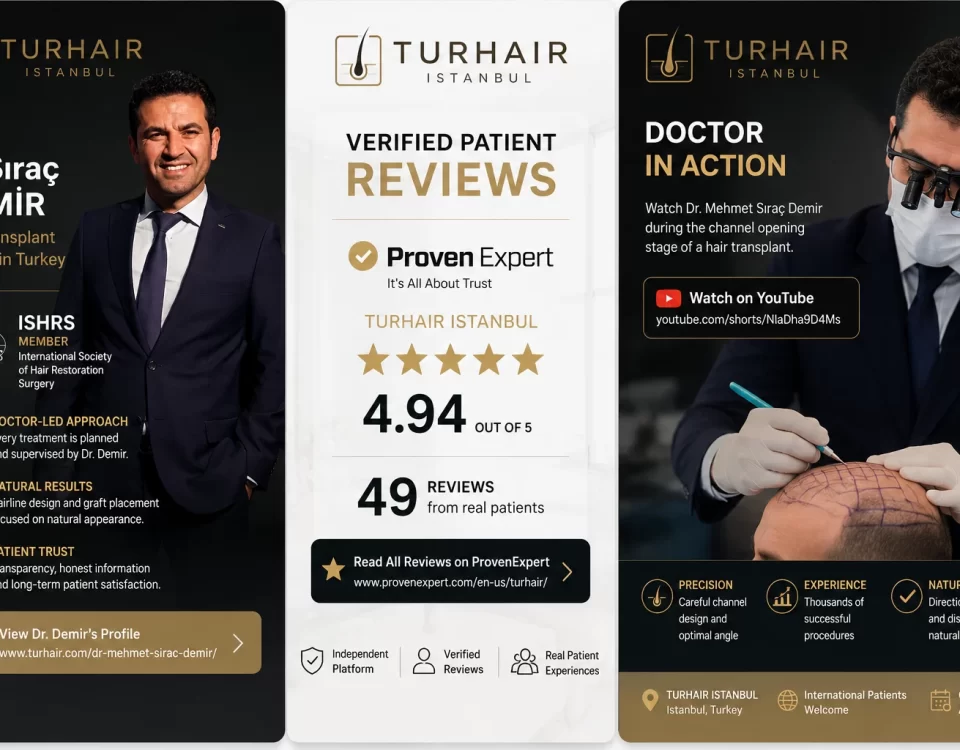
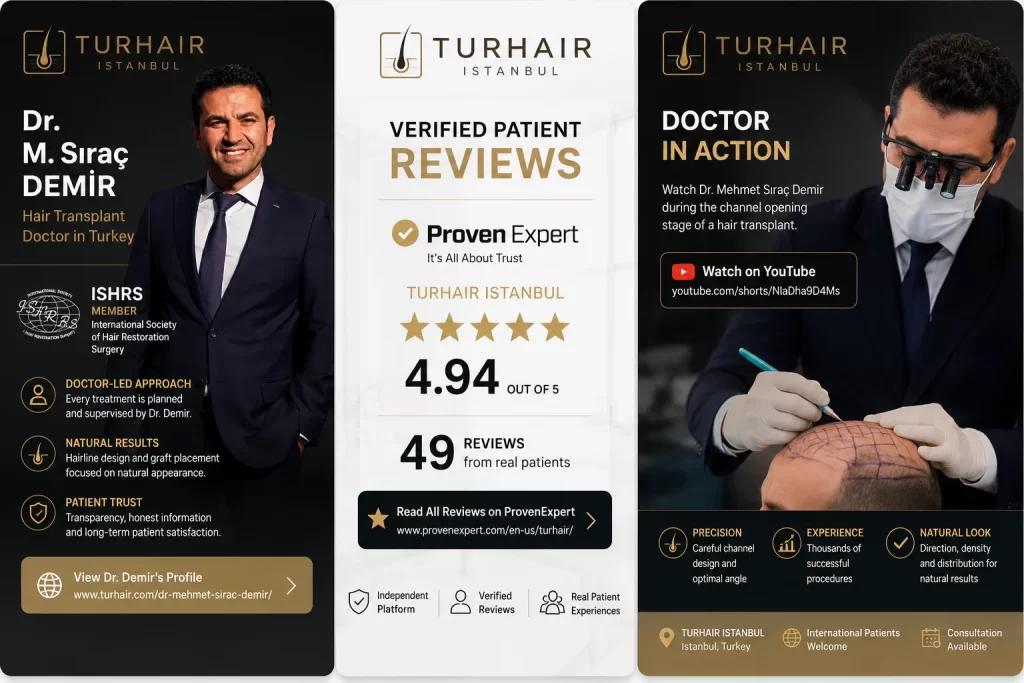
Why TurHair & Dr. Demir Are Different for Afro Hair Transplant in Turkey
Afro hair should not be treated with a standard production-line approach. Curved follicles, donor preservation, hairline direction and extraction technique require individualized medical planning.
“The goal is not to extract the highest possible number of grafts. The goal is to extract the right grafts, preserve the donor area and build a natural result around the patient’s individual Afro hair characteristics.”
Choosing an Afro hair transplant clinic in Turkey requires more than comparing prices, hotel packages or advertised graft numbers. Afro-textured hair can present additional technical challenges because the follicle beneath the scalp may curve in a different direction from the visible hair shaft. This means that donor extraction can require greater precision, careful testing and an experienced surgical strategy.
At TurHair, the approach is built around individualized planning and the medical responsibility of Dr. Mehmet Sıraç Demir. Rather than treating every patient with the same graft target or identical hairline template, the procedure is adapted according to donor density, follicular curvature, hair calibre, degree of hair loss, facial proportions and long-term donor preservation.
1. Afro Hair Requires a Different Extraction Strategy
| Comparison | TurHair & Dr. Demir Approach | Typical Standardized High-Volume Model |
|---|---|---|
| Follicular Curvature | Extraction strategy is adapted after evaluating how the individual patient’s follicles behave beneath the skin. | A more standardized extraction technique may be applied across many different hair types. |
| Initial Extraction | Careful initial graft extraction can help determine the correct direction, punch approach and difficulty level. | Extraction may begin immediately according to a routine workflow. |
| Transection Awareness | Particular attention is paid to avoiding unnecessary follicular transection in curved Afro grafts. | Speed and graft targets may sometimes dominate the workflow. |
| Technique Adjustment | The plan can be modified during surgery according to the patient’s actual follicular anatomy. | Less flexibility may be available when multiple operations are run simultaneously. |
AFRO HAIR IS NOT “STANDARD FUE WITH CURLY HAIR.”
The anatomy below the scalp matters as much as the curl visible above it.
2. Doctor-Led Hairline and Recipient-Site Planning
One of the most important differences between hair transplant clinics is not the name of the technique but who makes the critical medical and aesthetic decisions. A clinic can advertise FUE, Sapphire FUE or DHI, but these labels do not tell a patient who actually evaluates the donor area, designs the hairline or determines the angle and distribution of transplanted grafts.
At TurHair, Dr. Mehmet Sıraç Demir is directly involved in the medical and aesthetic planning. For appropriate packages, the hairline and recipient channels are designed by the doctor. This becomes particularly relevant in Afro hair because the final appearance is influenced by both implantation direction and the natural curl of the transplanted strand.
| Critical Stage | TurHair & Dr. Demir | Why It Matters for Afro Hair |
|---|---|---|
| Donor Evaluation | Medical planning is based on the individual donor rather than a universal graft promise. | Curly hair can look visually dense even when the underlying donor capacity must still be measured carefully. |
| Hairline Design | Designed according to facial proportions, age, existing hairline characteristics and future hair loss. | A generic straight or excessively low hairline can look unnatural and consume unnecessary grafts. |
| Channel Direction | Recipient-site angle and distribution are planned to integrate with the patient’s natural growth pattern. | Afro curl can magnify poor directional planning once the hair matures. |
| Density Strategy | Density is allocated according to visual priority and donor limitations. | Afro hair often provides strong visual coverage without requiring identical density to straight-hair cases. |
3. Donor Preservation Comes Before Marketing Numbers
Some Turkish clinics heavily promote very high graft numbers. This can lead patients to believe that a 5,000-graft procedure is automatically better than a 3,000-graft procedure. For Afro patients, this approach can be particularly misleading.
The donor area is a finite biological resource. Every follicular unit extracted from the donor is permanently moved to another location. The correct question is therefore not “How many grafts can we possibly remove?” but “How many grafts can we safely use while maintaining a healthy-looking donor area?”
TurHair packages may include treatment up to a defined graft maximum, but that maximum is not treated as an automatic target. Dr. Demir’s planning is based on what the individual donor area can safely provide.
| Donor Philosophy | TurHair | Graft-Maximization Approach |
|---|---|---|
| Main Goal | Balance coverage, graft survival and long-term donor preservation. | Reach the largest advertised graft number. |
| Graft Count | Determined according to donor capacity and recipient need. | May be strongly influenced by package marketing. |
| Afro Visual Density | Curl and calibre are considered when calculating the amount of coverage required. | The same numerical density targets may be applied to different hair types. |
| Future Surgery | Future progression of hair loss is considered when preserving donor reserves. | The first procedure may consume a disproportionate amount of donor supply. |
MORE GRAFTS ≠ BETTER SURGERY
For Afro hair transplantation, an intelligent 2,800–3,500 graft strategy can be more appropriate than forcing 5,000 grafts from a donor area that should not provide them.
4. Lower Patient Volume Allows More Individualized Planning
Hair transplantation in Istanbul includes everything from boutique physician-led practices to very large centres operating on a high-volume model. Patient volume by itself does not prove whether a clinic is good or bad, but it can influence how much time the responsible physician can personally dedicate to each procedure.
TurHair is positioned around a lower-volume model, with a limited number of patients rather than mass simultaneous production. For a technically demanding Afro case, this allows the surgical plan to be adjusted when extraction characteristics differ from what was expected from photographs.
| Clinic Structure | TurHair Model | High-Volume Model |
|---|---|---|
| Daily Patient Volume | Limited patient volume allows greater focus on individual planning. | Many patients may undergo procedures simultaneously. |
| Afro Extraction Changes | The strategy can be adapted according to actual extraction behaviour. | Standard operating schedules can leave less room for case-specific adjustments. |
| Doctor Access | The responsible doctor is identifiable and involved in medical planning. | Doctor involvement may vary significantly between clinics and packages. |
| Hairline Individualization | Designed for the patient rather than copied from a standard template. | Standardized designs may be used when workflow speed is prioritized. |
5. The Difference Is Not FUE vs DHI — It Is Who Plans and Executes the Procedure
Patients searching for an Afro hair transplant in Turkey often become focused on whether they should choose FUE, Sapphire FUE or DHI. These techniques can all have a role in modern hair transplantation, but none of them automatically guarantees a natural result.
In Afro hair, the difficult part frequently begins before implantation: safely harvesting a curved follicular unit from the donor area. A DHI implanter pen cannot correct a graft that was already damaged during extraction. Similarly, a sapphire blade does not compensate for poor donor management or an unnatural hairline design.
TurHair therefore places the emphasis on medical planning, correct extraction, donor protection, channel direction and patient-specific technique selection, rather than promoting one instrument as universally superior.
| Question | TurHair & Dr. Demir | Why This Is Important |
|---|---|---|
| Is DHI automatically better for Afro hair? | No. Technique is selected according to the individual case. | Implantation method does not eliminate the challenge of curved follicle extraction. |
| Is Sapphire FUE automatically better? | No. Sapphire refers mainly to the recipient-site blade, not the quality of donor extraction. | Afro-specific extraction experience remains essential. |
| What determines the method? | Donor anatomy, recipient area, graft requirements, existing hair and physician assessment. | No single technique is ideal for every patient. |
| What is prioritized? | Natural design, follicular integrity and donor preservation. | Technique names should support the plan rather than replace medical judgment. |
THE TOOL DOES NOT CREATE THE RESULT.
THE SURGICAL PLAN DOES.
FUE, Sapphire and DHI are techniques. The quality of an Afro hair transplant depends on how those techniques are selected and applied to the individual patient.
Why This Matters Specifically for Afro Patients
Afro-textured hair can offer an important aesthetic advantage: its curl can create excellent visual coverage. At the same time, that same curl can make donor extraction more technically demanding. This combination means that Afro hair transplantation rewards careful planning and penalizes aggressive, standardized surgery.
For this reason, TurHair and Dr. Mehmet Sıraç Demir focus on five central principles:
- Understand the donor before chasing a graft number.
- Adapt extraction to the patient’s actual follicular curvature.
- Use physician-led hairline and recipient-site planning.
- Preserve enough donor supply for the patient’s future.
- Select FUE, Sapphire FUE or DHI according to the case—not according to marketing.
TurHair vs Other Afro Hair Transplant Clinics in Turkey: Summary
| Criteria | TurHair & Dr. Mehmet Sıraç Demir | What Patients Should Verify Elsewhere |
|---|---|---|
| Doctor Identity | Responsible physician is clearly identified. | Ask exactly which doctor is medically responsible. |
| Afro Planning | Extraction is approached according to curved follicular anatomy. | Ask whether Afro hair is routinely treated or only occasionally accepted. |
| Hairline | Individualized according to facial structure, curl and long-term planning. | Ask who physically designs the hairline. |
| Recipient Channels | Physician involvement available according to the selected treatment package. | Ask who creates channels and determines angle/direction. |
| Graft Philosophy | Maximum package allowance is not treated as a mandatory graft target. | Be cautious if the same graft number is promised to almost everyone. |
| Donor Preservation | Long-term donor appearance and future options are considered. | Ask how overharvesting is prevented. |
| Technique Selection | FUE, Sapphire FUE or DHI according to individual assessment. | Avoid assuming one branded method is automatically superior. |
| Patient Volume | Limited-volume approach intended to support individualized planning. | Ask how many simultaneous operations are performed daily. |
AFRO HAIR DESERVES INDIVIDUAL SURGICAL PLANNING
At TurHair, the objective is not mass production or the highest possible graft number. The objective is to create a medically appropriate plan around the individual patient’s Afro hair anatomy, donor capacity and long-term appearance.
Dr. Mehmet Sıraç Demir & TurHair — Plan the donor. Respect the curl. Design for the future.
Afro Hair Transplant Turkey vs Standard Hair Transplant
| Factor | Afro Hair | Straight / Less Curly Hair |
|---|---|---|
| Follicle Path | Often curved below the skin | Generally more linear |
| Extraction Difficulty | Can be technically demanding | Often more predictable |
| Transection Risk | Potentially higher if technique is not adapted | Usually lower with experienced extraction |
| Visual Coverage | Curl may create strong visual volume | Depends heavily on shaft diameter and graft density |
| Hairline Planning | Must account for curl, direction and ethnic characteristics | Direction and facial proportions remain important |
| Experience Required | Specific experience with curly follicles strongly preferred | General FUE experience may be sufficient for routine cases |
Who Can Be a Good Candidate for Afro Hair Transplantation?
Not everyone experiencing hair loss should automatically undergo a transplant. A proper candidate assessment is particularly important for Afro hair because donor limitations, hair-loss pattern and follicular anatomy can affect the treatment plan.
A good candidate generally has a stable and usable donor area, realistic expectations and a type of hair loss that can reasonably be treated surgically. The most common indication is androgenetic alopecia, also known as male or female pattern hair loss.
Patients should understand that a hair transplant redistributes existing follicles. It does not create new follicles. Every graft placed in the frontal area, temples or crown comes from another donor region. The donor supply therefore needs to be managed carefully over the patient’s lifetime.
Common Candidate Characteristics
- Androgenetic hair loss affecting the frontal region, temples, mid-scalp or crown
- A donor area with adequate density and healthy follicles
- Hair loss that has been appropriately evaluated
- No uncontrolled scalp disease in the donor or recipient area
- Realistic expectations regarding density and coverage
- An understanding that future hair loss may continue
- Sufficient donor supply for the desired restoration plan
Patients with advanced hair loss may still be candidates, but their surgical strategy often needs to prioritize the most visually important areas rather than attempting maximum density across the entire scalp.
Conditions That Must Be Distinguished From Male Pattern Hair Loss
One of the most important aspects of Afro hair transplantation is proper diagnosis. Not every form of hair loss in Afro-textured hair is caused by androgenetic alopecia.
Different forms of scarring alopecia, traction-related hair loss and inflammatory scalp conditions can affect patients with tightly curled hair. Performing transplantation into an active disease process may lead to poor growth or continued hair loss.
This is why a medical assessment should come before graft counting. A clinic should not treat every patient who sends photographs as automatically suitable for surgery.
Traction Alopecia
Traction alopecia may develop when repeated tension is placed on the hair through certain hairstyles. Depending on the duration and severity, early traction-related loss can sometimes improve when the source of tension is removed, while longstanding cases may lead to permanent follicular damage.
Where the condition is stable and the follicles have been permanently lost, transplantation may be considered after appropriate medical assessment.
Scarring Alopecia
Scarring alopecias destroy follicles through inflammatory processes and replace them with scar tissue. These conditions require careful diagnosis. Hair transplantation may be inappropriate when the disease remains active.
Central Centrifugal Cicatricial Alopecia
Central centrifugal cicatricial alopecia, often abbreviated as CCCA, is an important diagnostic consideration, particularly in women of African ancestry. Because it is a scarring form of hair loss, medical control and assessment of disease activity are essential before surgical restoration is considered.
A responsible clinic should recognize when dermatological evaluation is more appropriate than immediately scheduling surgery.
Understanding the Afro Donor Area
The donor area is the foundation of every hair transplant. It generally includes the back and sides of the scalp, where follicles are relatively resistant to the hormonal process responsible for common pattern hair loss.
With Afro hair, visual density can sometimes be deceptive. Curly hairs naturally overlap and occupy more visual space than straight hairs. A donor area may therefore look extremely dense from a distance even though the measurable number of follicular units is more moderate.
For this reason, donor planning should not rely only on photographs or visual inspection. During an in-person examination, the medical team can assess density, hair shaft diameter, follicular groupings, curl characteristics, scalp flexibility, miniaturization and the dimensions of the safe donor zone.
Important: A dense-looking Afro donor area does not mean unlimited grafts are available. The donor zone is a finite biological resource and should be managed conservatively.
Why “Maximum Grafts” Should Not Be the Main Goal
Patients comparing hair transplant clinics in Turkey frequently encounter advertisements promoting 4,000, 5,000 or even larger graft numbers. This can create the impression that more grafts automatically mean a better result.
That is not how responsible donor management works.
The correct number of grafts depends on the patient’s donor capacity, recipient area, degree of hair loss, hair characteristics, age, future hair-loss risk and aesthetic goals. Extracting the largest possible number simply because a package allows it may unnecessarily weaken the donor area.
This point can be especially important in Afro hair transplantation because individual graft extraction may be more technically demanding. The aim should be to obtain an appropriate number of viable grafts with minimal donor damage—not to chase a marketing number.
Patients should ask whether the clinic determines graft numbers after evaluating the donor area or whether the same advertised number is routinely offered to almost everyone.
Afro Hair and Visual Density
One potential aesthetic advantage of tightly curled hair is its ability to create substantial visual coverage. A curved hair shaft occupies more three-dimensional space and may overlap neighbouring hairs. This can make a transplanted region appear fuller than the same number of straight hairs under comparable conditions.
Hair shaft diameter also matters. Coarser hair generally produces greater visual density than fine hair. Skin-to-hair colour contrast can influence the perception of coverage as well.
For this reason, graft numbers alone are not an accurate predictor of the final result. Two patients receiving the same number of grafts may achieve very different visual density depending on:
- Hair curl
- Hair calibre
- Follicular unit composition
- Hair-to-skin colour contrast
- Recipient area size
- Placement angle
- Existing native hair
- Graft survival
FUE for Afro Hair Transplant in Turkey
FUE hair transplantation is one of the most widely used methods for Afro hair restoration in Turkey. FUE stands for Follicular Unit Extraction. During the procedure, individual follicular units are extracted from the donor area and later transplanted into the recipient region.
The major advantage of FUE is that it does not require removal of a long strip of scalp. Instead, numerous small circular extraction sites are created throughout the donor zone.
In Afro-textured hair, the difficult part is not the concept of FUE itself but following the direction of the curved follicle beneath the skin.
Step 1: Donor Evaluation
The donor region is examined to estimate available density and identify the safest extraction zone. Hair calibre, curl and follicular grouping should also be evaluated.
Step 2: Test Extractions
In technically challenging cases, cautious initial extractions may help the surgical team understand the subcutaneous curvature of the patient’s follicles. Adjustments can then be made to punch size, angle and extraction technique.
Step 3: Follicular Unit Extraction
Individual grafts are separated from the surrounding tissue and carefully removed. The goal is to preserve follicular integrity while spreading extraction appropriately across the donor area.
Step 4: Graft Preparation and Preservation
After extraction, grafts must be handled carefully and stored in an appropriate environment until implantation. Trauma, dehydration and excessive time outside the body can negatively affect graft viability.
Step 5: Recipient-Site Creation
The hairline, angles and distribution are planned. Recipient sites or channels are created according to the surgical plan.
Step 6: Implantation
Grafts are inserted into the prepared recipient areas while respecting appropriate distribution and natural direction.
Sapphire FUE for Afro Hair
Sapphire FUE is a commonly marketed variation of FUE in Turkey. The term generally refers to the use of sapphire blades during the recipient-channel creation stage.
Patients should understand that Sapphire FUE does not change the fundamental difficulty of Afro graft extraction. The challenging part of harvesting curved follicles still occurs in the donor region. A sapphire blade used for recipient sites does not automatically make extraction safer.
Therefore, when comparing Sapphire FUE for Afro hair in Turkey, patients should focus on the medical team’s Afro extraction experience rather than assuming that the name of the instrument guarantees better results.
DHI Afro Hair Transplant in Turkey
DHI, usually referred to as Direct Hair Implantation, uses an implanter device to insert grafts into the recipient area. It is frequently advertised throughout Turkey and can be appropriate in selected cases.
However, DHI should not be regarded as automatically superior to FUE for Afro-textured hair. The main technical difficulty in an Afro transplant often remains graft extraction. Whether grafts are subsequently inserted using pre-made channels or an implantation pen does not eliminate the need for careful harvesting.
The choice between FUE-style implantation and DHI should therefore depend on the patient’s individual case rather than marketing terminology.
| Method | Potential Role in Afro Hair | Important Consideration |
|---|---|---|
| FUE | Widely used for donor extraction and transplantation | Curved follicle extraction requires experience |
| Sapphire FUE | Sapphire blades may be used for recipient sites | Does not remove the challenge of curved donor follicles |
| DHI | Implanter pen may be used for graft placement | Not automatically better for every Afro patient |
Afro Hairline Design
The frontal hairline is one of the most visually important components of a hair transplant. It frames the face and often determines whether the result appears natural at conversational distance.
Hairline design should not be copied from another patient or produced from a generic template. Afro hairlines can vary considerably between individuals. Some patients naturally have relatively straight frontal contours, while others show subtle irregularities, temple recession patterns or different frontotemporal angles.
A good hairline should account for the patient’s:
- Age
- Facial proportions
- Forehead height
- Natural ethnic characteristics
- Existing hairline remnants
- Temple structure
- Donor supply
- Expected future hair loss
An excessively low hairline can consume a large number of grafts and may become difficult to maintain if surrounding native hair continues to thin. Conservative long-term planning is particularly important in younger patients.
Why Online Hairline Simulations Can Be Misleading
Patients sometimes ask clinics to digitally draw a future hairline or create a Photoshop simulation of what they will look like after surgery. Such images can be visually attractive but should not be confused with a medical prediction.
The final appearance of a hair transplant depends on donor capacity, graft survival, individual healing, hair calibre, curl, density distribution and future hair loss. A digitally created image cannot reliably reproduce these variables.
Hairline design is best finalized after the doctor can directly examine the scalp, donor area and facial proportions. Digital communication can be useful for preliminary assessment, but it cannot completely replace an in-person medical examination.
The Importance of Doctor Involvement
One of the most important questions patients should ask when researching the best Afro hair transplant clinic in Turkey is not simply which method the clinic advertises. It is who is responsible for the medical and aesthetic decisions.
Hair transplantation involves several distinct stages: donor evaluation, surgical planning, hairline design, anesthesia, graft extraction, recipient-site creation and implantation. Different clinics divide these responsibilities differently.
Some clinics follow a high-volume model in which multiple patients undergo surgery simultaneously and large parts of the procedure are delegated. Other clinics operate with lower patient volumes and greater physician involvement.
Patients should ask specifically:
- Who examines the donor area?
- Who determines the appropriate graft number?
- Who designs the hairline?
- Who creates the recipient channels?
- Who performs graft extraction?
- Who implants the grafts?
- How many patients are treated in the clinic each day?
- Is the responsible doctor’s identity clearly disclosed?
This is particularly relevant for technically demanding Afro cases, where extraction strategy may need to be adjusted during the procedure.
TurHair Approach to Afro Hair Transplantation in Turkey
At TurHair, hair transplantation is planned around individualized donor management and physician-led aesthetic decision-making rather than a one-plan-for-every-patient model.
Dr. Mehmet Sıraç Demir evaluates the patient’s hair-loss pattern and donor characteristics and is responsible for the medical and aesthetic planning of the procedure. Hairline design and recipient-channel planning are adapted to the patient’s facial proportions, donor capacity and hair characteristics.
For Afro-textured hair, particular attention is paid to the behaviour of the follicles during extraction. The number of grafts is determined according to what can be safely and realistically harvested rather than using the maximum number advertised in a package as an automatic target.
THE TURHAIR PRINCIPLE
The goal is not to extract the largest possible number of grafts. The goal is to use the donor area intelligently and create the strongest realistic long-term result.
Afro Hair Transplant Turkey Cost
One of the reasons international patients research Turkey is the difference in treatment costs compared with countries such as the United Kingdom and United States. However, the price of an Afro hair transplant can vary significantly depending on the clinic, physician involvement, technique, accommodation package and complexity of the case.
Patients should be cautious about choosing a clinic solely because it offers the lowest price. Hair transplantation permanently removes follicles from the donor area. Poorly planned extraction cannot simply be reversed.
A more useful comparison considers what is actually included in the surgical plan.
| What to Compare | Why It Matters |
|---|---|
| Doctor Involvement | Determines who is responsible for critical medical and aesthetic decisions |
| Afro Hair Experience | Curved follicles can require modified extraction technique |
| Patient Volume | Very high daily volume may influence physician availability |
| Donor Assessment | Prevents unnecessary overharvesting |
| Hairline Planning | Strongly affects natural appearance |
| Aftercare | Clear postoperative guidance supports appropriate healing |
TurHair Hair Transplant Packages
TurHair offers several treatment packages depending on the level of physician involvement and the selected surgical approach. Final suitability and technique are determined after medical assessment.
| Package | Price | Main Features |
|---|---|---|
| STANDARD | €2,500 | FUE, up to 5,000 grafts according to donor suitability, doctor supervision, hotel, transfers, medication/care products and patient assistance. |
| VIP | €3,000 | Doctor-designed hairline and recipient channels, FUE treatment, PRP and package services. |
| VIP PLUS | €3,500 | Sapphire FUE with enhanced physician involvement. DHI may be considered depending on individual medical assessment. |
Important: “Up to 5,000 grafts” describes a maximum package allowance and should never be interpreted as a promise that every patient should receive 5,000 grafts. The medically appropriate number depends on the donor area and the individual treatment plan.
How Many Grafts Are Needed for an Afro Hair Transplant?
There is no universal graft number for Afro hair transplantation. A patient with limited frontal recession may need considerably fewer grafts than someone with extensive frontal, mid-scalp and crown loss.
Because curly hair can create substantial visual coverage, graft requirements should be determined according to the recipient area and the patient’s specific hair characteristics rather than copied from straight-hair examples.
Very approximate planning ranges sometimes discussed in hair restoration include:
| Hair Loss Area | Possible Planning Range |
|---|---|
| Small hairline recession | Approximately 1,000–1,800 grafts |
| Hairline + frontal third | Approximately 1,800–2,800 grafts |
| Front + mid-scalp | Approximately 2,500–3,500+ grafts |
| Advanced hair loss | May require 3,500–5,000+ grafts or staged procedures depending on donor capacity |
These numbers are only illustrative. They are not a substitute for medical assessment. Some patients may need fewer grafts and others may require a different strategy entirely.
Can 5,000 Grafts Be Extracted From Afro Hair?
Sometimes yes, but certainly not from every patient.
The possibility of harvesting 5,000 grafts depends on the size and density of the donor zone, follicular anatomy, previous surgeries, hair calibre and the amount of extraction that can be performed without producing visible donor thinning.
In Afro hair, surgical teams also need to consider whether the follicular curvature allows efficient extraction without excessive transection. Attempting to reach a predetermined graft target despite difficult extraction can be counterproductive.
A responsible clinic should be willing to stop below an advertised maximum if continuing would unnecessarily compromise the donor area.
Overharvesting and the Afro Donor Area
Overharvesting occurs when too many follicles are removed from the donor area or when extraction is poorly distributed. The result can be patchiness, visible thinning or an unnatural moth-eaten appearance at the back and sides of the scalp.
This complication is particularly important because donor follicles are finite. Once removed, the donor sites do not produce replacement follicles.
Good FUE extraction therefore requires more than simply removing grafts. The medical team needs to consider extraction spacing and the percentage of follicles being removed from each zone.
Patients planning short hairstyles should discuss this carefully because donor irregularities can be more visible when the hair is worn very short.
Afro Hair Transplant Without Completely Shaving the Head
Some patients ask whether an Afro hair transplant can be performed without shaving the entire scalp. Depending on the case, variations of partial-shave or unshaven procedures may sometimes be possible.
However, long or tightly curled donor hair can make precise extraction more complicated. Shaving the donor area can provide better visualization of hair direction and improve access during FUE extraction.
For Afro-textured follicles, where understanding the direction of the hair is already challenging, adequate visibility may be particularly valuable.
The decision should therefore be based on surgical practicality rather than cosmetic preference alone.
Afro Hair Transplant for the Frontal Hairline
The frontal region is one of the most common areas treated. Hair loss may begin at the temples, gradually progress across the hairline and eventually affect the frontal third.
Because the frontal hairline is constantly visible, natural design is critical. Placing a perfectly straight row of grafts can look artificial, especially when examined closely. Natural hairlines generally contain subtle irregularities and changes in density.
The surgeon also needs to consider what the hair will look like after the transplanted strands begin to curl. The surface appearance months after surgery can differ considerably from the immediate postoperative pattern.
Afro Temple Restoration
Temple restoration can significantly alter facial framing but requires conservative planning. The natural angle of temporal hair is typically flatter and more acute than hair in the central frontal region.
If temporal grafts are implanted at an excessively upright angle, the result can appear unnatural. Afro curl adds another layer of complexity because the eventual direction of the hair depends on both implantation and the natural curvature of the strand.
For this reason, temple work should not simply be treated as an extension of the central hairline.
Afro Crown Hair Transplant
The crown, also known as the vertex, presents a different challenge. Natural crown hair grows in a spiral or whorl pattern, and the area can consume a significant number of grafts.
For patients with advanced hair loss and limited donor capacity, restoring the frontal region generally provides a stronger visual transformation than using the majority of available grafts in the crown.
Afro hair’s natural curl can provide an advantage because good visual coverage may sometimes be achieved with a lower absolute density than would be required with very fine straight hair.
Nevertheless, crown surgery should still be planned according to donor limitations and future hair-loss progression.
Can Women Have an Afro Hair Transplant in Turkey?
Yes. Women with Afro-textured hair may be candidates for surgical hair restoration, but determining the cause of hair loss is especially important.
Female hair loss can result from numerous conditions, including traction alopecia, female pattern hair loss and scarring disorders. Some forms of diffuse thinning may also affect the donor region, making transplantation inappropriate.
Women experiencing hairline loss after years of tight hairstyles may sometimes seek transplantation after the traction has been stopped and the affected area has remained stable.
However, surgery should only be considered after the underlying condition has been properly evaluated.
Afro Hair Transplant for Traction Alopecia
Traction alopecia commonly affects the frontal hairline and temples. Repeated tension can gradually damage follicles, particularly when tight braids, extensions, weaves or other high-tension hairstyles are used over long periods.
When traction alopecia is identified early, reducing or eliminating tension may allow some recovery. Once follicles have been permanently destroyed, lost areas may not regrow naturally.
Hair transplantation can potentially be considered in stable cases where the donor area is healthy. The first priority, however, is eliminating the mechanical cause of the hair loss.
Without changing the damaging hairstyle practices, both existing and transplanted hair may remain vulnerable to unnecessary tension.
Afro Hair Transplant for Women With Receding Hairlines
A receding frontal hairline can significantly alter facial proportions. Women may seek restoration of the central hairline, temples or both.
Female hairline design differs from many male patterns and must be individualized. The position, contour and temporal transitions should complement the patient’s facial structure rather than imitate a generic low hairline.
The number of grafts may be relatively modest in localized traction cases, but density distribution remains important because the hairline is highly visible.
Does Afro Hair Have Fewer Grafts?
It is not accurate to say that all Afro patients have fewer grafts. Follicular density varies between individuals.
Some studies and clinical observations have reported differences in average follicular density among ethnic groups, but these averages should not be used to predict an individual patient’s donor capacity.
The advantage of Afro hair is that tightly curled, often relatively coarse hair can provide excellent visual coverage. Therefore, the relationship between graft number and cosmetic density can differ from straight hair.
The correct approach is to measure the individual donor area rather than rely on population averages.
What Makes an Afro Hair Transplant Look Natural?
A natural-looking result is created by several factors working together. Graft survival alone is not sufficient. Even a high percentage of surviving grafts can look artificial if the hairline, angle or distribution is poorly designed.
Important aesthetic components include:
- Age-appropriate hairline position
- Correct frontotemporal proportions
- Natural irregularity at the leading edge
- Appropriate use of finer grafts near the hairline
- Correct implantation angle
- Understanding of curl direction
- Gradual density transition
- Integration with existing native hair
- Long-term planning for future hair loss
Single-Hair Grafts and the Afro Hairline
Natural frontal hairlines generally transition from finer individual hairs at the leading edge toward denser multi-hair follicular units behind them.
Placing large multi-hair grafts directly in the first row can produce an abrupt or plug-like appearance. For this reason, graft selection and distribution are important during hairline construction.
Afro follicles can make graft sorting more technically demanding, but the basic aesthetic principle remains the same: the front should appear soft rather than forming an obvious wall of hair.
Will Transplanted Afro Hair Stay Curly?
In general, transplanted hair retains the characteristics of the donor follicles from which it originated. Therefore, Afro-textured donor hair normally continues to produce curly or coiled hair after successful transplantation.
This is one of the reasons donor selection matters. The transplanted hairs do not permanently become straight simply because they are moved to a different location on the scalp.
The appearance during early regrowth can temporarily differ because new hairs initially emerge thin and immature. Over subsequent months, they generally develop more of their mature calibre and characteristics.
How Long Does an Afro Hair Transplant Take?
The duration depends on the number of grafts, extraction difficulty, technique and the way the clinic organizes the surgical stages.
An Afro hair transplant may require additional extraction time because follicles need to be harvested carefully. A clinic should not rush the procedure simply to maintain the same schedule used for straightforward hair types.
Larger sessions can last much of the day. Breaks may be included during surgery.
Patients should be more interested in how carefully the procedure is performed than in choosing whichever clinic promises the shortest operating time.
Does Afro Hair Transplant Hurt?
Hair transplantation is generally carried out under local anesthesia. The injections used to numb the scalp may cause temporary discomfort or pressure. Once adequate anesthesia has been achieved, patients should not experience normal sharp surgical pain in the treated area.
Sensation varies from person to person. Additional local anesthesia can be administered if discomfort develops during the procedure.
After surgery, temporary tenderness, tightness or sensitivity can occur in both the donor and recipient regions.
Preliminary Online Assessment vs In-Person Examination
International patients frequently begin their consultation by sending photographs. This can be useful for a preliminary evaluation of the hair-loss pattern and the visible donor area.
However, photographs have limitations. They cannot reliably show follicular curvature underneath the scalp, microscopic miniaturization, exact donor density or scalp characteristics.
For an Afro hair transplant, these limitations are particularly relevant. A clinic may provide an approximate preliminary graft range based on images, but the definitive surgical plan should be made after direct examination.
At TurHair, the patient’s scalp can be evaluated in person and, where appropriate, examined more closely before the final plan is established.
ONLINE PHOTOS = PRELIMINARY ASSESSMENT
The final graft count, donor strategy and hairline should be confirmed after direct medical examination. Photographs cannot show every detail of Afro follicular anatomy.
Photos Required for an Initial Afro Hair Transplant Assessment
Patients seeking a preliminary evaluation should generally provide clear photographs taken in good lighting without filters.
Useful views include:
- Front view
- Left side
- Right side
- Top of the scalp
- Crown
- Back donor area
- Both donor sides
The hair should not be artificially positioned to hide thinning. Clear photographs allow the medical team to better estimate the pattern of hair loss and visible donor availability.
Medical History Before Afro Hair Transplant Surgery
A hair transplant is a medical procedure, so patients should disclose relevant health information before surgery. This includes medications, chronic medical conditions, allergies and previous operations.
Patients should not discontinue prescription medication independently simply because they are planning hair transplantation. Medication changes should be discussed with the appropriate treating physician and transplant team.
Important information can include:
- Current medications
- Blood-thinning medication
- Blood pressure conditions
- Diabetes
- Cardiac conditions
- Bleeding disorders
- Drug or local anesthetic allergies
- Previous scalp surgery
- Previous hair transplantation
- History of abnormal scarring or keloids
- Active scalp disorders
Keloid Scarring and Afro Hair Transplant Patients
Keloid formation is an important subject when discussing surgery in patients with darker skin types because some individuals have a greater predisposition to abnormal scar formation.
Having Afro-textured hair does not automatically mean that a patient will develop keloids. However, a personal history of keloid or hypertrophic scarring should be disclosed to the doctor before surgery.
FUE produces many small extraction wounds rather than a single linear strip scar, but it is still a surgical procedure that involves skin healing.
Patients with a significant history of abnormal scarring require individualized assessment.
Skin Tone Does Not Determine Surgical Quality
Some patients incorrectly assume that an Afro hair transplant is mainly about working with darker skin. In reality, the major technical factor is the anatomy of the hair follicle, not the colour of the skin.
Patients of African descent can have a broad spectrum of skin tones and follicular characteristics. Likewise, some non-African patients can have tightly curled hair and challenging follicular anatomy.
The treatment plan should therefore be based on individual hair and scalp characteristics rather than simplistic ethnic categorization.
Choosing the Best Afro Hair Transplant Clinic in Turkey
The phrase best Afro hair transplant in Turkey appears frequently in online searches, but there is no independent universal ranking that can determine the best clinic for every patient.
A more useful approach is to evaluate measurable factors that influence medical quality and surgical planning.
1. Identify the Doctor
The clinic should clearly state which doctor is medically responsible for the procedure. Patients should be cautious when websites emphasize a brand name while providing little information about the physician.
2. Ask About Afro Hair Experience
Do not assume that performing thousands of standard FUE procedures automatically translates into expertise with curved Afro follicles. Ask whether the clinic regularly treats Afro-textured hair.
3. Ask Who Performs Each Surgical Stage
“Doctor supervised” can mean different things in different clinics. Patients should ask specifically who designs the hairline, who creates channels and who performs extraction.
4. Ask About Daily Patient Volume
The number of simultaneous operations can provide insight into how the clinic is organized. Extremely high daily volume may make direct physician involvement more limited.
5. Do Not Compare Only Graft Numbers
A clinic promising 5,000 grafts is not automatically better than one recommending 3,000. The medically appropriate number is the one that balances recipient needs with donor preservation.
6. Look at Relevant Before-and-After Cases
When possible, review examples involving hair characteristics similar to your own. Results from fine straight hair do not fully demonstrate how a clinic manages tightly curled follicles.
7. Evaluate Communication
A responsible clinic should be willing to discuss limitations, not only benefits. If every patient is told they are an ideal candidate and guaranteed maximum density from photographs alone, caution is appropriate.
Hair Mills and Afro Hair Transplantation
The term “hair mill” is commonly used online to describe high-volume hair transplant businesses where procedures may be heavily standardized and much of the operation may be delegated to rotating technical teams.
Not every large clinic provides poor care, and not every small clinic provides excellent care. The real issue is transparency and responsibility.
Afro hair transplantation is a procedure where standardized extraction can be particularly problematic because follicular curvature may require adaptation during surgery.
Patients should therefore investigate:
- Who is responsible for the operation
- Whether the doctor is physically present
- Who makes surgical decisions when extraction is difficult
- Whether patient volume affects physician access
- Whether the clinic modifies its approach for Afro hair
Questions to Ask Before Booking an Afro Hair Transplant in Turkey
- Which doctor will be responsible for my procedure?
- How much experience do you have with Afro-textured hair?
- Who will assess my donor area?
- Who will design my hairline?
- Who will create the recipient channels?
- Who performs the extraction?
- How do you manage curved follicles?
- What happens if my follicles are difficult to extract?
- How many patients do you treat per day?
- Is the quoted graft number a target or a maximum?
- How do you prevent overharvesting?
- Can I see Afro hair transplant cases?
- What is included in the quoted price?
- What postoperative care is provided?
Afro Hair Transplant Turkey: Price vs Medical Value
Turkey’s competitive pricing can make treatment financially accessible to international patients, but a hair transplant should not be evaluated in the same way as purchasing an ordinary consumer service.
If a hotel costs slightly more than expected, it can be replaced. If a donor area is damaged through poor extraction, the biological loss may be permanent.
The true cost of surgery should therefore include the medical value of preserving the patient’s future options.
A patient who chooses the cheapest possible clinic may save several hundred euros initially but could face expensive corrective surgery later if the hairline is unnatural or the donor area is depleted.
Conversely, the highest price does not guarantee the best result. Patients need to evaluate what the price actually represents.
What Should Be Included in a Turkey Hair Transplant Package?
International packages frequently combine surgery with travel-related services. Depending on the clinic, packages may include:
- Hair transplant procedure
- Preoperative assessment
- Doctor consultation
- Hotel accommodation
- Airport transfers
- Clinic transfers
- Medication
- Postoperative care products
- First wash
- Patient coordinator
- Interpreter or translation assistance
Patients should request a clear written explanation of inclusions before paying a deposit.
Traveling to Istanbul for an Afro Hair Transplant
Istanbul is served by extensive international flight connections, making it accessible from Europe, North America, Africa and the Middle East.
Patients typically arrive before the operation so there is sufficient time for transfer, check-in and preoperative preparation. The exact schedule depends on the clinic and flight times.
A common structure is:
| Day | Typical Plan |
|---|---|
| Day 1 | Arrival in Istanbul, airport transfer and hotel check-in |
| Day 2 | Consultation, final planning and hair transplant procedure |
| Day 3 | Postoperative control / first wash depending on clinic protocol |
| Departure | Return flight according to medical advice and travel schedule |
Can You Fly After an Afro Hair Transplant?
Most international hair transplant patients return home relatively soon after surgery. Flying itself does not normally place direct mechanical pressure on the grafts, but the scalp remains sensitive during the first days.
Patients should follow postoperative instructions carefully, avoid hitting or rubbing the recipient area and consider travel logistics when booking flights.
Very long travel immediately after surgery can also be tiring, so allowing adequate time for postoperative review may be helpful.
What Happens on the Day of Surgery?
The exact protocol varies between clinics, but a hair transplant day generally begins with consultation and confirmation of the surgical plan.
The doctor examines the donor and recipient areas and discusses the proposed hairline. Photographs may be taken for medical documentation.
After preparation, local anesthesia is administered. Grafts are extracted from the donor zone and placed in a suitable holding solution. Recipient sites are then prepared according to the hairline and density plan, and the grafts are implanted.
Because Afro follicular anatomy may require careful extraction, the harvesting stage should not be rushed.
What Happens Immediately After an Afro Hair Transplant?
Immediately following surgery, tiny graft sites will be visible in the recipient region and small extraction points will remain in the donor area.
Mild swelling, redness and crust formation can occur during early recovery. The appearance varies between patients and skin types.
The transplanted grafts are particularly vulnerable to mechanical trauma during the first postoperative period. Patients should therefore avoid rubbing, scratching or applying unapproved products to the recipient area.
First Night After Surgery
The first night requires careful sleeping positioning to reduce the risk of accidentally touching the transplanted area. Clinics often provide specific instructions regarding head elevation and positioning.
Patients should avoid sleeping directly on newly implanted grafts.
The donor region may feel tender, tight or slightly uncomfortable. Medication should be taken only according to the provided medical instructions.
First Wash After an Afro Hair Transplant
The postoperative washing protocol is designed to clean the scalp while avoiding unnecessary trauma to newly transplanted follicles.
The exact timing and technique should follow the clinic’s instructions. During the early phase, washing is generally performed gently without aggressive rubbing.
Patients with Afro-textured hair should resist the temptation to immediately return to their normal intensive hair-care routine. Products, oils, styling treatments and mechanical manipulation should only be resumed when considered appropriate.
When Do the Crusts Disappear?
Small crusts typically develop around transplanted grafts during the early healing period. These gradually loosen as the scalp heals and postoperative washing progresses.
They should not be aggressively picked off with fingernails. Premature mechanical removal can irritate the scalp and potentially damage grafts during the vulnerable early period.
The clinic should provide instructions for gradually removing crusting at the appropriate stage of recovery.
Shock Loss After Afro Hair Transplant
Many transplanted hairs shed during the weeks following surgery. This is commonly known as the shedding or shock-loss phase and does not necessarily mean that the follicles have been lost.
The transplanted follicles enter a resting phase before producing new hairs.
Some native hairs around the surgical region may also temporarily shed after surgery. Patients with pre-existing miniaturized hair should discuss this possibility before treatment.
When Does Afro Hair Start Growing After Transplant?
Hair transplant growth is gradual. Patients should not judge the final result during the first weeks or months.
A simplified timeline may look like this:
| Period | Typical Development |
|---|---|
| 0–2 weeks | Initial healing and crusting |
| 2–8 weeks | Many transplanted hairs may shed |
| 3–4 months | Early new growth may begin |
| 5–8 months | Increasing visible growth and coverage |
| 9–12 months | Substantial maturation in many patients |
| 12–18 months | Further maturation may continue, particularly in slower-growing areas |
Individual timelines vary. Afro hair may also look different at different stages because early regrowth can initially be finer before developing mature curl and calibre.
When Can Afro Hair Be Styled After Transplant?
Patients should avoid aggressive styling during the early healing phase. Tight braids, extensions, strong chemical treatments and hairstyles that place traction on the transplanted region should not be resumed until the scalp has adequately healed and the medical team considers it safe.
Long-term, avoiding excessive tension is particularly important for patients who previously developed traction alopecia.
The purpose of surgery is to restore follicles, so repeating the same mechanical stress that contributed to hair loss is counterproductive.
Afro Hair Transplant Results: What Should Patients Expect?
The realistic goal of an Afro hair transplant is improved coverage and a natural redistribution of the patient’s available donor follicles. Surgery cannot reproduce unlimited adolescent density when substantial hair loss has already occurred.
The strongest results usually come from matching expectations to biological resources.
A patient with a strong donor zone, thick curly hair and localized frontal loss may achieve excellent visual density. A patient with extensive Norwood-pattern loss and limited donor reserves may need a more conservative hairline and lower crown density.
The surgical plan should therefore answer a long-term question: how can the available donor follicles create the greatest aesthetic benefit over the patient’s lifetime?
DONOR HAIR IS LIMITED. PLANNING SHOULD NOT BE.
A successful Afro hair transplant is not defined by the biggest graft number—it is defined by intelligent extraction, natural design and responsible long-term donor management.
Why Natural Afro Hair Results Require Individual Planning
No two Afro hair transplant patients have identical curl patterns, donor density, facial proportions or hair-loss progression. This is why standardized hairlines and pre-determined graft packages should not replace medical planning.
A good treatment strategy considers both the patient’s appearance today and what may happen to the surrounding native hair in the future.
This is especially important for younger patients. Building an extremely low, dense hairline at age 22 may appear attractive immediately, but if the patient progresses to advanced hair loss later, the remaining donor area may not be sufficient to maintain a natural overall pattern.
Hair transplantation should therefore be treated as a long-term redistribution strategy rather than a one-day cosmetic event.
For Black men exploring hair restoration in Turkey, selecting a suitable provider should involve more than comparing treatment prices, hotel packages or advertised graft limits. Afro-textured hair presents specific characteristics that can affect the way follicles are harvested and transplanted. While the hair shaft may appear curly, coiled or tightly textured above the scalp, its follicular path beneath the skin may also curve. This makes careful donor analysis, appropriate extraction planning and protection of the harvested grafts particularly relevant. Patients looking for the best hair transplant in Turkey for Black men should therefore examine a clinic’s familiarity with Afro-textured hair, the physician’s role in treatment planning, donor preservation strategies and how the proposed hairline is adapted to the patient’s facial structure.
At TurHair, Afro-textured cases are assessed according to the individual characteristics of each patient instead of automatically applying a predetermined graft number or identical surgical plan. Dr. Mehmet Sıraç Demir considers donor density, hair calibre, follicular structure, curl characteristics, current pattern of hair loss and facial proportions when developing a treatment strategy. Long-term donor capacity is also an important part of this evaluation. Because the visible direction of curly hair does not always reveal the precise path followed by the follicle below the scalp, extraction requires appropriate planning. Patients considering treatment in Turkey should consequently evaluate the overall medical approach instead of making their decision primarily on terms such as FUE or DHI, unusually high graft promises or low package prices.
The identity and involvement of the responsible physician are additional factors worth investigating before undergoing surgery. Hair transplantation is not simply the transfer of follicles between two areas of the scalp; it also requires decisions concerning hairline shape, distribution of available grafts, density and the angle and direction of future growth. When researching the best hair transplant doctors in Turkey, patients can compare the surgeon’s experience, responsibilities during treatment, approach to donor assessment and involvement in hairline and recipient-area planning. Understanding exactly who makes these decisions provides a clearer basis for comparing different providers than promotional photographs or marketing claims alone.
Patients should also evaluate how the clinic operates as a whole. The experience of a physician is important, but hair transplantation additionally depends on an appropriate clinical setting, an experienced medical team and clearly established responsibilities throughout the procedure. Those comparing the best hair transplant clinic in Turkey should investigate who assesses the donor area, who establishes the number and distribution of grafts, who creates the hairline plan and who is responsible for recipient-site preparation. It can also be useful to understand the clinic’s daily patient volume and the degree of physician involvement allocated to each individual case.
At TurHair, Dr. Mehmet Sıraç Demir takes part in the medical and aesthetic planning of each procedure. The treatment strategy considers the patient’s existing hair-loss pattern, donor availability, facial proportions, desired coverage and the possibility of future hair loss. Rather than treating the largest possible graft count as the main measure of a successful procedure, the emphasis is placed on using the available donor supply strategically while preserving options for the future. For Black men in particular, combining these principles with an understanding of Afro-textured follicular characteristics can help create a treatment plan based on individual anatomy rather than a standardized clinic package.
Afro Hair Transplant Turkey – Key Takeaways
An Afro hair transplant in Turkey can provide significant improvement for suitable patients, but curly follicular anatomy makes clinic selection especially important.
The central difference between Afro hair transplantation and many routine FUE cases lies beneath the surface. Follicles can follow a curved subcutaneous path, increasing the technical demands of extraction. This means that the experience of the medical team, conservative donor management and willingness to adapt the extraction technique are more important than simply choosing between marketing labels such as FUE, Sapphire FUE or DHI.
Patients should also investigate who is responsible for hairline design, recipient-channel creation and donor planning. Istanbul contains both physician-led practices and high-volume centres, so the phrase “hair transplant in Turkey” describes a very broad range of medical models.
For patients with Afro-textured hair, a good consultation should evaluate the donor area, identify the underlying cause of hair loss, estimate realistic graft availability and develop a hairline that respects both facial proportions and natural hair characteristics.
Price remains an important consideration for international patients, but it should be evaluated together with physician involvement, Afro-specific experience, donor safety and long-term planning.
Ultimately, the aim of an Afro hair transplant should not be to extract the greatest possible number of grafts in a single session. The objective should be to produce a natural, sustainable restoration while preserving the donor area for the future.
Afro Hair Transplant Turkey – Frequently Asked Questions
30 common questions about Afro hair transplantation in Turkey, FUE, DHI, curly follicle extraction, costs, donor management and recovery.
1. Is Turkey good for Afro hair transplants?
Turkey can be a suitable destination for Afro hair transplantation when the clinic has genuine experience working with tightly curled and curved follicles. Patients should evaluate the responsible doctor, donor-management strategy, Afro hair experience and who performs the important stages of the procedure rather than choosing a clinic based only on price.
2. What is an Afro hair transplant?
An Afro hair transplant is a hair restoration procedure performed on patients with Afro-textured, tightly curled or coiled hair. Healthy follicular units are usually extracted from the back and sides of the scalp and transplanted into areas affected by hair loss. The procedure requires particular attention because Afro follicles may curve beneath the skin.
3. Why is Afro hair transplantation more difficult?
The visible hair shaft may be curly while the follicle underneath the skin also follows a curved path. During FUE extraction, the medical team must follow this subcutaneous direction carefully. Incorrect punch angle or depth can increase the risk of follicular transection.
4. Can FUE be performed on Afro hair?
Yes. FUE can be performed successfully on suitable Afro hair patients. However, the extraction technique may need to be adapted to the curvature of the individual patient’s follicles. Experience with Afro-textured hair is therefore particularly important.
5. Is DHI suitable for Afro hair?
DHI may be suitable for selected Afro hair transplant patients, but it is not automatically superior to FUE. DHI primarily changes how grafts are implanted. It does not eliminate the technical challenge of extracting curved follicles from the donor area. Technique selection should therefore be individualized.
6. Is Sapphire FUE better for Afro hair?
Not necessarily. Sapphire FUE generally refers to the use of sapphire blades during recipient-site creation. The sapphire blade itself does not solve the challenge of extracting curved Afro follicles. The experience of the surgical team and appropriate donor management remain more important than the name of the instrument.
7. How much does an Afro hair transplant cost in Turkey?
The cost varies according to the clinic, physician involvement, surgical technique, graft requirements and services included in the treatment package. Patients should compare exactly what is included and who performs the critical stages rather than selecting a clinic solely because it offers the lowest advertised price.
8. How many grafts do I need for an Afro hair transplant?
The required graft number depends on the size of the recipient area, donor capacity, hair calibre, curl, existing native hair and desired coverage. A small frontal restoration may require substantially fewer grafts than treatment involving the frontal region, mid-scalp and crown. The final number should be determined individually.
9. Can 5,000 grafts be extracted from Afro hair?
It may be possible in selected patients, but 5,000 grafts should never be an automatic target. Donor density, follicular curvature, previous surgery and the size of the safe donor zone must be considered. Preserving the donor area is more important than reaching an advertised graft number.
10. Does Afro hair need fewer grafts?
Not automatically. However, tightly curled and relatively coarse hair can create strong visual coverage because each strand occupies more visual space. This means that some Afro patients can achieve impressive coverage without requiring the same numerical density that might be desirable for very fine, straight hair.
11. Will transplanted Afro hair remain curly?
Generally, yes. Transplanted follicles normally retain the characteristics of the donor hair. Therefore, follicles producing curly or coiled hair in the donor area generally continue producing similar hair after successful transplantation.
12. Can Black men get a hair transplant in Turkey?
Yes. Black men with suitable donor areas and appropriate indications for surgery can undergo hair transplantation in Turkey. The important consideration is finding a medical team familiar with Afro follicular anatomy and capable of adapting extraction and hairline planning accordingly.
13. Can Black women have a hair transplant in Turkey?
Yes, but determining the cause of hair loss is particularly important. Female patients may experience traction alopecia, female pattern hair loss, scarring alopecia or other conditions. Surgery should only be considered after the cause and stability of the hair loss have been appropriately evaluated.
14. Can traction alopecia be treated with a hair transplant?
Stable cases of permanent traction alopecia may sometimes be treated surgically when the donor area is suitable. However, ongoing tension from tight hairstyles should first be stopped. Early traction-related hair loss may not always require transplantation, so medical evaluation is important.
15. Can CCCA be treated with a hair transplant?
Central centrifugal cicatricial alopecia is a scarring form of hair loss and requires careful medical evaluation. Transplantation should not simply be performed into an actively inflamed area. Disease activity and stability need to be assessed before surgical restoration is considered.
16. Are Afro patients at greater risk of keloid scarring?
Some individuals with darker skin types may have a greater predisposition to keloid formation, but having Afro hair does not mean that a patient will automatically develop keloids. A personal history of keloid or abnormal scar formation should always be disclosed before surgery.
17. Does an Afro FUE hair transplant leave scars?
FUE creates numerous small extraction sites rather than the linear scar associated with strip surgery. These sites normally heal as very small marks, but no surgical extraction technique should be described as completely scarless. Visibility depends on healing, extraction technique, skin characteristics and hairstyle length.
18. What is follicular transection in Afro hair transplantation?
Transection occurs when a follicle is accidentally cut during extraction. Because Afro follicles can curve underneath the skin, the visible direction of the hair does not always reveal the complete path of the follicle. Careful extraction technique is therefore important for minimizing unnecessary graft damage.
19. Why is donor preservation important for Afro hair?
The donor area contains a limited number of usable follicles. Excessive or poorly distributed extraction can create visible thinning and reduce options for future procedures. Afro hair may provide strong visual coverage, but the underlying donor supply must still be treated as a finite resource.
20. How is an Afro hairline designed?
An Afro hairline should be designed according to facial proportions, age, forehead dimensions, existing hair, donor capacity and the patient’s natural characteristics. The direction and curl of the hair must also be considered. A standardized hairline template is not appropriate for every patient.
21. Can an Afro hair transplant look natural?
Yes. Natural appearance depends on appropriate hairline position, irregularity at the frontal edge, graft selection, implantation angle, density distribution and integration with native hair. Afro hair can provide excellent visual coverage when these factors are planned correctly.
22. Do I need to shave my Afro hair before the transplant?
Whether shaving is required depends on the procedure and individual case. For FUE extraction, shortening or shaving the donor region can improve visibility and access. This may be particularly useful with tightly curled follicles because precise assessment of extraction direction is important.
23. How long does an Afro hair transplant take?
The duration depends on graft numbers, extraction difficulty and the surgical technique used. Afro hair extraction can sometimes take longer because curved follicles may require a slower and more cautious harvesting approach. Larger procedures can take much of the day.
24. Is an Afro hair transplant painful?
The procedure is generally performed under local anesthesia. Patients may experience temporary discomfort during anesthetic injections, but the scalp becomes numb for the surgical stages. Temporary tenderness, sensitivity or tightness can occur during early recovery.
25. When does Afro hair start growing after a transplant?
Early new growth often begins during the first few months, but hair transplantation is a gradual process. More visible improvement commonly develops between approximately five and eight months, with further maturation continuing through 12 months and sometimes longer. Individual growth timelines vary.
26. When will I see the final Afro hair transplant result?
Many patients see substantial development by around 9 to 12 months, although maturation can continue beyond one year. Crown growth can sometimes take longer. Hair calibre, curl and overall appearance may continue improving as transplanted follicles mature.
27. Can beard hair be used for an Afro hair transplant?
Beard follicles can sometimes be considered as a supplementary donor source in selected patients, particularly when scalp donor resources are limited. However, beard hair differs from scalp hair in calibre and growth characteristics. It is generally used strategically rather than automatically replacing scalp donor hair.
28. How should I choose the best Afro hair transplant clinic in Turkey?
Rather than relying on a “best clinic” ranking, investigate who the responsible physician is, the clinic’s experience with Afro-textured follicles, who performs each surgical stage, how donor capacity is assessed, how many patients are treated daily and whether the clinic can show relevant cases. Transparent medical responsibility is more meaningful than marketing claims alone.
29. What makes TurHair different for Afro hair transplantation?
TurHair focuses on individualized donor planning, Afro-specific extraction considerations and physician-led medical and aesthetic decision-making. Dr. Mehmet Sıraç Demir evaluates the surgical strategy, while hairline and recipient-site planning can be performed with direct physician involvement according to the selected treatment plan. The objective is to balance natural coverage with responsible long-term donor preservation.
30. How can I get an Afro hair transplant assessment in Turkey?
The process can begin with clear photographs of the front, sides, top, crown and donor area together with relevant medical and hair-loss information. Photographs can support a preliminary assessment, but the final graft number, hairline and surgical strategy should be confirmed after direct examination because photographs cannot fully demonstrate follicular curvature, donor density or scalp characteristics.
AFRO HAIR REQUIRES INDIVIDUAL PLANNING
The right question is not simply “How many grafts can I get?” but how those grafts can be safely extracted, intelligently distributed and used to create a natural long-term result.