Risks of Getting Hair Transplant Abroad
April 26, 2026
Best Hair Transplant Turkey ✨
May 17, 2026Does Hair Transplant Hurt?
Does a hair transplant hurt? The short answer is: no, the procedure itself is not painful thanks to modern anesthesia techniques. However, you may experience mild discomfort before, during, and after the procedure. In this detailed guide, we explain exactly what you will feel at each stage, how pain is managed, and what to expect during recovery.
Hair transplant does not hurt thanks to local anesthesia, but mild discomfort may occur during recovery.
If you are considering a procedure abroad, check our full guide:
Hair Transplant Turkey Cost 2026
💉 Does Hair Transplant Hurt During the Procedure?
The most important thing to understand is that hair transplant procedures are performed under local anesthesia. This means your scalp is numbed, and you remain awake but do not feel pain during the surgery.
- You may feel a slight pinching sensation when anesthesia is injected
- After anesthesia, the scalp becomes completely numb
- During graft extraction and implantation, pain is not felt
- You may feel pressure or movement, but not pain
Modern clinics use advanced techniques to minimize discomfort even during anesthesia application.
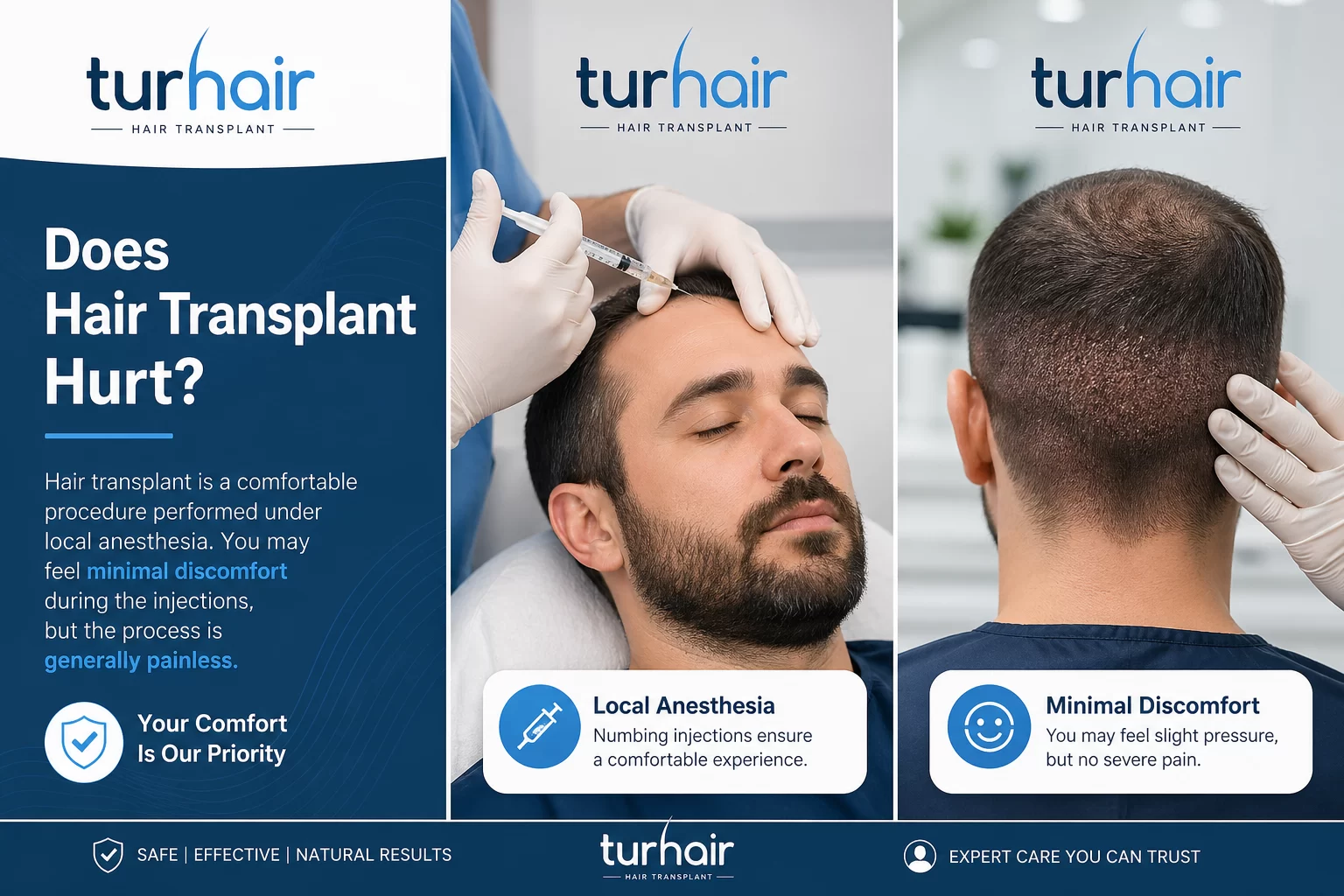
Hair transplant procedures are performed under local anesthesia, ensuring minimal discomfort. Turhair provides a comfortable and pain-controlled experience for every patient.
⚙️ Pain Level by Technique (FUE vs DHI vs Sapphire FUE)
The level of discomfort can vary slightly depending on the technique used:
- FUE (Follicular Unit Extraction): Minimal discomfort, widely used
- Sapphire FUE: Slightly less tissue trauma, faster healing
- DHI (Direct Hair Implantation): Similar pain level, but longer procedure time
All modern techniques are designed to be minimally invasive and comfortable.
Learn more about techniques here:
Hair Transplant Cost Guide
😬 Does Hair Transplant Hurt After the Procedure?
After the anesthesia wears off, you may experience mild discomfort or tightness in the scalp. This is completely normal and temporary.
- Mild soreness in donor and recipient areas
- Tight feeling in the scalp
- Minor swelling (usually forehead area)
- Light itching during healing
Most patients describe the sensation as similar to a mild sunburn rather than real pain.
✨ Turhair Premium Comfort Comparison
| Feature | Standard Clinics | Turhair Premium Experience |
|---|---|---|
| Anesthesia Application | Quick, basic injections | Gradual, controlled anesthesia for maximum comfort |
| Pain Level | Moderate discomfort possible | Minimal discomfort, nearly painless experience |
| Needle Technique | Standard needles | Ultra-fine needles for reduced sensitivity |
| Patient Monitoring | Limited during procedure | Continuous comfort monitoring and adjustments |
| Procedure Experience | Clinical and stressful | Relaxed, VIP-level environment |
| Post-Procedure Pain | Noticeable soreness | Mild sensitivity with controlled recovery |
| Doctor Involvement | Often technician-led | Doctor-led precision and care |
💊 How Is Pain Managed?
Clinics provide medications to ensure a comfortable recovery:
- Painkillers (for 1–3 days)
- Anti-inflammatory medication
- Antibiotics to prevent infection
- Special aftercare products
With proper medication, most patients report little to no pain after the first 48 hours.
⏱️ How Long Does Discomfort Last?
Recovery is usually quick:
- Day 1–2: Mild discomfort
- Day 3–5: Itching and healing begin
- Day 7: Most discomfort disappears
- Day 10+: Scabs fall off naturally
By the end of the first week, most patients feel completely normal.
😴 Does Hair Transplant Affect Sleep?
Sleeping can be slightly uncomfortable for the first few nights because you must:
- Sleep with your head elevated
- Avoid touching the transplanted area
- Use a special pillow if provided
This is temporary and improves within a few days.
⚠️ When Can Pain Become a Problem?
Severe pain is not normal after a hair transplant. If you experience any of the following, you should contact your clinic immediately:
- Intense or worsening pain
- Signs of infection (redness, pus, fever)
- Severe swelling that does not improve
Choosing a professional clinic significantly reduces these risks.
🌍 Does Hair Transplant Hurt More Abroad?
The level of pain does not depend on the country, but on:
- The experience of the doctor
- The quality of anesthesia
- The technique used
- The hygiene standards
Countries like Turkey are known for combining high-quality care with advanced pain management.
💎 TURHAIR VIP Difference
At TURHAIR, patient comfort is a top priority. The clinic focuses on:
- Doctor-led anesthesia application
- Minimally invasive techniques
- Advanced pain control protocols
- Personalized aftercare support
- VIP service including hotel & transfers
This ensures a smooth, comfortable, and stress-free experience for international patients.
📊 Pain Scale Summary
| Stage | Pain Level (1–10) |
|---|---|
| Anesthesia Injection | 3–4 |
| During Procedure | 0–1 |
| First Night | 2–3 |
| Days 2–3 | 1–2 |
| After Day 5 | 0–1 |
🧠 Psychological Perception of Pain
One of the most overlooked aspects of hair transplant pain is the psychological factor. Many patients feel anxious before the procedure, which can increase the perception of pain. In reality, the procedure is far less uncomfortable than expected.
- Fear of needles can make anesthesia feel worse than it is
- Stress can increase sensitivity to minor discomfort
- Relaxed patients report significantly lower pain levels
Professional clinics often provide a calm environment, music, or mild sedatives to ensure patients remain comfortable and relaxed throughout the procedure.
🪡 Does the Anesthesia Injection Hurt?
The anesthesia stage is the only moment where patients may feel discomfort. However, this lasts only a few minutes.
- Feels like a small pinch or burning sensation
- Duration: 5–10 minutes
- Pain level: mild and temporary
Many clinics now use needle-free anesthesia devices or vibration tools to reduce the sensation even further.
🔬 What Happens During the Procedure?
Understanding each step helps reduce anxiety and fear:
- Consultation and design: Hairline planning with the doctor
- Anesthesia application: Scalp is numbed
- Graft extraction: Hair follicles are taken from donor area
- Channel opening: Tiny incisions are made
- Implantation: Grafts are placed carefully
Once anesthesia is active, patients feel no pain during these steps.
🧴 Post-Procedure Sensations Explained
After the procedure, several sensations are normal and part of healing:
- Tingling: Nerve endings recovering
- Itching: Skin regeneration process
- Numbness: Temporary loss of sensation
- Tightness: Especially in donor area
These are not signs of pain but rather indicators of natural healing.
📅 Day-by-Day Recovery Experience
Here is a more detailed breakdown of what patients feel after a hair transplant:
- Day 1: Slight soreness, tight scalp, mild swelling begins
- Day 2: Swelling may increase slightly, discomfort remains minimal
- Day 3–4: Itching begins, scabs start forming
- Day 5–7: Scabs stabilize, discomfort almost gone
- Day 8–10: Scabs fall off, scalp feels normal again
This timeline shows that pain is short-lived and manageable.
🧑⚕️ Does Doctor Experience Affect Pain?
Yes — the experience of the doctor plays a critical role in patient comfort.
- Accurate anesthesia application reduces discomfort
- Gentle technique minimizes tissue damage
- Proper planning shortens procedure time
A skilled doctor ensures that the procedure is not only successful but also comfortable for the patient.
🌡️ Pain vs Discomfort – Important Difference
Many patients confuse discomfort with pain. It’s important to distinguish between the two:
- Pain: Sharp, intense sensation (rare in hair transplant)
- Discomfort: Mild, tolerable sensation (common but temporary)
Hair transplant procedures are associated with discomfort, not real pain.
🚫 Common Myths About Hair Transplant Pain
- Myth 1: Hair transplant is extremely painful → False
- Myth 2: Recovery takes weeks of pain → False
- Myth 3: Techniques like FUE are painful → False
- Myth 4: You cannot sleep after surgery → False
Modern technology has made hair transplant a comfortable outpatient procedure.
✈️ Traveling After Hair Transplant – Does It Increase Pain?
Many international patients travel immediately after the procedure. This does not increase pain, but you should follow basic precautions:
- Avoid touching the scalp during travel
- Keep your head elevated if possible
- Stay hydrated
- Follow medication schedule
With proper care, travel does not negatively affect comfort levels.
🛡️ How to Minimize Discomfort Even More
You can take several steps to make your experience even smoother:
- Choose an experienced, doctor-led clinic
- Avoid alcohol and smoking before/after procedure
- Follow all aftercare instructions carefully
- Take prescribed medications on time
- Sleep in the recommended position
These small steps significantly improve comfort and recovery.
💬 Real Patient Experiences
Most patients describe their experience as:
- “Much easier than expected”
- “No pain during procedure”
- “Only slight discomfort for 1–2 days”
This consistent feedback confirms that hair transplant is a low-pain procedure.
🔗 Internal Resources
For more detailed information, explore our related guides:
📌 Extended Final Conclusion
So, does hair transplant hurt? The honest answer is: no, not in the way most people fear. The procedure is carefully designed to be painless, and any discomfort experienced is mild, temporary, and easily managed.
With modern medical advancements, experienced doctors, and proper aftercare, hair transplantation has become a safe, comfortable, and highly predictable procedure.
If you are hesitating because of pain, you can feel confident knowing that the experience is far more comfortable than expected.
👉 Start your journey with full confidence:
Explore Hair Transplant Options
🧬 Nerve Sensitivity and Healing Process
After a hair transplant, the scalp goes through a natural healing process that involves temporary nerve sensitivity changes. This is completely normal and should not be confused with pain.
- Numbness: Common in donor and recipient areas for a few weeks
- Tingling sensation: Indicates nerve regeneration
- Hypersensitivity: Some areas may feel more sensitive temporarily
These sensations gradually disappear as the nerves heal, typically within 2–6 weeks.
🧊 Does Cold Therapy Help Reduce Discomfort?
Cold therapy can be beneficial in reducing swelling and mild discomfort after a hair transplant. However, it must be used carefully.
- Apply cold compress only to the forehead area
- Never apply ice directly to transplanted grafts
- Use for short intervals (10–15 minutes)
This method helps control swelling without damaging sensitive grafts.
🚿 Hair Washing – Does It Hurt?
The first hair wash is often a concern for patients, but it is not painful when done correctly.
- Performed gently using special medical shampoos
- Usually done 2–3 days after the procedure
- May cause slight sensitivity, not pain
Clinics typically demonstrate the correct washing technique to ensure a safe and comfortable experience.
🏋️ Physical Activity and Pain
Returning to physical activity too early can increase discomfort or complications.
- Avoid heavy exercise for at least 7–10 days
- Light walking is allowed after 2–3 days
- Intense workouts may increase swelling and sensitivity
Following these guidelines helps maintain a pain-free recovery.
🍽️ Nutrition and Recovery Comfort
Your diet plays an important role in healing and comfort after a hair transplant.
- Consume protein-rich foods for tissue repair
- Stay hydrated to reduce inflammation
- Avoid alcohol and smoking during recovery
Proper nutrition supports faster healing and minimizes discomfort.
💼 Work and Daily Life After Procedure
Most patients can return to daily activities quickly, with minimal discomfort.
- Office work: return within 2–3 days
- Social activities: after 5–7 days
- Full normal routine: within 10 days
Since pain is minimal, daily life is rarely disrupted.
🌙 Night Care Tips for Maximum Comfort
The first few nights are important for recovery. Following these tips helps reduce discomfort:
- Sleep at a 30–45 degree angle
- Use a neck pillow to avoid contact with grafts
- Avoid turning during sleep
These precautions ensure a comfortable and safe healing process.
🧪 Medications and Their Role in Comfort
Post-procedure medications are essential for maintaining comfort and preventing complications:
- Analgesics: Reduce mild discomfort
- Antibiotics: Prevent infection
- Anti-inflammatory drugs: Reduce swelling
Taking medications as prescribed ensures a smooth recovery experience.
🔍 Long-Term Sensitivity – Is It Normal?
In rare cases, patients may experience prolonged sensitivity in the donor area. This is usually mild and temporary.
- May last several weeks
- Gradually improves without treatment
- Rarely interferes with daily life
If sensitivity persists beyond a few months, a follow-up with the clinic is recommended.
🌐 Comparing Pain to Other Cosmetic Procedures
Compared to other cosmetic procedures, hair transplant is considered one of the least painful:
- Less painful than liposuction
- Less invasive than rhinoplasty
- Similar or less discomfort than dental procedures
This makes it a preferred option for patients concerned about pain.
📈 Why Modern Techniques Reduce Pain
Technological advancements have significantly improved patient comfort:
- Micro-motor extraction tools
- Sapphire blades for precise incisions
- Improved anesthesia techniques
- Minimally invasive implantation methods
These innovations ensure minimal trauma and faster healing.
📊 Extended Pain Comparison Table
| Procedure | Pain Level (1–10) |
|---|---|
| Hair Transplant | 1–3 |
| Dental Treatment | 2–4 |
| Liposuction | 5–7 |
| Rhinoplasty | 6–8 |
💡 Expert Insight
Medical professionals agree that hair transplantation is a low-pain, high-comfort procedure when performed correctly. The key factors include:
- Doctor expertise
- Proper anesthesia
- Patient compliance with aftercare
When these are aligned, discomfort is minimal and temporary.
🔗 More Helpful Guides
📌 Final Extended Answer
To conclude in the most complete way: hair transplant does not hurt in a significant or concerning way. The procedure is carefully controlled with anesthesia, and post-procedure sensations are mild and manageable.
Thanks to modern medical advancements, patients can expect a comfortable experience, fast recovery, and minimal disruption to daily life.
If fear of pain is holding you back, you can move forward with confidence knowing that hair transplant is one of the most patient-friendly cosmetic procedures available today.
👉 Discover your options today:
Start Your Hair Transplant Journey
❓ FAQ – Does Hair Transplant Hurt?
Is hair transplant painful?
No, the procedure is not painful due to local anesthesia. Only mild discomfort may occur.
What is the most painful part?
The anesthesia injection is the only part where slight discomfort is felt.
How long does pain last?
Usually 2–3 days, with mild sensations disappearing within a week.
Can I take painkillers?
Yes, clinics prescribe painkillers for a comfortable recovery.
Is FUE painful?
No, FUE is minimally invasive and generally painless during the procedure.
Does DHI hurt more than FUE?
No, both techniques have similar pain levels.
📌 Final Verdict
Hair transplant is not a painful procedure. Thanks to modern techniques and anesthesia, most patients experience only minor discomfort rather than actual pain.
If you choose a qualified clinic and follow proper aftercare, the entire process is safe, comfortable, and manageable.
👉 Learn more about pricing and procedures:
Hair Transplant Cost in Turkey