Should You Travel to Turkey for Hair Transplant?
April 25, 2026
Does Hair Transplant Hurt?
April 26, 2026Risks of Getting Hair Transplant Abroad
“The risks of getting a hair transplant abroad include infections, poor results, hidden costs, and lack of legal protection.”
Getting a hair transplant abroad has become increasingly popular due to lower costs and attractive all-inclusive packages. Many patients travel to countries like Turkey, Mexico, or Thailand seeking affordable solutions. However, while the price advantage is real, there are serious risks of getting a hair transplant abroad that are often overlooked.
In this comprehensive guide, we will explain the medical risks, legal issues, hidden costs, and long-term consequences of undergoing a hair transplant overseas, helping you make a safe and informed decision.
🌍 Why Do People Get Hair Transplants Abroad?
The main reasons include:
- Significantly lower prices (up to 70% cheaper)
- All-inclusive packages (hotel, transfers, medication)
- Quick availability and no waiting lists
- Strong online marketing and social media influence
However, choosing a clinic based only on cost can expose patients to serious risks.
🌟 TURHAIR Difference
👨⚕️ Doctor-Led Procedure
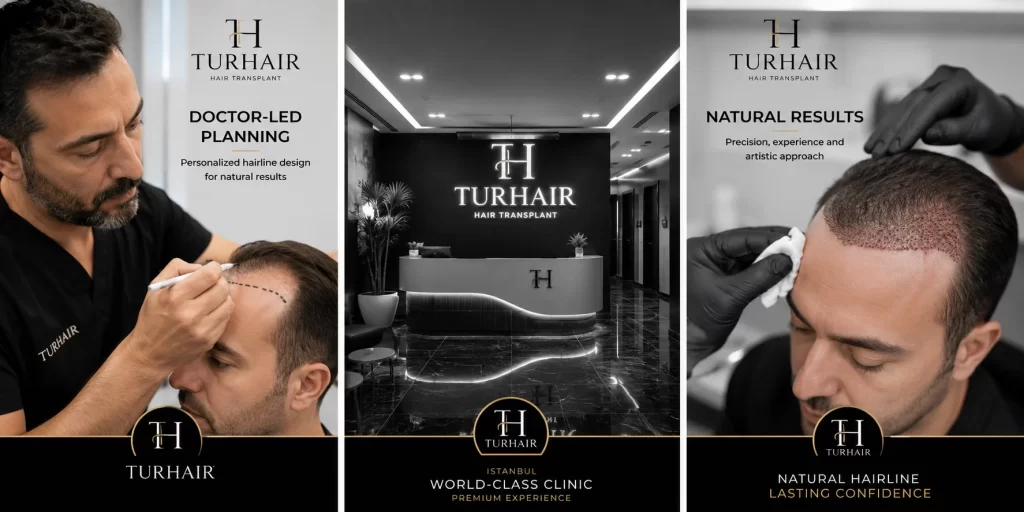
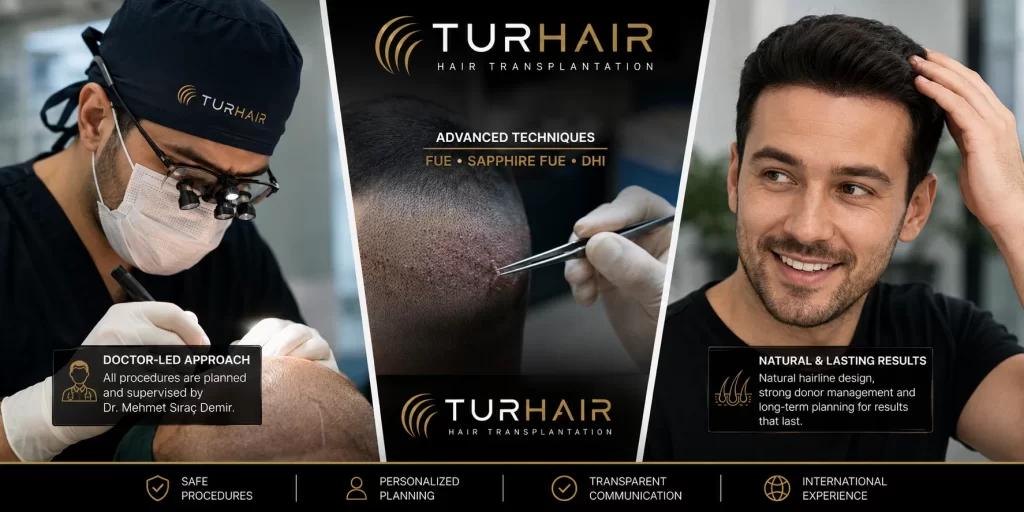
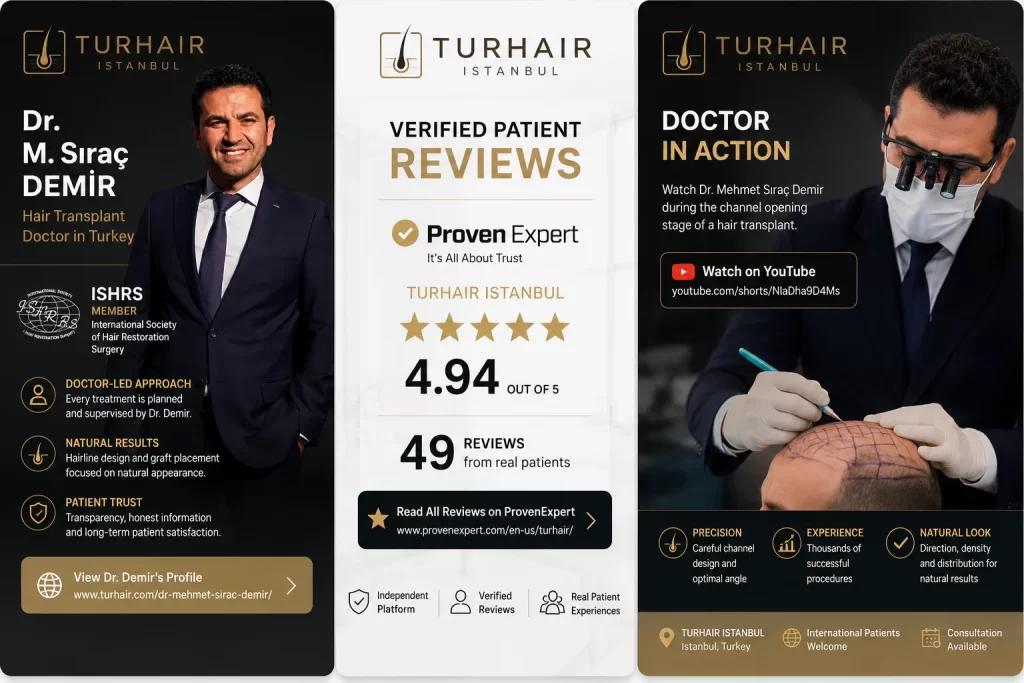
At TURHAIR, critical steps such as channel opening and hairline design are performed directly by the doctor — not technicians. This ensures natural results and maximum graft survival.
🎯 Personalized Planning
Every patient receives a custom treatment plan based on facial structure, donor capacity, and long-term hair loss progression.
💎 Natural Hairline Design
We focus on age-appropriate and realistic hairlines, avoiding artificial or overly dense appearances.
🛡️ Maximum Donor Protection
Your donor area is preserved with precision extraction techniques, ensuring future transplant options remain open.
🏨 VIP All-Inclusive Package
Enjoy a seamless experience including 5-star hotel, VIP airport transfers, medications, and aftercare kits.
🌍 International Patient Support
Our multilingual team provides full support before, during, and after your procedure — even after you return home.
📱 TURHAIR vs Standard Clinics
| Feature | TURHAIR | Standard Clinics |
|---|---|---|
| Doctor Involvement | ✔ Direct Doctor Control | ✖ Often Technician-Based |
| Hairline Design | ✔ Personalized & Natural | ✖ Generic |
| Donor Protection | ✔ Maximum Preservation | ✖ Risk of Overharvesting |
| Hygiene Standards | ✔ High Medical Standards | ✖ Varies Widely |
| Aftercare | ✔ Long-Term Support | ✖ Limited |
| Patient Experience | ✔ VIP All-Inclusive | ✖ Basic Packages |
🚀 Why TURHAIR is a Safer Choice
When considering the risks of getting a hair transplant abroad, choosing a clinic like TURHAIR significantly reduces potential complications.
- ✔ Doctor-led approach ensures medical safety
- ✔ Transparent pricing with no hidden costs
- ✔ Focus on natural, long-term results
- ✔ Strong international reputation and patient satisfaction
Final Note: A hair transplant is a lifetime investment. Choosing a VIP-quality clinic ensures not just results — but peace of mind.
⚠️ 1. Unqualified or Inexperienced Practitioners
One of the biggest risks is that the procedure may not be performed by a qualified doctor. In some clinics, technicians — not licensed surgeons — carry out most of the operation.
- Lack of medical supervision
- Poor hairline design
- Incorrect graft extraction
- Permanent damage to donor area
Tip: Always confirm that a certified doctor performs critical steps like channel opening.
⚠️ 2. Risk of Infections and Poor Hygiene Standards
Not all clinics abroad follow strict European or US medical standards. Poor sterilization can lead to infections such as:
- Scalp infections
- Folliculitis
- Blood-borne diseases
In severe cases, infections can result in permanent scarring or graft loss.
⚠️ 3. Overharvesting and Donor Area Damage
Some clinics focus on maximizing graft numbers rather than achieving natural results. This can lead to:
- Overharvesting of donor area
- Visible thinning at the back of the head
- Irreversible damage
Once the donor area is damaged, correction becomes extremely difficult.
⚠️ 4. Unnatural Results and Poor Hairline Design
Hair transplant is not just a technical procedure — it is an art. Poorly trained practitioners may create:
- Unnatural straight hairlines
- Wrong angle of hair growth
- Low density appearance
This often leads to dissatisfaction and the need for corrective surgery.
⚠️ 5. Hidden Costs and Misleading Pricing
While the initial price may seem low, many patients face unexpected costs:
- Additional graft fees
- Medication and aftercare not included
- Correction procedures
- Travel complications
In some cases, fixing a bad transplant can cost more than doing it correctly the first time.
⚠️ 6. Lack of Legal Protection
When you undergo a procedure abroad, your legal rights may be limited:
- Difficult to file malpractice claims
- Different medical laws and regulations
- Language barriers
If something goes wrong, pursuing legal action can be complicated and expensive.
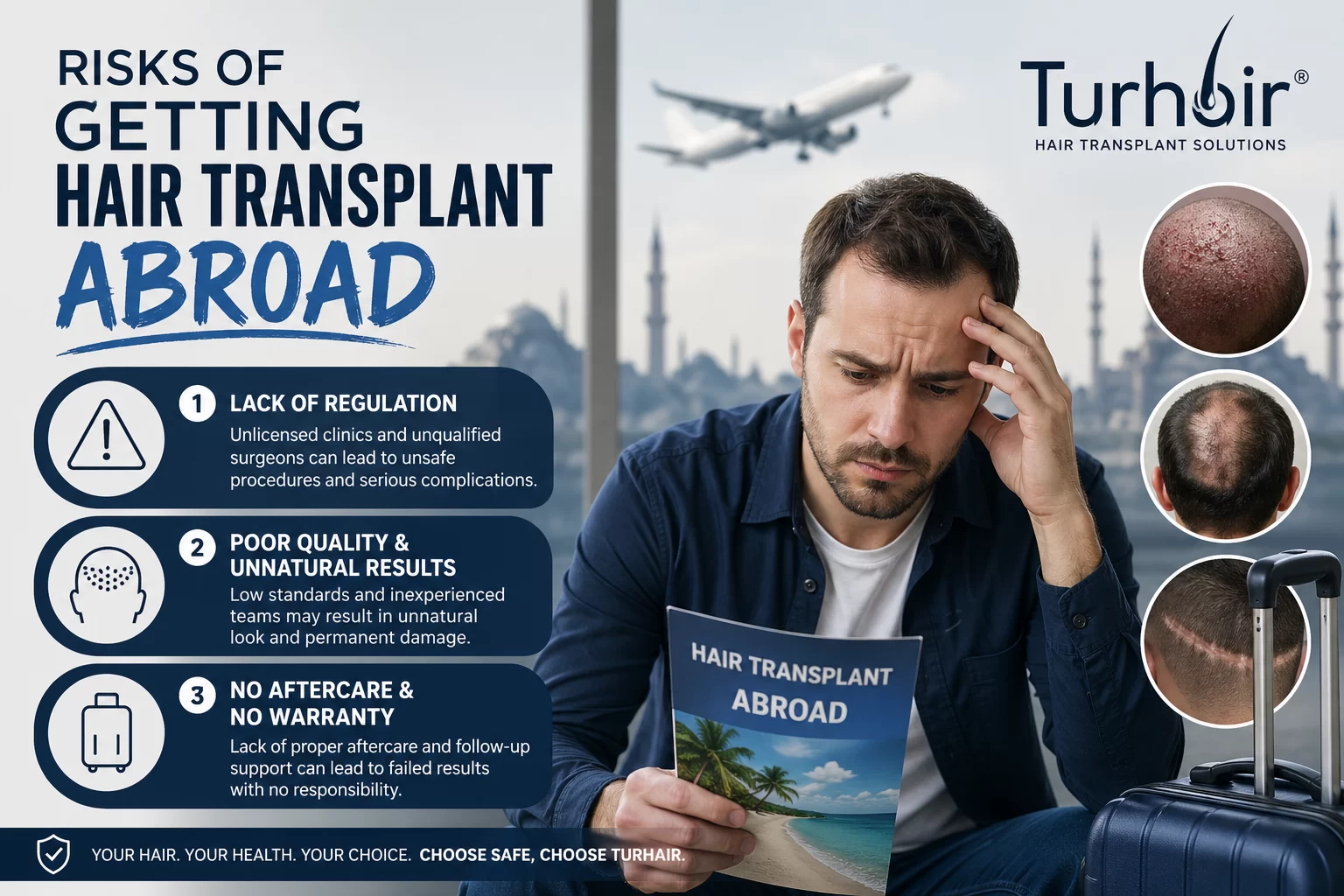
Discover the real risks of getting a hair transplant abroad and why choosing a trusted clinic like Turhair matters.
⚠️ 7. No Long-Term Follow-Up Care
Hair transplant requires proper aftercare and monitoring. Clinics abroad often cannot provide long-term follow-up.
- No direct access to doctor after returning home
- Poor guidance on complications
- Delayed treatment of issues
This can negatively impact your final results.
⚠️ 8. Aggressive Sales Tactics and Overpromising
Many clinics use strong marketing strategies to attract patients:
- Guaranteed results claims
- Unrealistic before/after photos
- Fake or manipulated reviews
Always verify clinic credibility independently.
⚠️ 9. Language Barriers and Miscommunication
One of the most underestimated risks of getting a hair transplant abroad is the language barrier. Clear communication between the patient and the medical team is essential for a successful procedure. When communication is limited or misunderstood, critical details may be missed.
- Incorrect expectations about results
- Misunderstanding of procedure details
- Inadequate explanation of risks
- Improper aftercare instructions
Even small misunderstandings can lead to dissatisfaction or medical complications. Always ensure there is a professional translator or multilingual medical staff available.
⚠️ 10. High-Volume Clinics and Assembly-Line Procedures
Some popular destinations operate high-volume clinics that treat multiple patients per day. These clinics often prioritize quantity over quality.
- Rushed procedures
- Limited doctor involvement
- Standardized (non-personalized) treatment plans
- Reduced attention to detail
This “factory model” significantly increases the risk of poor results and complications.
⚠️ 11. Psychological Impact of Poor Results
Hair transplant is not only a physical procedure but also deeply connected to self-confidence and mental well-being. When results are unnatural or unsuccessful, patients may experience:
- Loss of self-esteem
- Anxiety and stress
- Social discomfort
- Depression in severe cases
Correcting a failed hair transplant can take years and multiple procedures, adding emotional and financial burden.
⚠️ 12. Travel-Related Health Risks
Undergoing surgery abroad also involves travel, which introduces additional risks, especially immediately after the procedure.
- Flying too soon after surgery
- Risk of swelling and discomfort during flights
- Exposure to infections while traveling
- Limited access to immediate medical care
Patients are often advised to stay several days post-procedure, but not all clinics emphasize this properly.
⚠️ 13. Lack of Emergency Support
If complications arise after the procedure, immediate medical attention is crucial. However, patients who travel abroad may face difficulties accessing emergency support.
- No direct access to the original surgeon
- Local doctors may not be familiar with the procedure performed
- Delayed treatment increases risk of permanent damage
This gap in care can turn minor issues into serious complications.
⚠️ 14. Unrealistic Expectations and Overpromising
Many clinics attract patients by promising guaranteed results or extremely high graft numbers. These promises are often unrealistic.
- Overestimation of achievable density
- Ignoring donor area limitations
- Misleading before-and-after photos
A professional clinic should always provide realistic expectations based on individual hair characteristics.
⚠️ 15. Ethical Concerns and Lack of Regulation
Regulations for cosmetic procedures vary significantly between countries. In some regions, oversight may be less strict, allowing clinics to operate without proper accountability.
- Unregulated clinics
- Lack of standardized protocols
- Limited accountability for malpractice
This increases the overall risk for international patients.
⚠️ 16. Lack of Personalized Treatment Planning
One of the critical risks of getting a hair transplant abroad is the absence of individualized planning. Many clinics apply a “one-size-fits-all” approach rather than tailoring the procedure to the patient’s unique hair structure, age, and future hair loss pattern.
- Generic hairline designs
- Incorrect graft distribution
- Ignoring future hair loss progression
- Unbalanced density
A proper hair transplant requires long-term planning, not just immediate visual results.
⚠️ 17. Inadequate Pre-Operative Assessment
Before any surgical procedure, a detailed medical evaluation is essential. Some clinics abroad may skip or rush this step.
- No proper scalp analysis
- Ignoring underlying health conditions
- Lack of blood tests or medical history review
This increases the risk of complications during and after the procedure.
⚠️ 18. Poor Pain Management and Patient Comfort
Patient comfort is a key part of a quality medical procedure. In lower-cost clinics, pain management protocols may not be adequate.
- Insufficient anesthesia
- Uncomfortable procedure conditions
- Long operation times without proper breaks
This can make the overall experience stressful and traumatic.
⚠️ 19. Use of Outdated Techniques
Not all clinics invest in modern technology or updated techniques. Some may still use outdated methods that increase risks and reduce success rates.
- Older extraction tools causing more scarring
- Less precise implantation methods
- Lower graft survival rates
Modern techniques such as Sapphire FUE or advanced DHI methods require proper training and equipment.
⚠️ 20. Lack of Transparency in Procedure Details
Some clinics do not clearly explain what the procedure involves, who performs it, and what the expected outcomes are.
- Unclear roles of doctor vs technicians
- No detailed treatment plan
- Hidden limitations not discussed
Transparency is essential for trust and patient safety.
⚠️ 21. Post-Surgery Complications Often Underestimated
Many patients believe that once the procedure is completed, the process is over. In reality, the post-operative period is critical.
- Swelling and redness
- Itching and discomfort
- Temporary hair shedding (shock loss)
Without proper guidance, patients may panic or handle recovery incorrectly.
⚠️ 22. Inconsistent Quality Between Clinics
Even within the same country, the quality of hair transplant clinics can vary dramatically. A well-known destination does not guarantee consistent standards across all providers.
- Some clinics are highly professional
- Others operate with minimal oversight
- Wide variation in results and safety
This makes thorough research absolutely essential.
⚠️ 23. Reputation vs Reality Gap
Online presence can sometimes be misleading. A clinic may appear highly reputable due to marketing, but real-world results may differ.
- Edited or filtered photos
- Selective success stories
- Hidden negative reviews
Always seek independent verification before making a decision.
⚠️ 24. Pressure to Book Quickly
Some clinics use urgency tactics to push patients into making fast decisions.
- “Limited-time offers”
- Discounts for immediate booking
- Pressure from sales representatives
This can lead to rushed decisions without proper research.
⚠️ 25. Impact on Future Hair Restoration Options
A poorly performed hair transplant can limit your options for future procedures.
- Depleted donor area
- Scar tissue formation
- Reduced graft availability
This makes achieving better results later much more difficult.
📊 Comparing Risk vs Reward
While hair transplants abroad offer clear financial advantages, patients must weigh these against the potential risks.
| Advantages | Risks |
|---|---|
| Lower cost | Higher medical risk |
| All-inclusive packages | Limited legal protection |
| Quick availability | Poor follow-up care |
| Travel experience | Potential complications |
🧠 Expert Insight: Why Quality Matters
Hair transplantation is both a medical and artistic procedure. It requires precision, experience, and long-term vision. Cutting costs by choosing the cheapest option can compromise all three.
Experts agree that the most important factors are:
- Doctor expertise
- Clinic reputation
- Hygiene and safety standards
- Personalized approach
🔚 Final Conclusion (Extended)
The decision to undergo a hair transplant abroad should never be based solely on cost. While savings can be significant, the risks of getting a hair transplant abroad include medical complications, unsatisfactory results, legal challenges, and long-term financial consequences.
A successful hair transplant requires careful planning, skilled execution, and proper aftercare. Choosing a reputable, doctor-led clinic with transparent practices is the best way to ensure safe and natural results.
Ultimate takeaway: Investing in quality from the beginning is always more cost-effective than correcting mistakes later. Your hair, health, and confidence are worth the right decision.
🔬 Medical Complications to Be Aware Of
Beyond general risks, there are specific medical complications associated with poorly performed hair transplants:
- Shock loss (temporary or permanent)
- Necrosis (tissue death due to poor blood supply)
- Severe scarring
- Chronic inflammation
These complications can significantly affect both appearance and scalp health.
💰 Long-Term Financial Impact
While the initial procedure abroad may be cheaper, the long-term costs can be significantly higher if something goes wrong.
- Corrective procedures
- Medical treatments
- Consultations with specialists
- Lost time and productivity
In some cases, patients end up spending double or triple the original cost to fix poor results.
🛡️ How to Protect Yourself Before Traveling
If you are considering a hair transplant abroad, take these precautions:
- Request proof of doctor qualifications
- Ask who performs each step of the procedure
- Review unedited patient results
- Confirm hygiene standards and clinic certifications
- Understand the full cost breakdown
- Ensure clear communication in your language
Preparation is key to minimizing risks.
🌟 The Importance of Doctor-Led Clinics
One of the most effective ways to reduce risks is choosing a clinic where the doctor is actively involved in the procedure. Doctor-led clinics typically provide:
- Personalized treatment planning
- Accurate graft calculation
- Natural hairline design
- Higher safety standards
This approach ensures better long-term results and patient satisfaction.
🔗 Additional Resources
To better understand pricing, safety, and choosing the right clinic, explore these guides:
📌 Final Thoughts
The risks of getting a hair transplant abroad go far beyond the initial procedure. From medical complications and poor results to legal challenges and long-term financial costs, choosing the wrong clinic can have lasting consequences.
Final takeaway: Never choose a clinic based solely on price. Prioritize experience, medical standards, and transparency. A successful hair transplant is not just about saving money — it’s about protecting your health, appearance, and confidence for life.
🔍 How to Reduce the Risks
You can minimize risks by taking these precautions:
- Choose doctor-led clinics
- Verify certifications and experience
- Check real patient reviews and results
- Avoid extremely cheap offers
- Ask detailed questions about the procedure
💡 Safer Alternative: Choosing a Trusted Clinic
Instead of focusing only on price, prioritize quality and safety. A reputable clinic should offer:
- Doctor-performed procedures
- Transparent pricing
- Natural results portfolio
- Comprehensive aftercare
Learn more about safe and affordable options here:
❓ FAQ – Risks of Hair Transplant Abroad
Is it safe to get a hair transplant abroad?
Yes, but only if you choose a reputable clinic with experienced doctors and proper medical standards.
What is the biggest risk?
The biggest risk is undergoing surgery by unqualified technicians instead of licensed doctors.
Can a bad hair transplant be fixed?
In many cases yes, but corrective procedures are complex, expensive, and not always fully successful.
Why are some clinics so cheap?
Lower costs often come from reduced medical standards, high patient volume, and technician-led procedures.
How do I verify a clinic abroad?
Check doctor credentials, patient reviews, before/after results, and ask for direct consultation.
Is aftercare important?
Yes, proper aftercare is essential for achieving natural and long-lasting results.
📊 Conclusion
While getting a hair transplant abroad can save money, the risks of getting a hair transplant abroad should not be underestimated. From medical complications to poor results and legal challenges, choosing the wrong clinic can have long-term consequences.
The key takeaway: prioritize safety, doctor expertise, and clinic reputation over price alone. A successful hair transplant is a lifelong investment — not a place to cut corners.