Why Is Hair Transplant Cheaper in Turkey?✨
April 25, 2026
Turkey vs USA Hair Transplant Results✨
April 25, 2026Is It Safe to Get a Hair Transplant in Turkey? (2026 Complete SEO Guide)
Hair transplantation in Turkey has become one of the most popular cosmetic procedures worldwide. But the most important question remains: Is it safe to get a hair transplant in Turkey?
The short answer: Yes — but only if you choose the right clinic and doctor.
In this comprehensive SEO guide, we will explain safety standards, real risks, success rates, and how to protect yourself before making a decision.
1. Is Hair Transplant in Turkey Safe?
Hair transplant procedures are generally considered safe when performed by qualified professionals in a sterile medical environment. :contentReference[oaicite:0]{index=0}
Turkey is one of the global leaders in hair transplantation, with:
- Modern medical infrastructure
- Experienced surgeons
- Advanced techniques like FUE, Sapphire FUE, and DHI
Studies and clinic data show that success rates often exceed 90–95% when procedures are done correctly.
In fact, complication rates in reputable clinics are very low, around 2–4%.
Conclusion: Turkey itself is not the risk — the clinic you choose is.
2. Why Turkey Became the #1 Hair Transplant Destination
Turkey attracts over a million international patients every year due to:
- Affordable prices (up to 70% cheaper than Europe)
- Highly specialized clinics
- All-inclusive packages (hotel + transfer + treatment)
- Doctor experience with thousands of procedures
This high volume actually improves safety — experienced teams perform procedures daily.
3. Real Risks of Hair Transplant (Not Just in Turkey)
Even though the procedure is safe, every surgery has risks.
Short-Term Side Effects
- Swelling on forehead
- Redness and itching
- Mild bleeding
- Temporary numbness
These are normal and usually disappear within a few days.
Possible Complications
- Infection
- Poor graft survival
- Scarring
- Uneven or unnatural results
Most complications appear weeks or months later, not during surgery.
4. The Biggest Risk: Wrong Clinic Choice
The main danger is not Turkey — it’s choosing the wrong provider.
Some low-cost clinics:
- Use unlicensed technicians
- Limit doctor involvement
- Operate with poor hygiene standards
- Focus on volume instead of quality
This can lead to:
- Over-harvesting (permanent donor damage)
- Artificial hairlines
- Failed results
Experts warn that unqualified clinics significantly increase risks and poor outcomes.
✨ TURHAIR Difference (Gold Standard – Mobile Optimized)
Not all hair transplant clinics are the same. The TURHAIR difference is based on one critical principle:
Doctor-led, precision-based, natural results.
While many clinics focus on volume, TURHAIR focuses on quality, safety, and long-term aesthetics.
👨⚕️ 1. Doctor Performs Critical Steps (MOST IMPORTANT)
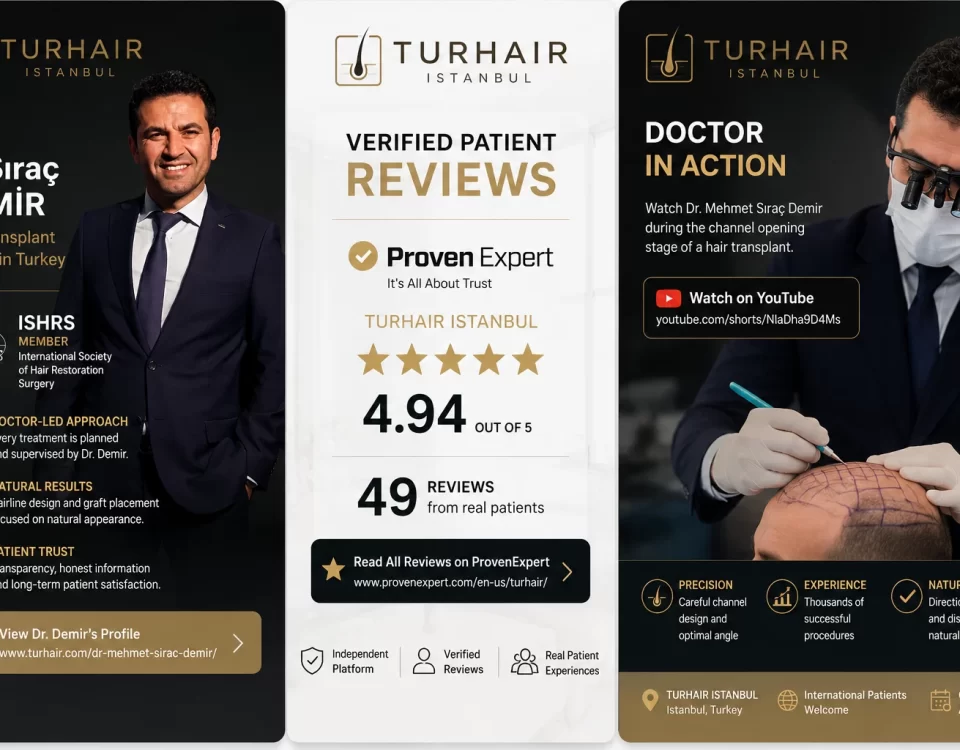
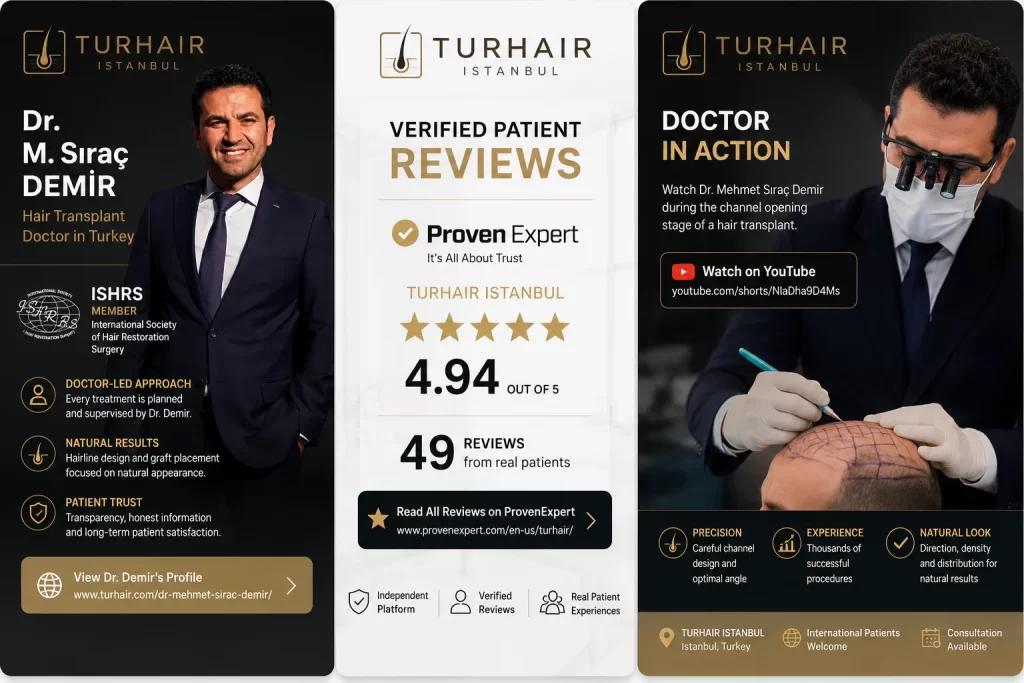
At TURHAIR, Dr. Sıraç Demir personally performs the most critical part of the procedure: channel opening. :contentReference[oaicite:0]{index=0}
This step determines:
- ✔ Hair direction
- ✔ Natural appearance
- ✔ Density
- ✔ Final success (70–80% impact)
Most clinics: Technicians perform this step ❌
TURHAIR: Doctor performs it ✔
🎯 2. Natural Hairline Design (Art + Medical Science)
TURHAIR does not use templates.
Each patient receives:
- ✔ Face-shape analysis
- ✔ Age-appropriate design
- ✔ Custom density planning
This ensures results look completely natural — not “transplanted”.
🧠 3. Personalized Treatment (NOT Mass Production)
Unlike high-volume clinics, TURHAIR limits patient numbers per day.
This allows:
- ✔ More doctor attention
- ✔ Detailed planning
- ✔ Higher precision
High-volume clinics often treat many patients daily with standardized approaches, reducing quality. :contentReference[oaicite:1]{index=1}
🛡️ 4. Maximum Medical Safety
TURHAIR operates as a doctor-led medical clinic, not a technician-based center.
Includes:
- ✔ Medical examinations before surgery
- ✔ Blood tests and health checks
- ✔ Full doctor supervision
- ✔ Sterile environment
Many low-cost clinics reduce prices by removing doctor involvement — increasing risks. :contentReference[oaicite:2]{index=2}
💎 5. Balanced Density (No Overharvesting)
TURHAIR prioritizes:
- ✔ Donor area protection
- ✔ Long-term sustainability
- ✔ Natural density distribution
This avoids one of the biggest mistakes in hair transplants: overharvesting.
🏆 6. High Success Rate & Natural Results
TURHAIR focuses on:
- ✔ Long-lasting results
- ✔ High graft survival rate
- ✔ Natural growth direction
Hair begins growing after 3–4 months and full results appear within 12 months. :contentReference[oaicite:3]{index=3}
✈️ 7. VIP All-Inclusive Experience
TURHAIR offers premium medical tourism packages:
- ✔ 4–5 star hotel accommodation
- ✔ VIP airport transfers
- ✔ Translator support
- ✔ Medications & aftercare
Typical packages range around €2,500 – €3,500+ depending on technique. :contentReference[oaicite:4]{index=4}
📊 TURHAIR vs Standard Clinics
| Feature | TURHAIR | Typical Clinics |
|---|---|---|
| Doctor Involvement | ✔ Direct (critical steps) | ❌ Limited / none |
| Channel Opening | ✔ Doctor | ❌ Technicians |
| Hairline Design | ✔ Personalized | ❌ Standard template |
| Patient Volume | ✔ Limited | ❌ High-volume |
| Safety Level | ✔ High (medical) | ⚠️ Variable |
| Result Quality | ✔ Natural & dense | ⚠️ Inconsistent |
🔥 Final TURHAIR Advantage
The real difference is simple:
✔ Doctor-led precision
✔ Natural results
✔ Long-term safety
✔ Premium patient experience
In hair transplantation, the cheapest option is rarely the safest.
5. Success Rates in Turkey (Real Data)
- Top clinics: 95–99% success rate
- Average clinics: 75–90%
- FUE graft survival: 85–95%
This means your result depends heavily on:
- Doctor skill
- Technique used
- Aftercare quality
6. How to Choose a Safe Hair Transplant Clinic in Turkey
Follow these rules to stay safe:
✔ Doctor-Led Procedure
The surgeon should perform critical steps (especially channel opening).
✔ Licensed Clinic
Always verify official registration and certifications.
✔ Real Patient Results
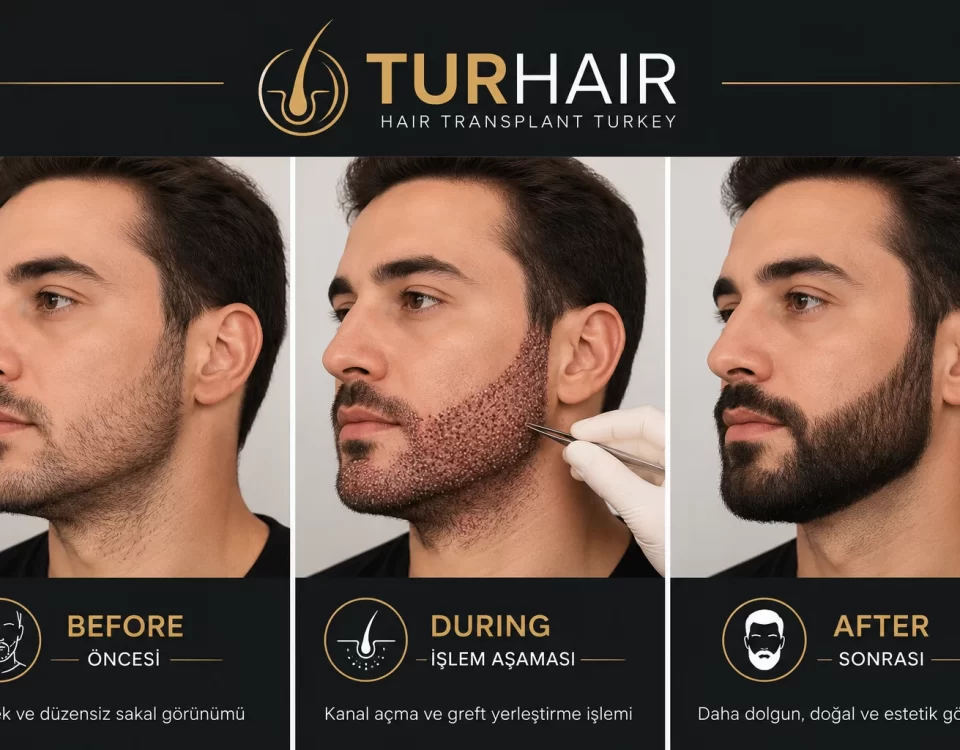
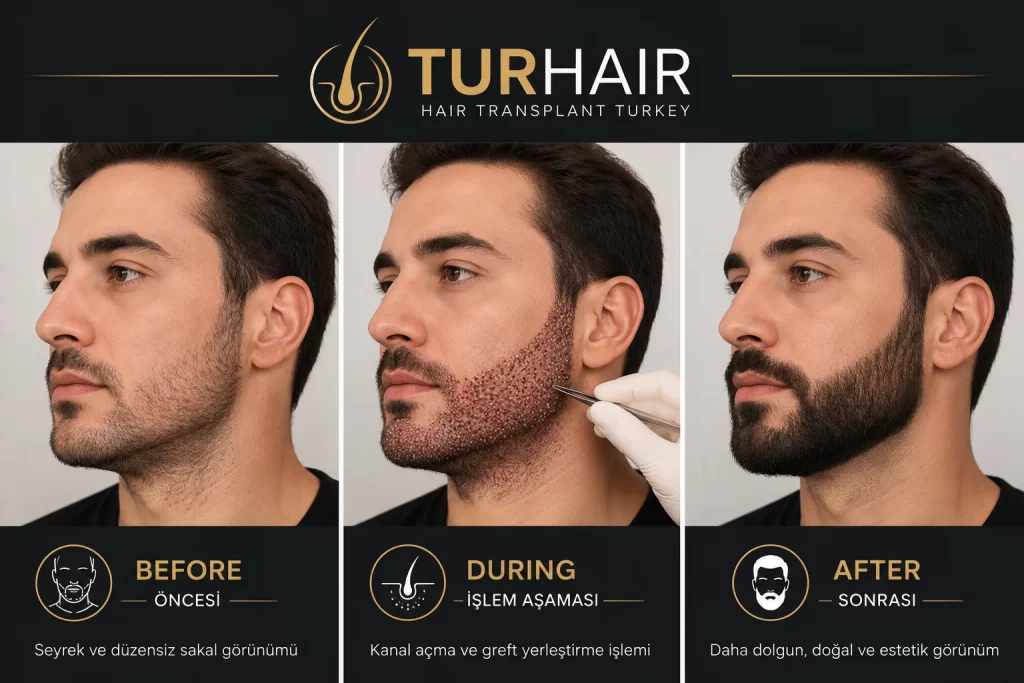
Look for before/after photos and video testimonials.
✔ Transparent Pricing
Avoid “too cheap” or “unlimited graft” offers — they often cut corners.
✔ Aftercare Support
Follow-up is essential for long-term success.
7. TURHAIR Difference (Why Clinic Choice Matters)
Not all clinics are equal. A doctor-led clinic like TURHAIR focuses on:
- Doctor-performed channel opening
- Natural hairline design
- Controlled graft extraction (no overharvesting)
- High-density planning
- Personalized aftercare
This approach reduces risks and increases natural-looking results.
8. Turkey vs Europe: Safety Comparison
| Factor | Turkey | Europe |
|---|---|---|
| Success Rate | 90–98% | 90–98% |
| Cost | €2,000 – €4,500 | €6,000 – €12,000 |
| Experience Volume | Very High | Moderate |
| Risk Level | Low (if clinic is good) | Low |
Conclusion: Safety level is similar — but Turkey offers better value.
9. Final Verdict: Is It Safe?
Yes — hair transplant in Turkey is safe.
But only if:
- You choose a reputable clinic
- The procedure is doctor-led
- Proper hygiene and protocols are followed
Unsafe situations happen only when patients choose cheap, unlicensed clinics.
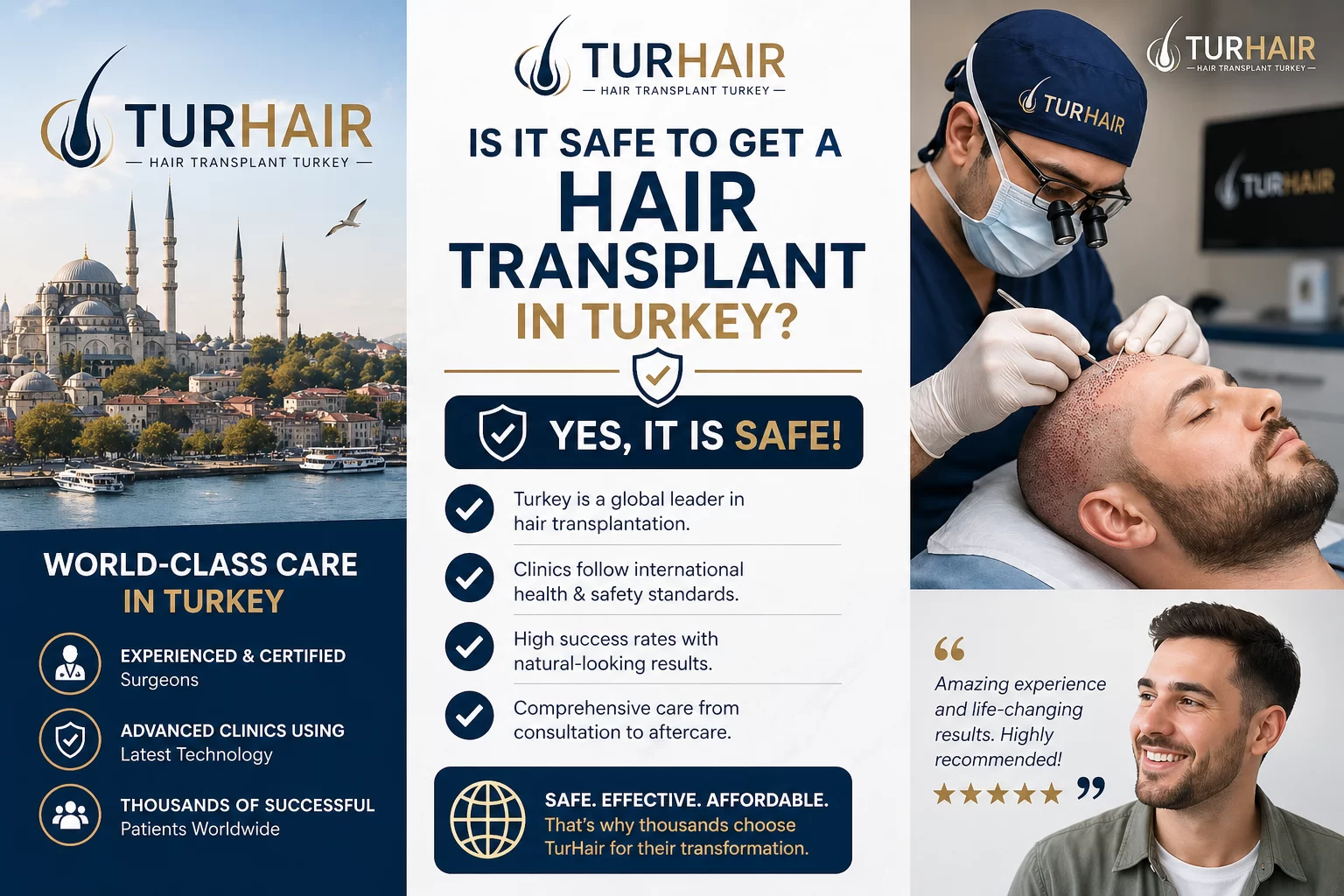
Turhair clinic in Turkey offering safe, doctor-led hair transplant procedures with natural results and advanced technology.
10. FAQ
Is hair transplant in Turkey risky?
Hair transplant is low-risk when performed by qualified doctors in licensed clinics. Risks increase significantly in unregulated clinics.
Why is Turkey cheaper for hair transplant?
Lower operational costs and high patient volume allow clinics in Turkey to offer affordable prices without reducing quality.
What is the success rate in Turkey?
Top clinics report success rates between 95% and 99%, depending on technique and surgeon expertise.
How long does recovery take?
Initial healing takes 7–10 days, while full hair growth results appear within 6–12 months.
Can hair transplant go wrong?
Yes, if performed by inexperienced teams. Poor results include unnatural hairlines, scarring, or low graft survival.
Is Turkey better than Spain for hair transplant?
Safety levels are similar, but Turkey offers more experienced clinics and significantly lower prices.
Internal Links
11. What Happens During a Safe Hair Transplant Procedure?
Understanding the process helps you evaluate whether a clinic follows proper medical standards.
Step-by-Step Safe Procedure
- Consultation & Planning: Hairline design and graft calculation based on facial structure
- Donor Area Preparation: Controlled shaving and sterilization
- Local Anesthesia: Applied by a qualified medical professional
- Graft Extraction (FUE): Individual follicles removed safely
- Channel Opening: Critical step that defines natural results
- Implantation: Grafts placed at correct angle and density
Important: In high-quality clinics, the doctor performs the most critical stages, not technicians.
12. Hygiene & Medical Standards in Turkey
Top clinics in Turkey follow international hygiene protocols similar to Europe:
- Sterile surgical environments
- Single-use medical tools
- Strict infection control procedures
- Certified operating rooms
However, lower-tier clinics may not meet these standards — which is why verification is essential.
13. Red Flags to Avoid (Very Important)
If you see any of the following, do NOT choose that clinic:
- ❌ Extremely low prices (below €1,500)
- ❌ “Unlimited graft” promises
- ❌ No doctor involvement
- ❌ No real patient results
- ❌ Poor communication or rushed consultation
These are typical signs of hair transplant mills — high-volume, low-quality clinics.
14. Post-Operation Safety (Aftercare Matters)
The success of your hair transplant depends heavily on aftercare.
Key Aftercare Rules
- Do not touch or scratch the grafts
- Avoid sun exposure for at least 2 weeks
- Sleep with head elevated
- Follow washing instructions carefully
- Use prescribed medications
Good clinics provide:
- Aftercare kits
- Detailed instructions
- Online follow-up support
15. Timeline: What to Expect After Surgery
| Time | What Happens |
|---|---|
| Day 1–3 | Redness and mild swelling |
| Day 7–10 | Scabs fall off |
| Week 2–4 | Shock loss (temporary shedding) |
| Month 3–4 | New hair begins to grow |
| Month 6 | Visible improvement |
| Month 12 | Final results |
16. Psychological Safety: Managing Expectations
Safety is not only physical — it’s also psychological.
Unrealistic expectations can lead to dissatisfaction even after a successful procedure.
A good clinic will:
- Explain realistic density limits
- Assess donor capacity honestly
- Avoid overpromising results
17. Is Traveling to Turkey Safe for Medical Tourism?
Turkey is one of the leading countries in medical tourism, especially in cities like Istanbul.
Patients benefit from:
- International patient coordinators
- VIP airport transfers
- 4–5 star hotel accommodation
- Translation services
These services reduce stress and improve overall safety and comfort.
18. TURHAIR Safety Protocol (Example of Best Practice)
A premium clinic approach includes:
- ✔ Doctor-led operations
- ✔ Limited number of patients per day
- ✔ Customized treatment plans
- ✔ No overharvesting of donor area
- ✔ Continuous patient monitoring
This model prioritizes quality over quantity, which is key to safe outcomes.
19. Final Expert Tips Before Booking
- ✔ Always request a consultation first
- ✔ Ask who performs each step
- ✔ Verify clinic license and credentials
- ✔ Avoid decisions based only on price
- ✔ Check independent reviews
20.So, is it safe to get a hair transplant in Turkey?
Yes — when done correctly.
Turkey offers some of the best hair transplant clinics in the world, combining affordability with high medical expertise.
However, safety depends entirely on your clinic choice. By following the guidelines in this article, you can significantly reduce risks and achieve natural, long-lasting results.
21. FUE vs DHI vs Sapphire FUE: Which Is Safer?
The safety of a hair transplant also depends on the technique used. While all modern methods are considered safe, each has unique advantages.
| Technique | Safety Level | Key Advantage |
|---|---|---|
| FUE | Very High | Minimally invasive, fast recovery |
| DHI | Very High | Direct implantation, precise control |
| Sapphire FUE | Very High | Less tissue damage, better healing |
Key Insight: The technique matters, but the doctor’s experience matters more.
22. Infection Risk: How Rare Is It?
One of the biggest concerns patients have is infection.
In reality, infection rates in professional clinics are extremely low — typically below 1%.
This is because:
- Procedures are minimally invasive
- Local anesthesia is used (no general anesthesia risks)
- Antibiotics are often prescribed
Most infections occur due to poor aftercare, not the procedure itself.
23. Donor Area Safety (Critical Factor)
The donor area (usually the back of the head) is a limited resource.
Safe clinics always:
- Extract grafts evenly
- Avoid overharvesting
- Preserve natural density
Unsafe clinics may:
- Take too many grafts
- Cause visible thinning
- Damage future transplant potential
This is one of the most irreversible mistakes in hair transplantation.
24. Natural Results = Safe Technique
Safety is not only about avoiding complications — it also includes achieving natural results.
A safe procedure ensures:
- Correct hair growth direction
- Age-appropriate hairline design
- Balanced density
Unnatural results are often caused by:
- Poor planning
- Inexperienced teams
- Mass-production clinics
25. Cost vs Safety: The Truth
Many patients believe cheaper always means unsafe — but this is not entirely true.
Turkey offers lower prices because of:
- Lower operational costs
- High competition
- Government-supported medical tourism
However:
Extremely cheap clinics often compromise safety.
Safe price range in 2026:
- €2,000 – €4,500 → Safe, reputable clinics
- Below €1,500 → High risk
26. Hair Transplant Myths (Debunked)
Myth 1: Hair transplant is dangerous
Truth: It is one of the safest cosmetic procedures when done correctly.
Myth 2: Turkey is risky
Truth: Turkey is a global leader — risk depends on clinic choice.
Myth 3: Results are immediate
Truth: Full results take 6–12 months.
Myth 4: Anyone can perform it
Truth: Only trained professionals should perform key steps.
27. How Many Grafts Are Safe?
The number of grafts must be carefully calculated.
- 2,000–3,000 grafts → Moderate restoration
- 3,000–4,500 grafts → Large areas
- 5,000+ grafts → Requires advanced planning
Warning: Clinics offering “unlimited grafts” often sacrifice safety.
28. Long-Term Safety: Will Transplanted Hair Last?
Yes — transplanted hair is typically permanent because it comes from genetically resistant areas.
However, long-term success depends on:
- Proper technique
- Donor quality
- Post-op care
In some cases, additional sessions may be needed for density.
29. What Do Real Patients Say?
Patient reviews highlight the most important safety factors:
- Doctor involvement
- Communication quality
- Aftercare support
- Natural results
Negative reviews usually mention:
- Lack of supervision
- Poor planning
- Unrealistic promises
30. Final Summary (Featured Snippet Ready)
Is it safe to get a hair transplant in Turkey?
✔ Yes, when performed by a qualified doctor in a licensed clinic
✔ Success rates reach up to 95–99% in top clinics
✔ Risks are minimal and manageable
✔ The biggest risk is choosing the wrong provider
Best Advice: Focus on quality, not just price.
Advanced Internal Links (SEO Boost)
- Why Hair Transplant Is Cheaper in Turkey
- Hair Transplant Turkey Price 2026
- Hair Transplant Cost Guide
31. Age Factor: Is There a Safe Age for Hair Transplant?
Age plays an important role in both safety and long-term results.
- 18–24: Usually not recommended (hair loss pattern not stable)
- 25–45: Ideal age range for stable and predictable results
- 45+: Still safe, but depends on donor strength and health
Key Insight: A safe clinic will sometimes refuse treatment if you are not a good candidate.
32. Medical Conditions & Safety Check
Before any hair transplant, a proper medical evaluation is essential.
You should inform your clinic if you have:
- Diabetes
- High blood pressure
- Heart conditions
- Skin disorders
- Autoimmune diseases
Safe clinics always perform:
- Blood tests
- Health screening
- Risk assessment
Skipping this step is a major red flag.
33. Anesthesia Safety (Local vs General)
Hair transplants are performed under local anesthesia, which is significantly safer than general anesthesia.
Benefits include:
- No loss of consciousness
- Lower complication risk
- Faster recovery
- No hospital stay required
Most patients report only mild discomfort during injections.
34. Travel Safety Tips for International Patients
If you are traveling to Turkey, follow these safety tips:
- Arrive at least one day before surgery
- Avoid alcohol before and after the procedure
- Stay hydrated
- Follow clinic transportation arrangements
- Do not travel alone if possible
Good clinics organize everything to reduce stress and risk.
35. Female Hair Transplant Safety
Hair transplant is also safe for women, but requires a different approach.
Special considerations:
- Diffuse hair loss patterns
- Preservation of existing hair
- No full shaving (in most cases)
Women should always choose clinics experienced in female hair restoration.
36. Shock Loss: Is It Dangerous?
Shock loss is temporary hair shedding after the procedure.
Important facts:
- It is normal and expected
- It usually occurs within 2–4 weeks
- Hair regrows within a few months
It is not a complication — it is part of the process.
37. Density Planning & Safety Balance
High density looks attractive, but safety comes first.
Safe clinics balance:
- Coverage
- Density
- Donor preservation
Overly aggressive density can damage both donor and recipient areas.
38. Revision Transplants (Fixing Bad Results)
Unfortunately, some patients require corrective procedures.
Reasons include:
- Unnatural hairline
- Low graft survival
- Overharvesting
Revision procedures are more complex and require highly experienced doctors.
Choosing the right clinic the first time is critical.
39. Technology & Equipment Safety
Modern clinics use advanced tools to increase safety and precision:
- Micromotor extraction devices
- Sapphire blades
- Choi implanter pens (DHI)
- High-magnification systems
Outdated equipment may increase tissue damage and recovery time.
40. Legal Protection for Patients
Turkey has regulations for medical procedures, but enforcement can vary.
To protect yourself:
- Request written agreements
- Keep all medical documents
- Confirm clinic licensing
- Avoid cash-only payments without receipts
Transparency is a sign of a safe clinic.
41. Nutrition & Healing Speed
Your body plays a major role in recovery.
To improve healing:
- Eat protein-rich foods
- Take vitamins (if recommended)
- Avoid smoking
- Drink plenty of water
Healthy patients recover faster and achieve better results.
42. Smoking & Alcohol Impact
Smoking and alcohol negatively affect hair transplant success.
- Smoking reduces blood flow to grafts
- Alcohol increases bleeding risk
Most clinics recommend:
- Stop smoking 7 days before and after
- Avoid alcohol for at least 1 week
43. Climate Advantage: Why Turkey Helps Recovery
Turkey’s climate can actually support recovery:
- Mild temperatures (spring/autumn)
- Less extreme humidity compared to tropical regions
However, patients must still avoid direct sun exposure after surgery.
44. How to Verify a Clinic (Checklist)
- ✔ Check official website and credentials
- ✔ Ask for doctor’s name and experience
- ✔ Request real patient videos
- ✔ Read independent reviews
- ✔ Confirm medical license
This checklist dramatically reduces your risk.
- Hair Transplant Cost in Turkey (2026)
https://www.turhair.com/hair-transplant-turkey-cost-2026-✨/ - How Much Does a Hair Transplant Cost?
https://www.turhair.com/how-much-does-a-hair-transplant-cost-in-turkey/ - Why Is Hair Transplant Cheaper in Turkey?
https://www.turhair.com/why-is-hair-transplant-cheaper-in-turkey/
45. Final Ultra Summary (Google Featured Snippet Optimized)
Is it safe to get a hair transplant in Turkey?
✔ Yes — it is one of the safest cosmetic procedures
✔ Success rates can reach up to 99% in top clinics
✔ Risks are minimal and manageable
✔ The main risk is choosing an unqualified clinic
Golden Rule: Choose a doctor-led clinic, not the cheapest option.
Frequently Asked Questions
Is it safe to get a hair transplant in Turkey?
Yes, getting a hair transplant in Turkey is safe when the procedure is performed in a licensed clinic by an experienced medical team. The most important factor is choosing a doctor-led clinic rather than a high-volume, technician-only center.
Why is Turkey popular for hair transplants?
Turkey is popular because it offers experienced medical teams, advanced FUE, Sapphire FUE and DHI techniques, competitive prices, and all-inclusive packages with hotel, VIP transfers, translator support and aftercare.
What is the biggest risk of hair transplant in Turkey?
The biggest risk is choosing the wrong clinic. Unlicensed or very cheap clinics may use inexperienced technicians, perform too many operations per day, or overharvest the donor area, which can lead to poor results.
How does TURHAIR make the procedure safer?
TURHAIR focuses on doctor-led planning, natural hairline design, donor area protection, sterile medical standards and personalized aftercare. Critical steps such as channel opening are performed with medical precision.
How long does recovery take after a hair transplant?
Initial recovery usually takes 7 to 10 days. Redness, scabbing and mild swelling are normal in the first days. New hair growth usually begins after 3 to 4 months, while final results are typically visible within 12 months.
How can I choose a safe hair transplant clinic in Turkey?
Choose a licensed clinic with real patient results, doctor involvement, transparent pricing, clear aftercare instructions and strong reviews. Avoid clinics that promise unlimited grafts or extremely low prices without medical evaluation.