Hair Transplant Turkey Cost 2026 ✨
April 11, 2026Hair Transplant in Turkey: Complete Guide to Natural and Long-Lasting Results
Hair transplant in Turkey has become one of the most popular medical procedures worldwide. Every year, thousands of patients travel to Turkey seeking high-quality treatment, experienced doctors, and affordable prices. However, choosing the right clinic is critical for achieving natural and long-lasting results.
In this guide, you will learn how hair transplantation works, why Turkey is a leading destination, and what factors determine success.
👉 Learn more:
hair transplant in Turkey
What is hair transplant in Turkey?
Hair transplant in Turkey is a medical procedure where hair follicles are taken from a donor area and implanted into bald areas. Turkey is popular due to experienced doctors, advanced techniques, and more affordable prices compared to Europe, offering natural and long-lasting results.
Why is Turkey popular for hair transplant?
Turkey is popular for hair transplant because it combines experienced medical teams, modern techniques, and lower costs compared to Europe. Many clinics offer all-inclusive packages, making it a preferred destination for patients seeking quality and affordability.
How much does a hair transplant cost in Turkey?
Hair transplant cost in Turkey typically ranges between €2500 and €6000 depending on the clinic, technique, and number of grafts. This is significantly more affordable compared to Europe, where prices can exceed €10000.
Are hair transplant results permanent?
Hair transplant results are generally permanent because transplanted hair is taken from areas resistant to hair loss. However, results depend on factors such as genetics, doctor experience, and proper aftercare.
Hair transplant in Turkey steps
- Consultation and hair analysis
- Hairline design
- Donor hair extraction
- Channel opening
- Graft implantation
- Recovery and growth process
What is a Hair Transplant?
A hair transplant is a medical procedure that involves extracting healthy hair follicles from the donor area (usually the back of the head) and implanting them into areas affected by hair loss. These transplanted hairs are typically resistant to hair loss, making the results permanent in most cases.
The procedure requires precision, planning, and medical expertise to achieve a natural look.
Why Choose Turkey for Hair Transplant?
Turkey has become a global hub for hair transplantation due to several key advantages:
- Highly experienced doctors and medical teams
- Advanced techniques such as FUE and DHI
- Affordable pricing compared to Europe
- All-inclusive packages for international patients
However, not all clinics offer the same quality. Some clinics operate with a high-volume approach, where the focus is on the number of procedures rather than patient-specific planning.
Hair Transplant Techniques
FUE (Follicular Unit Extraction)
FUE is the most commonly used technique. It involves extracting individual hair follicles and implanting them into the recipient area.
- No visible linear scar
- Faster recovery
- Natural-looking results
DHI (Direct Hair Implantation)
DHI is a variation of FUE using a special implantation pen for more precise placement.
- Higher control over angle and direction
- Ideal for hairline design
- More precise implantation
Doctor vs Technician Clinics
One of the most important differences in the hair transplant industry is who performs the procedure.
Doctor-led clinics:
- Doctor designs the hairline
- Doctor opens channels
- Higher medical safety
- More natural results
Technician-based clinics:
- Doctor may only supervise
- Most steps done by assistants
- Results may vary
Step-by-Step Procedure
- Consultation: Evaluation of hair loss and donor area
- Hairline Design: Planning a natural appearance
- Extraction: Harvesting hair follicles
- Channel Opening: Determining direction and density
- Implantation: Placing grafts into the recipient area
Each step plays a crucial role in the final outcome.
Recovery Process
Recovery after hair transplant follows a predictable timeline:
- First week: Healing and scabbing
- 2–4 weeks: Shock loss phase
- 3–4 months: New hair growth begins
- 6 months: Visible improvement
- 12 months: Final results
Hair Transplant Cost in Turkey
Prices vary depending on the clinic and services included.
- Turkey: €2000 – €4000
- Europe: €6000 – €12000+
While Turkey offers competitive prices, extremely low-cost clinics should be evaluated carefully, as quality may be compromised.
What Affects the Final Result?
Hair transplant results depend on multiple factors:
- Doctor’s experience
- Donor hair quality
- Hair characteristics (thickness, curl)
- Post-operative care
Even with the same technique, results can vary between patients.
Common Mistakes to Avoid
- Choosing based only on price
- Ignoring doctor involvement
- Believing unrealistic promises
- Not researching the clinic properly
A hair transplant is a long-term decision, so careful research is essential.
Is Hair Transplant Safe?
When performed in a professional medical environment, hair transplant is a safe procedure with minimal risks.
Temporary side effects may include:
- Redness
- Swelling
- Shock loss
Serious complications are rare when performed by experienced professionals.
Conclusion
Hair transplant in Turkey offers an excellent combination of quality, experience, and affordability. However, the key to success is choosing a clinic that focuses on medical standards, natural results, and long-term planning.
Instead of focusing only on cost, patients should prioritize experience, doctor involvement, and proven results.
👉 Start your journey:
best hair transplant clinic in Turkey
Hair Transplant: The Complete Guide to Permanent Hair Restoration
Hair loss affects millions of men and women worldwide and can significantly impact confidence and quality of life. While there are many temporary treatments available, hair transplant surgery remains the only proven permanent solution.
In this comprehensive guide, you will learn everything about hair transplantation, including techniques, results, recovery, costs, and what makes a high-quality clinic stand out.
What is a Hair Transplant?
A hair transplant is a medical procedure in which hair follicles are extracted from a donor area (usually the back of the head) and implanted into areas experiencing hair loss.
The transplanted hair is genetically resistant to hair loss, meaning the results are long-lasting and natural.
Why is Turhair different from other hair transplant clinics?
Turhair differs from many hair transplant clinics by focusing on doctor-led procedures, personalized planning, natural hairline design, and careful donor area management. Instead of a high-volume approach, it prioritizes safe, natural, and long-lasting results tailored to each patient.
- Doctor involvement in key stages
- Natural and realistic hairline design
- Long-term planning strategy
- Donor area protection
- Personalized treatment approach
Turhair stands out from many other hair transplant clinics because it focuses on medical planning, natural-looking results, careful donor area management, and doctor involvement in key stages of the procedure. Instead of a volume-based approach, the goal is to provide a safe, personalized, and long-term solution for each patient.
Turhair vs Other Clinics
Choosing a hair transplant clinic should never be based only on price.
What matters most is who performs the critical steps, how the procedure is planned,
and whether the result will look natural for years.
| Criteria | TURHAIR | Other Clinics / Technician Clinics |
|---|---|---|
| Medical approach | Doctor-focused and medically planned approach | Often sales-driven or volume-based approach |
| Consultation | Detailed evaluation and realistic planning | Often brief or handled mainly by consultants |
| Hairline design | Natural hairline planning based on facial structure | May use standard or overly aggressive designs |
| Doctor involvement | Doctor involvement in key stages of the procedure | Doctor may have limited involvement |
| Individual planning | Personalized strategy based on donor area and future hair loss | Often similar package structure for many patients |
| Natural result focus | Focus on natural angles, direction, and long-term appearance | Sometimes focus mainly on high graft numbers |
| Donor area protection | Careful donor management to avoid unnecessary overharvesting | Risk of overharvesting in high-volume settings |
| Procedure style | Quality-oriented and patient-specific | Can be production-line style in some clinics |
| Patient communication | Clear communication before, during, and after the procedure | Communication may become weaker after booking |
| Aftercare support | Structured follow-up and aftercare guidance | Aftercare may be more limited or generic |
| Overall goal | Natural, safe, and long-lasting result | May prioritize speed, volume, or marketing appeal |
Not all hair transplant clinics offer the same standard. The difference is not only in price, but in medical planning, doctor involvement, donor area protection, and the naturalness of the final result. Below is a simple comparison to help patients understand what truly matters when choosing a clinic.
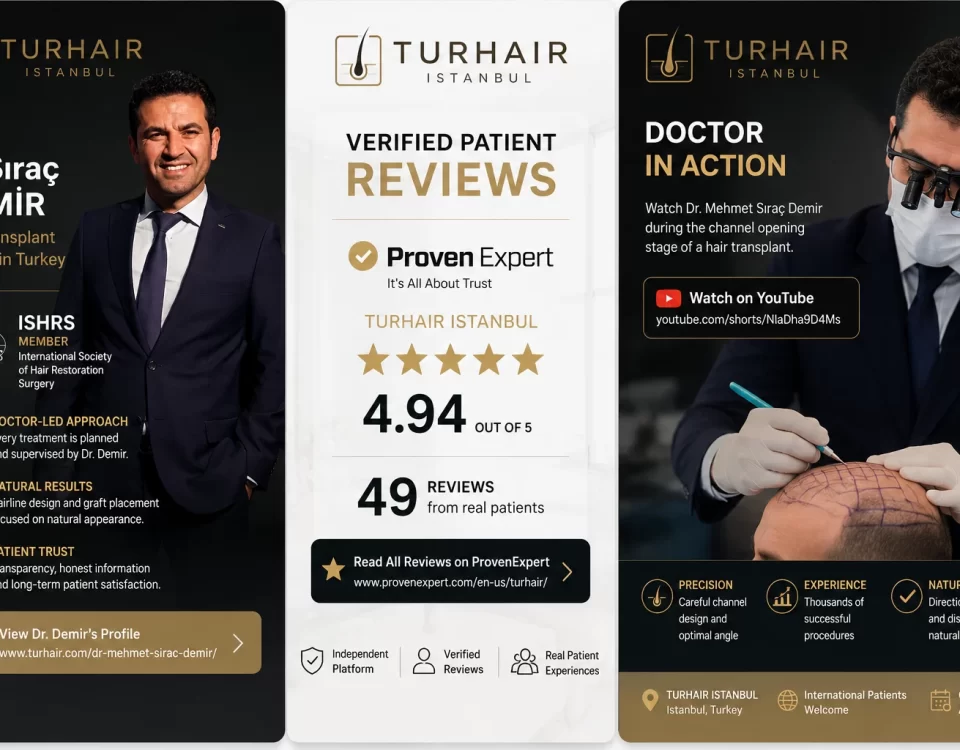
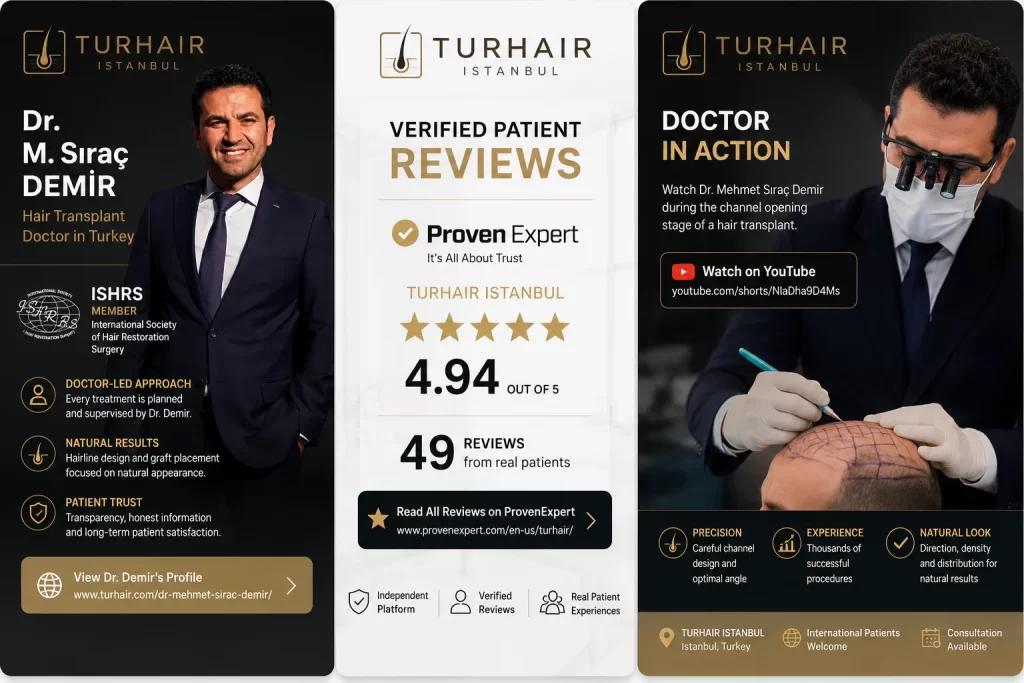
Video: Dr. Demir Performing Channel Opening During Hair Transplant
Video of Dr. Demir during the channel opening stage of a hair transplant procedure.
This is the most critical step, determining 70–80% of the final result.
At Turhair clinic, channels are opened personally by the doctor, ensuring natural hair direction and high density.
Video: Dr. Demir performing channel opening during a real hair transplant procedure at Turhair.
Why Do People Lose Hair?
Hair loss is not caused by a single factor. Understanding the reasons helps set realistic expectations.
- Genetics (Androgenetic Alopecia)
- Hormonal changes (DHT sensitivity)
- Stress and lifestyle
- Nutritional deficiencies
- Medical conditions
Each patient is different, which is why results vary from person to person.
Hair Transplant Techniqu
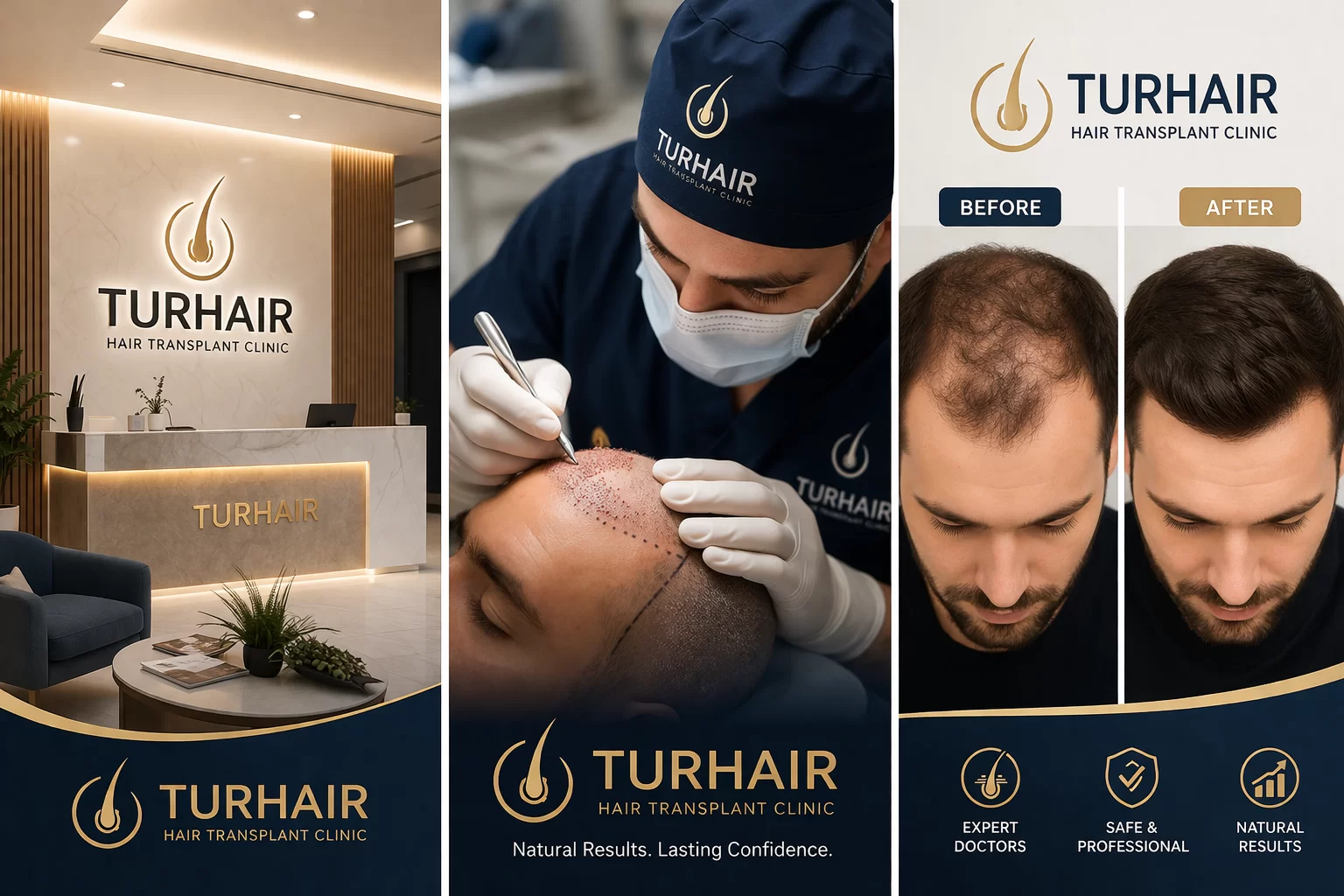
Doctor-led hair transplant procedure at Turhair clinic showing precision work, medical expertise, and advanced technology for natural results.
es
FUE (Follicular Unit Extraction)
The most modern and widely used technique today.
- No visible linear scar
- Faster recovery time
- Natural-looking results
DHI (Direct Hair Implantation)
A more advanced variation of FUE using a special implantation pen.
- More precise implantation
- Higher density possible
- Ideal for hairline design
Why Turkey is the Leading Destination
Turkey has become the global hub for hair transplant procedures, attracting thousands of patients every month.
- Highly experienced doctors
- Advanced medical facilities
- Affordable pricing
- All-inclusive packages
However, not all clinics are the same. Many clinics operate with technicians performing most of the procedure, which can affect results.
Doctor vs Technician Clinics – Critical Difference
This is one of the most important factors when choosing a clinic.
Doctor-led clinics:
- Doctor designs hairline
- Doctor opens channels
- Higher medical safety
- More natural results
Technician-based clinics:
- Doctor often only signs paperwork
- Procedure done mostly by assistants
- Inconsistent results
Video: Dr. Demir Performing Channel Opening During Hair Transplant
Video of Dr. Demir during the channel opening stage of a hair transplant procedure.
This is the most critical step, determining 70–80% of the final result.
At Turhair clinic, channels are opened personally by the doctor.
Video of Dr. Demir during channel opening in a hair transplant procedure at Turhair clinic.
Step-by-Step Hair Transplant Process
1. Consultation
The doctor evaluates your hair loss and donor area.
2. Hairline Design
A natural hairline is planned based on facial structure.
3. Donor Extraction
Hair follicles are extracted using micro tools.
4. Channel Opening
This step determines direction and density.
5. Implantation
Grafts are placed carefully into the recipient area.
6. Recovery
The healing process begins immediately after the procedure.
Recovery Timeline
- Day 1–7: Scabbing and healing
- Week 2–4: Shock loss (normal)
- Month 3–4: New hair starts growing
- Month 6: Visible improvement
- Month 12: Final results
Are Results Guaranteed?
No medical procedure can offer a 100% guarantee.
Results depend on:
- Genetics
- Donor quality
- Doctor experience
- Post-operative care
However, in experienced clinics, success rates are very high.
Hair Transplant Cost
Prices vary significantly depending on location and clinic quality.
- Europe: €6000 – €12000+
- Turkey: €2500 – €6000
Lower prices should always be evaluated carefully. Extremely cheap offers may compromise quality.
Is Hair Transplant Painful?
The procedure is performed under local anesthesia, so pain is minimal.
Patients usually report:
- Discomfort during anesthesia
- No pain during the procedure
- Mild soreness after
Who is a Good Candidate?
- Men with pattern baldness
- Women with thinning hair
- People with strong donor area
- Patients with realistic expectations
Risks and Side Effects
Hair transplant is generally safe but may include:
- Temporary swelling
- Redness
- Shock loss
Serious complications are rare in professional clinics.
How to Choose the Right Clinic
- Check real patient results
- Confirm doctor involvement
- Avoid mass-production clinics
- Read verified reviews
Conclusion
Hair transplantation is a life-changing procedure when done correctly. The key is choosing a clinic where medical standards are high and the doctor is actively involved.
Instead of focusing only on price, focus on long-term results, because a hair transplant is something you will carry for life.
Hair Transplant Results: What to Expect Realistically
One of the most common questions patients ask is: “Will my results look completely natural?” The answer depends on several critical factors, not just the procedure itself.
Hair transplantation is not a simple cosmetic process—it is a medical procedure that requires precision, planning, and experience. When done correctly, results can be indistinguishable from natural hair.
Key Factors Affecting Results
- Donor Hair Quality: Thick, dense donor hair leads to better coverage
- Hair Characteristics: Curly or wavy hair provides more visual density
- Skin Contrast: Lower contrast between hair and skin improves appearance
- Doctor Skill: One of the most important factors
Even with perfect technique, every patient’s outcome will be unique.
Hairline Design: The Most Important Step
The hairline is the most visible part of a hair transplant and requires artistic as well as medical expertise.
A poorly designed hairline is often the main reason for unnatural results.
- Must match facial proportions
- Should not be too low or aggressive
- Must consider future hair loss
Density vs Coverage: What Matters More?
Many patients focus only on density, but this is a common misunderstanding.
Coverage is often more important than density.
A balanced distribution of grafts across the scalp creates a fuller visual effect, even with moderate density.
Overpacking grafts in one area can:
- Damage existing hair
- Reduce graft survival
- Look unnatural
Shock Loss Explained
Shock loss is a temporary shedding of transplanted or existing hair after the procedure.
This can be alarming for patients, but it is completely normal.
- Usually occurs within the first 2–4 weeks
- Hair regrows after 3–4 months
- Not a sign of failure
Understanding this process helps avoid unnecessary stress.
Post-Operative Care: Critical for Success
The success of a hair transplant does not depend only on the clinic. Patient responsibility is equally important.
Aftercare includes:
- Following washing instructions
- Avoiding physical trauma
- Not smoking or drinking alcohol initially
- Using prescribed medications
Hair Transplant for Women
Although often associated with men, hair transplantation is increasingly popular among women.
Women typically experience:
- Diffuse thinning
- Hairline recession
- Volume loss
However, female hair transplantation requires a different approach and careful evaluation.
Beard and Eyebrow Transplants
Hair transplantation is not limited to the scalp.
Modern techniques allow for:
- Beard Transplant – for fuller facial hair
- Eyebrow Transplant – for shape and density correction
Common Mistakes Patients Make
Choosing the wrong clinic is the biggest risk factor.
- Focusing only on price
- Ignoring doctor involvement
- Trusting fake reviews
- Expecting unrealistic results
A hair transplant is a lifelong result—mistakes can be difficult to fix.
Can a
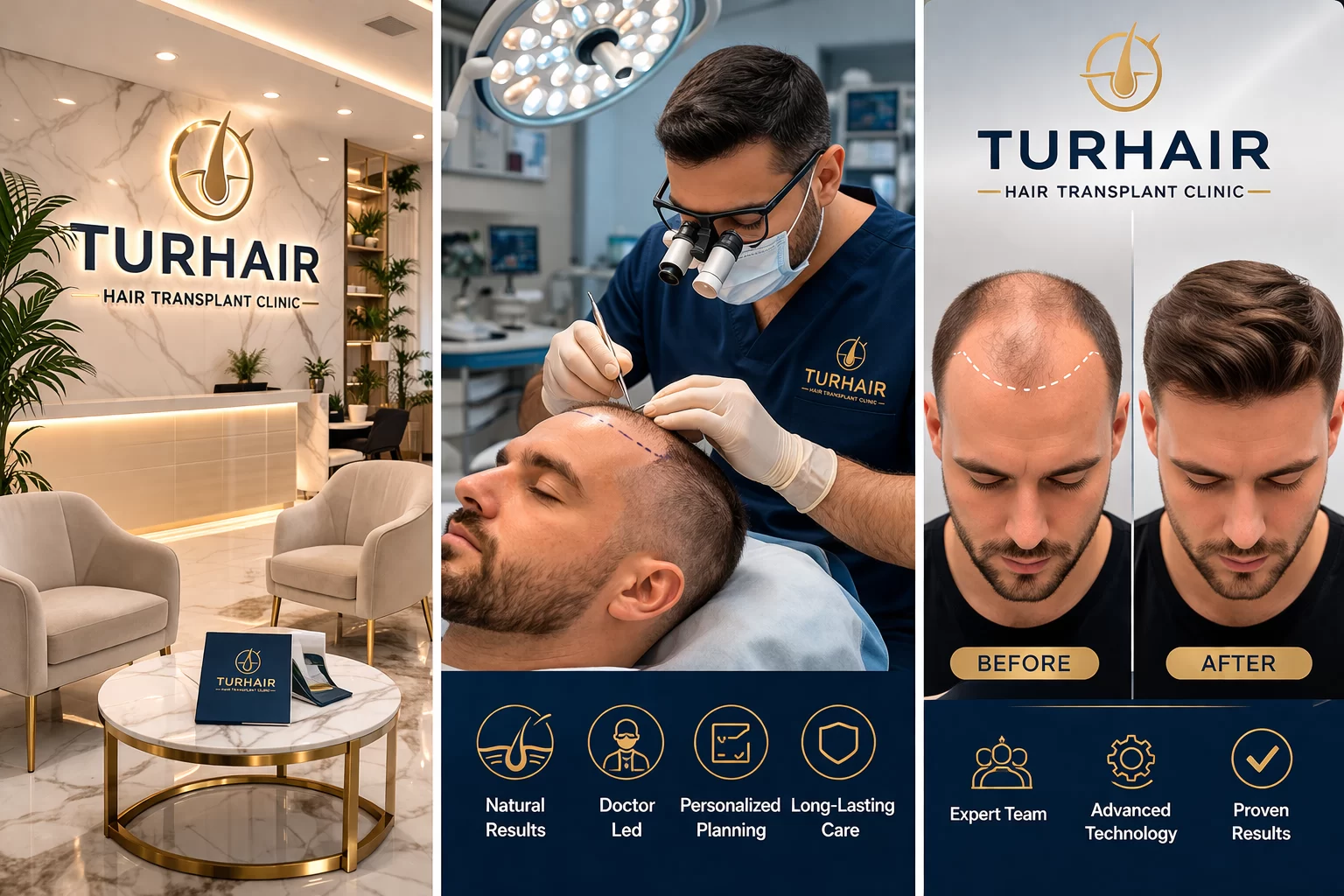
Professional hair transplant procedure at Turhair clinic including modern facilities, doctor-led surgery, and natural before and after hair restoration results.
Hair Transplant Fail?
While rare, failure can occur.
Possible reasons include:
- Poor surgical technique
- Overharvesting donor area
- Improper implantation angles
- Lack of post-care
This is why choosing an experienced doctor is essential.
A successful hair transplant can last a lifetime.
However, existing native hair may continue to thin over time.
This is why some patients may need:
- Medical treatment (e.g., finasteride)
- A second session in the future
Final Thoughts
Hair transplantation is not just about restoring hair—it’s about restoring confidence.
The difference between a good and bad result is often not the technique, but the experience and involvement of the doctor.
Take your time, do proper research, and choose quality over price.
Advanced Hair Transplant Planning: Strategy Matters
A successful hair transplant is not just about performing the procedure—it is about long-term planning. One of the biggest mistakes patients make is focusing only on the current bald area instead of future hair loss progression.
A professional clinic will always plan for the next 10–15 years, not just the present moment.
Why Long-Term Planning is Critical
- Prevents unnatural “island” hair look
- Protects donor area for future sessions
- Ensures consistent appearance over time
Without proper planning, even a technically good transplant can look unnatural after a few years.
Donor Area Management
The donor area is a limited resource. Once hair follicles are extracted, they do not grow back in the donor region.
This makes donor management one of the most critical aspects of the procedure.
- Avoid overharvesting
- Maintain natural donor density
- Use grafts efficiently
Poor donor management can lead to visible thinning at the back of the head.
Graft Survival Rate
Not all transplanted grafts survive. Survival rate depends on multiple factors.
- Extraction technique
- Handling of grafts
- Time outside the body
- Implantation method
In high-quality clinics, survival rates typically reach 90–95%.
Natural Angles and Direction
One of the most overlooked aspects of hair transplantation is the angle and direction of implanted grafts.
Hair does not grow straight up—it follows natural angles depending on the region of the scalp.
- Hairline: soft and irregular
- Mid-scalp: forward direction
- Crown: circular pattern
Incorrect angles can make the result look artificial, even if density is good.
Crown (Vertex) Transplant Challenges
The crown area is one of the most difficult regions to restore.
Why?
- Requires more grafts
- Has complex growth patterns
- Often continues to lose hair over time
This is why many experienced doctors prioritize the front and mid-scalp first.
Single Session vs Multiple Sessions
Not all patients can achieve full coverage in one session.
Factors include:
- Size of bald area
- Donor capacity
- Desired density
Some patients may need a second session after 8–12 months.
Hair Transplant and Age
Age plays a major role in determining suitability.
- Under 25: Risk of unstable hair loss
- 25–40: Ideal candidates
- 40+: More predictable patterns
Younger patients must be evaluated carefully to avoid future aesthetic issues.
Medical Treatments vs Hair Transplant
Hair transplantation is not always the first step.
In some cases, medical treatments may help slow down hair loss:
- Finasteride
- Minoxidil
- PRP therapy
However, these are not permanent solutions and require continuous use.
Hair Transplant Myths
There are many misconceptions about hair transplantation.
- Myth: Results are instant
- Reality: Takes 6–12 months
- Myth: Cheap clinics are the same
- Reality: Quality varies significantly
- Myth: One session solves everything
- Reality: Depends on individual case
Traveling for Hair Transplant
Many patients choose to travel abroad for hair transplantation, especially to Turkey.
Advantages include:
- Cost savings
- Experienced clinics
- All-inclusive packages
However, it is essential to research thoroughly before making a decision.
How to Verify a Clinic
Before booking, always verify the clinic:
- Ask who performs the procedure
- Request real before/after photos
- Check patient testimonials
- Confirm medical licensing
Transparency is a key sign of a reliable clinic.
Psychological Impact
Hair loss is not only a physical issue—it also affects mental well-being.
Many patients report:
- Increased confidence
- Improved social interactions
- Better self-image
This makes hair transplantation more than just a cosmetic procedure.
Final Expert Advice
If you are considering a hair transplant, remember these key points:
- Do not rush the decision
- Choose a doctor, not a price
- Think long-term
- Follow aftercare strictly
A well-planned and properly executed hair transplant can deliver life-changing results that last for decades.
Hair Transplant Success Rate: What Determines It?
The success of a hair transplant is not a matter of luck. It is the result of multiple factors working together correctly. Patients often ask about “success rate,” but this should be understood in a broader context.
In high-quality clinics, the success rate can reach up to 90–95%, but this depends heavily on technique and execution.
Main Factors That Influence Success
- Doctor Experience: The most important factor
- Graft Handling: Proper storage and minimal trauma
- Implantation Technique: Correct angle and depth
- Patient Compliance: Following aftercare instructions
Even small mistakes in any of these areas can significantly affect the final outcome.
Micro vs Macro Planning in Hair Transplant
There are two levels of planning in a hair transplant procedure:
Macro Planning
- Overall hairline design
- Coverage distribution
- Long-term strategy
Micro Planning
- Angle of each graft
- Depth of implantation
- Direction of hair growth
Both levels must be executed perfectly to achieve natural results.
The Importance of Channel Opening
Channel opening is one of the most critical steps in hair transplantation.
This stage determines:
- Hair direction
- Density
- Natural appearance
If channels are opened incorrectly, even perfectly implanted grafts will produce poor results.
Implantation Techniques Compared
There are different implantation approaches used in modern hair transplantation.
- Forceps implantation: Traditional and widely used
- Implanter pen (DHI): More controlled placement
Each technique has advantages, but results depend more on the team’s experience than the tool itself.
Hair Transplant Density: Numbers vs Reality
Many clinics advertise high graft numbers, but numbers alone do not guarantee good results.
Important considerations:
- Donor capacity is limited
- Overharvesting causes permanent damage
- Balanced distribution creates better visual density
A natural look always comes from proper planning, not maximum graft count.
Overharvesting: A Serious Risk
Overharvesting occurs when too many grafts are taken from the donor area.
This can lead to:
- Visible thinning in the donor region
- Patchy appearance
- Limited future options
Unfortunately, this is common in high-volume clinics focused on quantity over quality.
Repair Hair Transplants
Patients who had poor results may require a repair procedure.
Repair cases are more complex because:
- Donor area may be depleted
- Existing unnatural hairlines must be corrected
- Scar tissue may affect results
Hair Transplant and Lifestyle Factors
Lifestyle choices can significantly impact both recovery and final results.
- Smoking: Reduces blood flow to grafts
- Alcohol: Can interfere with healing
- Diet: Affects hair growth quality
Healthy habits support better outcomes.
Seasonal Considerations
Hair transplantation can be performed year-round, but each season has advantages.
- Winter: Easier recovery, less sweating
- Summer: More sunlight but requires extra care
Patients should follow guidelines carefully regardless of the season.
Hair Transplant and Sports
Physical activity should be limited after the procedure.
- Light activity after 10–14 days
- Heavy exercise after 1 month
Early activity can damage grafts.
When Will You See Full Results?
Patience is essential in hair transplantation.
- First visible growth: 3–4 months
- Significant improvement: 6 months
- Final result: 12 months
Hair growth is a gradual process and varies between individuals.
Choosing Quality Over Marketing
The hair transplant industry is highly competitive, and marketing can sometimes be misleading.
Always focus on:
- Medical expertise
- Doctor involvement
- Real patient results
Do not rely solely on advertisements or social media promotions.
Final Conclusion
A hair transplant is a long-term investment in your appearance and confidence.
The difference between success and disappointment often comes down to one key factor: who performs the procedure.
Take your time, research carefully, and choose a clinic that prioritizes quality, safety, and natural results.
Hair Transplant Consultation: What Happens Before the Procedure?
The consultation phase is one of the most important parts of a successful hair transplant journey. Unfortunately, many patients underestimate its value and focus only on the surgery itself.
A proper consultation ensures that the patient is a suitable candidate and that expectations are realistic.
What a Professional Consultation Includes
- Detailed scalp and donor area analysis
- Hair loss pattern evaluation
- Medical history review
- Realistic result planning
A rushed or superficial consultation is often a warning sign of a low-quality clinic.
Digital Analysis and Modern Tools
Advanced clinics use digital tools to analyze hair density and scalp condition.
- Microscopic hair analysis
- Density measurement per cm²
- Donor capacity estimation
These tools allow for more precise planning and better long-term results.
Customized Treatment Plan
No two patients are the same. A personalized approach is essential.
A good treatment plan includes:
- Number of grafts required
- Hairline design strategy
- Session planning (if needed)
- Post-operative care plan
Communication with the Doctor
Direct communication with the doctor is a critical factor.
Patients should always:
- Ask who performs each step
- Discuss expectations openly
- Clarify all concerns before booking
If communication is handled only by sales staff, this may indicate a commercial rather than medical approach.
Pre-Operation Preparation
Preparing properly before the procedure improves both safety and results.
- Avoid alcohol 3–5 days before
- Stop smoking if possible
- Avoid blood-thinning medications (if approved by doctor)
- Get proper rest before surgery
These small steps can significantly impact graft survival.
Day of the Procedure: What to Expect
On the day of the procedure, patients typically go through several stages.
- Final consultation and confirmation
- Hairline drawing and approval
- Preparation and sterilization
- Local anesthesia
- Procedure (4–8 hours depending on graft count)
Understanding the process helps reduce anxiety.
Comfort During the Procedure
Hair transplant procedures are long but generally comfortable.
Patients may:
- Watch movies
- Listen to music
- Take short breaks
Modern clinics aim to provide a relaxed environment.
Immediately After the Procedure
After the procedure, patients will receive detailed instructions.
- Bandaging (if necessary)
- Medication prescription
- First washing instructions
First Night After Hair Transplant
The first night is important for protecting the grafts.
- Sleep with head elevated
- Avoid touching transplanted area
- Use travel pillow if recommended
This helps prevent swelling and graft damage.
Washing Process Explained
The first wash usually takes place after 2–3 days.
- Gentle application of lotion
- Soft washing technique
- No pressure on grafts
Proper washing is essential for healing.
When Can You Return to Work?
Most patients can return to work within a few days.
- Office jobs: 3–5 days
- Physical jobs: 7–10 days
This depends on individual healing and comfort level.
Hair Transplant for Different Hair Types
Hair type plays a role in the final appearance.
- Straight hair: Needs higher density
- Curly hair: Provides better coverage
- Thick hair: Better visual fullness
Each type requires a slightly different approach.
Ethnic Considerations
Different ethnic backgrounds have unique hair characteristics.
- European hair: usually straight or wavy
- Middle Eastern hair: thicker, often curly
- Asian hair: straight but strong
Understanding these differences is essential for natural results.
Technology in Hair Transplant
Modern technology has improved the precision of hair transplantation.
- Micro motor extraction tools
- Sapphire blades for channel opening
- Advanced implanter pens
However, technology alone does not guarantee success—experience is key.
Final Recommendations
If you are considering a hair transplant, keep these final recommendations in mind:
- Choose a medically focused clinic
- Ensure doctor involvement
- Understand the process fully
- Be patient with results
A well-executed hair transplant can provide natural, permanent, and life-changing results.
Frequently Asked Questions About Hair Transplant in Turkey
What is hair transplant in Turkey?
Hair transplant in Turkey is a medical procedure where healthy hair follicles are taken from a donor area, usually the back of the head, and implanted into areas affected by hair loss. Turkey is a popular destination because of experienced doctors, modern techniques, and more affordable prices compared to many European countries.
Why is Turkey popular for hair transplant?
Turkey is popular for hair transplant because it offers a combination of experienced medical teams, advanced techniques such as FUE and DHI, and more competitive prices than many clinics in Europe. Many patients also prefer Turkey because clinics often provide organized treatment packages for international visitors.
How much does a hair transplant cost in Turkey?
Hair transplant cost in Turkey usually ranges between €2000 and €4000 depending on the clinic, doctor involvement, technique, number of grafts, and services included. Prices in Europe are often much higher, which is one of the main reasons many patients choose Turkey.
Are hair transplant results permanent?
Hair transplant results are generally considered long-lasting because transplanted hair is taken from donor areas that are usually resistant to hair loss. However, long-term results also depend on genetics, age, donor quality, doctor experience, and whether native hair continues to thin over time.
What are the steps of a hair transplant in Turkey?
A hair transplant in Turkey usually includes consultation and hair analysis, hairline design, donor hair extraction, channel opening, graft implantation, and the recovery period. Each step is important for achieving a natural-looking and long-lasting result.
Is hair transplant in Turkey safe?
Hair transplant in Turkey can be safe when the procedure is performed in a professional medical environment by experienced practitioners. Clinic choice is very important because safety, planning, hygiene, and medical supervision all directly affect the final result.
How long does it take to see hair transplant results?
Most patients begin to see new hair growth after 3 to 4 months. Visible improvement often appears around 6 months, while final hair transplant results are usually seen between 9 and 12 months after the procedure.
Why does clinic choice matter in hair transplant?
Clinic choice matters because natural results depend on medical planning, doctor involvement, donor area management, correct graft placement, and proper aftercare. Choosing only by price can increase the risk of unnatural results or poor long-term outcomes.