Eyebrow Transplant✨
April 23, 2026
Best Hair Transplant Clinic in Turkey
April 24, 2026PRP Therapy (Platelet-Rich Plasma) – Complete Guide 2026
PRP Therapy (Platelet-Rich Plasma) has become one of the most popular non-surgical treatments for hair loss, skin rejuvenation, and tissue repair. Thanks to its natural approach and minimal downtime, PRP is widely preferred by patients looking for effective and safe results.
In this comprehensive guide, you will learn what PRP therapy is, how it works, its benefits, and whether PRP hair treatment is truly effective.
What is PRP Therapy?
PRP (Platelet-Rich Plasma) is a medical treatment that uses a concentration of platelets derived from your own blood. Platelets contain powerful growth factors that stimulate cell regeneration and accelerate healing.
Because PRP uses the patient’s own blood, it is considered a natural and low-risk treatment with minimal chances of allergic reactions or complications.
How Does PRP Therapy Work?
- A small amount of blood is drawn from the patient
- The blood is processed in a centrifuge
- Platelet-rich plasma is separated
- The PRP is injected into the targeted area
The entire procedure typically takes 30 to 45 minutes, and patients can return to their daily routine immediately.
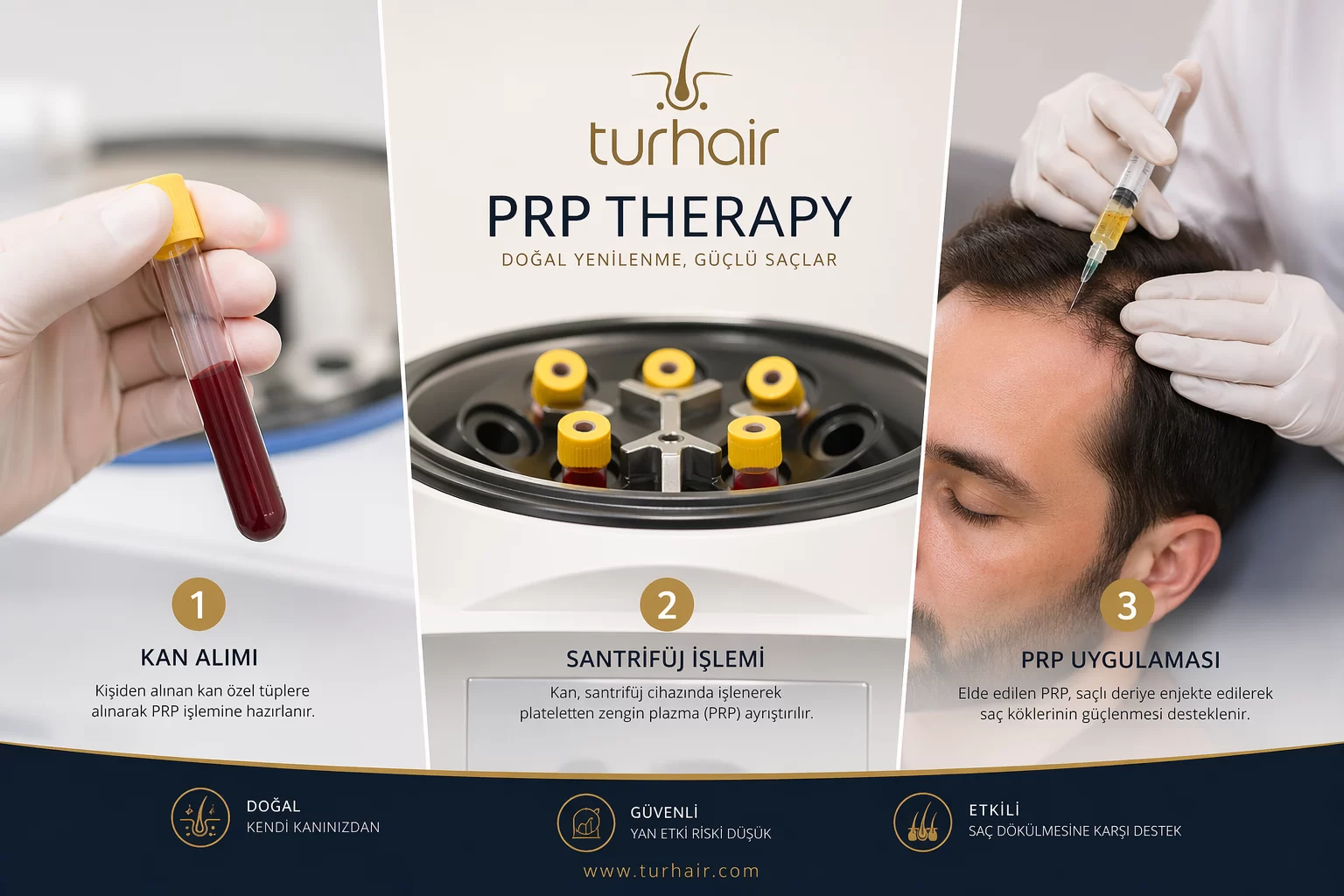
PRP Therapy process at Turhair: blood extraction, centrifuge separation, and scalp injection to stimulate hair growth naturally.
PRP Hair Treatment
PRP hair treatment is widely used to treat hair thinning and early-stage hair loss. It helps stimulate inactive hair follicles and improves overall scalp health.
Key benefits for hair include:
- Strengthens hair follicles
- Reduces hair shedding
- Improves hair thickness
- Supports new hair growth
PRP is also commonly used after hair transplant procedures to enhance healing and improve graft survival.
Benefits of PRP Therapy
- Natural and safe treatment
- No surgery required
- Minimal downtime
- Low risk of side effects
- Versatile use (hair, skin, joints)
These advantages make PRP a suitable option for both men and women.
PRP for Skin Rejuvenation
PRP is not only used for hair loss but also for skin rejuvenation. Often referred to as the “vampire facial,” this treatment improves skin quality and promotes a youthful appearance.
Skin benefits include:
- Reduces fine lines and wrinkles
- Improves skin tone and texture
- Boosts collagen production
- Enhances skin elasticity
How Many PRP Sessions Are Needed?
PRP therapy is usually performed in 3 to 4 sessions, spaced about 3–4 weeks apart.
For long-term results, maintenance sessions once or twice a year are recommended.
Who is a Good Candidate for PRP?
- People experiencing hair thinning
- Patients after hair transplant
- Individuals seeking skin rejuvenation
- Those looking for natural treatments
However, PRP may not be suitable for individuals with certain medical conditions. A professional consultation is always recommended.
Are There Any Side Effects?
PRP therapy is generally safe. Since it uses your own blood, the risk of allergic reaction is extremely low.
Some mild side effects may include:
- Temporary redness
- Minor swelling
- Mild discomfort at injection site
These effects usually disappear within a few days.
PRP vs Other Hair Loss Treatments
Compared to medications like Minoxidil or Finasteride, PRP offers a more natural approach. While medications may require continuous use, PRP stimulates the body’s own healing process.
PRP is often combined with other treatments for optimal results.
PRP Therapy Cost
The cost of PRP therapy varies depending on the clinic, location, and number of sessions required.
On average:
- Europe: €300 – €800 per session
- Turkey: €150 – €400 per session
Many clinics offer package deals for multiple sessions.
Why Choose PRP Therapy?
If you are looking for a natural, effective, and minimally invasive treatment, PRP therapy is an excellent option. It works with your body’s own healing system to deliver noticeable improvements.
Whether for hair restoration or skin rejuvenation, PRP continues to be one of the most trusted treatments in modern aesthetic medicine.
Conclusion
PRP Therapy is a powerful and versatile treatment that offers real results without surgery. With consistent sessions and proper care, patients can achieve healthier hair, improved skin, and enhanced confidence.
How Long Does It Take to See PRP Results?
One of the most common questions about PRP therapy is how quickly results can be seen. While PRP is highly effective, it is important to understand that it works gradually by stimulating the body’s natural healing process.
For PRP hair treatment, most patients begin to notice reduced hair shedding within the first 4 to 6 weeks. Visible improvements in hair thickness and density typically appear after 3 to 4 months. Full results are usually achieved between 6 to 12 months, depending on individual response.
For skin treatments, patients may notice a healthier glow within a few weeks, while collagen production continues to improve over several months.
PRP Therapy for Men vs Women
PRP therapy is suitable for both men and women, but the causes of hair loss may differ. Men typically experience androgenetic alopecia (male pattern baldness), while women often deal with diffuse thinning or hormonal-related hair loss.
PRP is particularly effective in:
- Early-stage hair loss
- Thinning hair in women
- Postpartum hair loss
- Stress-related shedding
Because PRP is hormone-free, it is a preferred solution for patients who want to avoid medications.
PRP Combined with Hair Transplant
Many leading clinics combine PRP therapy with hair transplant procedures such as FUE or DHI. This combination significantly improves overall results.
Benefits of combining PRP with hair transplant include:
- Faster healing of the donor and recipient areas
- Improved graft survival rate
- Reduced inflammation and redness
- Stronger and thicker hair growth
PRP is often applied during the transplant procedure and in follow-up sessions to maximize results.
What to Expect After PRP Treatment
After a PRP session, patients can usually return to normal activities the same day. However, there are a few important aftercare guidelines:
- Avoid washing the treated area for 24 hours
- Do not use harsh hair products immediately after treatment
- Avoid direct sun exposure for 1–2 days
- Refrain from intense exercise for 24 hours
Following these recommendations helps ensure optimal results.
PRP Therapy vs Mesotherapy
PRP is often compared with mesotherapy, another popular treatment for hair and skin. While both involve injections, they differ significantly.
PRP Therapy:
- Uses patient’s own blood
- Rich in natural growth factors
- No risk of allergic reaction
Mesotherapy:
- Uses vitamins, minerals, and chemicals
- Pre-made formulations
- Higher risk of sensitivity in some patients
PRP is generally considered a more natural and safer option.
Is PRP Therapy Painful?
PRP therapy involves small injections, so mild discomfort may occur. However, most clinics apply a topical anesthetic to minimize pain.
Patients typically describe the sensation as:
- Minor pinching
- Light pressure
- Short-lasting discomfort
Overall, PRP is well tolerated and does not require downtime.
Who Should Avoid PRP Therapy?
Although PRP is safe, it may not be suitable for everyone. Patients should avoid PRP if they have:
- Blood disorders
- Active infections
- Certain chronic diseases
- Severe platelet dysfunction
A thorough medical consultation is essential before starting treatment.
PRP for Beard and Eyebrow Growth
PRP is increasingly used for beard and eyebrow enhancement. It helps stimulate dormant follicles and improve density in these areas.
This is especially beneficial for:
- Patchy beard growth
- Thin eyebrows
- Post-transplant support
Results appear gradually, similar to scalp hair treatments.
How Long Do PRP Results Last?
The longevity of PRP results depends on lifestyle, genetics, and maintenance treatments.
On average:
- Initial results last 12–18 months
- Maintenance sessions extend results
- Healthy lifestyle improves longevity
Regular follow-ups are key to sustaining results.
Tips to Maximize PRP Results
- Follow your doctor’s treatment plan
- Maintain a healthy diet rich in vitamins
- Avoid smoking and excessive alcohol
- Use recommended hair care products
- Stay consistent with sessions
Combining PRP with proper care significantly enhances outcomes.
PRP Therapy Trends in 2026
In 2026, PRP therapy continues to evolve with advanced techniques and improved technology. Clinics now use:
- Higher concentration PRP systems
- Combination therapies (PRP + stem cells)
- Personalized treatment protocols
These innovations make PRP even more effective and widely accessible.
Why PRP is a Top Choice Worldwide
PRP therapy is gaining popularity globally due to its natural, safe, and effective approach. Patients prefer it because it enhances the body’s own healing abilities rather than relying on artificial substances.
With proven results in hair restoration and skin rejuvenation, PRP remains one of the most trusted treatments in aesthetic medicine.
Final Thoughts
If you are looking for a non-surgical solution for hair loss or skin concerns, PRP therapy is a powerful option. With minimal downtime and long-lasting results, it offers a perfect balance between safety and effectiveness.
Always choose an experienced clinic and follow professional advice to achieve the best possible results.
Scientific Evidence Behind PRP Therapy
PRP therapy is not just a trend; it is supported by a growing body of scientific research. Studies have shown that platelet-rich plasma contains growth factors such as PDGF (Platelet-Derived Growth Factor), VEGF (Vascular Endothelial Growth Factor), and TGF (Transforming Growth Factor), all of which play a crucial role in tissue regeneration.
In hair restoration, these growth factors stimulate the dermal papilla cells, prolong the anagen (growth) phase of the hair cycle, and improve blood supply to hair follicles. This results in stronger, thicker, and healthier hair growth.
Clinical studies have demonstrated that patients undergoing PRP hair treatment experience a significant increase in hair density and hair shaft thickness compared to untreated areas.
Understanding the Hair Growth Cycle
To fully understand how PRP works, it is important to know the hair growth cycle, which consists of three main phases:
- Anagen Phase: Active growth phase
- Catagen Phase: Transitional phase
- Telogen Phase: Resting and shedding phase
PRP therapy helps extend the anagen phase while reducing the duration of the telogen phase, resulting in healthier and more consistent hair growth.
PRP for Different Types of Hair Loss
PRP therapy is effective for various types of hair loss, including:
- Androgenetic Alopecia: Genetic hair loss in men and women
- Alopecia Areata: Autoimmune-related hair loss
- Telogen Effluvium: Temporary hair shedding due to stress or illness
However, results may vary depending on the severity and cause of hair loss. Early intervention always leads to better outcomes.
PRP Therapy in Sports Medicine and Orthopedics
Beyond aesthetics, PRP therapy is widely used in sports medicine. Athletes use PRP to accelerate healing in:
- Tendon injuries
- Ligament damage
- Muscle tears
The regenerative properties of PRP help reduce recovery time and improve tissue repair, making it a versatile medical treatment.
PRP vs Stem Cell Therapy
PRP is often compared to stem cell therapy, another advanced regenerative treatment.
PRP Therapy:
- Uses platelet-rich plasma from blood
- More accessible and cost-effective
- Minimal risk
Stem Cell Therapy:
- Uses stem cells from fat or bone marrow
- More complex and expensive
- Still under extensive research
For most patients, PRP offers an excellent balance between safety, effectiveness, and affordability.
Customization of PRP Treatments
Modern clinics now offer personalized PRP protocols based on the patient’s condition. Factors considered include:
- Age and gender
- Severity of hair loss
- Hormonal profile
- Lifestyle habits
This customized approach ensures maximum effectiveness and better long-term results.
PRP Therapy for Anti-Aging
PRP is increasingly used as an anti-aging treatment. By stimulating collagen production and improving skin elasticity, PRP helps reduce visible signs of aging.
Benefits include:
- Reduction of wrinkles
- Improved skin firmness
- Enhanced hydration
- Youthful and radiant appearance
It is often combined with microneedling for even better results.
PRP and Microneedling Combination
The combination of PRP therapy and microneedling is one of the most effective treatments for skin rejuvenation.
Microneedling creates tiny micro-injuries in the skin, allowing PRP to penetrate deeper and enhance its regenerative effects.
This combination is ideal for:
- Acne scars
- Fine lines
- Uneven skin texture
Common Myths About PRP Therapy
There are several misconceptions about PRP therapy that need clarification:
- Myth: PRP gives instant results
Reality: Results take time and require multiple sessions - Myth: PRP is painful
Reality: Mild discomfort only - Myth: PRP works for everyone
Reality: Best results are seen in early-stage conditions
PRP Therapy Safety Standards
Safety is a key factor in PRP treatment. Reputable clinics follow strict protocols, including:
- Sterile equipment and environment
- Certified medical professionals
- High-quality centrifuge systems
Choosing the right clinic is essential for achieving safe and effective results.
Global Popularity of PRP Therapy
PRP therapy is widely used across the world, including Europe, the United States, and Turkey. Countries like Turkey have become leading destinations due to:
- Experienced specialists
- Affordable pricing
- Advanced medical technology
This has made PRP an accessible treatment for international patients.
PRP Therapy and Lifestyle Factors
Your lifestyle plays a major role in the success of PRP therapy. Factors that improve results include:
- Balanced nutrition
- Regular exercise
- Stress management
- Proper sleep
Healthy habits support the body’s natural healing process, enhancing PRP effectiveness.
Future of PRP Therapy
The future of PRP therapy looks promising, with ongoing research focused on improving its effectiveness. Innovations include:
- Advanced platelet concentration techniques
- Combination with regenerative medicine
- AI-based treatment planning
These advancements are expected to make PRP even more effective in the coming years.
Why PRP Therapy is Worth It
PRP therapy offers a unique combination of natural healing, minimal risk, and proven effectiveness. It is an ideal choice for patients who want noticeable results without surgery.
Whether used for hair restoration, skin rejuvenation, or medical treatments, PRP continues to deliver consistent and reliable outcomes.
Conclusion
PRP Therapy stands out as one of the most advanced and natural treatment options available today. With continuous improvements in technology and techniques, it remains a top choice for patients worldwide.
If you are considering PRP, consult a qualified specialist to create a personalized treatment plan and achieve the best possible results.
PRP Therapy Preparation: What You Should Know Before Treatment
Preparing properly for PRP therapy can significantly improve the effectiveness of the treatment. While PRP is a minimally invasive procedure, following pre-treatment guidelines helps ensure optimal platelet quality and better overall results.
Before your session, doctors typically recommend:
- Staying well hydrated 24–48 hours before treatment
- Avoiding alcohol and smoking
- Stopping anti-inflammatory medications (if approved by your doctor)
- Maintaining a balanced diet rich in vitamins
These steps help maximize platelet concentration and enhance the regenerative power of PRP.
Diet and Nutrition for Better PRP Results
Your diet plays a crucial role in how well your body responds to PRP therapy. Nutrient-rich foods support healing and improve cell regeneration.
Recommended nutrients include:
- Protein: Essential for tissue repair
- Vitamin C: Boosts collagen production
- Iron: Supports healthy blood circulation
- Zinc: Promotes healing and immune function
A healthy diet enhances the effectiveness of PRP and accelerates visible results.
PRP Therapy for Different Age Groups
PRP therapy is suitable for a wide range of age groups, but outcomes may vary based on age-related factors.
- 20s–30s: Best results due to strong regenerative capacity
- 30s–40s: Effective for preventing further hair loss
- 40+: Visible improvement, especially with combination treatments
Early intervention typically leads to faster and more noticeable improvements.
PRP Therapy for Women: Special Benefits
Women experiencing hair thinning often prefer PRP therapy because it does not involve hormonal medications.
Key advantages for women include:
- Safe for long-term use
- Effective for diffuse thinning
- Helps restore hair volume
- Supports postpartum hair recovery
This makes PRP one of the most popular hair restoration treatments among female patients.
PRP Therapy for Men: Targeting Hair Loss
For men dealing with pattern baldness, PRP therapy can slow down hair loss and improve density in thinning areas.
It is particularly effective in:
- Crown thinning
- Hairline recession (early stages)
- Strengthening existing hair follicles
While PRP may not fully restore completely bald areas, it significantly improves overall hair quality.
PRP Maintenance Plan
Maintaining results after initial PRP sessions is essential. A proper maintenance plan typically includes:
- Follow-up sessions every 6–12 months
- Regular scalp care routine
- Optional combination with other treatments
Consistency is key to long-term success.
PRP Therapy and Stress Management
Stress is one of the major causes of hair loss. Managing stress enhances the effectiveness of PRP therapy.
Helpful techniques include:
- Meditation
- Exercise
- Healthy sleep patterns
Reducing stress supports hair growth and improves overall results.
PRP for Scalp Health
A healthy scalp is essential for strong hair growth. PRP therapy improves scalp condition by increasing blood circulation and reducing inflammation.
This leads to:
- Better nutrient delivery
- Stronger hair follicles
- Improved scalp environment
As a result, hair grows healthier and more consistently.
PRP Therapy for Acne Scars
PRP is widely used for treating acne scars. When combined with microneedling, it significantly improves skin texture.
Benefits include:
- Reduction in scar depth
- Smoother skin surface
- Enhanced collagen production
This makes PRP a powerful tool in dermatology.
PRP Therapy for Dark Circles
PRP therapy is also effective for reducing dark circles under the eyes. It improves skin quality and boosts collagen production in delicate areas.
Results include:
- Brighter under-eye appearance
- Reduced pigmentation
- Improved skin thickness
This treatment is gaining popularity as a natural alternative to fillers.
PRP Therapy Cost Factors
The cost of PRP therapy can vary based on several factors:
- Clinic reputation
- Doctor’s experience
- Technology used
- Number of sessions
While affordability is important, choosing a high-quality clinic ensures better and safer results.
Choosing the Right PRP Clinic
Selecting the right clinic is crucial for successful PRP therapy. Consider the following:
- Qualified and experienced doctors
- Positive patient reviews
- Modern equipment
- Transparent pricing
A professional clinic will provide personalized treatment plans and realistic expectations.
PRP Therapy vs Hair Transplant
PRP therapy and hair transplant serve different purposes but can complement each other.
PRP Therapy:
- Non-surgical
- Best for early hair loss
- Maintenance treatment
Hair Transplant:
- Surgical procedure
- Permanent solution for bald areas
- Immediate visible density
Combining both treatments often yields the best results.
PRP Therapy Recovery Timeline
Recovery from PRP therapy is quick and straightforward:
- Day 1: Mild redness or sensitivity
- Day 2–3: Normal appearance returns
- Week 2+: Early internal healing begins
This fast recovery makes PRP an attractive option for busy individuals.
PRP Therapy Success Rate
PRP therapy has a high success rate, especially when applied in early stages of hair loss or skin aging.
Success depends on:
- Patient consistency
- Quality of treatment
- Underlying health conditions
With proper care, most patients achieve noticeable improvement.
PRP Therapy Innovations
New technologies continue to improve PRP effectiveness, including:
- Advanced centrifuge systems
- Higher platelet concentration techniques
- Combination therapies
These innovations are making PRP even more powerful and reliable.
Final Conclusion
PRP therapy remains one of the most effective, natural, and versatile treatments available today. Whether you are targeting hair loss, skin aging, or tissue repair, PRP offers a safe and proven solution.
By choosing the right clinic and following a consistent treatment plan, you can achieve long-lasting and noticeable results.